
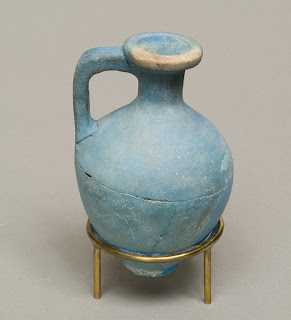
 Egyptian Juglet, ca. 1750–1640 B.C. | Blue is considered to be the first synthetically produced color pigment. Egyptian blue (cuprorivaite) was created around 2,200 B.C. It was made from ground limestone mixed with sand and a copper mineral, such as azurite or malachite, then heated between 1470 and 1650°F. The result was an opaque blue glass which was then crushed and combined with thickening agents such as egg whites to create a paint or glaze. |   |
 | The history of ultramarine began around 6,000 years ago when the semi-precious gemstone it was made from—lapis lazuli—began to be imported by the Egyptians from Afghanistan. The Egyptians tried and failed to turn it into a paint, with each attempt resulting in gray. Instead, they used it to make jewelry and headdresses. Also known as “true blue” lapis lazuli first appeared as a pigment in the 6th century and was used in Buddhist paintings in Afghanistan. It was renamed ultramarine—in Latin: ultramarinus, meaning “beyond the sea”. It remained extremely expensive until a synthetic ultramarine was invented in 1826 by a French chemist, who then named it “French Ultramarine.” Cobalt blue dates back to the 8th and 9th centuries, and was then used to color ceramics and jewelry. |  |

Absolutely interesting. Sent it on to artists as reference
ReplyDelete