Thursday, April 30, 2026

Bulgarian Valley of Kings

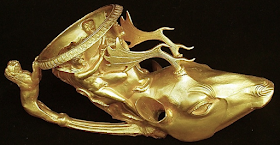
The Valley of the Thracian Rulers (or Kings) in central Bulgaria, near Kazanlak, represents a major concentration of Thracian elite tombs from the 5th–3rd centuries BC.
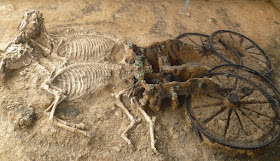
A four-wheeled wooden chariot, its intricately carved bronze plating and fittings, plus the skeletal remains of two horses and a dog have been preserved in situ instead of being removed to a museum. Thracian chariots were often buried with up to eight horses and their elaborately decorated bridles. Thracians established a powerful kingdom in the fifth century B.C.

The capital was thought to be Seutopolis, whose ancient ruins lie under a large artificial lake near Shipka, in an area dubbed 'the Bulgarian Valley of Kings' for its many rich tombs. It is believed that there are over 1500 funeral mounds in the region, with only 300 being researched so far.
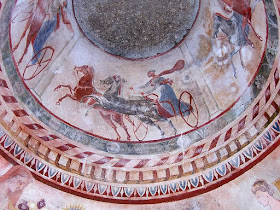
The Kazanlak Tomb was found accidentally on 19 April 1944 by soldiers who were digging for entrenchment against aircraft. It dates to the first half of 3rd century BC.
The Svetitsa mound revealed a spectacular gold mask, which was laid on the face of the deceased person. It was made of a solid 673-g gold plate with individual features - thick hair, beard and mustache, the eyes half-closed. This is one of the earliest and richest tombs discovered in the Valley.
"To Seuthes," was written in one of the silver vessels and on a bronze helmet. It led some historians to suppose that the tomb belonged to King Seuthes III (ca. 330-300/295 BC). See ---- https://ancientbulgaria.bg/listings/valley-thracian-kings

Wednesday, April 29, 2026

Salt Mining

Prior to industrialization, it was expensive, dangerous, and labor intensive to harvest the mass quantities of salt necessary for food preservation and seasoning. This made salt an extremely valuable commodity in ancient times. The Bible compliments some men as being ‘the salt of the earth’. Entire economies were based solely on salt production and trade.

Ancient method of boiling brine into pure salt in China.
In the Iron Age, the British evaporated salt by boiling seawater or brine from salt spri­ngs in small clay pots over open fires. Roman salt-making entailed boiling seawater in lead-lined pans. In ancient Rome, salt on the table was a mark of a very rich patron; those who sat nearer the host were "above the salt," and those less favored were "below the salt".
The oldest salt mine known in Azerbaijan.

Ancient Roman Glass Salt Dishes
Roman prisoners were given the task of salt mining, and life expectancy was low. Rapid dehydration caused by constant contact with the salt and accidental excessive sodium intake was fatal. The Roman historian Pliny the Elder stated in his Natural History's discussion of sea water, that "[I]n Rome ... the soldier's pay was originally salt and the word 'salary' derives from it ..."
Roman salt pans in Hortales.

The oldest of the salt men found has been carbon dated to 9550 B.C.
While bulldozing salt from the Chehrabad Salt Mine, Iranian miners uncovered the sixth "salt man" to be found in the last fifteen years. These "salt men" are ancient corpses killed or crushed in the cave and mummified by the extreme conditions. Hair, flesh and bone are all preserved by the dry salinity of the cave, and even internal organs such as stomachs and colons have been found intact. The first salt mummy, dated to 300 A.D., was discovered in 1993, sporting a long white beard, iron knives and a single gold earring. In 2004 another mummy was discovered only 50 feet away, followed by another in 2005 and a "teenage" boy mummy later that year.

Legio IX Hispana - 9th Legion

Legio IX Hispana ("9th Legion – Spanish") was a legion of the Imperial Roman army that existed from the 1st century BC until at least AD 120. The legion fought in various provinces of the late Roman Republic and early Roman Empire.
Legio IX Hispana was stationed in Britain following the Roman invasion in 43 AD. The Caesarian Ninth Legion fought in the battles of Dyrrhachium and Pharsalus (48 BC) and in the African campaign of 46 BC. After his final victory, Caesar disbanded the legion.
Octavian (Augustus) later recalled the veterans of the Ninth to fight against the rebellion of Sextus Pompeius. The Ninth remained with Octavian in his war of 31 BC against Mark Antony and fought by his side in the Battle of Actium.
The legion was sent to Hispania to take part in the campaign against the Cantabrians (25–13 BC). The Ninth participated in the invasion of Caledonia in 82–83. The legion narrowly escaped complete destruction after a surprise attack at night on their fort. The last attested activity of the Ninth in Britain is during the rebuilding in stone of the legionary fortress at York (Eboracum) in 108.

The last records came from Nijmegen and date 120. These are the latest records of Legion IX. It's fate remains speculation.

Tuesday, April 28, 2026

The Oxus Treasure

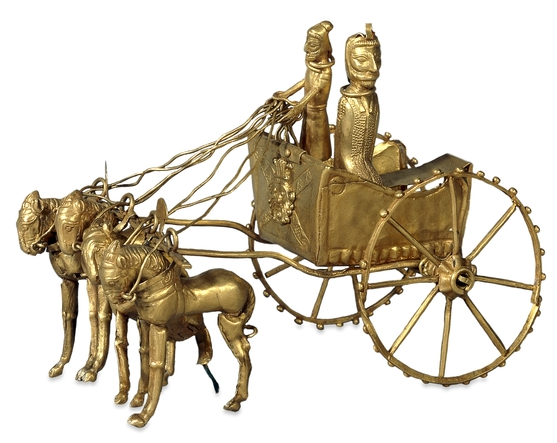
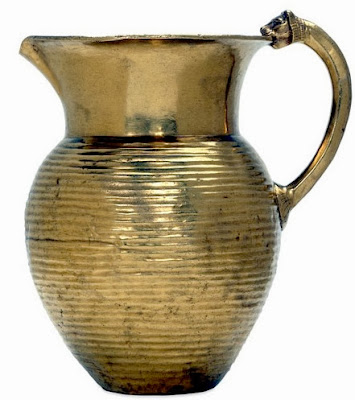
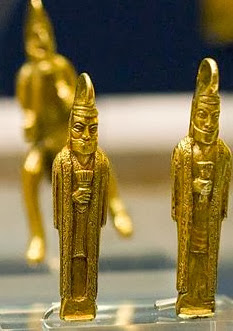
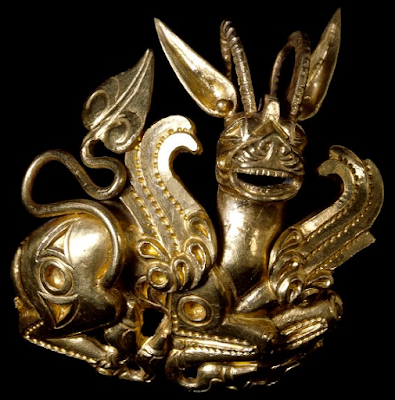
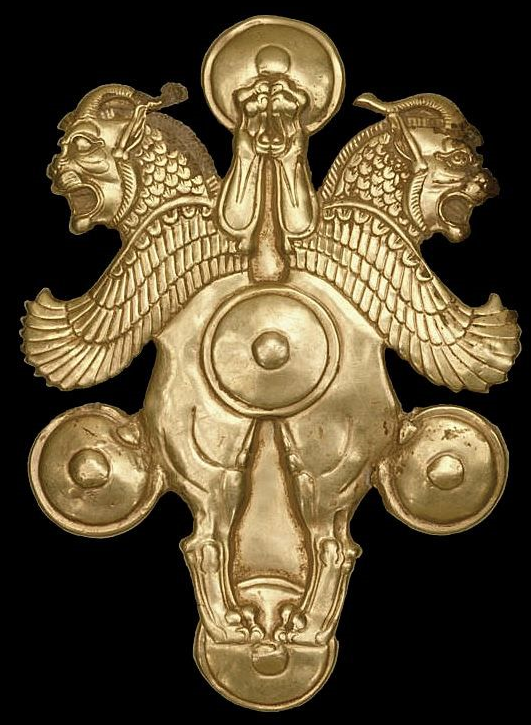
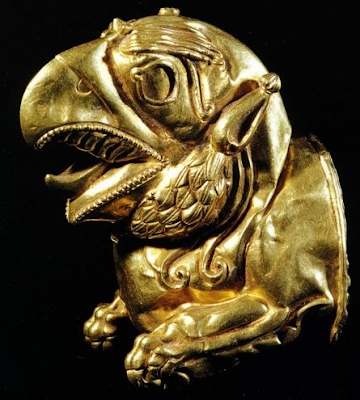
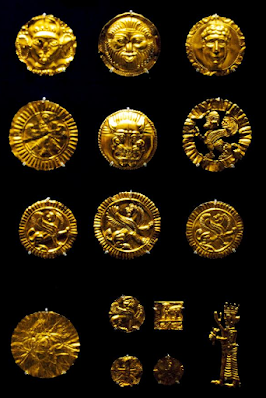
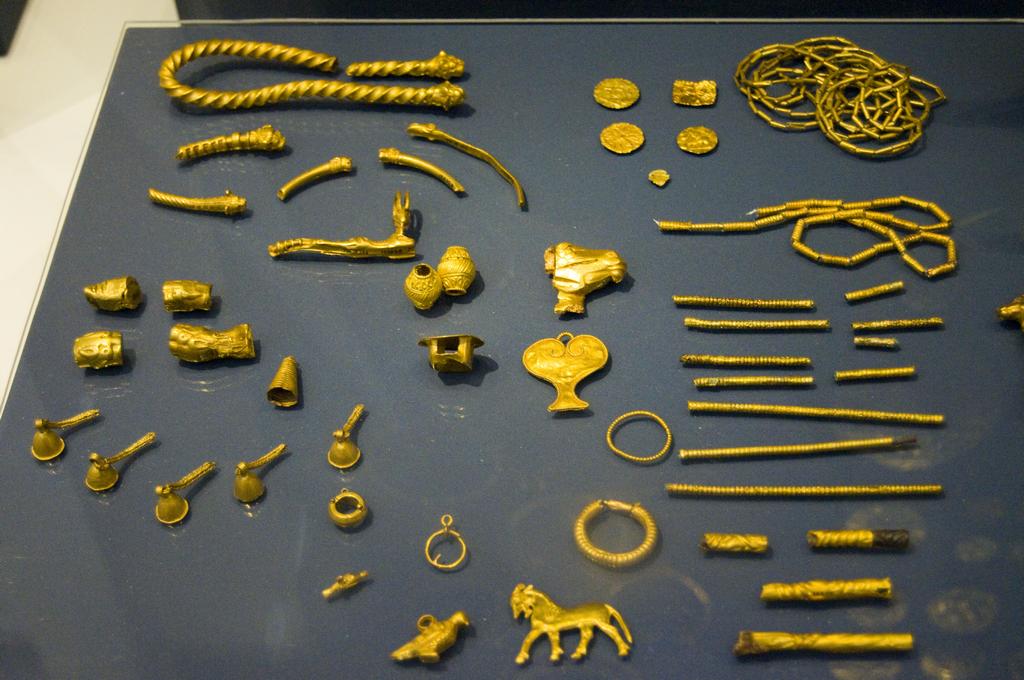
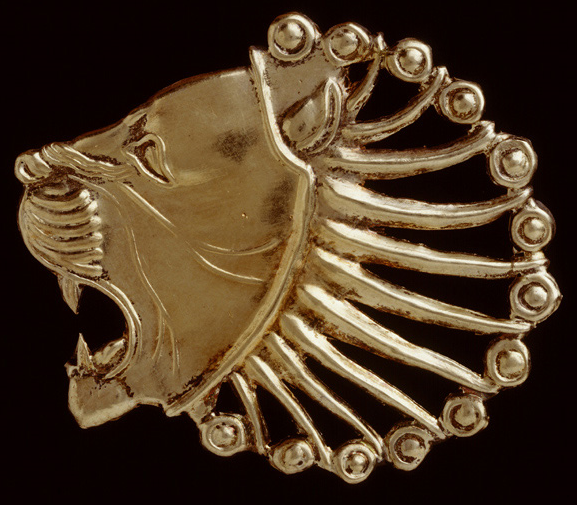
The Oxus treasure is a hoard of 180 pieces of metalwork in gold and silver from the Achaemenid Persian period, found by the Oxus river in 1880 in Takht-i Kuwad, Tadjikistan. It is the world's most important collection of gold and silver to have survived from the Achaemenid period.

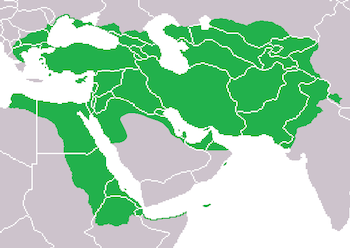
The Achaemenid Dynasty built an empire (559–330 BC) which, at its peak, spanned three continents.

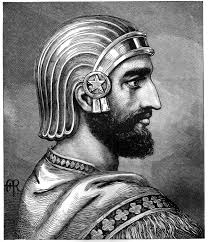
Cyrus the Great
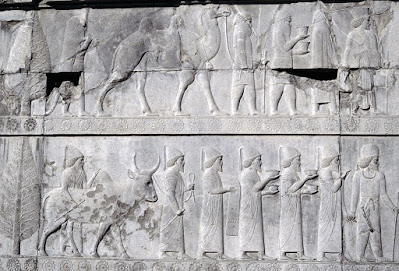
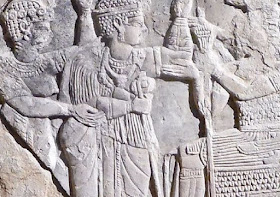
The Achaemenid dynasty ruled the Persian Empire, which stretched from Egypt and Thrace in the west to Central Asia and the Indus Valley in the east. In land mass, the Achaemenid Empire was the largest empire the ancient world had ever seen until 331-330 BC, when Alexander the Great toppled it on his eastward march from the Mediterranean through Afghanistan to India. The Persian Empire became the first to govern many ethnic groups on the principle of equal rights, as long as taxes were paid and the peace kept.
The king didn't interfere with the local customs and religions of its subject states, a unique quality that fostered rapid growth.
The treasure is thought to have once been housed in a temple which was looted and the hoard then buried to be retrieved later. The British Museum has nearly all the surviving metalwork from the hoard.

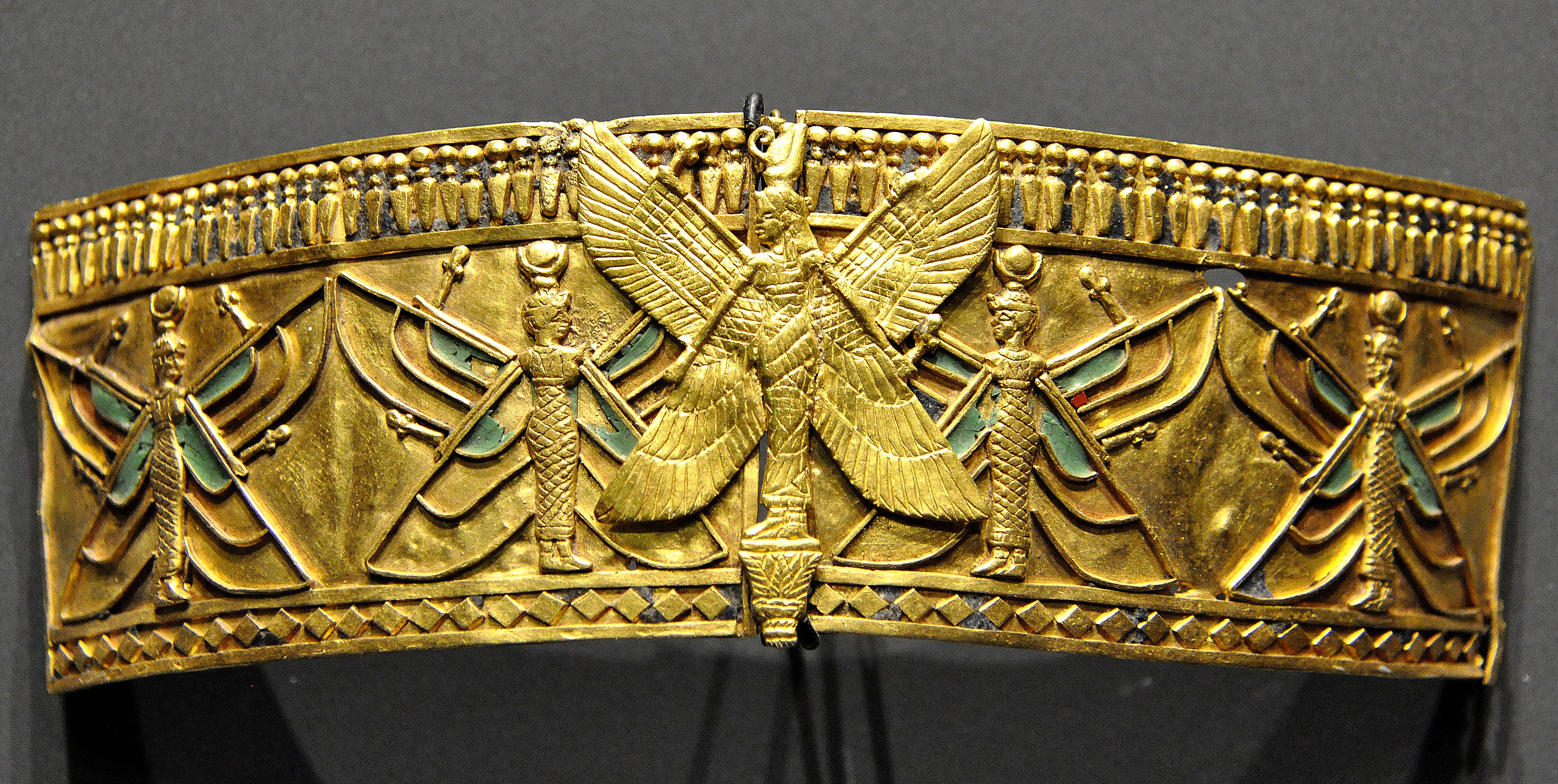
Amanishakheto gold

The Candaces of Meroe were the queens of the Kingdom of Kush. They ruled from the city of Meroe in what is now Sudan. Amanishakheto reigned from 10 BC to 1 AD. Amanishakheto bore the titles “Qore” and “Kandake”, both “King” and “Queen mother”, meaning that she was a ruling queen, and not merely a consort. She was the successor to Queen Amanirenas. Queen Amanirenas is one of the most famous Meroitic queens because of her role in leading the Kushite army against the Romans from 25 BC to 22 BC. This war is largely responsible for halting Rome's southward expansion in Africa. Amanishaketo and her kingdom was extremely wealthy. Kush produced most of the gold in ancient Egypt. Rich grave goods found in her tomb are testaments to her great wealth.
Her grave treasures consisted of 10 bracelets, 9 shield rings, 67 signet rings, 2 bracelets and a large number of amulets, all created by the finest craftsmen of the Kingdom of Meroƫ.

Jewelry was stolen from the Queen's pyramid in 1834. Queen Amanishakheto reigned during the Third Intermediate Period of ancient Egypt.

Monday, April 27, 2026

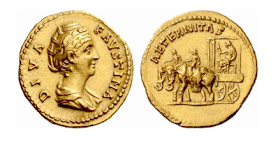
Elephants on ancient coins

Elephants have a long history of interaction with humans. The Indus Valley civilization used captive Asian elephants as early as 2000 BCE for logging, transportation and ceremonial processions.
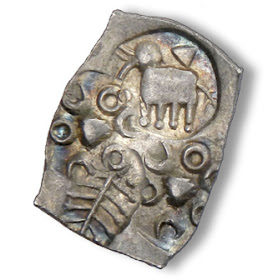
Karshapana, or “punch-marked silver” coinage of India, dates from 600 BCE to ca. 300
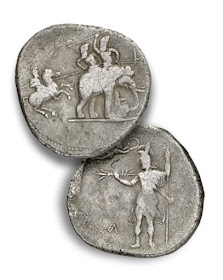
India provides the earliest appearance of elephants on coins. A rare commemorative silver dekadrachm, Alexander the Great, lance in hand, charges at an elephant. This may have been an actual event during the Battle of the Hydaspes (326 BCE). Horses are spooked by the smell and sound of elephants unless trained.
Alexander (336-323 B.C.), Silver dekadrachm of 5 shekels, 40.08g. Minted at Babylon, struck c. 327 B.C. $300k.
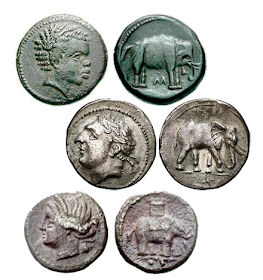
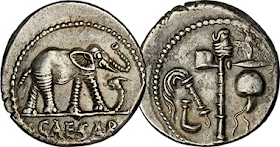
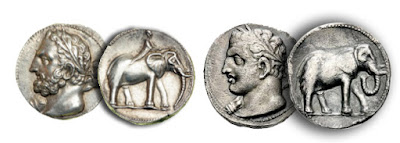
African elephants appear on the reverse of rare Carthaginian coins struck in Spain from about 220 to 206 BCE, probably to pay mercenaries. The best-known elephant images on coins appears on a massive issue of Roman denarii in the name of Julius Caesar. Based on the multitude of different dies, the size of this issue is estimated at 22.5 million.
This coin sold in 2013 for $980.
In 248 CE, Rome observed it's 1000th anniversary. Emperor Philip I (“the Arab”) celebrated with elaborate gladiatorial games, fighting exotic animals brought from every corner of the empire.
These were commemorated on his coins, which survive in large numbers.

Hoard of Pompeii charms

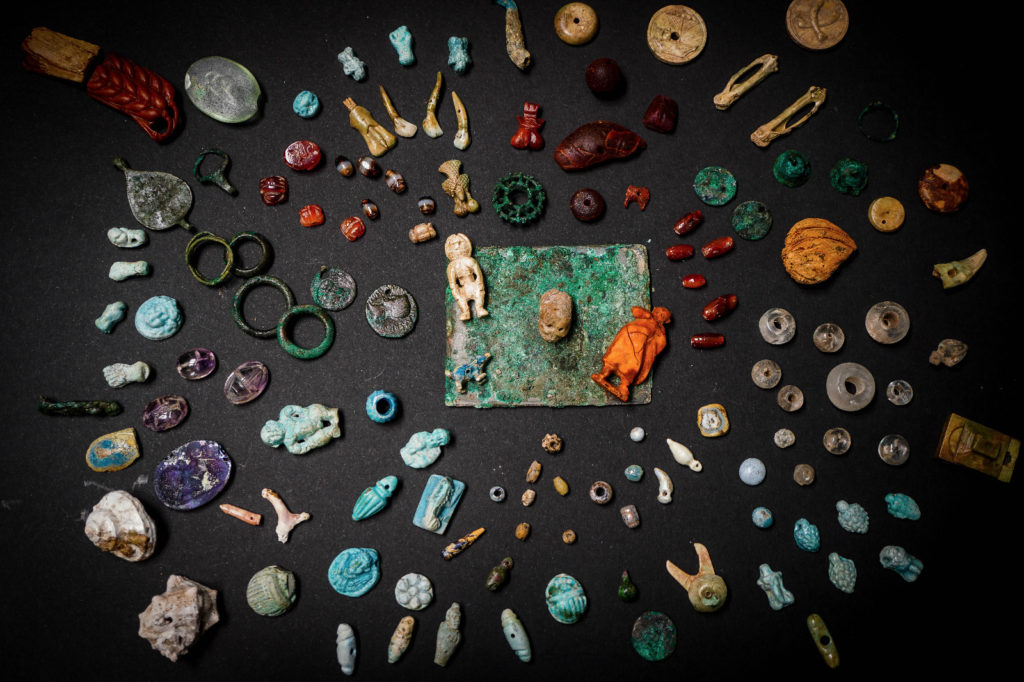
In 2019 archaeologists in Pompeii discovered a treasure trove of good luck charms and fertility amulets.
Most of the items would have belonged to women. A room with the bodies of 10 victims, including women and children, was excavated in the same house.
The trove was found in what remained of a wooden box.
The wood itself had decomposed and only the bronze hinges remained, preserved by the volcanic material which hardened over it. The objects included crystals, amber and amethyst stones, buttons made of bones, beetles from the orient, amulets, dolls, bells, miniature penises, fists and a tiny skull. They were found at the Casa del Giardino.
Amulets were essential in Roman daily life to ward off the 'evil eye', bad luck, and disease. They were commonly worn or carried by children, soldiers, and women.