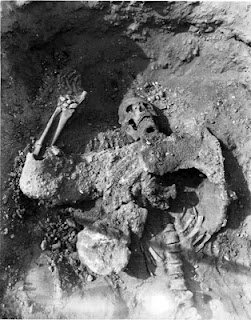
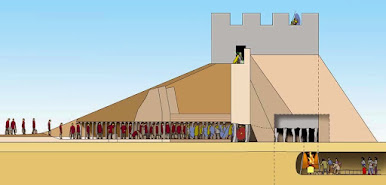
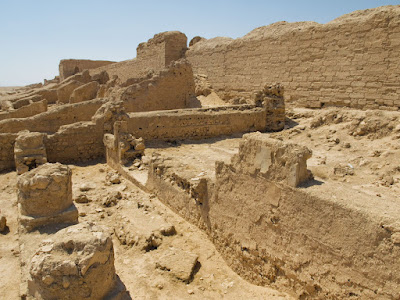
 | Researchers claimed in 2009 to have found the first evidence of chemical weapons, dating from a battle fought at the ancient Roman fortress of Dura-Europos. 20 Roman soldiers unearthed beneath the town's ramparts didn't die of war wounds, but from poison gas.
 |  |
War in antiquity rarely matched the heroism of myth. To stave off a Roman siege in A.D. 189, the defenders of the Greek city of Ambracia built a flamethrower that coughed out smoking chicken feathers.
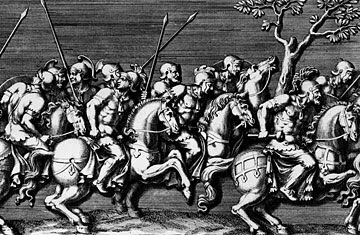 | At Themiscrya, another Greek outpost, Romans tunneling beneath the city contended with not only a charge of wild beasts but also a barrage of hives swarming with bees. Roman armies routinely poisoned the wells of cities they besieged. | 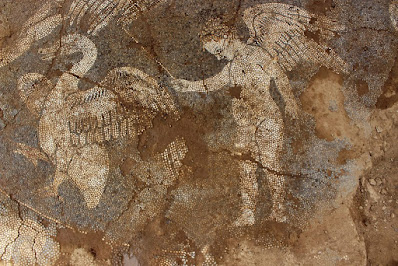 |
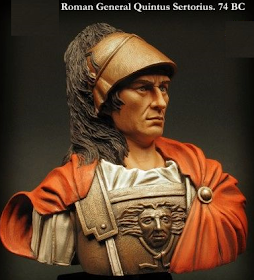 | Roman general Sertorius in 80 B.C. had his troops pile mounds of gypsum powder by the hillside hideouts of Spanish rebels. When kicked up by wind, the dust became an irritant, smoking the insurgents out.
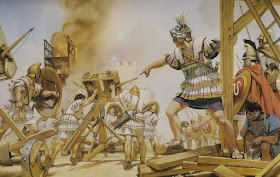 | 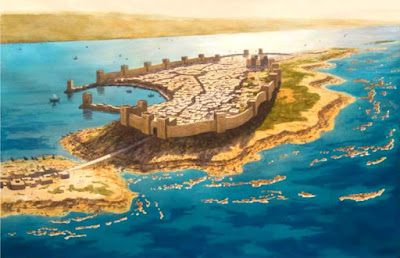
In 332 B.C., the citizens of the doomed port of Tyre catapulted basins of burning sand at Alexander the Great's advancing army. |
 | Poisoned arrows appear in classical literature. The epics of Homer, the Iliad and the Odyssey both insinuate the use of the poisoned arrows in the Trojan War. The myths of Hercules also allude to the use of poisoned arrows; after he slew the Hydra he dipped his arrowheads in the venom.
Scythians were famed for their poisoned arrows; the poison was a concoction of decomposed poisonous snakes and human blood incubated in a manure heap. One of the terms that the Greeks used to describe this poison was toxikon, which stemmed from toxon meaning a bow. Our modern word toxicology derives from this. | 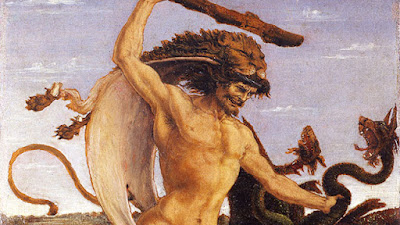 |
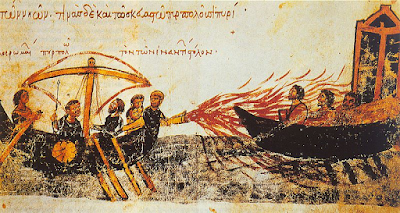
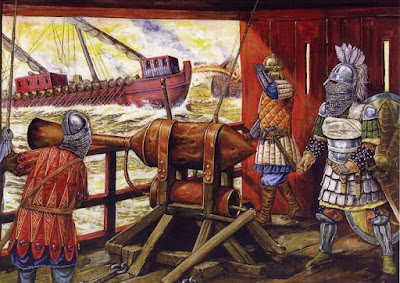 | Greek fire was an incendiary weapon developed c. 672 and used by the Eastern Roman (Byzantine) Empire. The Byzantine formula was a closely guarded state secret. The composition of Greek fire remains a matter of speculation with proposals including combinations of pine resin, naphtha, quicklime, calcium phosphide, and sulfur. Byzantine use of incendiary mixtures used pressurized nozzles or siphōn to project the liquid onto the enemy. | 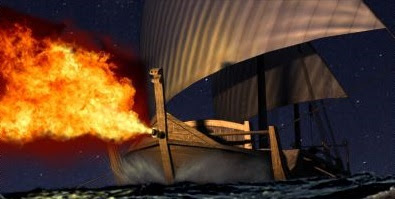
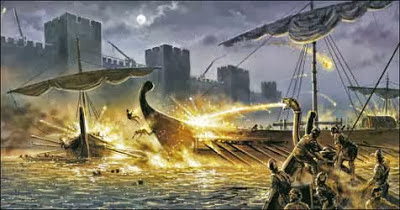 |
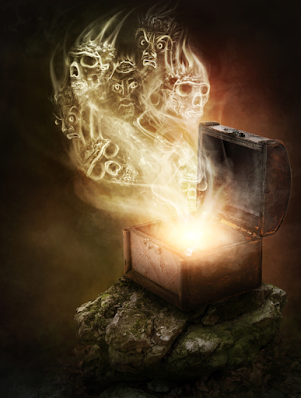
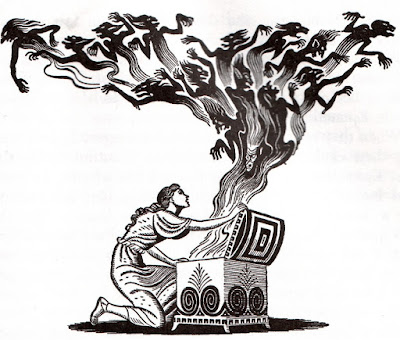 | Even in antiquity, some feared the lurking consequences of unleashing what we call chemical weapons. The ancient Greek tale of Pandora's box offers a metaphor for their use. Pandora's box is an artifact in Greek mythology which contained all the evils of the world. The phrase "to open Pandora's box" means to perform an action that may seem small, but that turns out to have severely detrimental and far-reaching consequences.
|  |
The Dura-Europos shield is the only surviving fully intact rectangular "long shield" (scutum) from the Roman Empire. It was discovered in the 1930s in the ancient Roman city of Dura-Europos in modern-day Syria. The artifact dates to the mid-3rd century CE (about 250–256 CE)
 | The rectangular arched shield is mainly made of wood. It was found broken up into thirteen parts. It is made from strips of wood that are 30 to 80 mm wide and 1.5 to 2 mm thick. They are put together in three layers, so that the total thickness of the wood layer is 4.5 to 6 mm. | 
In the center of the shield is a hole that was cut into the wood after the board was made, the umbo (central boss) is missing. |

No comments:
Post a Comment