Saturday, August 31, 2019

The Succubus - Incubus

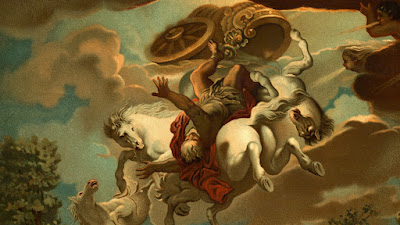
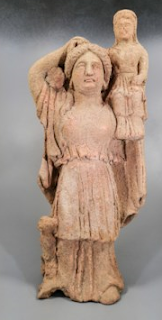
A succubus is a demon in female form, or supernatural entity in medieval folklore that appears in dreams and takes the form of a woman in order to seduce men, usually through sex. A succubus may take a form of a beautiful young girl but closer inspection may reveal deformities of her body, such as bird-like claws or serpentine tails. The male counterpart to the succubus is the incubus.

During the time when succubus lore was created, sexual activities that were not purposefully procreative were considered sin. The succubus may have been used by men to retain their faith.

In some stories a succubus collects semen from the men she seduces. The incubi or male demons then use the semen to impregnate human females.
Salacious tales of incubi and succubi have been told for centuries. Some traditions hold that repeated sexual activity with an incubus or succubus may result in the deterioration of health, mental state, or death.

One of the earliest mentions of an incubus comes from Mesopotamia on the Sumerian King List, c. 2400 BC, where the hero Gilgamesh's father is listed as Lilu. It is said that Lilu disturbs and seduces women in their sleep, while Lilitu, a female demon, appears to men in their erotic dreams.

Friday, August 30, 2019

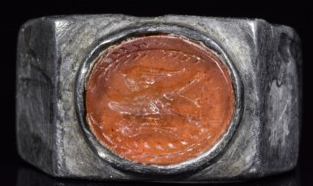
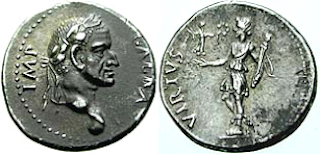
Gold aureus of Antoninus Pius

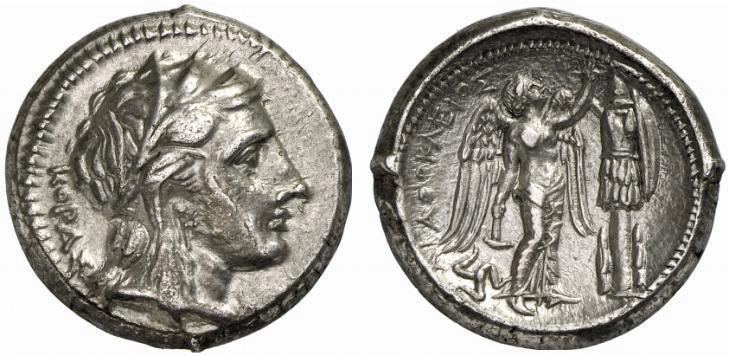
Antoninus Pius, also known as Antoninus, was Roman emperor from 138 to 161. He was one of the Five Good Emperors. About A.D. 141 Antoninus Pius ordered the Roman frontier be pushed northward. A gold aureus alludes to his victory in Britain. The coin was struck circa 143 to 144 A.D., at the Rome Mint. The campaign was successful, establishing the 39-mile-long Antonine Wall some 99 miles north of Hadrian’s wall. The Senate acclaimed Antoninus as Imperator in A.D. 143 for the second time.

This coin marks that event, with its depiction of winged Victory holding a trophy symbolizing military success. The aureus made $7,000.

Thursday, August 22, 2019

Yellowstone volcano: 133 earthquakes registered in one month

There are five tremors a day on average. Monitoring records from the US Geological Survey shows that all of the earthquakes have been relatively small, with the largest being a 3.5. Some geologists argue that when it comes to forecasting a volcano eruption, it's not the size of the seismic activity, but more the quantity. A spate of small earthquakes around a volcano usually signifies that magma and gasses beneath the surface are beginning to navigate their exit.
Volcanism at Yellowstone is relatively recent, with calderas that were created during large eruptions that took place 2.1m, 1.3m, and 630,000 years ago. The calderas lie over a hotspot where light and hot magma (molten rock) from the mantle rises toward the surface.

The hotspot appears to move, but it is much deeper than the terrain and remains stationary while the North American Plate moves over it.

Wednesday, August 21, 2019

The Chimera


The Chimera of Arezzo, bronze, Etruscan, 5th century BC
In Greek mythology the Chimera was a monstrous fire-breathing hybrid, composed of the parts of more than one animal. It is usually depicted as a lion, with the head of a goat arising from its back, and a tail that ended with a snake's head. It was thought to be one of the terrifying offspring of Typhon and Echidna and a sibling of such monsters as Cerberus and the Lernaean Hydra.

The sighting of a Chimera was a certain omen for disaster. Homer's description in the Iliad: "a thing of immortal make, not human, lion-fronted and snake behind, a goat in the middle, and snorting out the breath of the terrible flame of bright fire."
The Chimera was defeated by Bellerophon with the help of Pegasus. Since Pegasus could fly, Bellerophon shot the Chimera from the air in safety. Homer adds that Bellerophon finished the Chimera off by equipping his spear with a lump of lead that melted when exposed to the Chimera's fiery breath.

Tuesday, August 20, 2019

The Sword of Charlemagne

Joyeuse, is the name traditionally attributed to Charlemagne's personal sword. The sword of Joyeuse, which resides in the Louvre Museum, is one of the most famous swords in history. Historical records link the sword to Charlemagne the Great, King of the Franks. The story begins in 802 AD. Legend says that the sword was forged by the famous blacksmith Galas, and took three years to complete. The sword was described as having magical powers. It was said to have been so bright that it could outshine the sun and blind its wielder's enemies in battle, and any person who wielded it could not be poisoned.
Charlemagne (742-814 AD) did much to define the shape and character of medieval Europe. After the fall of the Roman Empire, he was the first to reunite Western Europe. He ruled a vast kingdom that encompassed what is now France, Germany, Italy, Austria, and the Low Countries. The sword was moved to the Louvre in 1793 following the French Revolution. It was last used by a French king in 1824 with the crowning of Charles X.

The pommel (top fitting) of the sword dates from the 10th and 11th centuries, the cross to the second half of the 12th century, and the grip to the 13th century. The grip once featured a fleur-de-lis, but was it removed for the coronation of Napoleon I in 1804.

Monday, August 19, 2019

Sekhmet 'The Powerful One'

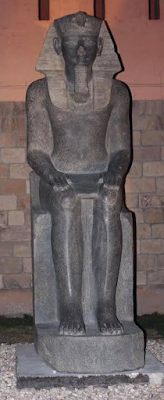
In 2017 archaeologists discovered 66 fragments and statues of Sekhmet believed to have been warding off evil from Amenhotep III’s temple. Amenhotep III’s reign, between 1386 to 1349 BC, is regarded as the peak of Egypt’s prosperity and power.
A toppled black granite statue of Amenhotep III was also found at the site.
The statue of Amenhotep shows the king as a young man and is thought to have been commissioned during his reign. Pharoah Amenhotep III became a king at the age of 12, when he inherited an empire spanning from the Euphrates to Sudan.

His temple is being preserved and rebuilt as part of a government approved renovation project.
Sekhmet, often called “the powerful one” is the daughter of Egyptian sun god Ra and was believed to ward off evil and ill health. Her influence was powerful on the Egyptians. Some statues depict her standing and holding the symbol of life – a sceptre made of papyrus.

Saturday, August 17, 2019

Discovery attests to Babylonian conquest of Jerusalem

Archaeologists have uncovered evidence of the bloody Babylonian conquest of Jerusalem in the sixth century B.C. The Babylonians, under King Nebuchadnezzar, besieged Jerusalem and then conquered the city, razing it and burning it to the ground.

Experts digging in an excavation site at Jerusalem’s Mount Zion found layers of ash and arrowheads, as well as lamps, a gold and silver tassel or earring and pieces of ceramics from the Iron Age.
The arrowheads are known as 'Scythian arrowheads' and have been found at other battle sites from the 7th and 6th centuries BCE. They were fairly common.

The Babylonian conquest of Jerusalem took place in 587 and 586 B.C. The nature of the artifacts and the layer of ash point to a bloody chapter in the city’s long history.

Wednesday, August 14, 2019

Treasure of Zlatinitsa–Malomirovo

Gold and silver greave (knee-piece)The Treasure of Zlatinitsa–Malomirovo is a rich ancient Thrace gold and silver treasure from the 4th century BC, the time of the Odrysian Kingdom. The Zlatinitsa–Malomirovo Treasure was discovered in 2005.
One of the two deer head-shaped gold-coated silver rhytons
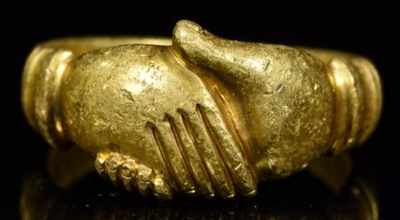
A ring from the Zlatinitsa – Malomirovo Treasure depicts a scene from Ancient Thracian mythology

Tuesday, August 13, 2019

Hoard of Pompeii charms found

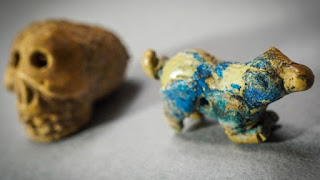
Archaeologists in Pompeii have discovered a treasure trove of good luck charms and fertility amulets which they think may have been used for casting spells by an ancient Roman sorcerer. Most of the items would have belonged to women. A room with the bodies of 10 victims, including women and children, was excavated in the same house.
The trove was found in what remained of a wooden box. The wood itself had decomposed and only the bronze hinges remained, preserved by the volcanic material which hardened over it. The objects included crystals, amber and amethyst stones, buttons made of bones, beetles from the orient, amulets, dolls, bells, miniature penises, fists and even a tiny skull. They were found at the Casa del Giardino.

Sunday, August 11, 2019

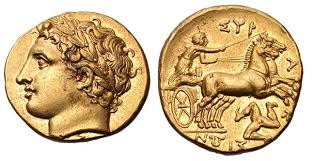
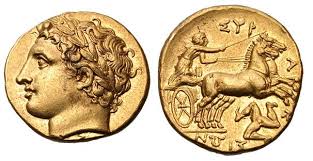
Agathocles of Syracuse

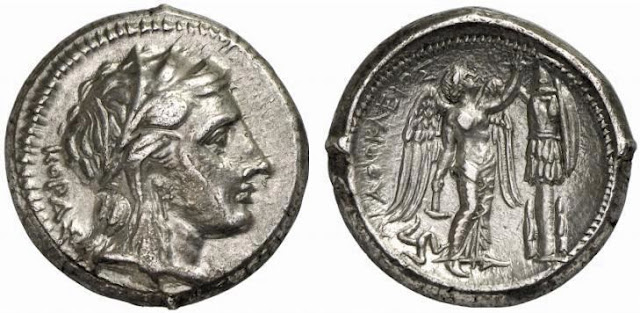
Agathocles was a Greek tyrant of Syracuse (317–289 BC) and king of Sicily (304–289 BC). The son of a potter, he entered the army along with his brother Antander. In 333 BC he married the widow of his patron Damas, a distinguished and wealthy citizen. He was twice banished for attempting to overthrow the oligarchical party in Syracuse. In 317 BC he returned with an army of mercenaries and they took the city. After banishing or murdered some 10,000 citizens, he made himself master of Syracuse. He then created a strong army and fleet and subdued the greater part of Sicily. War with Carthage followed.
His last years were plagued by ill-health and the turbulence of his ambitious grandson Archagathus, at whose instigation he is said to have been poisoned. He was a born leader and used cruelty to gain his ends, but he afterwards showed himself a mild and popular tyrant.

Agathocles restored the Syracusan democracy on his death bed and did not want his heirs to succeed him as king.
Machiavelli reasons that Agathocles' success, in contrast to other criminal tyrants, was due to his ability to commit his crimes quickly and ruthlessly, and states that cruelties are best used when they are applied at one blow and are necessary to one's security, and that are not persisted in.

Friday, August 9, 2019

The Staffordshire Hoard

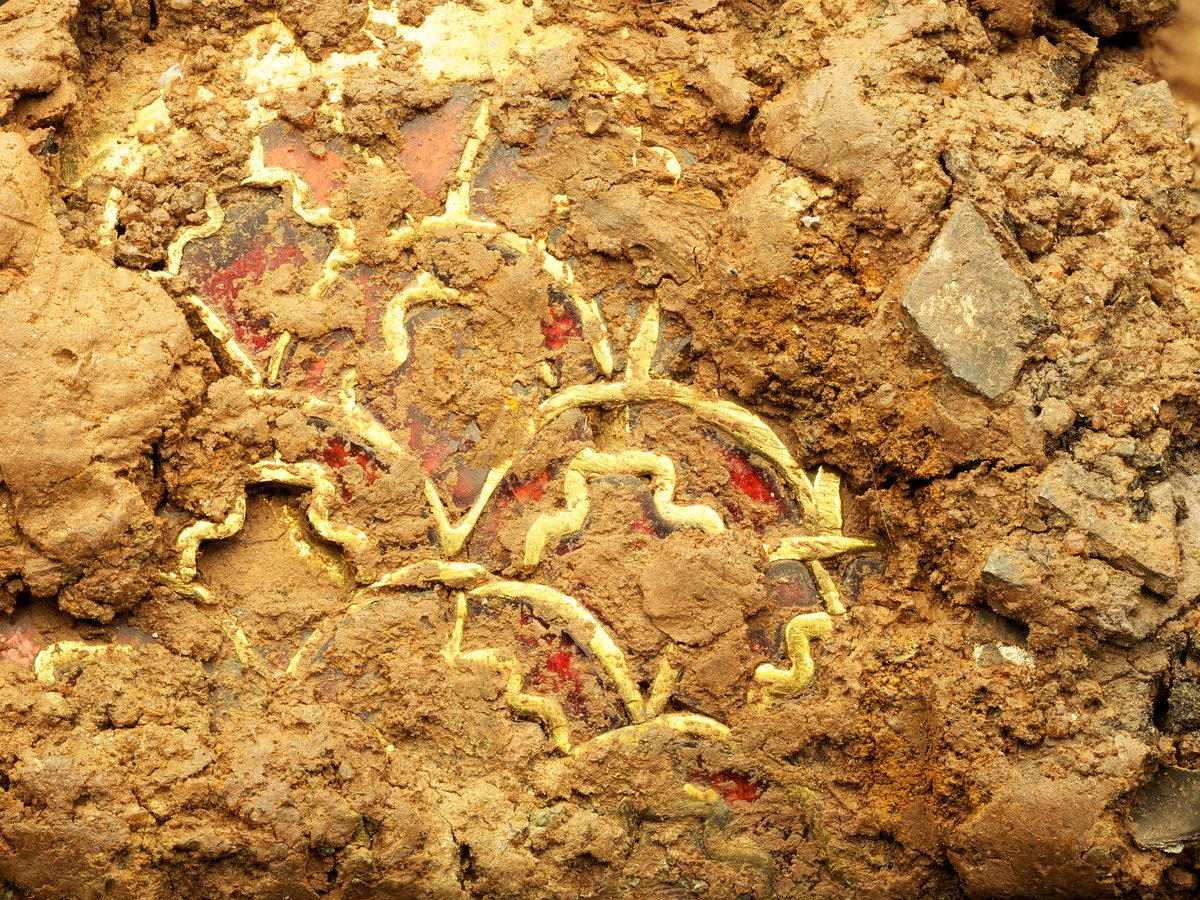
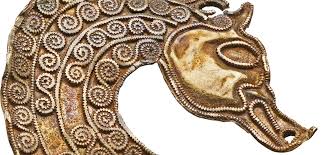
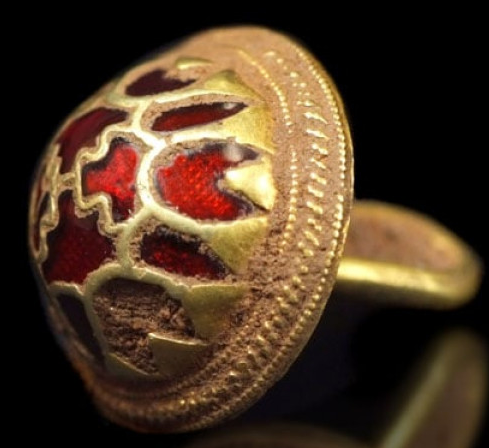
A hoard was found a decade ago in the village of Hammerwich in Staffordshire. It is the largest collection of Anglo-Saxon gold and silver metalwork ever found.
3,500 pieces were excavated. One item is a silver gilt strip bearing a Biblical inscription in Latin – the only inscribed item in the haul. It reads: ‘Surge domine et disepentur inimici tui et fugent qui oderunt te a facie tua’ – 'rise up, o Lord, and may thy enemies be scattered and those who hate thee be driven from thy face’
The hoard consists of up to 5.094 kg (11.23 lb) of gold and 1.442 kg (3.18 lb) of silver. 66 gold sword hilt collars and many gold hilt plates were found, some with inlays. It's thought the hoard were items seized in battle ca 600 AD and buried for later recovery.

The hoard was purchased jointly by the Birmingham Museum and Art Gallery and the Potteries Museum & Art Gallery for £3.285m under the Treasure Act.