Sunday, November 28, 2021

Piece of Dinosaur Tail found in Amber

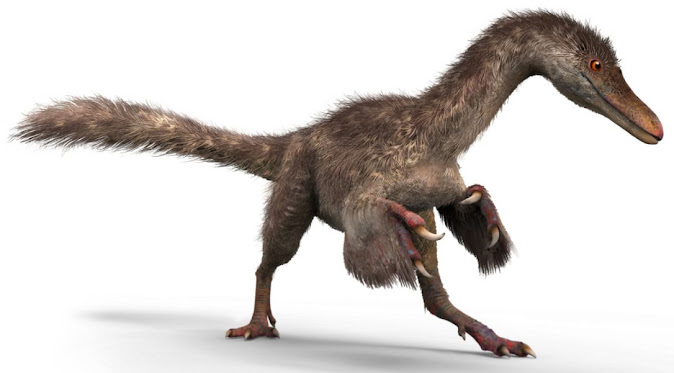
At a market in northern Burma in 2017, Lida Xing noticed a chunk of amber with a dark blotch inside. The impurity — plant matter, it seemed at first — made the amber far less valuable. But it made the specimen priceless to Xing. Trapped inside the amber was a piece of dinosaur tail, complete with feathers preserved in microscopic detail. Researchers believe the 3.7-centimetre-long section of tail — eight vertebrae wrapped in skin and soft tissue and covered with pigmented plumage — belonged to a theropod that lived in the mid-Cretaceous, about 99 myo. Amber containing feathered dinosaur-era remains reported before included the discovery of a wing from a primitive Cretaceous bird.
Most scientists now accept that many dinosaurs were feathered, and this discovery will help answer questions about exactly what those dinosaurs looked like and how feathers evolved.

Friday, November 26, 2021

Gold bar was Conquistador booty

A gold bar in Mexico revealed that it was once part of the treasure stolen by the Spanish conquistadors during the conquest of the Aztec. It belongs to an event called the ‘Night of Sorrows’ (La Noche Triste) in 1520.

The bar was probably made by goldsmiths working under the supervision of the Spanish in 1519-1520.
On the night of July 1, 1520, Cortez's army left their compound and headed west, toward the Tlacopan causeway. The Spaniards made their way out of their complex unnoticed but were seen by Aztec warriors known as the Eagle Warriors, who sounded the alarm. The fighting was ferocious.

As the Spaniards and their native allies reached the causeway, hundreds of canoes appeared in the waters. Weighed down by gold and equipment, many soldiers lost their footing, fell into the lake, and drowned. Sources vary as to the total number of casualties. At least 450 Spaniards died along with 4,000 of their allies.

Monday, November 22, 2021

Battle of Megiddo

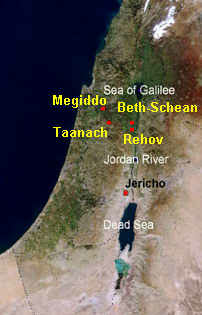
The Battle of Megiddo is the first battle that was recorded in detail and for posterity. Pharaoh Thutmose III's military scribe inscribed it in hieroglyphs at Thutmose's temple at Karnak, Thebes (now Luxor). Not only is this the first detailed battle description, but it is the first written reference to the religiously important Megiddo: Megiddo is also known as Armageddon. Megiddo was an important city because it overlooked the route from Egypt through Syria to Mesopotamia. If an enemy of Egypt controlled Megiddo, it could block the pharaoh from reaching the rest of his empire. In approximately 1479 B.C., Thutmose III, pharaoh of Egypt, led an expedition against the prince of Kadesh who was in Megiddo.
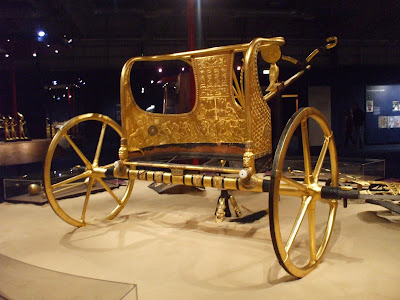
Egyptian troops entered the fortress at Megiddo to plunder. They took almost a thousand chariots, including the prince's, more than 2000 horses, thousands of other animals, millions of bushels of grain, an impressive pile of armor, and thousands of captives. The Egyptians next went north where they captured 3 Lebanese fortresses, Inunamu, Anaugas, and Hurankal.

Sunday, November 21, 2021

7-year-old Israeli Boy Finds 3,400-year-old Canaanite Figurine

In 2016 a seven-year-old boy found a beautifully preserved 3,400-year-old female figurine at the Canaanite archaeological site of Tel Rehov. The well-preserved carved form of a naked woman, featuring a narrow waist and apparently an ornate hairdo was turned it over to the Israel Antiquities Authority. Archaeologists are mixed if the figurine is an idol of a fertility goddess, such as Astarte, or depicts a living woman of the time.
The figurine is from the late Bronze period of 13 to 15 centuries BCE and from the city of Rehov, which was then ruled by the central government of the Egyptian pharaohs. Tel Rehov is the location of the largest ancient Canaanite and Israelite site in the Beth-Shean Valley and one of the largest sites in the Holy Land. Excavations at Tel Rehov revealed successive occupational layers from the Late Bronze Age and Iron Age.

Saturday, November 13, 2021

The Stronghold of Cape St. Atanas

In 2013, 7 gold coins were found near the Bulgarian town of Byala, Varna. The coins are 4.5 grams each of 98% pure gold. One of them was minted during the reign of Emperor Justinian I the Great, and the rest are from the time of Justin the First. The treasure was found buried in a sealed ceramic container at the ancient stronghold of Cape St. Atanas. It dates to the sixth century B.C. “The White Rocks” in Byala was in the immediate vicinity of a famous Roman travel station/Templum Iovis and there was a stronghold around it. The station was named after the temple of Zeus.
Around the time of the coins' burial, the area was populated with the remains of the Roman Empire. In the fourth century the 7 coins could buy 300 kg of wheat, 1 horse, 10 pigs or 3000 liters of wine. 7 gold coins was about a standard Roman soldier's annual salary. Varna, the area's main city, is famous as the site where the oldest golden treasure in the world was found.
See ----->Gold of the Varna Necropolis

Friday, November 12, 2021

Assyrian siege ramp of Sennacherib

In 701 BC, the Assyrian empire was a superpower that waged a bloody campaign against Judah. “After all that Hezekiah had so faithfully done, Sennacherib king of Assyria came and invaded Judah. He laid siege to the fortified cities, thinking to conquer them for himself,” (2 Chronicles 32:1) The Assyrians controlled land extending from modern-day Iran to Egypt. The Assyrians dominated with siege ramps. Archaeologists reconstructed how the Assyrians may have built a siege ramp to conquer the biblical city of Lachish.
Lachish was the key stronghold in the hilly Shephelah region, the breadbasket of Judah.
The researchers discovered that the ramp was made up of 3 million small boulders weighing about 14 pounds each. Sennacherib’s men worked around the clock to build the ramp, passing each stone by hand man-to-man. According to the researchers, the men finished the ramp in 25 days. Residents of Lachish watched the Assyrian army build the ramp, and they would try to defend the city by shooting arrows and throwing down stones. In the final stage of the ramp, wooden beams were placed on top of the stones and held battering rams. The battering rams then pounded the city walls.

Wednesday, November 10, 2021

The Trident


Corinthian plaque, 550–525 BC.
The trident has always been associated with Poseidon. Poseidon was gifted his trident by the elder cyclopes, the one-eyed giants of ancient Greece, to help him in the war against the titans. Poseidon, as well as being god of the sea, was also known as the 'Earth Shaker' because when he struck the earth in anger he caused earthquakes. He also used his trident to stir up tidal waves, tsunamis and sea storms.

In Hindu mythology, it is the weapon of Shiva, known as trishula.

Sunday, November 7, 2021

Tutankhamun's gold

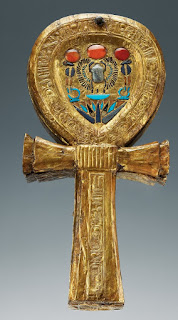
The Grand Egyptian Museum is exhibiting Tutankhamun’s gold. The exhibition is a celebration of the anniversary of the discovery of Tutankhamun’s tomb in 1922.

More than 5,000 pieces of Tutankhamun’s artifacts are spread across 7,500 square meters.
See ----->http://psjfactoids.blogspot.ca/2016/11/gold-of-tutankhamun.html
See ----->http://psjfactoids.blogspot.ca/2016/06/tutankhamuns-dagger-made-from-meteorite.html

Friday, November 5, 2021

Ashurnasirpal II Relief - $ 31m

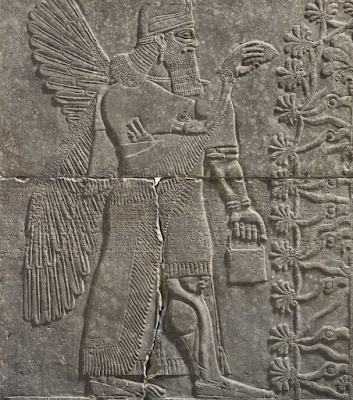
Retrieved from Nimrud in modern-day Iraq in the mid-19th century. Standing more than seven feet high, this proud figure was once part of an elaborate decorative scheme that covered the walls of the Northwest Palace at Nimrud, which was constructed some 3,000 years ago. An Assyrian gypsum relief of a Winged Genius. Reign of Ashurnasirpal II, circa 883-859 BC.The Assyrian relief sold for $30,968,750 in 2018.

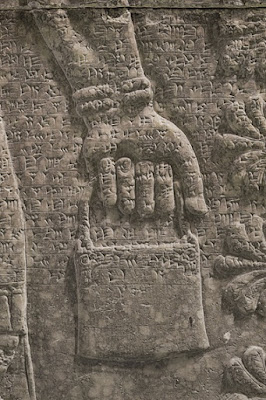
The stone’s surface is covered in ‘Standard Inscription’, a cuneiform incantation that recalls Ashurnasirpal: ‘Fierce monarch, merciless hero, the word of whose mouth destroys mountains and seas…’

Thursday, November 4, 2021

Norfolk treasure declared England’s biggest Anglo-Saxon coin hoard

131 gold coins unearthed by metal detectorists from a field in west Norfolk over 30 years have been declared the largest hoard of such items from the Anglo-Saxon period found in England. The coins, as well as four other gold objects dating to 1,400 years ago, were sporadically discovered between 1991 and 2020. Most of the objects were found by an anonymous detectorist who reported his finds to the authorities. 10 of the coins were found by David Cockle, a cop who was jailed for 16 months in 2017 for illegally trying to sell them. The coins are mostly Frankish tremisses and include nine gold solidi, a larger coin from the Byzantine empire worth three tremisses.
The discovery of the other objects, including a gold bracteate (a type of stamped pendant) and a small gold bar, suggests the coins should be seen as bullion, valued by weight rather than face value. The curator of early medieval coins at the British Museum called it a “hugely important find".
See ----->UK Cop who stole ancient gold coins jailed