Tuesday, December 30, 2025

Spectacular Chinese gold found

An extremely rare golden seal dating to the 1600s was found in 2020.
It belonged to a Chinese emperor-to-be and was unveiled by archaeologists studying the remnants of a Ming dynasty battlefield. The seal weighs over 17 pounds and is 95% pure gold. The object is likely unique.
It bears the words 'Shu Shi Zi Bao', meaning 'Treasure of the Shu Prince'. It's believed that the seal was deliberately broken when the monarchy was overthrown during a peasant uprising. Over 2000 valuable artifacts are thought to have been the booty of Zhang Xianzhong.
Zhang led the peasant revolt which conquered modern-day Sichuan and its largest city of Chengdu in 1644 during the fall of the Ming dynasty. Zhang, the 'Yellow Tiger', was slain by the Manchus the following year.

Monday, December 29, 2025

Coin hoard from 1066 - Chew Valley Hoard

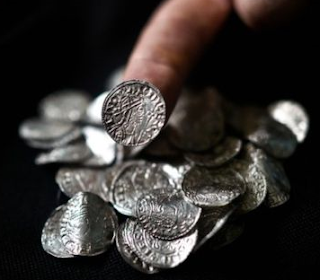
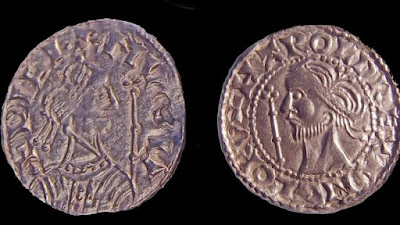
The Chew Valley hoard contains 1,236 coins of Harold II, the last crowned Anglo-Saxon king of England, and 1,310 coins of William I. The hoard is "hugely significant" as it doubles the number of Harold coins than all previous known finds combined.
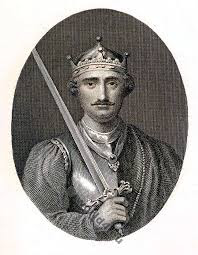
It includes fine examples of coins issued by William I after his coronation on Christmas Day in 1066.
Adam Staples and Lisa Grace made a once in a lifetime discovery while out metal detecting together. They discovered 2,571 silver coins that date back to the time of King Harold II, aka Harold Godwinson. He was the last crowned Anglo-Saxon king of England who died in the Battle of Hastings by an arrow through the eye in 1066. The couple found the coins while searching an unploughed field in north east Somerset near Bath in 2019.
Harold Godwinson was king for seven months and coins from his reign are rare. Experts believe the coins were buried within two or three years after 1066 and probably before 1072. The Battle of Hastings was fought on 14 October 1066 between the Norman-French army of William, the Duke of Normandy, and an English army under King Harold Godwinson. It marked the beginning of the Norman conquest of England.
The battle of Hastings was a decisive Norman victory.
The hoard was bought for £4.3m - making it the highest-value treasure ever found in the UK.

Saturday, December 27, 2025

Ancient Sites without the tourists

Ruins are often the centerpieces of a trip overseas. Unfortunately everybody thinks the same: Stonehenge, Chichen Itza, the Great Pyramids, Pompeii. Take a less beaten path and the ruins can be both spectacular and without crowds.

The Valley of the Temples in Agrigento is an archaeological site in Agrigento (ancient Greek Akragas), Sicily. It is one of the most outstanding examples of ancient art and architecture in the world.
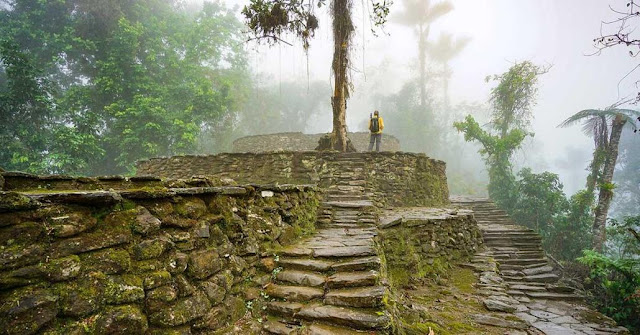
La Ciudad Perdida. Magdalena, Colombia.

Reached only after a grueling five-day trek through the Colombian jungle, it’s almost 1,000 years older than Machu Piccu. It was abandoned after the Spanish conquest and only rediscovered in the 1970s.
Acrocorinth. Corinth, Greece.

Acrocorinth, or Upper Corinth has sheep roaming among the ruins, not tourists. Acrocorinth was continuously occupied from archaic times to the early 19th century.
Ruins of Jerash. Jerash, Jordan.

The most intact Roman city outside of Italy, Jerash was a crossroads of many cultures. The city flourished until the mid-eighth century CE, when the 749 Galilee earthquake destroyed most of it. The ancient city has been gradually revealed through a series of excavations.

Friday, December 26, 2025

Thonis-Heracleion

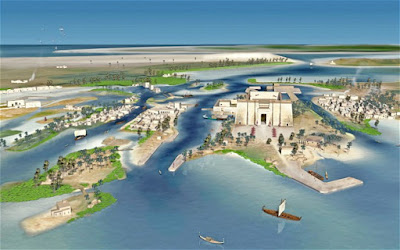
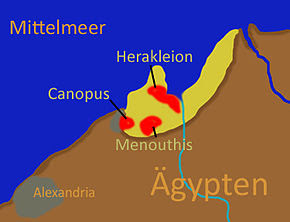
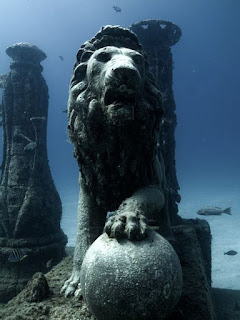
Known by it's Egyptian name Thonis and Greek name Heracleion; it served as Egypt's main gateway before Alexandria. It housed major temples (Amun, Neith) and famous mythical figures like Herakles and Helen. The ruins of the ancient Egyptian city near Alexandria are located in Abu Qir Bay, 2.5 km off the coast, under 10m (30 ft) of water.
Its beginnings go back as early as the 12th century BC. Its importance grew during the waning days of the Pharaohs — the late period, when it was Egypt's main port for international trade and collection of taxes. Heracleion was originally built on adjoining islands in the Nile Delta, and was intersected by canals.
In ancient times, the port city of Thonis-Heracleion was the main port of entry to Egypt for all ships coming from the Greek world. Heracleion flourished from the 6th to the 4th century BC.
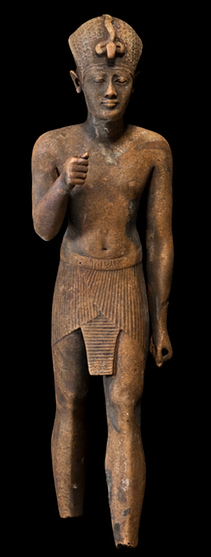
Pharaoh Nectanebo I made many additions to the temple there in the 4th century B.C. Much of the city sank in the 3rd or 2nd century AD, probably due to liquefaction of the silts on which it was built following earth tremors. Eventually it sunk entirely into the depths of the Mediterranean around the 8th century AD. The ruins submerged in the sea were located by the French underwater archaeologist Franck Goddio in 2000.
The site spans 40 sq miles (110 sq km) with probably only 2% of the site excavated. More than 200 objects are showcased at an exhibition at Institut du Monde Arabe (The Arab World Institute) in Paris.


Wednesday, December 24, 2025

2,300-year-old Celtic gold coins found in Swiss bog

Two rare Celtic gold coins were discovered in a Swiss bog. One coin is a stater that weighs 7.8 grams, and the other is a 1/4 stater with a weight of 1.86 gram. As mercenaries, the Celts of mainland Europe were given Greek coins as payment at the end of the fourth century B.C. These coins later served as inspiration for Celtic coinage at the beginning of the third century B.C.

The staters were minted during the reign of Philip II of Macedon, the father of Alexander the Great. Both coins showcase the profile of the Greek god Apollo on the obverse and a two-horse chariot on the reverse.
The coins were modified slightly from their Greek originals. On the smaller one's reverse, a triple spiral can be seen beneath the horses. This symbol, known as a triskele, appears frequently in Celtic art. Experts say that Celtic gold coins were not used for everyday transactions. They were too valuable. The Bärenfels bog in Switzerland has many water-filled sinkholes. The Celts often chose water-filled places like this for votive offerings.

High status female skeleton found at La Almoloya

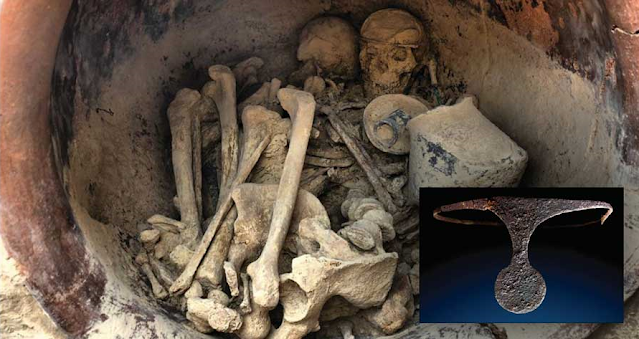
A silver diadem still adorned the skull of a woman when her 3,700-year-old grave was discovered at La Almoloya, Spain in 2021. The trove of ornate jewelry confirms the Princess of La Almoloya was elite status.
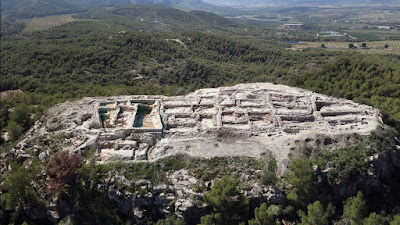
The woman was buried alongside a man in a large pot, beneath the floor of what may be western Europe’s earliest palace.
La Almoloya is an archaeological site about 35 miles northwest of Cartagena in southeastern Spain. Radiocarbon dating suggests the burial occured about 1700 B.C.
The rare silver diadem was still worn on her head. Scholars say that the immense silver riches were a symbol of power in El Argar society.
El Argar, an early Bronze Age culture that was based within modern Spain, is one of the great enigmas of world archaeology. After emerging in 2200 BC, it disappeared 650 years later for uncertain reasons.

Monday, December 22, 2025

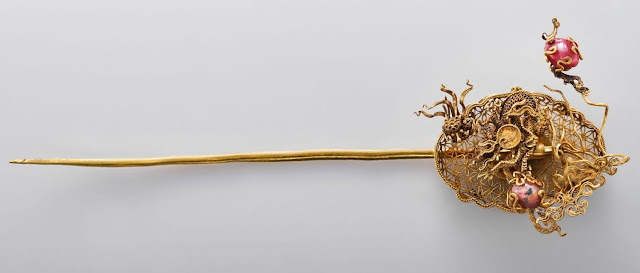
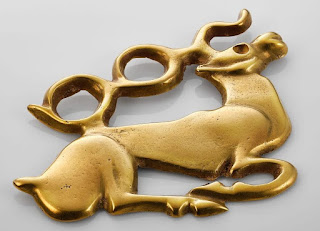
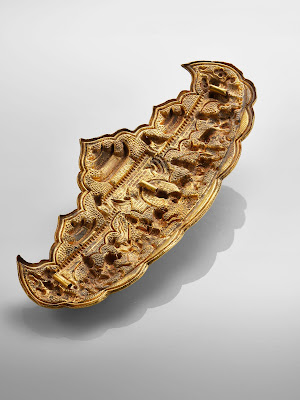
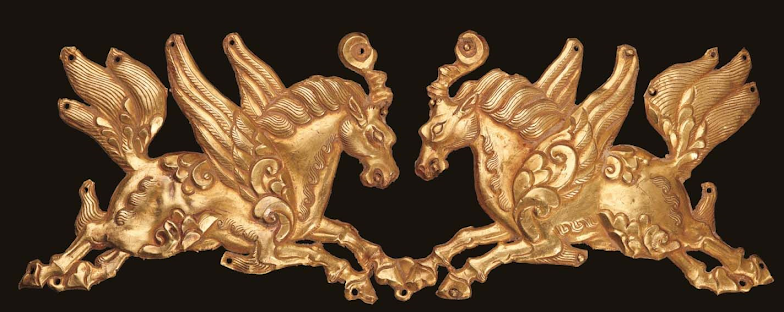
The Art of Gold, 3000 Years of Chinese Treasures

An exhibition at L’École featured masterpieces from the Mengdiexuan collection.
It shined a light on 3,000 years of Chinese gold craftsmanship.

Headdress with dragons chasing a pearl. Ming dynasty (1368-1644) Gold with ruby inlay.