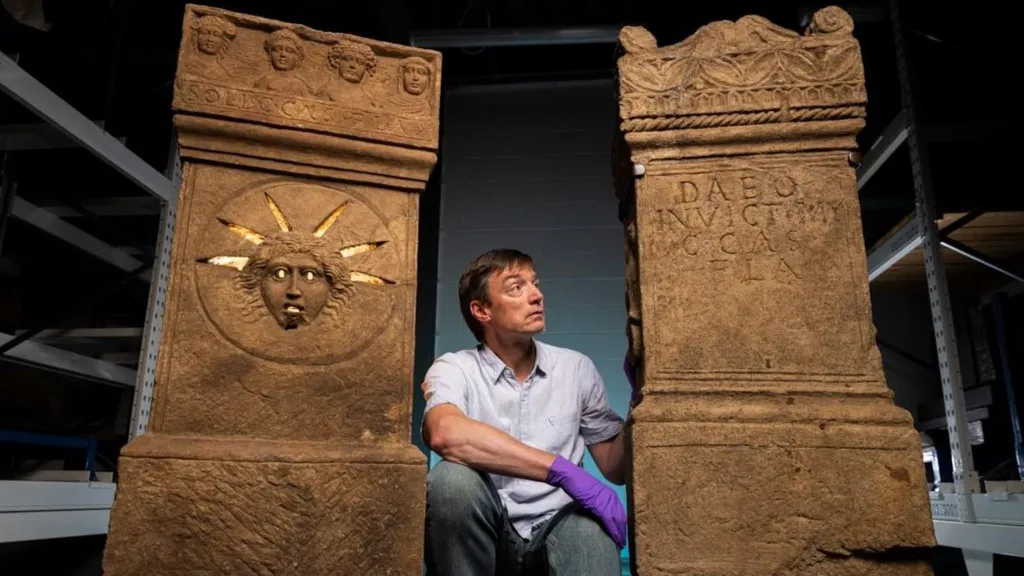
 | Two ancient Roman stone altars found near Edinburgh go on public display for the first time as part of a new exhibition at the National Museums of Scotland. The altars were used by soldiers worshipping the god Mithras almost 2,000 years ago in a temple at the northern frontier of the Roman empire.
The discovery of the altars was made at Inveresk in East Lothian and dates to about 140 AD - when southern Scotland was reoccupied under Emperor Antoninus Pius. |
 | The altars, which were excavated in 2010, are the only examples of their kind ever found in Scotland. Experts say the altars were once the centrepiece of the most northerly temple to the god Mithras in the Roman empire. Mithras was the focus of a secretive, male-only cult followed mainly by Roman soldiers. One altar shows the face of Sol, the sun god. It was designed so that light shone from behind, making the god's face and crown appear to glow in the darkness.
It also includes carvings of the four seasons, shown as female figures, reflecting the passage of time. | 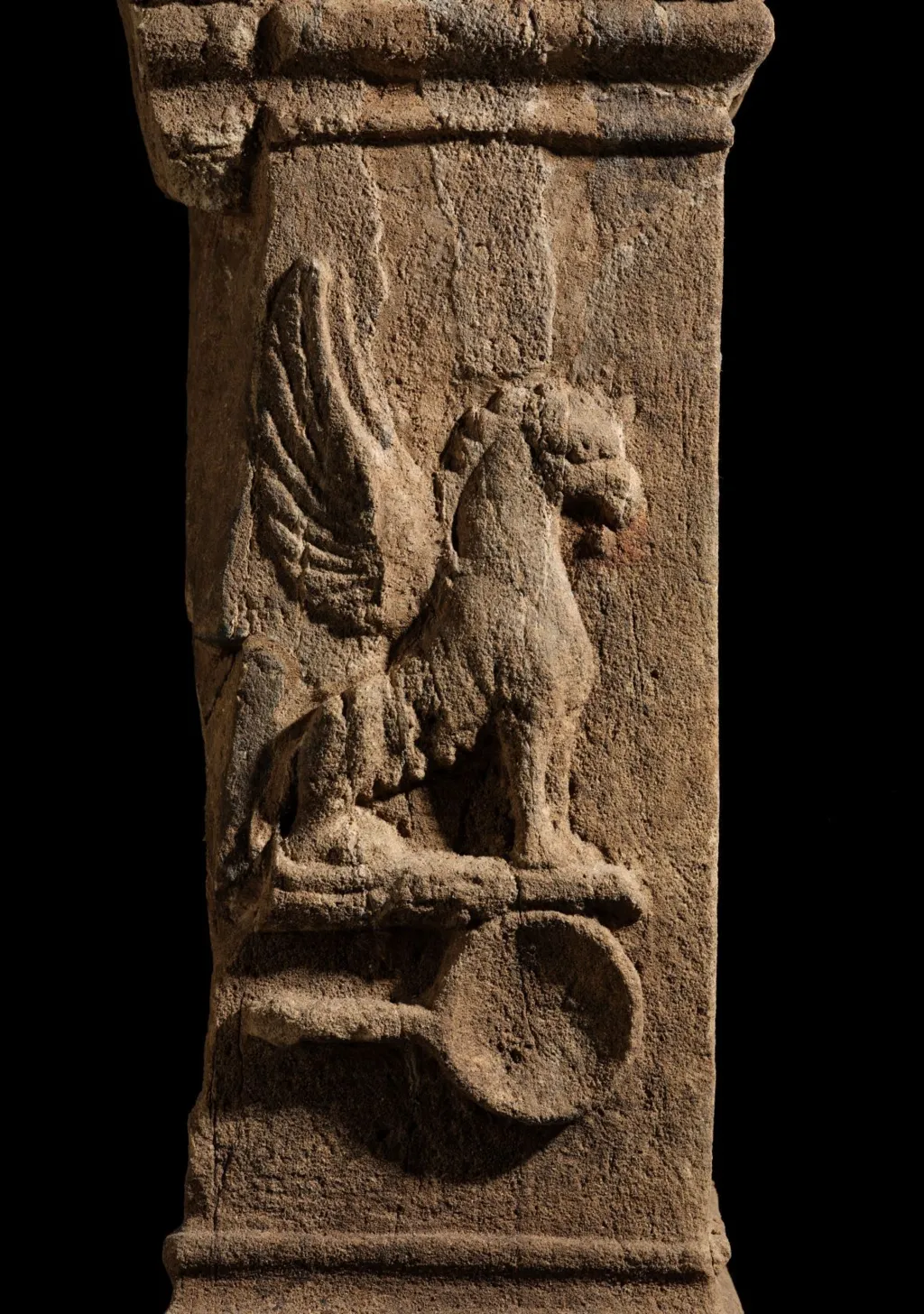 |
 | Both altars were dedicated by a Roman centurion, probably named Gaius Cassius Flavianus, who was likely in charge of the fort at Inveresk. Around 140–142 AD, Emperor Antoninus Pius ordered the reoccupation of southern Scotland, reversing Hadrian's policy to push the Roman frontier north. Led by governor Quintus Lollius Urbicus, Roman legions built the turf-based Antonine Wall between the Firth of Forth and the Firth of Clyde. |
Construction of the 37-mile (60 km) turf-and-timber fortification began around 142 AD, featured 16–20 forts and a wide ditch. The wall served as a new, shorter frontier though it was only occupied for about two decades before being abandoned.


No comments:
Post a Comment