The Roman army spanned 1,200 years from 753 BCE to 476 CE, evolving from clan war-bands into a professional global power. In the Late Republic (Julius Caesar) the army numbered 30 to 40 legions. (roughly 150,000 to 200,000 men plus allies) Between 400,000 to 500,000 soldiers served at its peak during the mid-2nd century AD under emperors like Trajan and Hadrian.
 | Joining the ancient Roman army during the Empire period required passing a strict physical exam, proving citizenship, and committing to 25 years of service. Legionaries had to be Roman citizens, though non-citizens could join the auxiliaries to earn citizenship. Recruits were ideally young men between 16 and 23 years old, though the legal limit stretched up to age 35. There were 4 stages.
The inspection (probatio): The process began with a rigorous preliminary assessment by a magistrate or military official. The recruit had to prove they were a free-born Roman citizen. Slaves, convicts, and those in dishonorable professions (gladiators, actors, etc.) were excluded. Recruits often presented a commendatio (a reference letter) from an influential patron. |
If the recruit passed the interview, they faced a strict medical and physical evaluation based on standard military criteria. (Inquisitio) Once deemed physically fit, the recruit was given a temporary status and marked for service. The recruit was given a lead identification disc worn around the neck, or sometimes branded/tattooed on the hand, to identify them as a soldier and deter desertion.
The oath (sacramentum): recruits swore an absolute oath of loyalty to the Emperor and then received a signing bonus. Basic training included about four months of grueling boot camp, long marches, and weapon drills.
In the late Republic reforms standardized service to 16 years of active duty. In the Roman Empire Augustus initially set the term at 16 active years plus 4 in reserve, which later expanded to 20 years of active duty and 5 years of reserve duty. The first 20 years involved rigorous soldiering, border patrols, or frontline combat. The final 5 years typically involved reserve status or lighter operational tasks. (sub vexillo)
Retirement (honesta missio) came after completing a full term, after which veterans received an honorable discharge with a valuable retirement bonus of land or cash. Roman legionaries faced strict military discipline, with offenses ranging from minor daily infractions to breaches of duty and treason. Desertion (desertio / emansio) was punished by the fustuarium (a fatal beating or stoning by comrades) or execution. Sleeping on guard duty or theft was also subject to the fustuarium or severe beatings. |  |
Disobedience, sloppiness, or minor offenses were handled by centurions using their vitis (a vinewood staff) to strike the soldier on the spot. (castigatio) Demotion, loss of privileges and a stay in a jail cell were the most common forms of punishment for even small indiscretions.
See ----
Roman Vitis



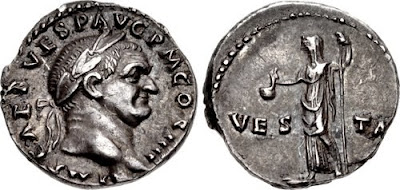
 Post-reform denarius of Nero, about 93% silver.




 Agrippina I (mother of Caligula) Æ Sestertius. Rome, 37-41 CE. AGRIPPINA M F MAT C CAESARIS AVGVSTI, draped bust right / S P Q R MEMORIAE AGRIPPINAE, carpentum to left, drawn by two mules. $6,400.

 The vitis was a mark of earned leadership. Centurions were promoted from the ranks, and the vitis represented their transition from soldier to officer. Under the Porcian Laws, it was the only legal means of corporal punishment for Roman citizens, reinforcing its legitimacy.






.jpg)