Tuesday, June 30, 2020

The land of gold, Halayeb and Shalateen

The area is inhabited by the Beja tribe, the largest in eastern Sudan.Egypt announced the discovery of gold in the Eastern Desert, with reserves at more than 1m ounces. The Shalateen Triangle is rich in oil and other metals, most notably gold.
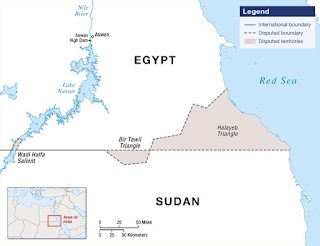
The conflict around the Shalateen Triangle began in the days of British colonialism which failed to identify who the inhabitants of the Triangle followed. It was annexed to Egypt, but was returned to Sudan in 1902 since it is closest to Sudanese land.

The Queen of Sheba is a figure first mentioned in the Hebrew Bible. She brings a caravan of valuable gifts for the Israelite King Solomon ... "with a very great retinue, with camels bearing spices, and very much gold, and precious stones" The tale has undergone elaboration in many cultures. Historians identify Sheba with the South Arabian kingdom of Saba in present-day Yemen. Yemen was one of the colonies of ancient Ethiopia, before the fall of the Axum Empire. The queen's existence is not disputed and her 'lost mines' are legend.
See ----->Gold Mining in Sudan - terra incognita

Monday, June 22, 2020

Father Crespi and his Artifacts


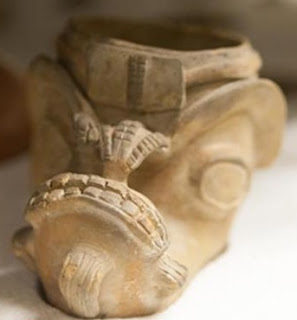
Crespi won the hearts of the people and they began to bring him artifacts as offers of thanks. The items came from all corners of the country, and were the works of almost all the indigenous cultures of Ecuador.
Father Carlos Crespi Croci was a Salesian monk who was born in Italy in 1891. He studied anthropology at the University of Milan before becoming a priest. In 1923, he was assigned to the small Andean city of Cuenca in Ecuador to work among the indigenous people. It was here that he devoted 59 years of his life to charitable work until his death in 1982.

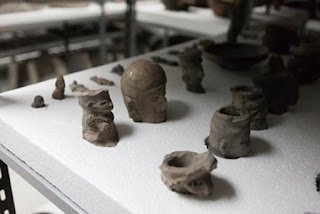
Over time, Father Crespi acquired more than 50,000 objects.
Thousands of Crespi’s artifacts are unremarkable but there was a small subset of items that sparked intense controversy.

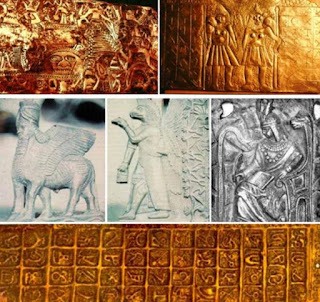
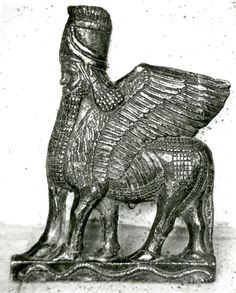
Some of the artifacts are Babylonian in style, others appear to have been carved in gold with strange motifs and symbols that do not resemble objects from any South American culture. Some of the gold plates appear to show a type of ancient writing.
In 1973, Swiss ‘ancient astronaut author’ Eric von Däniken launched his book ‘ Gold of the Gods ’, claiming the artifacts had been created by a lost civilization with help from extraterrestrial beings. Father Crespi and the story of his artifacts shot to fame.

According to Däniken, the so-called Metallic Library consisted of thousands of books made with metallic pages. A recent investigation has proven them to be crude fakes.
Investigators found Father Crespi’s collection was purchased by the Central Bank of Ecuador and is currently stored in their museum vaults, with the majority being authentic and valuable artifacts. Nowhere to be found however were the artifacts that were photographed and filmed in the 1970s consisting of gold carvings, hieroglyphs, and the Sumerian figures.

No one at the Universidad Politécnica Salesiana, Church of Maria Auxiliadora or the Central Bank Museum were able to say what became of them.

Sunday, June 21, 2020

The Sree Padmanabhaswamy Temple

The world's richest temple has a cash flow problem. In the wake of depleting revenue amid lockdown restrictions, the Sree Padmanabhaswamy temple has slipped into a deep financial hole. Management plans to approach the trust controlled by the Travancore royal family for aid. The famous shrine’s revenue has plummeted since the Covid-19 lockdown began on March 25.
The Sree Padmanabhaswamy temple is a Hindu temple dedicated to Lord Vishnu located in Thiruvananthapuram, India.

The temple and its assets belong to Lord Padmanabhaswamy, and are controlled by a trust run by the Royal family. In June 2011, the Supreme Court directed authorities to open the secret chambers of the temple for inspection of the items kept inside. Some had not been opened in centuries.
The review of the temple's underground vaults led to the enumeration of a vast inventory of the temple's assets, which consist of gold, jewels, and other valuables. 18th century Napoleonic era coins were found, as well as a three-and-a-half foot tall solid gold idol of Mahavishnu studded with rubies and emeralds. Ceremonial attire adorning the idol was in the form of a gold anki weighing 30 kg.(66 lb).
It is estimated that the value of the items is close to 1.2 lakh crore (US$22 billion) This makes the temple the wealthiest in the world. The treasures accumulated for centuries, put there by generations of the Maharajahs of Travancore.

Vault B door with Cobra guardians
It was announced that a new hidden treasure vault had been discovered beyond the already documented Vault B. Adding to recent treasure findings in other vaults, researchers are estimating the total treasure could total over $1.5 trillion.

The temple has been shrouded in mystery and superstition. Two enormous Cobras are rumored to be protecting the innermost hidden chamber.
Legend holds that anyone who opens the vault will be met with certain doom.
Saturday, June 20, 2020

Ancient Greek plague

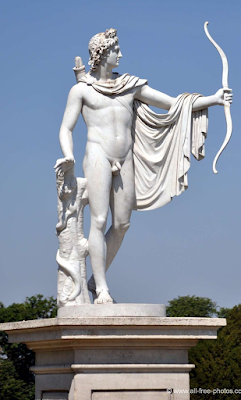
Homer’s Iliad has the earliest account of plague in Greek literature and dates back to the eighth century BCE. Agamemnon captured the daughter of the Trojan priest of Apollon, Chryses. When Chryses attempted to ransom her, Agamemnon refused to return her. Chryses prayed to Apollon, “god of the silver bow.” Apollo was addressed with his epithet Apollon Smintheus, or “Apollo the mouse god.” The Greeks had noticed the correlation between rodent infestation and plague, and so prayed to this aspect of Apollon. Apollon heard the cry of his priest and sent a plague through the Greek armies, shooting his arrows at the Greek soldiers for nine days, leading to bodies burning on pyres.

In mythology, the arrows of Apollon (as well as those of his twin sister Artemis) were associated with the rapid onset of disease.
The Greeks appeased Apollon with sacrifices of bulls and goats, hymns, and the return of the priest’s daughter. They purified themselves and 'cast their filth into the sea'.

Modern research indicates that rats were not the main reason for spread of plague. The best models suggest it was human borne ticks and fleas.

Thursday, June 11, 2020

Search on for Cleopatra's tomb

Taposiris Magna has been in the spotlight recently as the site of the tomb of Cleopatra and Mark Antony. The remains of a temple of Osiris is believed to be the last resting place of Cleopatra.Cleopatra VII was born in 70 or 69 B.C. and ruled Egypt as co-regent for almost three decades. After the forces of Cleopatra and Mark Anthony were defeated by Octavian, she committed suicide in 30 B.C.
The ancient settlement was occupied from the second century BC to the seventh century AD.

In 2010 archaeologists discovered a huge headless granite statue of a Ptolemaic king, and the original gate to a temple dedicated to the god Osiris. It could represent Ptolemy IV.

Tuesday, June 9, 2020

Falerii Novi revealed through radar

Falerii Novi was a walled city spanning 30.5 hectares about 50km north of Rome. It was founded in 241 BC and was inhabited until around 700 AD. This is the first time a complete ancient city was mapped using ground-penetrating radar.

With a population of 3000 people, it boasted an elaborate public bath complex and market building, and at least 60 large houses.
One notable discovery was the location of the city’s water system. GPR showed it was laid out underneath the buildings before they were built, suggesting the city's construction was highly planned.

Friday, June 5, 2020

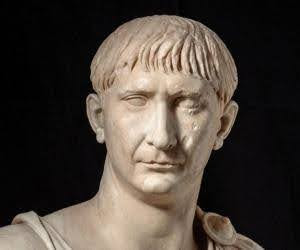
Statue of Trajan unveiled

The statue of Roman Emperor Marcus Ulpius Nerva Traianus (Trajan) was found last year. The excavation work in ancient Laodicea, Turkey, found the statue, which dates to 113 A.D. It was in 356 pieces. Trajan is best known for his extensive public building program, which reshaped the city of Rome and left numerous landmarks such as Trajan’s Forum, Trajan’s Market and Trajan’s Column. His conquest of Dacia enriched the empire greatly.

His campaigns expanded the Roman Empire to its greatest territorial extent. In late 117, while sailing back to Rome, Trajan fell ill and died of a stroke. He was deified by the Senate and his ashes were laid to rest under his column. He was succeeded by his cousin Hadrian.

Thursday, June 4, 2020

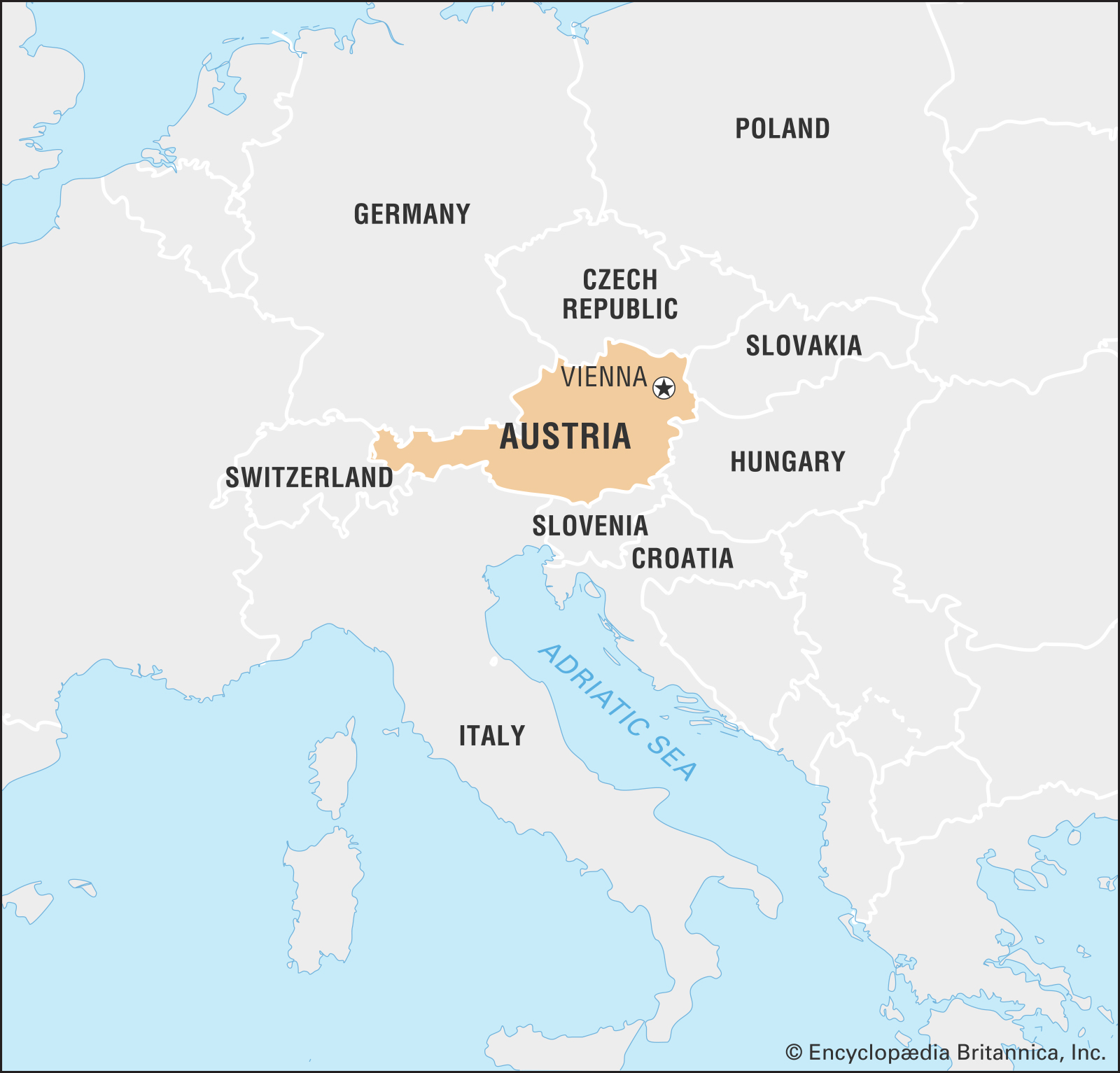
Roman gold necklace found in Austria


The discovered necklace weighs 32 grams and has a pear-shaped fastener at one end and a button at the other. It was made of a thin flattened gold ribbon and decorated with an irregular stamped ornament. Purity is 90%, with a slight admixture of silver and copper. The discovery was highly unusual.
Archaeologists did not find any other archaeological evidence of Roman presence at the site to better explain the origin of the necklace or it's location.

Such necklaces appear most often in richly-adorned tombs of the Late Roman period, but could also be from the latter end of the 3rd-4th centuries AD. This type of jewellery has never been found in Moravia before.

Wednesday, June 3, 2020

Gold of the Boer War

The armed conflict between Britain and the two Boer republics of Transvaal and Orange Free State in South Africa, the second Boer War, began on 11 October 1899 and ended on 31 May 1902.

The Boer War (Gold War) was the first war of the bloody 20th century. It pitted the might of the British Empire against a small group of Dutch farmers. Boer is the Dutch word for farmer.
The British mobilized an army of more than 500,000 men from all corners of the empire to fight the Dutch farmers.

This vast army used state of the art military technology. One such weapon was the newly invented Maxim machine gun.
Despite overwhelming numbers and the latest killing technology, the Boers fought heroically against the British invaders. The Boers were never able to field more that 60,000 men but they fought tenaciously and displayed amazing courage and resourcefulness to defend their homeland.

The Battle of Spion Kop was fought on the hilltop of Spioenkop along the Tugela River in South Africa from 23–24 January 1900.

Six companies of the 2nd Battalion The King's Own Royal Lancaster Regiment marching in column, and at ease, towards Spion Kop.
20,000 British troops faced 8,000 Boers. It was a British defeat. The British suffered 243 fatalities; many were buried in the trenches where they fell. About 1,250 British were either wounded or captured. Mohandas Gandhi was a stretcher-bearer at the battle, in the Indian Ambulance Corps.

Boers at Spion Kop, 1900.

The British trench in "the murderous acre" on Spion Kop
In the closing stages of the Anglo-Boer War, Paul Kruger, president of the South African Republic of Transvaal and the face of the resistance against the British, was said to have absconded with all of the riches of his nation when he fled from encroaching British troops in 1900.

In the 1880s Kruger had issued orders that if the British threatened the capital city of Pretoria the entire reserves of the national bank - gold bullion and coins - should be put on wagons and hidden in the African plains. Following his evacuation, Kruger lived out the last four years of his life in exile before dying in Switzerland. Most Boer leadership were killed and the location of the Krugerrand fortune has never been revealed.
The 1902 gold Veldpond also known as the "Pilgrim's Rest Coin" is a coin struck by the Boers on the run from the overwhelming British forces on a makeshift mint set up in the veld (long grass) in the remote region of Pilgrims Rest in the north eastern Transvaal. For many numismatists the Veld Pond is the holy grail of South African coins.

Soft hand-cut dies and an improvised flypress were used to strike about 530 coins in gold. Only a single set of hand carved dies were used - thus the simple design and the poor quality of the coin. The dies were kept under lock and key so the official mintage figures are deemed to be accurate. Genuine Veld Ponds today sell for well over US $20,000