Friday, January 24, 2020

Submerged ancient Egyptian treasures

More than 200 objects were showcased in 2016 at an exhibition of Egyptian artifacts discovered in a sunken ancient city. Dating back some 2,300 years they were found over a decade ago near what is now the city of Alexandria.

In ancient times, the port city of Thonis-Heracleion was the main port of entry to Egypt for all ships coming from the Greek world.
The city was founded around the 8th century BC, underwent natural catastrophes, and eventually sunk entirely into the depths of the Mediterranean in the 8th century CE.

Thursday, January 23, 2020

Ancient Bat Guano reveals secrets

Ancient bat guano like sediment cores, ice samples and tree rings, can be used to study the climate of the past. Artibeus jamaicensis is one of the species that contributed to the guano researchers used to study the climates of the past.

Deep in the forests of northwestern Jamaica, a secluded cave has sheltered an unabridged account of the environment since the early Bronze Age. The cave’s inhabitants live in near-total darkness, swarming out to feed at night through a mist of their own urine and retreating back inside to roost. The colony of bats then add to the archived climate record much as their ancestors did before them: by swooping down from the walls and defecating on the cave floor. With its high levels of nitrogen, guano from bats and birds has been harvested as a natural fertilizer.
Wars have even been fought over the treasure: In 1864 a naval conflict broke out between Spain and Peru over the Chincha Islands, covered in guano deposits said to be over thirty meters, or 100 feet, tall. Radiocarbon dating put the base of the core at around 4,300 years old, long before the first humans arrived. The lead levels in the guano core experienced a sharp uptick after 1760, the fingerprint of coal combustion that propelled the Industrial Revolution.

Tuesday, January 21, 2020

Yarrabubba crater 2.229 billion years old

It's possible that the impact led to a great thaw as Earth exited a global frozen state.
More than two billion years ago, an asteroid slammed into Earth and created a 43-mile wide crater in Western Australia's outback. Researchers believe it is the oldest known impact crater, predating others by 200 million years. The new age of the Yarrabubba crater, created by dating the minerals, is 2.229 billion years old.
An impact into an ice-covered continent could have sent half a trillion tons of water vapor, an important greenhouse gas, into the atmosphere. Water vapor is an effective, and the most abundant, greenhouse gas that can absorb radiation and send it back to Earth's surface.

The asteroid strike that led to the extinction of the dinosaurs 66 million years ago led to global ocean cooling and widespread acid rain.

Monday, January 20, 2020

Basilosaurus cetoides

An ancient whale twice the length of today's orcas once chowed down on other whales in the Eocene epoch's seas 40 to 35 mya. Measuring 15–18 m (49–59 ft), Basilosaurus cetoides is one of the largest-known animals to exist from the KT extinction event 66 mya to around 15 mya when modern cetaceans began to reach huge sizes.
Basilosaurus was top marine predator of it's time. A 2010 discovery of a Basilosaurus fossil in Egypt's Wadi Al-Hitan (Valley of Whales) is the first-ever with its last meal inside it. The valley, about 87 miles (140 km) southwest of Cairo, is a hot spot for whale fossils, with hundreds found there.
Among the jumble of bones found mixed with the whale's skeleton were teeth, skull fragments, vertebrae and ribs of D. atrox, an ancient species of whale that grew to about 16 feet (5 m) long. A modern equivalent to Basilosaurus would be orcas, which are about half the size.

Saturday, January 18, 2020

Mummies of Museo Leymebamba

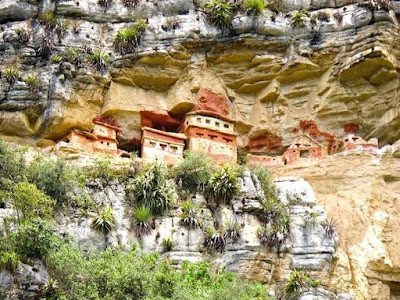
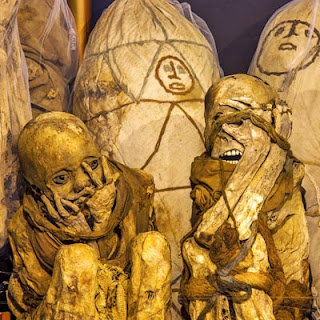
The Leymebamba Museum in Peru was inaugurated in 2000, specifically to house 200 mummies and their burial offerings. The mummies were recovered during a 1997 excavation on the banks of Laguna de los Cóndores, a lake about 50 miles south of Chachapoyas. The mummies are from the Chachapoyas culture from about 800 AD.

Nestled into the limestone cliffs around the lake were a series of chullpas, or tombs. The stone burial structures had been untouched for 500 years, until local farmers started to rummage through the funerary site.
The Chachapoya were skilled embalmers. They treated the skin and vacated bodily cavities. Then they left much of the remaining mummification process to the cold, dry, sheltered lakeside ledges.
It’s an unnerving sight for some. A few of the mummies stare back with pained expressions, an occasional face so well-preserved that it looks like it would blink. A few bundled babies also sit on the shelves, their tiny bodies carefully wrapped in cloth.

Now in the controlled climate of the museum the mummies found a new resting place. Here they sit huddled together like a lost tribe, eternally silent.
They are exhibited in semi-darkness, at the same temperature and moisture as the mausoleum where they were deposited.
Wednesday, January 15, 2020

Wulong bohaiensis - the dancing dragon

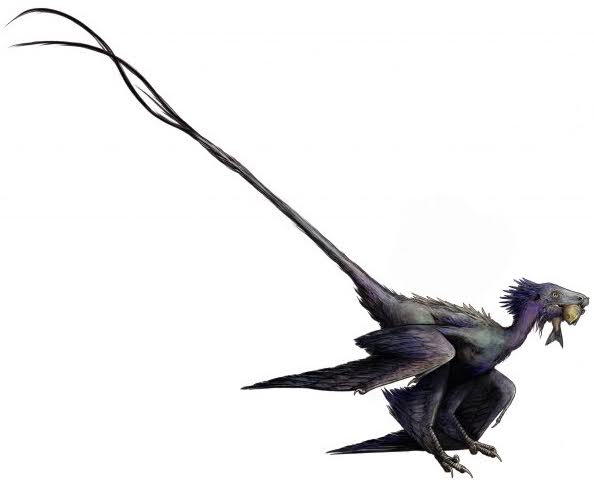
A new species of feathered dinosaur has been discovered in China. Scientists named the dinosaur Wulong bohaiensis. Wulong is Chinese for "the dancing dragon." The unique specimen is 120 million years old. The fossil preserves feathers and bones that provide new information about how dinosaurs grew and how they differed from birds.

Its bones were thin and small, and the animal was covered with feathers, including a wing-like array on both its arms and legs and two long plumes at the end of its tail.
Larger than a common crow and smaller than a raven, but with a long, bony tail which would have doubled its length, Wulong bohaiensis had a narrow face filled with sharp teeth. It is one of the earliest relatives of Velociraptor, the famous dromaeosaurid theropod dinosaur that lived 75 million years ago. The specimen is thought to be a juvenile. It was found more than a decade ago in the fossil-rich Jehol Province.

The discovery is significant. Not only is it a dinosaur that is new to science, it also shows the connection between birds and dinosaurs.

Tuesday, January 14, 2020

Ancient Maxims of Delphi

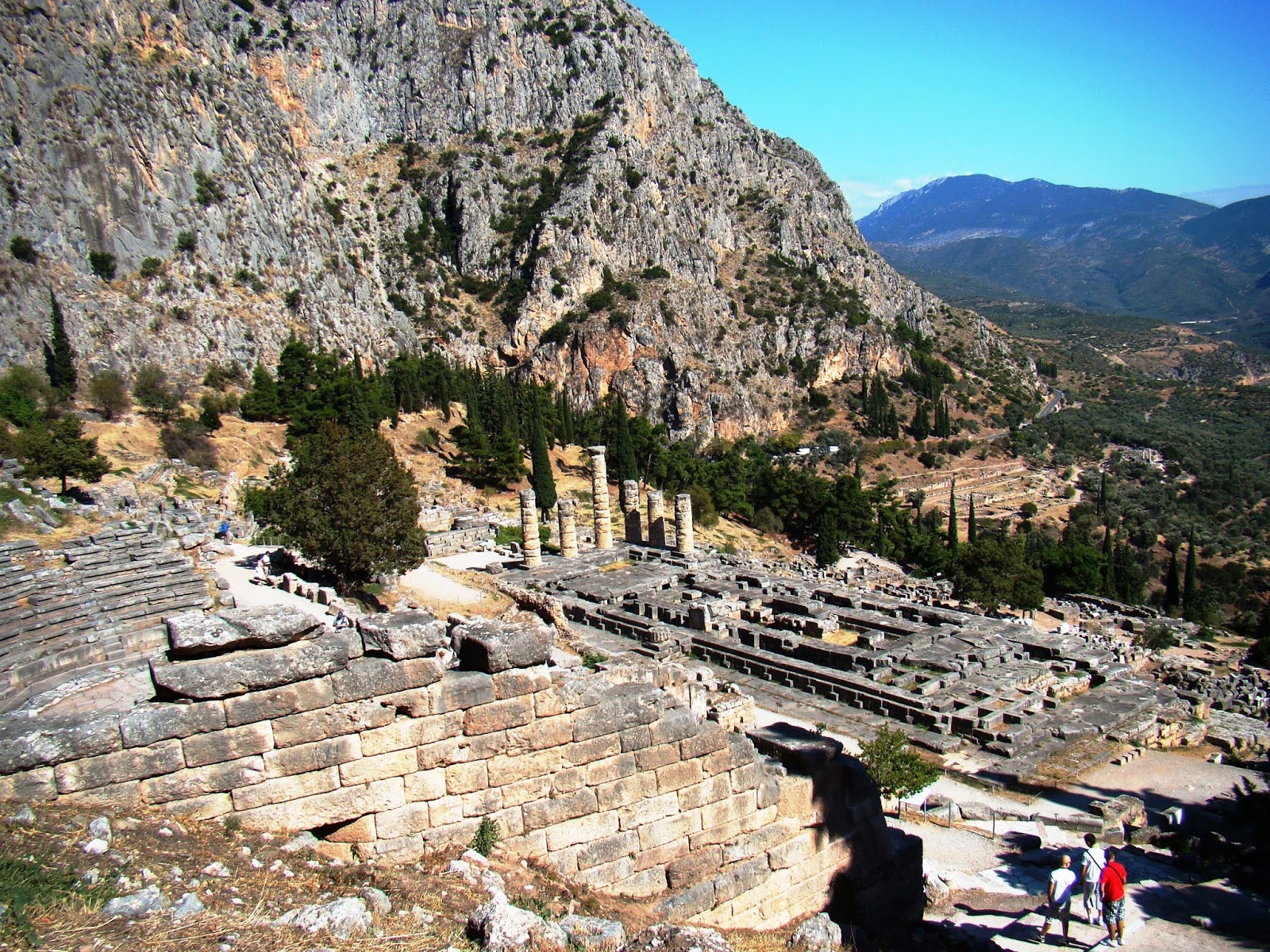
The Delphic maxims are a set of 147 aphorisms inscribed at Delphi. Originally, they were said to have been given by the Greek god Apollo's Oracle at Delphi, Pythia, and therefore were attributed to Apollo. The apophthegmata are inscribed on a stone monument at Delphi.

Some are non-starters these days. "Rule your wife" and "Admire oracles" are ones we can live without. "Keep deeply the top secret" and "Beget from noble routes" aren't that helpful.
"Shun evil," "Exercise nobility of character," "Pray for things possible," "Look down on no one" seems like good advice.

There's a wise quartet ... "As a child be well-behaved," and "As a youth be self-disciplined," "As of middle age be just," and "As an old man be sensible." The ancient sages still provide guidance in the human effort to live wisely.

Monday, January 6, 2020

3 generations of Scythian women found

Researchers have uncovered the remains of four high status Scythian women of different ages in the same tomb. One was estimated to be between 12 and 13 years old when she died, the second was 20 to 29 years old, a third was 25 to 35 years old and the fourth a remarkable for the times 45 to 50 years old. She was buried in a calathos, or ceremonial headdress, bedecked with floral ornamented plates and shaped pendants. Her jewelry was around 70% gold, mixed with copper, silver and iron.

The women's burial occurred during the 4th century BC. Scythians were a powerful group of nomadic tribes of warriors that lived across central Asia between 900 and 200 BC.
The remains were found in a cemetery known as Devitsa V, a site consisting of 19 mounds in the Voronezh region of Russia.

Thursday, January 2, 2020

Pompeii reveals another secret - garum

Garum was a fermented fish sauce and was used extensively throughout the ancient world as a condiment. What went into garum and how it was prepared was lost to time.

In 2014 a team from the University of Cadiz began excavating at Pompeii in search of garum. They found a garum store and, inside, were 2,000-year-old traces of the sauce itself. For the first time ever an actual sample of garum could be analyzed to find out exactly what it was made of. Microscopic analysis revealed pollen grains revealing which selection of herbs were used. The sample also told them exactly what species of fish was used.
The spices are characteristic of the Mediterranean – rosemary and coriander. Anchovies were used. Like modern soy sauce, fermented garum is a rich source of umami flavoring, including monosodium glutamate. When mixed with wine, vinegar, black pepper, or oil, garum enhances the flavor of a wide variety of dishes, including boiled veal and steamed mussels. It was so common that even peasants used it to improve the taste of their bread.