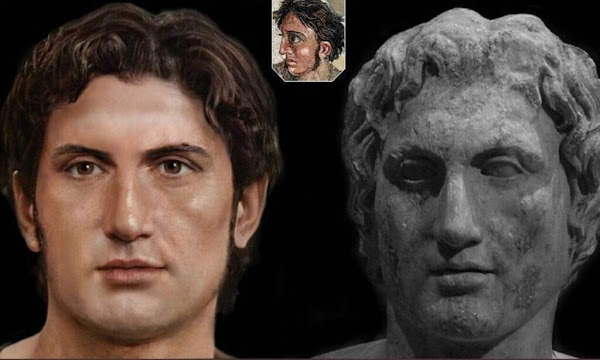
 | Artist Alessandro Tomasi has brought the long dead to living colour before. His latest effort gives us Alexander the Great, based apon on the Lysippus bust and the Alexander Mosaic. |

Sunday, January 24, 2021
Face of Alexander the Great

Thursday, January 21, 2021
Theft from Burgess Shale
 | A tourist from Belgium paid a price for going where he wasn’t supposed to go and attempting to steal an ancient artifact by putting it into a sock and stuffing it into a backpack. An alert hiking guide at the world-famous Burgess Shale Formation in Canada’s Yoho National Park spotted the tourist in a restricted area and alerted wardens. The tourist was collecting fossils illegally near the Walcott Quarry of the Burgess Shale, a fossil field with some artifacts more than 500 million years old. Wardens dug through the tourist’s backpack and discovered the trilobite fossil. |  The Walcott Quarry of the Burgess Shale. |
 | He was charged with removing a fossil with the intention of selling or trafficking the ancient artifact. A British Columbia provincial court fined him $4,000. Authorities say “a fairly active” black market exists for fossils from the Burgess Shale with values ranging from $300 or $400 for common trilobite fossils. Larger and rarer fossils can sell for $ 10,000 or more. | 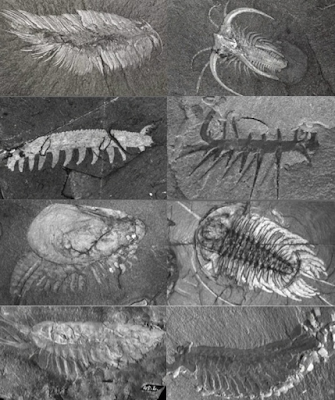 |
 | The Burgess Shale Formation is located in the Canadian Rockies of British Columbia. It is one of the world's most celebrated fossil fields and is listed as a UNESCO world heritage site. It is famous for the exceptional preservation of the soft parts of its fossils. At 508 million years (Middle Cambrian) old, it is one of the earliest fossil beds containing soft-part imprints. |  |
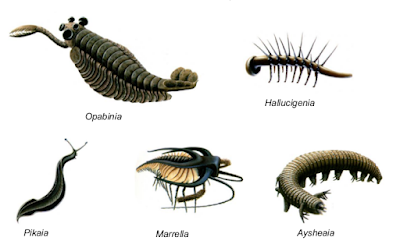
 | Burgess Shale contains the best record we have of Cambrian animal fossils. It reveals creatures originating from the Cambrian explosion, an evolutionary burst of animal origins dating 545 to 525 million years ago. |  |
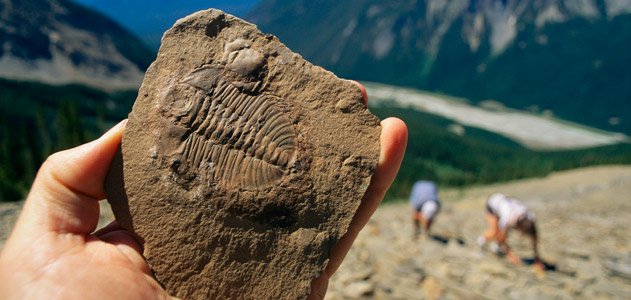 | During this period, life was restricted to the world's oceans. The land was barren, uninhabited, and subject to mudslides which periodically rolled into the seas and buried marine organisms. At Burgess, sediment was deposited in a deep-water basin adjacent to an enormous algal reef with a vertical escarpment several hundred meters high. |  |
 | 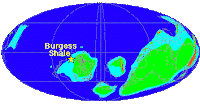 The Burgess Shale fossils have been called the world’s most significant fossil discovery because of their great age, their diversity and the detail of their preservation. |  |
 |  |
  |   |
Wednesday, January 20, 2021
Iron Age money
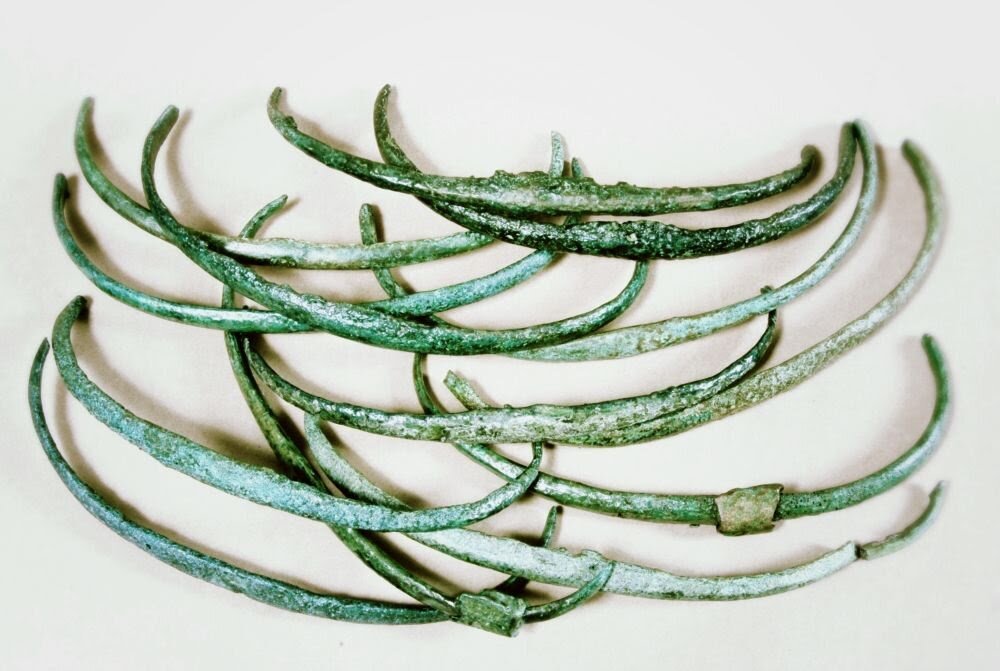 | In the Early Bronze Age, ancient people used bronze objects as an early form of money. Researchers suggest that a consistent similarity in shape and weight, along with the fact that the objects often occurred in hoards, are signs of their use as an early form of standardized currency. Standardized currency is a requirement for trade, a cornerstone of human development. |
Saturday, January 16, 2021
Stash of late medieval coins discovered in Hungary
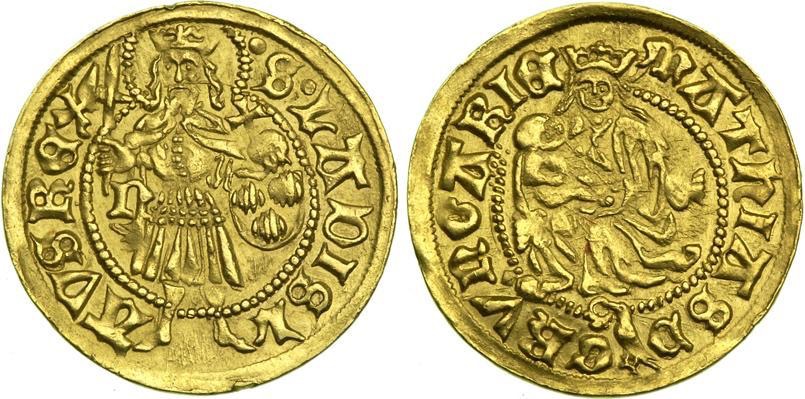
 | Újlengyel is a Hungarian village about 31 miles (50 km) southeast of Budapest. The oldest coin is a silver denarius of Roman emperor Lucius Verus, who ruled from A.D.161 to A.D. 169. The newest coins date to Louis II, who ruled Hungary and Bohemia from 1516 to 1526. The hoard consists of nearly 7,000 silver coins and four gold coins. The four gold coins were issued during the reign of Matthias I, the king of Hungary from 1458 to 1490. Hungarians may have buried the hoard during an attack from the Ottoman Empire in 1526. |
 | The Ottoman Empire, led by Suleiman the Magnificent, defeated Hungary and its allies in the Battle of Mohács on Aug. 29, 1526; this marked the end of the Hungarian monarchy. |
Thursday, January 14, 2021
Cape Lefkada
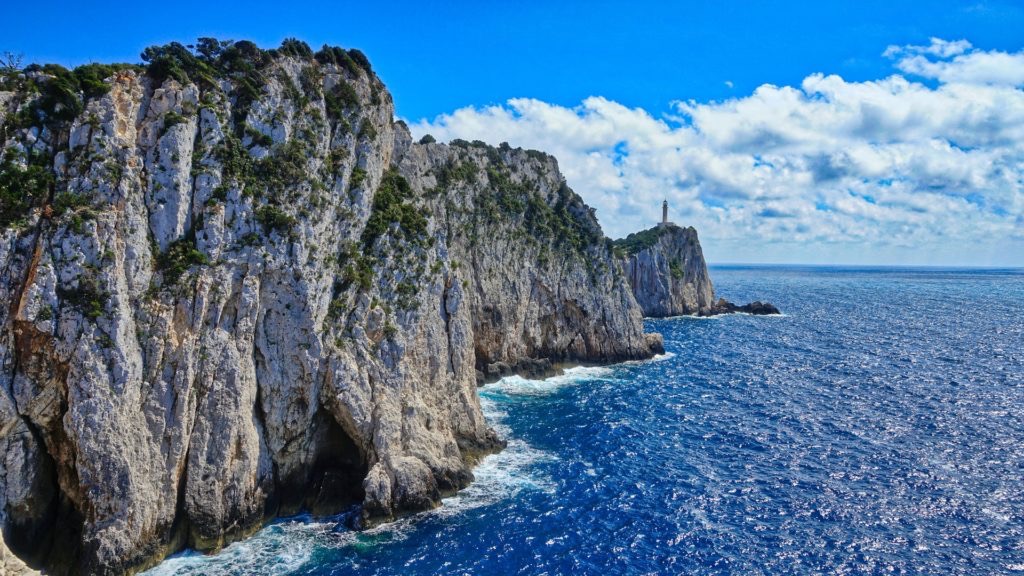
 A restored fresco from Pompeii that many believe depicts Sappho. | Cape Lefkada features a towering white cliff jutting into the sea, and has inspired many ancient myths. Lovers and tragic figures throughout the ages are said to have thrown themselves from the craggy heights. The death of Sappho is the best known. According to legend, Sappho died after throwing herself from the Cape, forlorn after a beautiful sea god named Phaon rejected her love. Some versions of the myth of Aphrodite and Adonis end with the goddess of love jumping off its heights after hearing of her lover’s death. Due to her status as a goddess, she did not die, and landed in the water unharmed. |
Wednesday, January 13, 2021
Huge Israel hoard
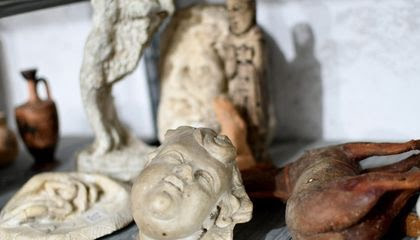
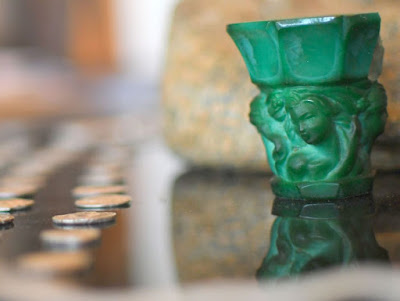
 | Israel officials seized a huge hoard of artifacts, which span the 1st millennium B.C. through the 11th century A.D., during raids at three sites in central Israel. Among the thousands of items are coins from the Seleucid Empire, which ruled Israel between 312 and 63 B.C.; Roman-era oil lamps; and stone statuettes of gods. Among the artifacts recovered are pieces of pottery, including rare vases made in Greece and Italy during the fifth and sixth centuries B.C. The items were usually found in tombs and were extremely precious. |
 |  |
Tuesday, January 12, 2021
Sanctuary of Apollo at Frangkissa
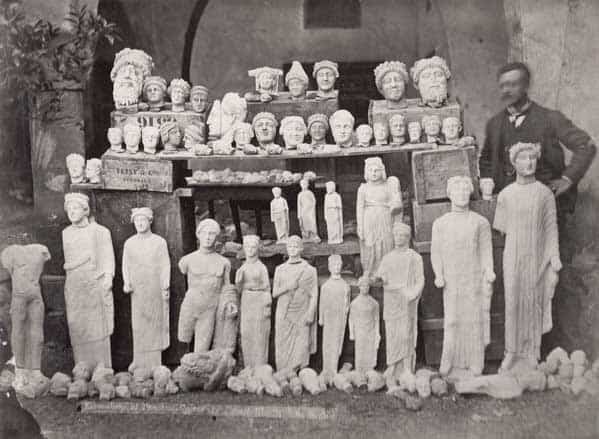 | Archaeologists excavating near ancient Tamassos have located one of the most important sanctuaries discovered in Cyprus to date, more than 125 years after its exact position was lost. The Sanctuary of Apollo at Frangkissa was subject to a dig in 1885. Only a small part of the finds from 1885 have remained in Cyprus. |
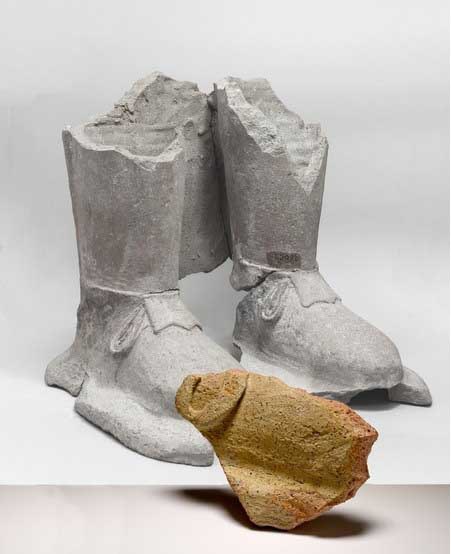 | Analysis of the finds shows that the area had been occupied since the Iron Age and was used throughout the Archaic, Classical and Hellenistic periods. 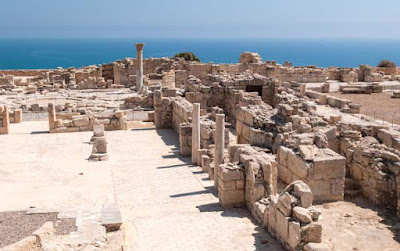  |
Monday, January 11, 2021
Theodosius Hoard
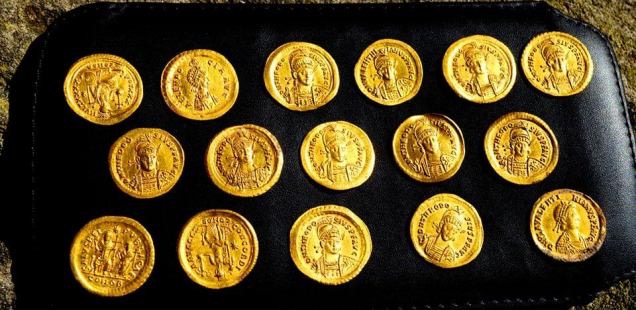 | In 2019, 16 gold solidi, most of them minted by Theodosius II (408 – 450 AD), the third longest ruling Emperor of the Eastern Roman Empire, popularly known today as Byzantium, were discovered by archaeologists excavating the ruins of ancient Marcianopolis in Bulgaria’s Devnya. Marcianopolis (Marcianople) was a major Roman and Early Byzantine city. |
Subscribe to:
Comments (Atom)