Monday, August 30, 2021

Face of 1,200 year old 'Huary Queen' revealed

The “Huarmey Queen” was found at El Castillo de Huarmey in Peru. She was from the pre-Incan Wari culture and lived about 12 centuries ago.
Her body, surrounded by jewelry, gold ear flares, a copper ceremonial ax, a silver goblet and weaving tools fashioned from gold, was found in a private chamber. Her skeleton revealed that she had a strong upper body and spent most of life seated, indicating that she could had been a weaver — a position of great renown among the Wari, who revered textiles more than gold and silver.
Experts spent 220 hours hand-crafting the features of the noblewoman, who was at least 60 years old when she died, using a 3D-printed cast of her skull and data on her bone and muscle structure.

Saturday, August 28, 2021

Unlooted imperial tomb of the Wari found


A winged creature adorns an ear ornament worn by an elite Wari woman.
The Wari lords have long been overshadowed by the later Inca. But in the 8th and 9th centuries A.D., the Wari built an empire that spanned much of present-day Peru. Their Andean capital, Huari, became one of the world's great cities. At its zenith, Huari boasted a population conservatively estimated at about 40,000 people. Paris, by comparison, had just 25,000 residents at the time.
In 2016 more than 60 skeletons inside a tomb were found, including three Wari queens buried with gold and silver jewellery and brilliantly-painted ceramics. Many mummified bodies were found sitting upright - indicating royalty.
The archaeologists say the tomb was found in El Castillo de Huarmey, about 280km (175 miles) north of Lima. Forensic archaeologist Wieslaw Wieckowski says the way other bodies were positioned indicated human sacrifice. In all, the archaeological team has found the remains of the Wari queens, gold pieces, ceramics and skeletons about 1,300 years old.

Six of the skeletons in the grave were not in the textiles. They were placed on the top of the other burials in very strange positions. Experts believe that they were sacrifices. The Wari civilization thrived from the 7th to 10th centuries AD, conquering all of what is now Peru before a mysterious and dramatic decline.

Wednesday, August 25, 2021

Archaeology intern unearths spectacular Roman dagger


Nico Calman had a good internship last year. The 19-year-old unearthed a 2,000-year-old silver dagger that likely helped the Romans wage war against a Germanic tribe in the first century A.D. Discovered in its sheath in the grave of a soldier at Haltern am See (Haltern at the Lake), the weapon needed nine months of meticulous work to reveal a spectacularly ornamented 13-inch-long blade and sheath that once hung from a leather belt.

Dating to the Augustan period from 37 B.C. to 14 A.D., the blade had a front row seat to some of the most humiliating defeats in Roman history. At that time, Haltern, which sat on the fringes of the vast Roman empire, housed a military base for soldiers.

Up to 20,000 Roman soldiers were slaughtered when Germanic tribes swept through the region in 9 A.D. Though thousands of Roman soldiers were stationed in Haltern over almost 15 years or more, there are very few finds of weapons, attesting to their great value.

Sunday, August 22, 2021

Monsters on Ancient coins

CRETE, Knossos. Stater (11.93g). about 425 – 360 BCE. Product of a union between Queen PasiphaĆ« and a white bull, the Minotaur was a ferocious man-eating beast, imprisoned in the Labyrinth of Daedalus. Theseus slew the Minotaur. This is a rare coin with less than 20 known.
Crete, Phaistos AR Stater. Mid-Late 4th century BCE. Herakles (his Latin name is Hercules) was the champion monster-slayer. In a fit of madness, Herakles killed his family; to atone for this crime he undertook a series of heroic quests. The Lernaean Hydra was one. Sever one of the Hydra’s heads and two grew back, making the monster hard to kill. Herakles slew the Hydra, helped by his companion Iolaus, who cauterized the neck with a torch as each head was cut off.
SIKYONIA, Sikyon. Circa 335-330 BCE. Bellerophon, riding Pegasus, killed the fire-breathing Chimaera (or Chimaira) with a block of lead impaled on a spear he lodged in the beast’s throat. The fire melted the lead, choking the beast. The Greek city of Sicyon, near Corinth adopted the chimaera as a symbol on coins, which are relatively common, from c. 430 down to about 280 BCE
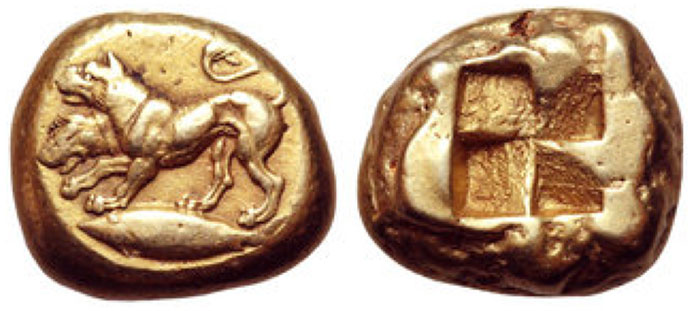
Cerberus (or Kerberos) is a giant, ferocious three-headed dog who guards the gateway to the land of the dead. He is often depicted as the companion of Hades (or Pluto,) god of the underworld. As his 12th Labor, Herakles wrestles Cerberus into submission and drags him back to the land of the living. Cerberus appears on a magnificent electrum stater of Cyzicus (c. 500-450 BCE).

Friday, August 20, 2021

Golden sandals of ancient Egypt


Sandals, gold sheet, New Kingdom, circa 1479–1425 BCE.
The most famous golden sandals came from the tombs of the queens of Thutmose III. The 18th-dynasty ruler buried his wives in sandals of sheet gold, engraved and embossed to mimic luxury leather footwear. Golden sandals were often accompanied by small golden “caps” for the fingers and toes. These are called finger and toe stalls. They protected the extremities of the mummy. According to ancient Egyptian beliefs, the dead were supposed to be entombed as complete bodies.

Tutankhamun's sandals.

Thursday, August 19, 2021

Shackled Greek skeletons to get display

The mass grave of 79 young men with shackles around their wrists and dating from the 7th century BC that was discovered on Athens’ southern coast in 2016 will be removed temporarily so the site can be secured. Exposure to the elements has meant the remains have sustained significant damage since their discovery.

According to the plan, the necropolis will be removed in blocks that will be returned once the site has been investigated and secured.
In 2016 researchers found a mass grave near Athens containing 79 skeletons. The wrists of the skeletons were all bound in iron shackles.

Archaeologists believe they were part of a mass execution.
The skeletons were found in the Falyron Delta necropolis, between Athens and the port of Piraeus. It’s believed the victims were part of a failed coup plot, supporters of Cylon, who attempted to take over Athens. Cylon was an Athenian noble who attempted to seize power in the city in 632 BCE, where his father-in-law, Theagenes, was tyrant.

The coup was opposed, and Cylon and his supporters took refuge in Athena's temple on the Acropolis. Cylon and his brother escaped, but his followers were cornered by Athens' nine archons and killed.
The grisly find is a rare and extraordinary one. Greece’s Central Archaeological Council announced construction of an underground “shell” which will permanently protect and display the skeletons.

Wednesday, August 18, 2021

Charioteer Flavius Scorpus

Flavius Scorpus (c. 68–95 AD) was a famous charioteer. Scorpus rode for the Green faction during his lifetime and accumulated 2,048 victories.
As one of the most famous drivers in Roman history, Scorpus earned huge amounts of money. Scorpus is also known for dying young, at 26. Scorpus was a slave, as were many charioteers, and was born in Spain.

Eventually he bought his freedom, becoming a libertus (freed slave). Although the cause of Scorpus' death is unknown, it is likely to have been in one of the numerous crashes that occurred during chariot races. The Romans called these naufragia "shipwrecks".
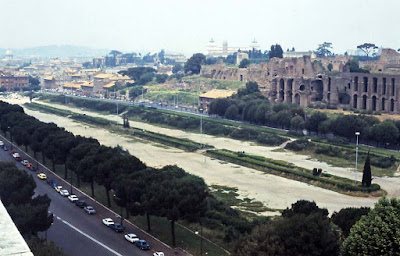
The Circus Maximus (Latin for greatest or largest circus; Italian: Circo Massimo) is an ancient Roman chariot-racing stadium and mass entertainment venue located in Rome. It measured 621 m (2,037 ft) in length and 118 m (387 ft) in width and could accommodate over 150,000 spectators.
See ----->The Highest Paid Athlete in History - Gaius Appuleius Diocles

Sunday, August 15, 2021

Anglo-Saxon gold coin could bring £200k

The Gold Penny, or Mancus of 30 Pence, was unearthed by a metal detectorist in a field near West Dean in March 2020. Weighing 4.82g, it was struck between 802 and 839 during the reign of Ecgberht, King of the West Saxons. Thought to be the only late Anglo-Saxon gold coin in private hands, it is expected to fetch between £150,000 and £200,000 at auction on 8 September. Struck at a West Saxon mint, the coin bears the King's title 'Ecgbeorht Rex' around a monogram of the word Saxon. Only eight other known gold coins were struck in England between 630 and 1257, seven of which are now held at the British museum.

Ancient Israel coin hoard

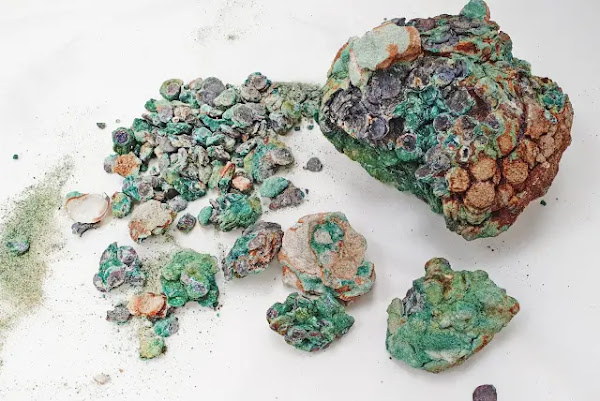
An ancient bundle of coins has been found on Habonim beach in Israel. The coins, weighing a total of 6 kg., were agglutinated after years of lying underwater. They were determined to have been used in the fourth century CE and likely came from an ancient shipwreck.

Saturday, August 14, 2021

Pompeii victims' bodies revealed in scans

Nearly 2,000 years after Mount Vesuvius buried Pompeii in ash and pumice, advanced imaging technology is bringing to life the victims of the devastating eruption. About 2,000 people died in Pompeii, yet only 1,150 individuals have been discovered since the mid 19th-century excavations. Pompeii was buried under 8 to 9 feet of material with bodies encased in layers of hardened pumice and ash. Scientists found that their decayed corpses left voids. They poured plaster into the cavities, creating plaster casts of the impression in the ash.
The pictures of horror and death are now being investigated for the first time with a 16-layer CAT technology. Among the victims scanned was a boy about four years old. The boy was found next to an adult male and female, likely his parents, and to an infant who appeared to be asleep on his mother's lap. CT scans revealed his clothes and striking details of his skeleton.
The investigation also showed that many victims, who were rushing out of their houses in a desperate attempt to escape, were killed by severe head injuries, most likely rubble that fell from collapsing buildings and roofs. Results also suggest that Pompeii's people were healthy, with nearly perfect teeth.