
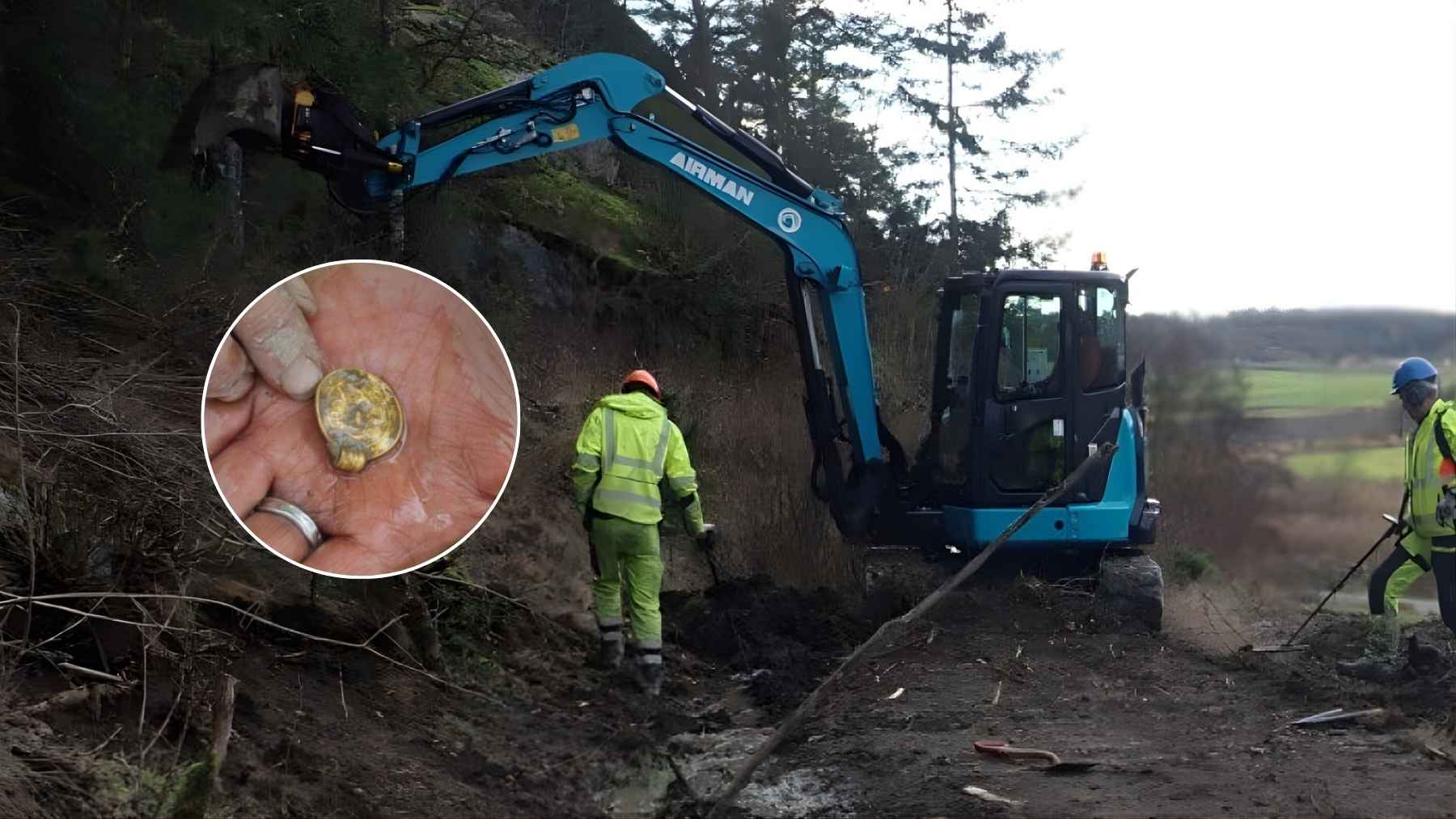
 | Seven gold pendants were buried in the Norway clay, the precious jewellry most likely a sacrifice meant for the gods. Those same pendants, called bracteates, have now been recovered near the municipality of Råde in Østfold County. A metal detector enthusiast first uncovered four pieces in a plowed field, and archaeologists from the University of Oslo later found three more during a follow up excavation. Researchers date the hoard to the sixth century. |
 | Researchers classify the Råde hoard as a mix of C type and D type bracteates, which helps date the burial to the sixth century. Items were connected to aristocratic communities within a Germanic elite in Scandinavia. The pendants likely acted as visible symbols of status and alliances. Only people with considerable wealth could afford to bury so much high purity gold in the ground and walk away from it. |
 | Tree ring records and glacial data point to a sharp cooling after a series of volcanic eruptions in the years 536 and 540. A study links those eruptions to a veil of volcanic dust that dimmed sunlight, reduced plant growth and brought food insecurity and hungar. Norse stories tell of a legendary Fimbul winter, a long season of darkness and hunger. |

No comments:
Post a Comment