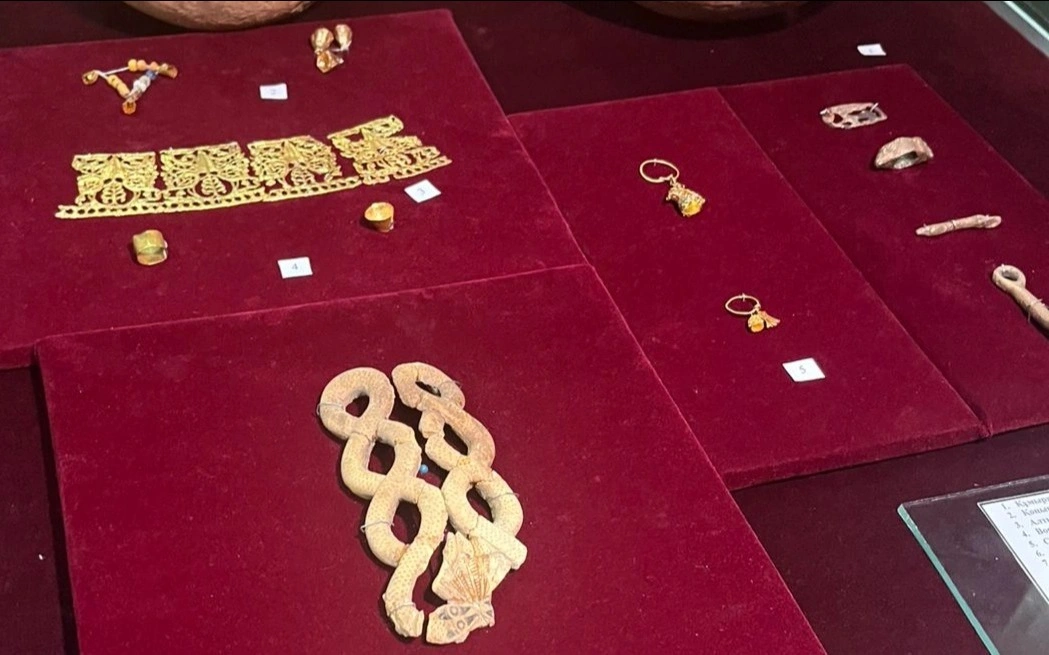
 | Archaeologists in Kazakhstan’s Zhetysu Region have uncovered rare gold jewelry, elite Saka-era burial mounds, and a unique double burial dating back to the 4th–3rd centuries BC during excavations at the Dauylbay burial ground. Located at the foot of the Dauylbay mountain range, the burial ground has yielded a wide array of artifacts, including bronze tools, bone ornaments, intricate ceramics, and ritual objects. |
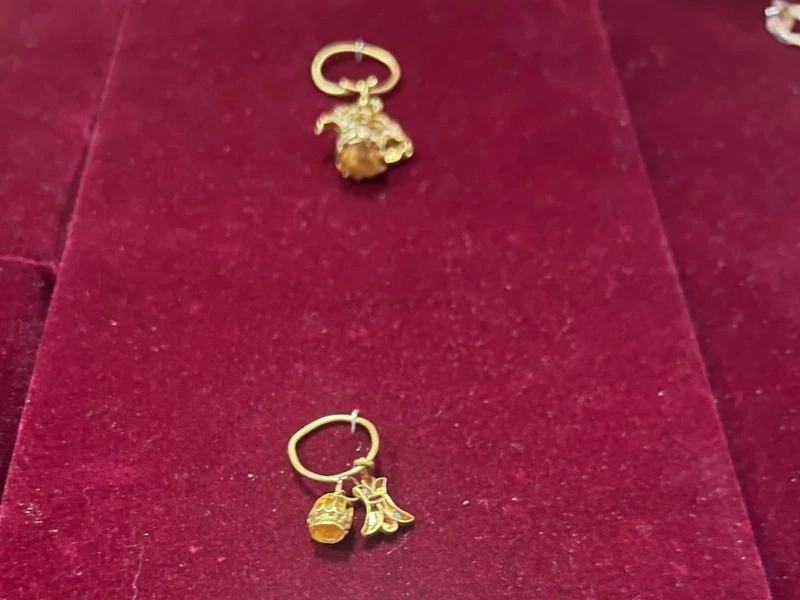
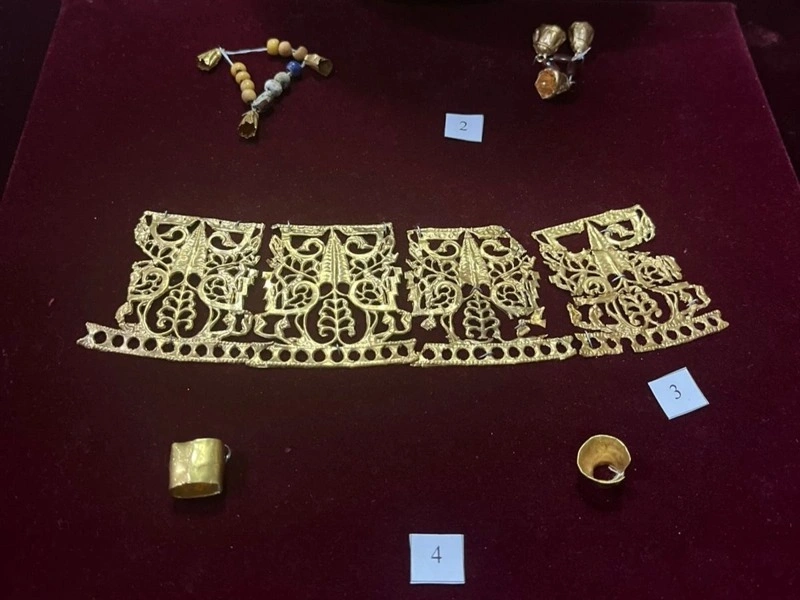
Archeologists unearthed fragments of gold jewelry: beads, earrings, bone buttons, bronze pins and buckles, and various ceramic vessels. Of importance is a varvorka – a gold ornament strung on a thread and used as a pendant in high-status ritual attire.
 | A rare bone artifact carved in the shape of a “snake-dragon,” is believed to have played a role in ancient ceremonies. |
In one of the larger mounds, measuring around 40 meters in diameter and 3-4 meters in height, archaeologists uncovered the remains of a man. An iron akinak sword, typical of Saka warriors, was found to his right, along with gold plates and a varvorka, indicating his high social rank. Three additional mounds – two of them of elites – contained a rare double burial. A woman and a child were laid to rest together; gold earrings were found near the child’s skull with bronze plaques crafted in the Saka animal style.


No comments:
Post a Comment