 | In 2019 archaeologists discovered the remains of a chariot from ancient Rome along with two horses. Dating to the 3rd century AD, the find, the first of its kind in Croatia, is an extremely high status burial for a wealthy Roman family.
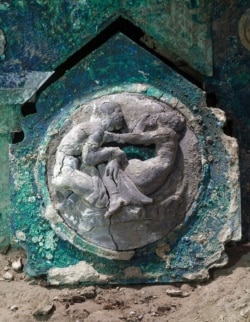
In 2021 near Pompeii, archaeologists uncovered a nearly intact Roman ceremonial chariot dating to the 1st century CE. Preserved in the volcanic ash, the chariot is believed to have been used in parades, processions, or elite marriages. |  |
The find is from an ancient burial mound known as a tumuli. Only those of the highest status were buried in this expensive manner.

Conquered under Augustus, Pannonia and Moesia Superior were strategic frontier provinces of the Roman Empire. | 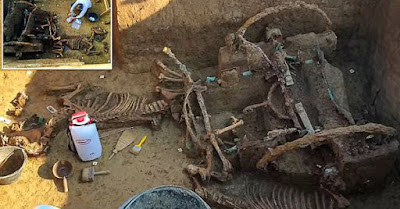
|
______________________ | Archaeologists discovered golden curse tablets in Roman tombs. These contain inscriptions with magical symbols calling upon both gods and demons to unleash ill-health, punishment, and death upon enemies. |  |
 | The curse tablets were found in Roman tombs at Viminacium, the ancient capital of the former Roman province of Moesia Superior in Serbia. The territory was under Roman (and later Byzantine) rule for about 600 years, from the 1st century BC until the 6th century. Viminacium occupies a total of about 450 hectares (1,100 acres) |  |
 | “..so long as someone, whether slave or free, whether man or woman, keeps silent or knows anything about it, they may be accursed in blood, and eyes and every limb and even have all intestines quite eaten away if they have stolen the ring or been privy (to the theft).”
Other curses are even more personal ... “May your penis burn away when you make love.” |  |
In Viminacium archaeologists found Christians and pagans buried together, suggesting they lived together in relative harmony and tolerance.



No comments:
Post a Comment