Rome’s territorial expansion was synonymous with military conquest. Coins served as both the messenger and message in ancient Rome.
AEGVPTO CAPTA (Egypt Captured) was a series of coins struck in 28-27 BCE by Octavian. The first Roman coins explicitly glorifying conquest were a novelty for the time.
 | The Nile crocodile was a symbol of ancient Egypt. The dupondius of Nimes continued to be struck for several decades, from 29 BCE up to 10 CE. The obverse portrays Augustus and Marcus Agrippa. The reverse is a crocodile chained to a palm tree. | 
The dupondius was a low value copper coin, used in everyday transactions. |
 | DACIA CAPTA (Dacia Captured). Under Trajan, the Roman Empire reached its greatest territorial extent. Trajan’s campaign over the Danube brought Rome both new territory and the gold mines of Dacia. The conquest of rich Dacia (101-102 and 105-106 CE) was the last major territorial addition of the Empire. |
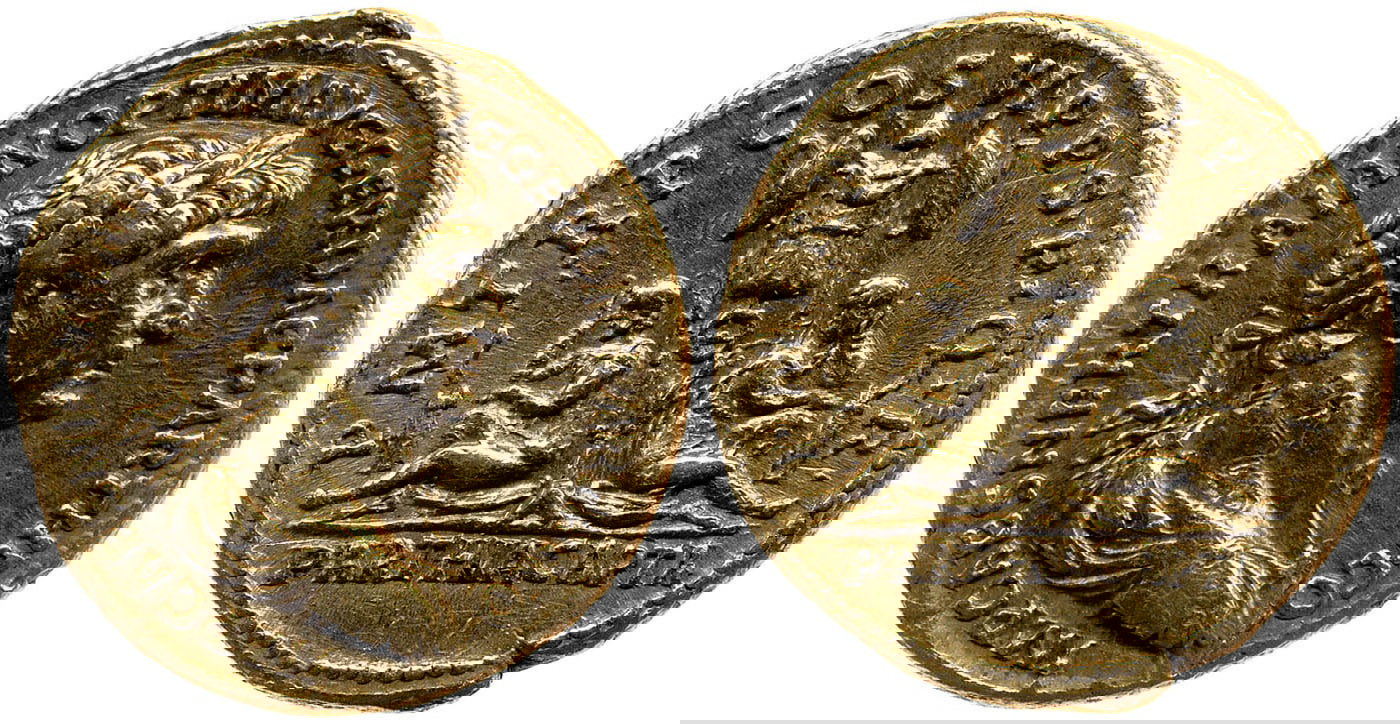 | | Parthia Capta. Rome fought many wars against the Parthian Empire but had few triumps. One of the few Roman leaders to humiliate the East was Emperor Trajan. His 115-117 CE campaign was celebrated with PARTHIA CAPTA (Parthia Conquered) coinage. |
 | The Armenia Capta gold aureus of Lucius Verus, issued in A.D. 163 in Rome made 14,000 Swiss francs ($13,963 U.S.) in 2019 against an estimate of 7,500 francs. In 163, the Roman general Marcus Statius Priscus invaded Armenia and captured the capital Artaxata. The second coin was issued in Rome, sometime in early 218. It features a bust of Macrinus on the obverse, and the reverse shows Victory seated. The reverse proclaims a victory over the Parthians, which is ironic, since Macrinus agreed to a humiliating peace treaty. 20,000 Swiss francs ($19,946 U.S.) against an estimate of 5,000 francs. | |


No comments:
Post a Comment