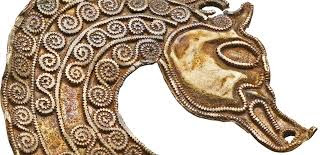
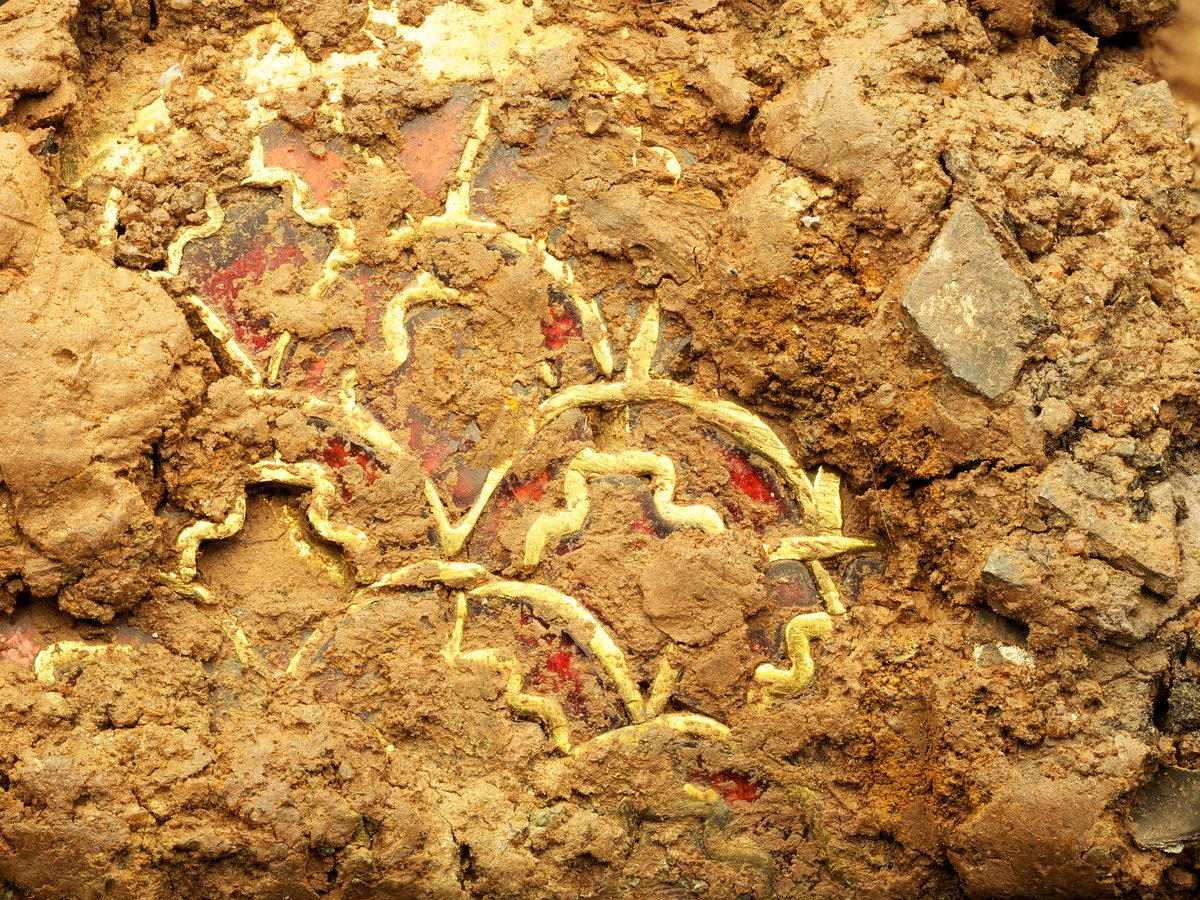
 | With more than 3,500 items, amounting to some 5kg of gold and 1.4kg of silver – plus thousands of garnets – the Staffordshire hoard is the largest cache of Anglo-Saxon metalwork ever found. | |
Archaeologists think the treasures were trophies, captured over multiple mid-seventh century battles.
 | It's likely that they were seized by the English midlands kingdom of Mercia from the kingdoms of Northumbria, East Anglia and Wessex.
 | |
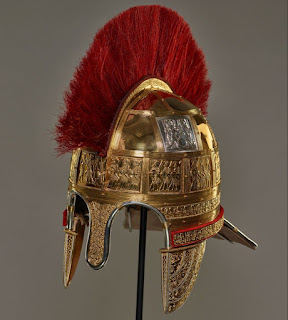
 | The items are almost exclusively military. The hoard was made up of fittings from up to 150 swords, gold and garnet elements of high status seax (fighting knifes), a gilded silver helmet, crosses, and a probable bishop’s headdress.
 | |
 | The ornate bishop’s headdress is the world’s earliest surviving example of high status ecclesiastical headgear. One element bears an inscription – a quotation from the Book of Numbers. It reads “Rise up, LORD, and let thine enemies be scattered; and let them that hate thee flee before thee”. It's possible that the hoard was war booty captured by the pagan Mercian king, Penda, from armies led by Christians. |  |
 | The hoard was found in the village of Hammerwich in Staffordshire.  | |
 | A silver gilt strip bears the Biblical inscription in Latin – the only inscribed item in the haul. |  |
  | The hoard was purchased jointly by the Birmingham Museum and Art Gallery and the Potteries Museum & Art Gallery for £3.285m under the Treasure Act. |  |



No comments:
Post a Comment