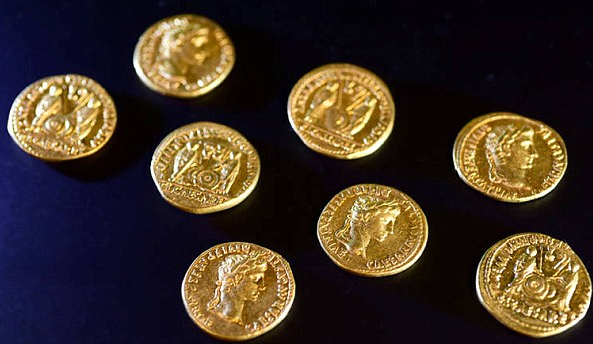
 | In 2018 eight aurei were discovered in Germany that helps confirm the site of the Battle of Teutoburg Forest. Such a find is extremely rare. The discovery at Kalkriese doubles the number of gold coins from the site. The coins feature Emperor Augustus, with the imperial princes Gaius and Lucius Caesar, and date between 2BCE and 4CE. The Battle of the Teutoburg Forest took place between 8 and 11 September 9 AD, near modern Kalkriese, when an alliance of Germanic tribes ambushed and destroyed three legions of the Roman commander Publius Quintilius Varus. |
 | A single aureus from the reign of Augustus would have been enough to feed and house an entire family in Rome for a month. Archaeologists speculate the gold belonged to a high-ranking Roman officer. | 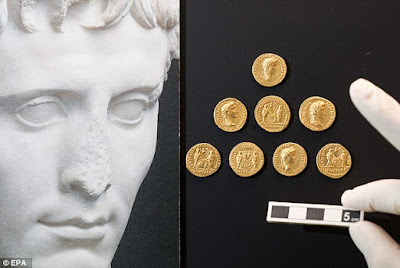 |
 | In the autumn of AD 9, the 25-year-old Arminius brought Roman commander Varus a false report of rebellion in northern Germany. He persuaded Varus to divert three legions under his command. (17th, 18th, and 19th legions, plus three cavalry detachments and six cohorts of auxiliaries) Ignoring warnings from Segestes not to trust Arminius, Varus marched deep into the Teutoburg Forest. All three legions were wiped out to the last man. Varus committed suicide. |  |
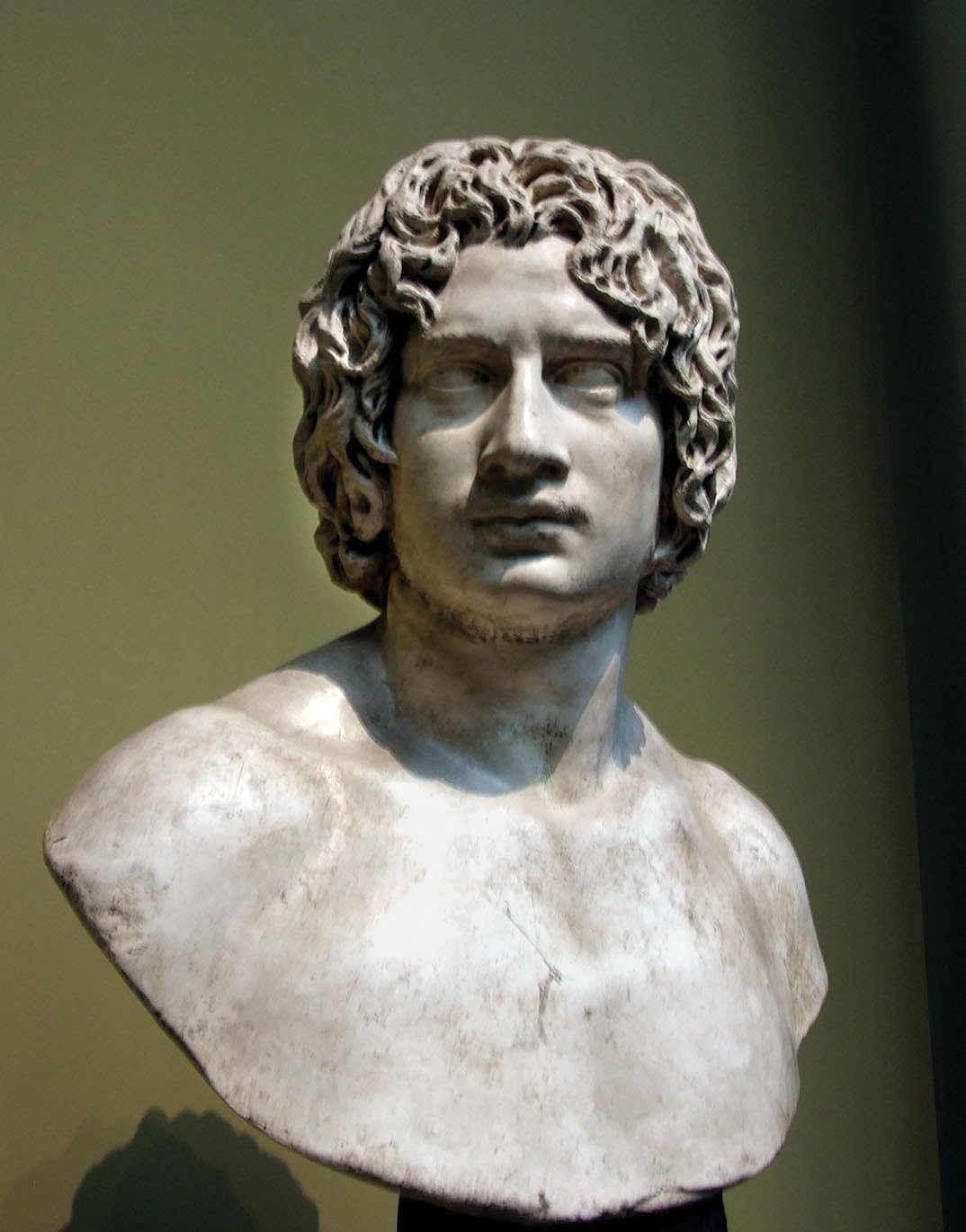 | As part of obligations to appease Rome, Segimer, the powerful Cherusci chief, surrendered his sons Arminius and Flavus to the Roman emperor Augustus. The young boys left the village and tribal lands of their birth in central Germania Magna to be taken to Rome and treated as nobility.
Varus received his appointment as governor in 7 AD, about a year before Arminius’ arrival. Varus held overall command of five legions and auxiliaries. Arminius had come to hate everything Roman. Arminius was not alone. He met with tribal chiefs to forge plans on how to rid themselves of the Romans. Arminius led an army of between 10,000 and 17,000 warriors back to Varus, with several times as many on the way. Word of the impending attack on the Romans spread. Not just among the Cherusci did warriors gather but also from their allies the Marsi and the Bructeri and from the Angrivarii, Chauci, Chatti, and Sugambri. Roman patrols and work parties along the route to Anreppen and in the countryside were caught off guard and slaughtered. |
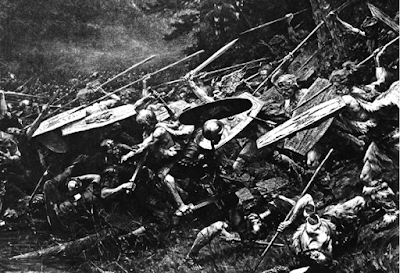 | As a result of the battle Germania remained independent from Roman rule. Roughly 25,000 men were killed during the slaughter in Teutoburg Forest. Teutoburg Forest is considered one of the most important defeats in Roman history, bringing the expansion under Augustus to an abrupt end. |  |
It dissuaded the Romans from pursuing the conquest of Germania.
| In 1990 a misshapen and corroded cavalry mask was found. Thought to have been worn during exhibitions by cavalry it is one of the most exceptional finds at the site of the Battle of the Teutoburg Forest. It is one the oldest facial helmets known from the Roman army, dating from the first part of the 1st century CE. |  |


No comments:
Post a Comment