
 | Volubilis is a partly excavated Berber-Roman city in Morocco near the city of Meknes. Built in a fertile agricultural area, it developed from the 3rd century BC onward as a Berber, then proto-Carthaginian, settlement before being the capital of the kingdom of Mauretania. It grew rapidly under Roman rule from the 1st century AD onward and expanded to cover about 100 acres with a 2.6 km circuit of walls. The city gained a number of major public buildings in the 2nd century, including a basilica, temple and triumphal arch. |
Prosperity came from Rome's demand for grain and olives. This trade prompted the construction of fine houses with large mosaic floors. 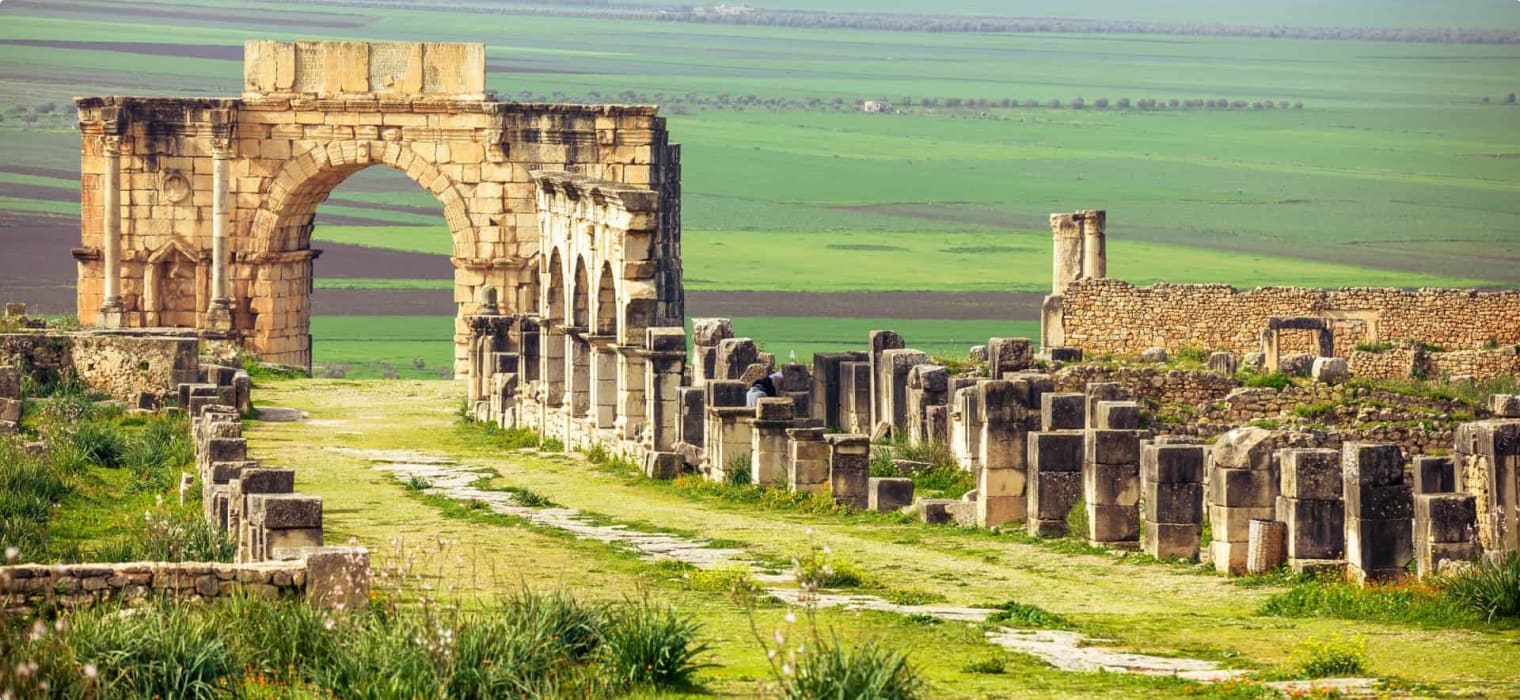 |
 | Despite evidence of ecological destruction, Volubilis grew in prosperity, thriving for the first two centuries of the imperial era. A main street, the Decumanus, had broad sidewalks lined with shops and the houses of the wealthy. At one end of the street was the imposing Arch of Caracalla. |
| At its peak in the late 2nd century, Volubulis was home to some 20,000 inhabitants. Volubilis was under threat from Berber tribes. It slipped out of imperial control, falling to local tribes in 285 CE. Volubilis was now deemed too remote to be retaken, lying beyond the frontiers of Rome’s shrunken borders in Africa. Despite the centuries since its abandonment, Volubilis remains one of the best-preserved Roman cities in Africa. Several houses with mosaics and large mosaic floors have been excavated. The grandest of them is the House of Orpheus. |  |

No comments:
Post a Comment