
 | The Herculaneum loaf is a carbonized, stamped sourdough loaf of bread that was baked when Vesuvius erupted on 24 August 79 AD. It came from a villa owned by Quintus Granius Verus. The small stamp on the bread reads “Celer, Slave of Quintus Granius Verrus”. Celer survived the eruption as he was listed in a later document of freed slaves. Researchers found a list of purchases and prices made over eight days, near the brick oven. On the list, bread was bought every day. Three varieties are listed: 'bread', 'coarse bread' and 'bread for the slave'. Panis Quadratus was standard white wheat bread. Coarse bread was cheaper flour for the poor; and slave bread was low-quality, bran-heavy, or animal-grade. |
Bakeries, or Corpus Pistorum, served a heavily taxed and controlled commodity. | 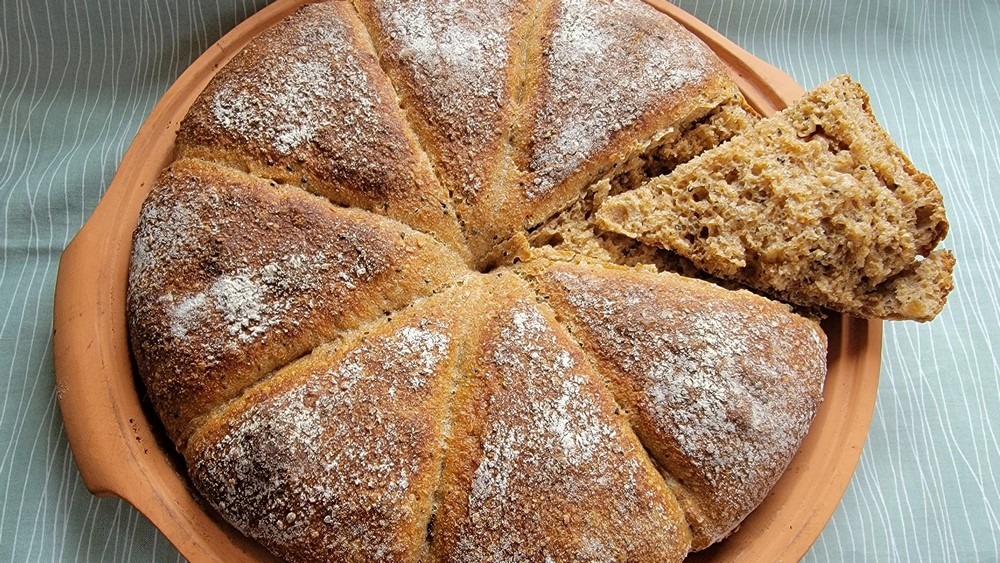 The bread has been analyzed and is a sourdough type whose recipe has been recreated. |
 |  A painting from Pompeii showing the sale of bread. |
| Pliny the Elder was a prolific writer and military commander who died attempting to rescue people in the aftermath of the volcanic eruption. His work Naturalis Historia (Natural History) presents a detailed picture of daily life, culinary habits, and baking technology in the 1st century AD. The carbonized loaves found in Pompeii and Herculaneum directly correlate with frescos and his texts. His statements on bread and fermentation still resonate 2000 years later: “The excellence of the finest kinds of bread depends principally on the goodness of the wheat,” and “Those persons who are dieted upon fermented bread are stronger in body.” The Natural History |  |

No comments:
Post a Comment