
| A study published in the Journal of Archaeological Science has, for the first time, quantified the profitability of gold mining in antiquity. The research, focused on the gold mining operations of the Egyptians during the New Kingdom in the rich lands of Nubia. Extracting the precious metal was a remarkably lucrative business, mainly thanks to very low labor costs. Using mathematical models, researchers analyzed four different mining methods. All of them, except one, generated windfall profits.They are 1) Oxidized Lode Mining, 2) Primitive Alluvial Prospecting, 3) Nile Alluvial Prospecting, and 4) Alluvial Clast Mining. |  |
 | The most profitable method was alluvial mining in wadis. The explanation lies in efficiency. Alluvial methods are simple: auriferous gravel is dug up and washed to separate the heavy gold particles. This requires relatively few processing steps. Lode and clast methods require dedicating a large portion of the labor force to the arduous tasks of crushing and grinding rock to release the gold. This diverts labour from extraction, reducing productivity. |
| One of the study’s most important findings is the potential for large gains for the “first arrivals” at a virgin deposit. New Kingdom Egyptians, during their expansion into previously unexplored Nubian lands, might have encountered alluvial deposits with concentrations of 2 or 3 grams of gold per ton of sediment (common in virgin deposits). Profitability skyrockets. | 
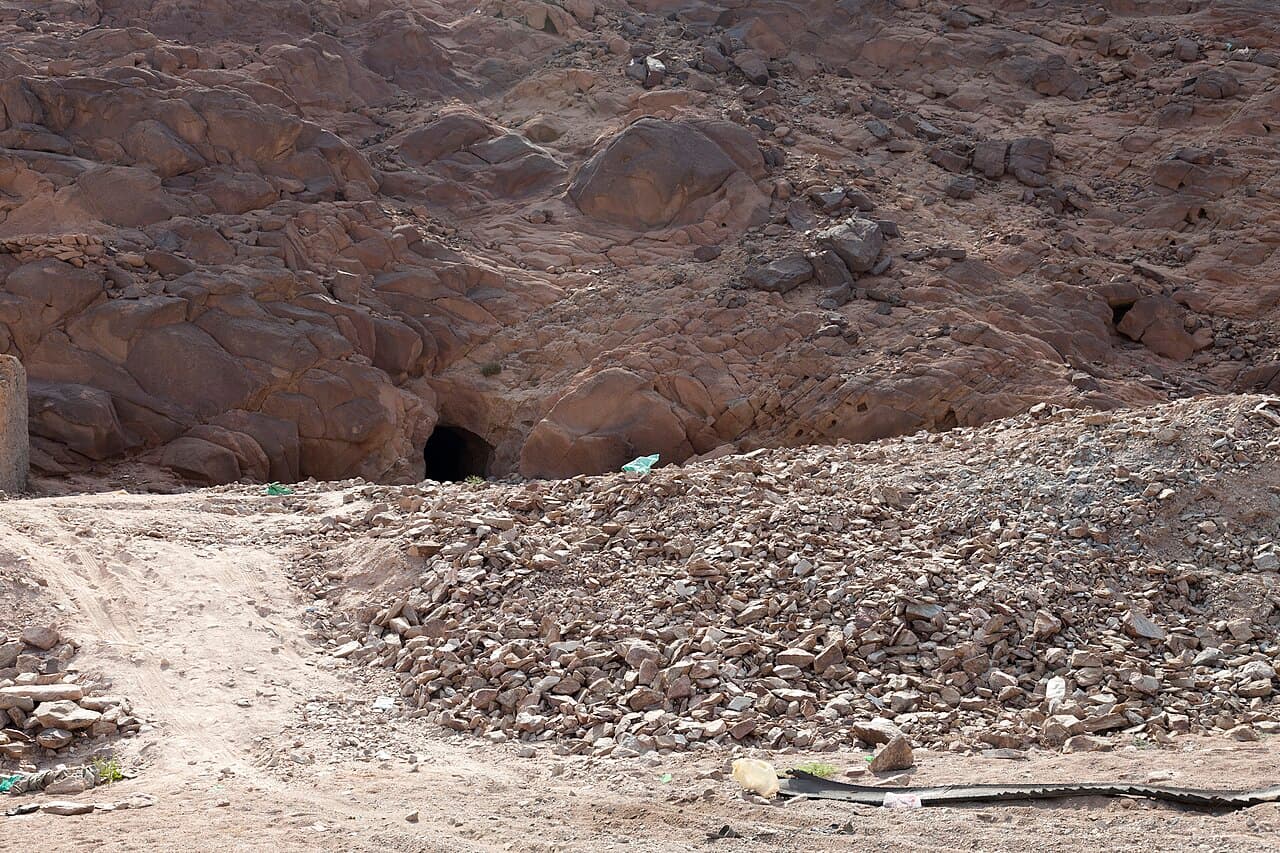
Ghozza mining settlement in Egypt. |
The study also highlights the importance of mining along the Nile. Egypt’s expansion into Nubia gave it access to virgin gold-bearing territories. There, the first miners began with the most lucrative target: the gold that erosion had freed and deposited as nuggets and dust on slopes, in streams, and in the Nile itself. This abundant and easily exploitable source of wealth would have supported the splendor of the New Kingdom, allowing it to accumulate tons of gold before production inevitably declined.


No comments:
Post a Comment