For more than a thousand years, a cemetery on the banks of the Rio Grande Coclé in Panama lay undisturbed, escaping the attention of looters.
 | The river flooded in 1927 scattering gold beads along its banks. In 1940, Penn Museum archaeologist J. Alden Mason excavated at the cemetery, unearthing spectacular finds. 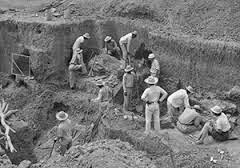 | 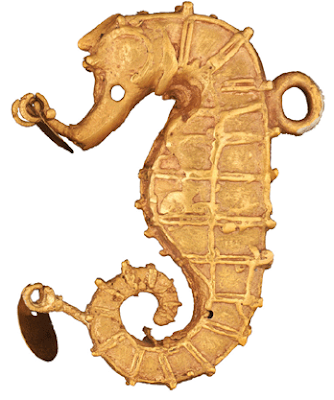 |

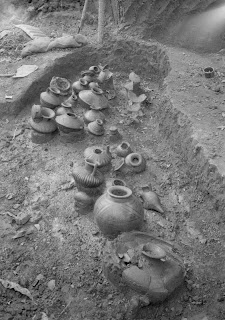
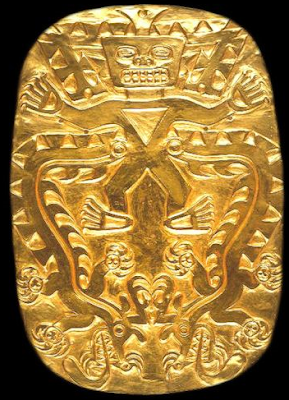
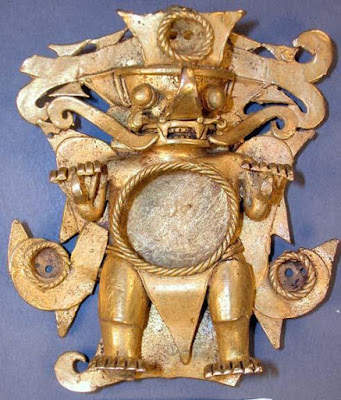
Human effigy pendant of gold, copper, silver alloy, Sitio Conte, Panama, ca. 700-900CE. | Large golden plaques and pendants with animal-human motifs were found, precious and semi-precious stone, ivory, and animal bone ornaments, and literally tons of detail-rich painted ceramics.
It was evidence of a sophisticated Precolumbian people, the Coclé, who lived, died, and painstakingly buried their dead with their gold.
 | 
 |
 | Long overshadowed by research on other indigenous Central and South American peoples, the Coclé, who lived from about 700 to 900 CE, remain mysterious.
 |  |




No comments:
Post a Comment