On this date in 363 AD Roman Emperor Julian defeated the Sassanid army in the Battle of Ctesiphon.
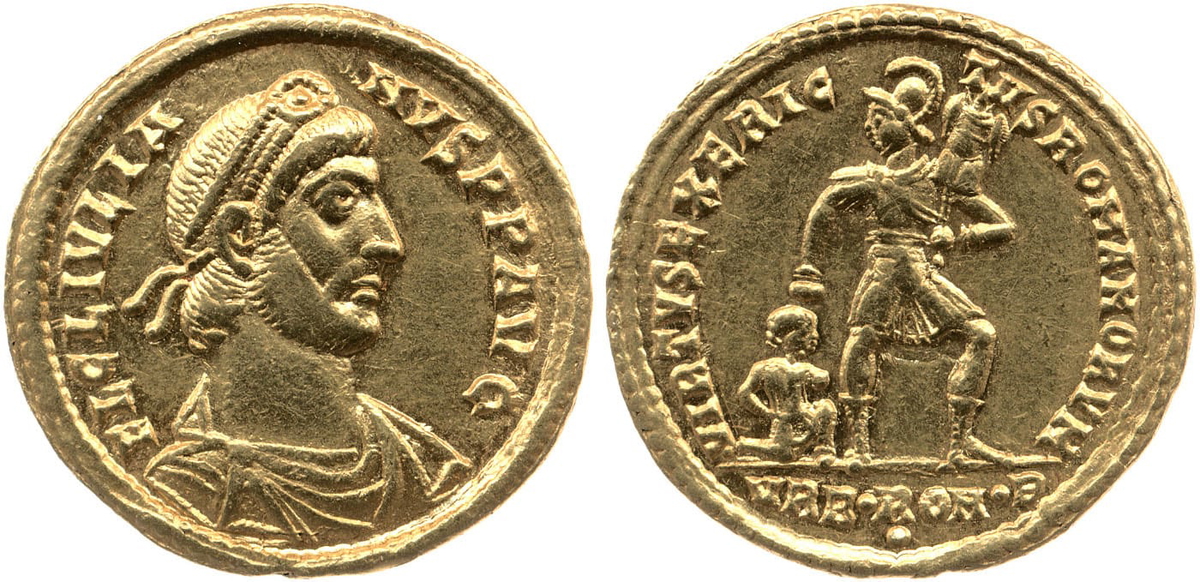 | In April 363 after massing a force of 65,000 men, Julian advanced down the Euphrates River and reached the vicinity of the Sassanid capital, Ctesiphon (just south of modern-day Baghdad, Iraq). Despite the battlefield triumph, the Romans lacked heavy siege equipment and supply lines necessary to breach the heavily fortified capital. Before the Romans could reach its walls, they had to defeat the defending army. Thousands of spearmen and the vaunted mail-clad cavalry, the clibanarii, barred the way. | |
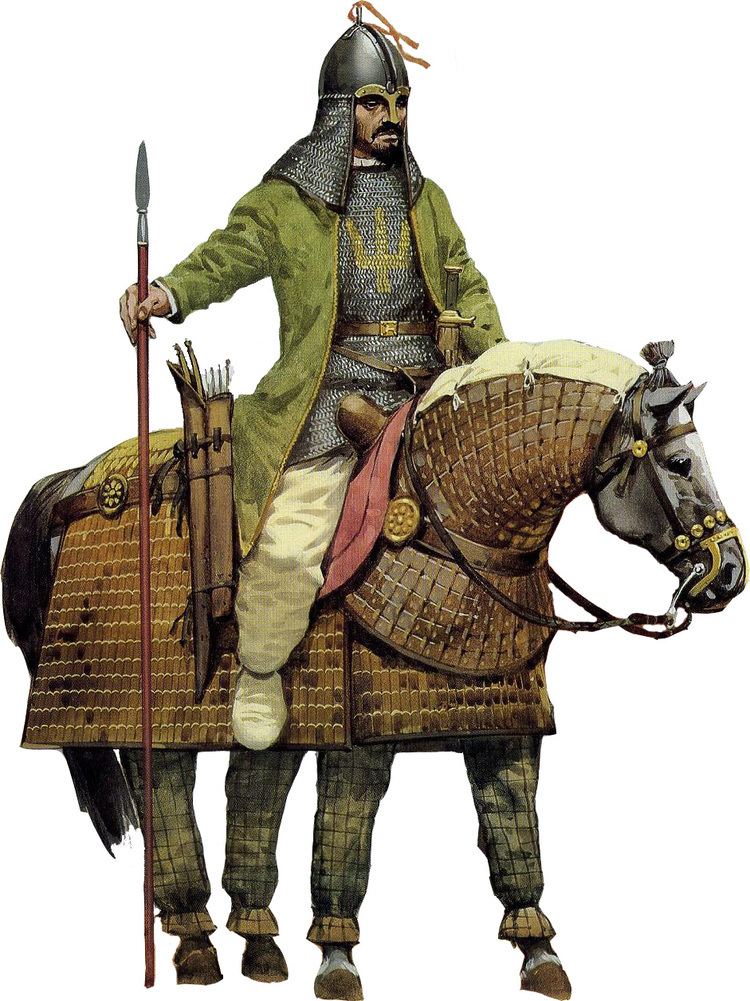 |
Ammianus, the primary source and eyewitness, said the defenders were an impressive sight. Cut off from supplies and facing disease in intense summer heat, Julian ordered a retreat on June 16. During the arduous withdrawal near Samarra, Julian was mortally wounded in a cavalry skirmish. The blow pierced his liver, and he died in his tent three days later at age 31. | 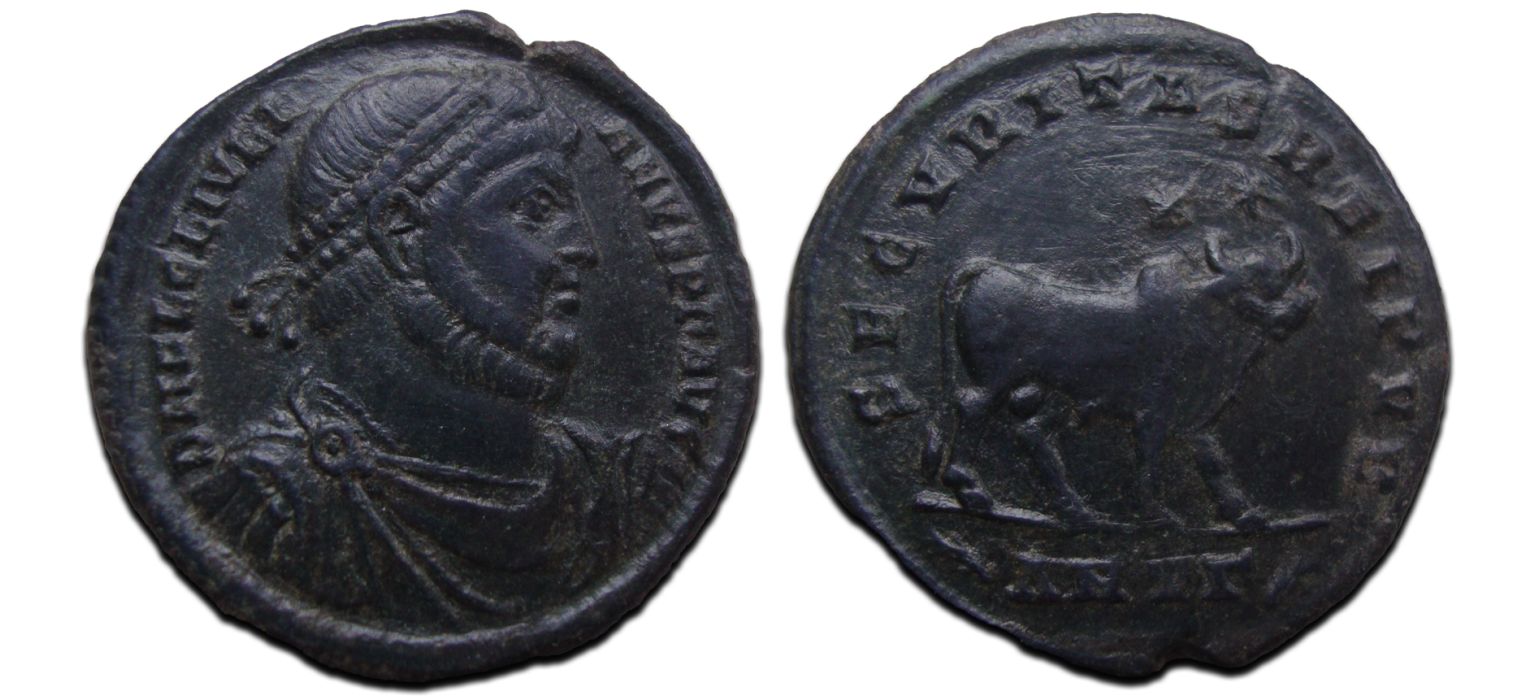
Julian II. AD 360-363. Antioch mint, 3rd officina. Struck AD 361-363. Very fine. €149. |
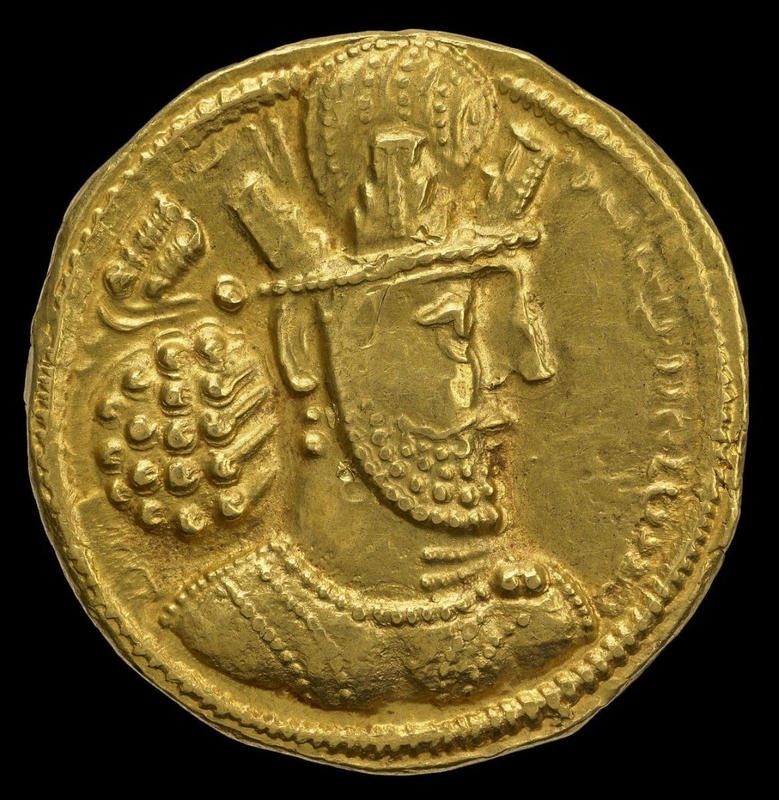
Sassanid king Shapur II, 309-379 CE.
| Leaderless and starving, the Roman army under Julian’s successor, Jovian, was ultimately forced to sue for peace, ceding crucial territories and fortresses to the Sassanids to secure a safe retreat. In a humiliating peace, Rome surrendered five provinces. A decisive Roman tactical victory turned into a strategic catastrophe. | 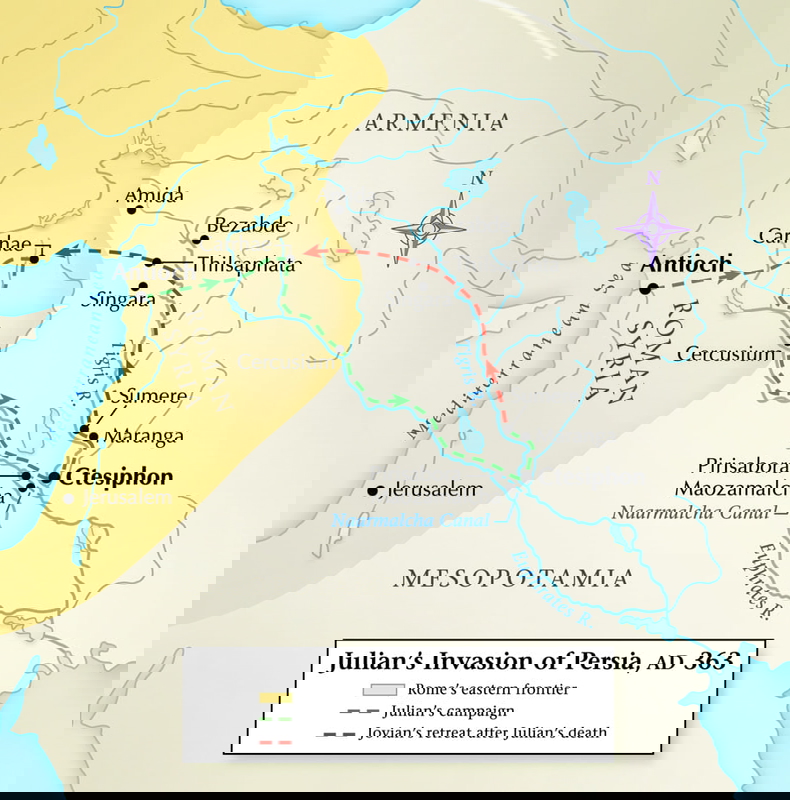 | |


No comments:
Post a Comment