Sunday, May 31, 2026

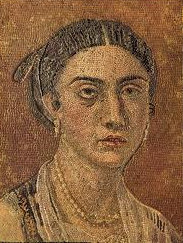
Mosaics of Pompeii

Pompeii has provided valuable insight to the Roman world and most agree it is the richest archaeological site in the world.
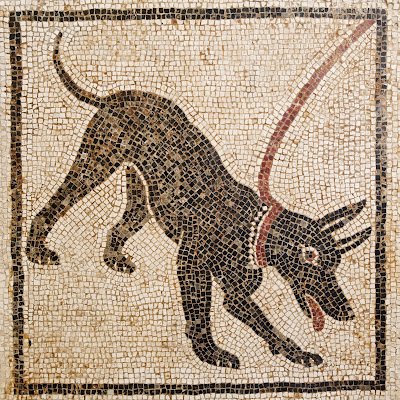
Cave Canem - Latin for "Beware of dog".
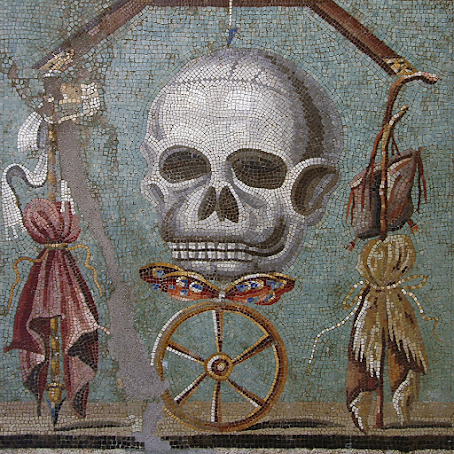
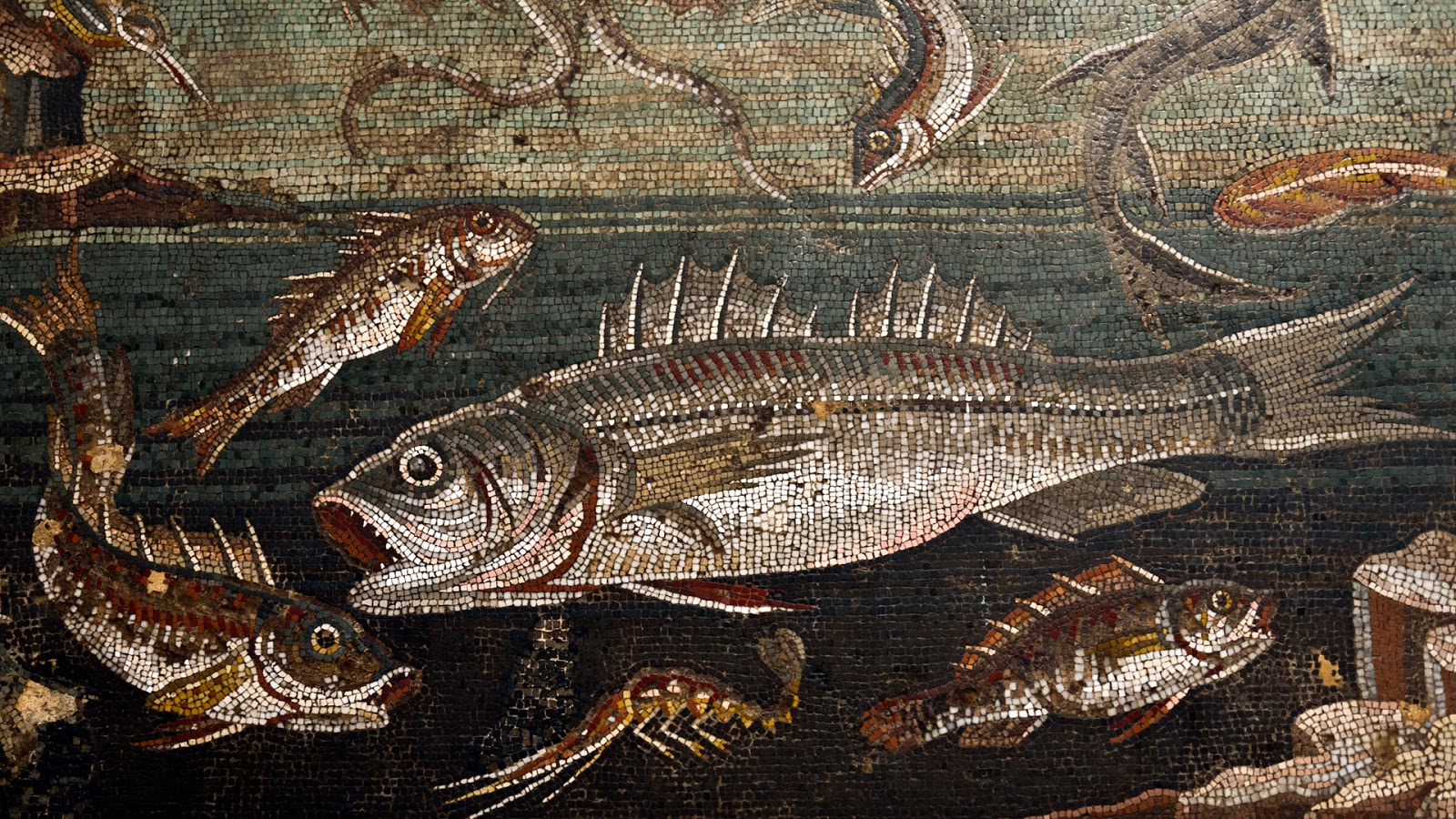
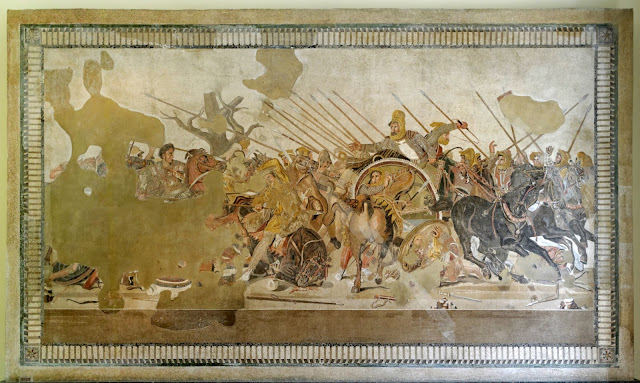
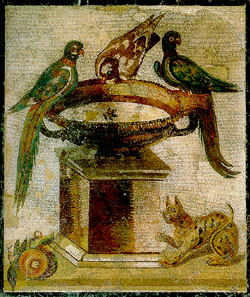
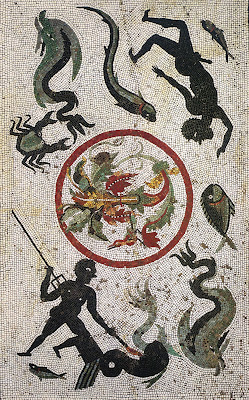
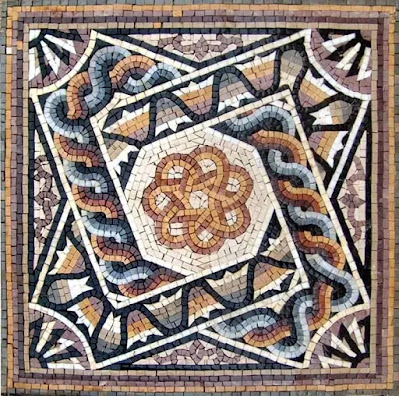
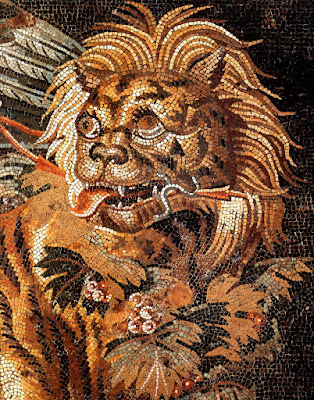
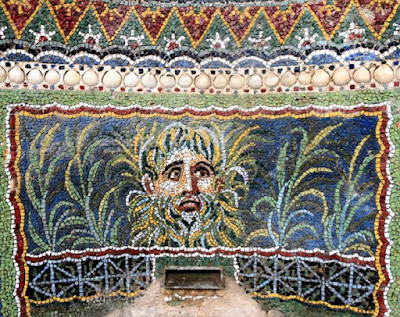
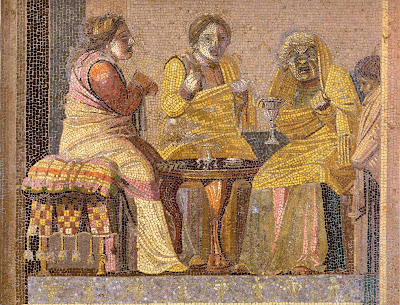
Fine mosaics were a common feature in the villas of the town and depicted scenes from mythology, the owner’s business interests or animal scenes. They are of the highest artistic merit.
Plato's Academy Circle
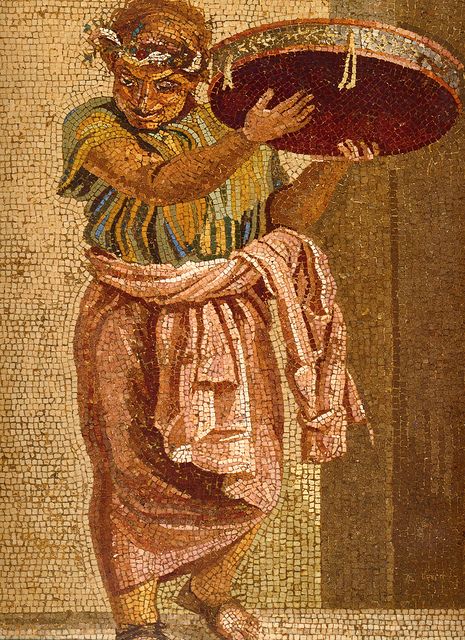
Detail of Musician with tympanon, Villa del Cicerone
House of Neptune

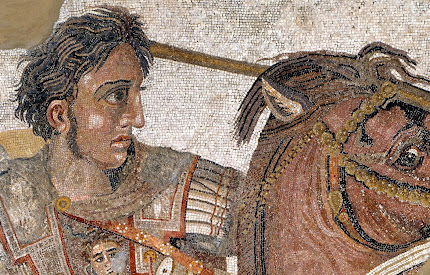
Detail Alexander the Great at the Battle of Issus

Head of Medusa

Detail Satyr and nymph

The House of the Tragic Poet.

Casa dell Orso Ferito - Bear Mosaic
Pompeii House of the Great Fountain Villa del Cicerone

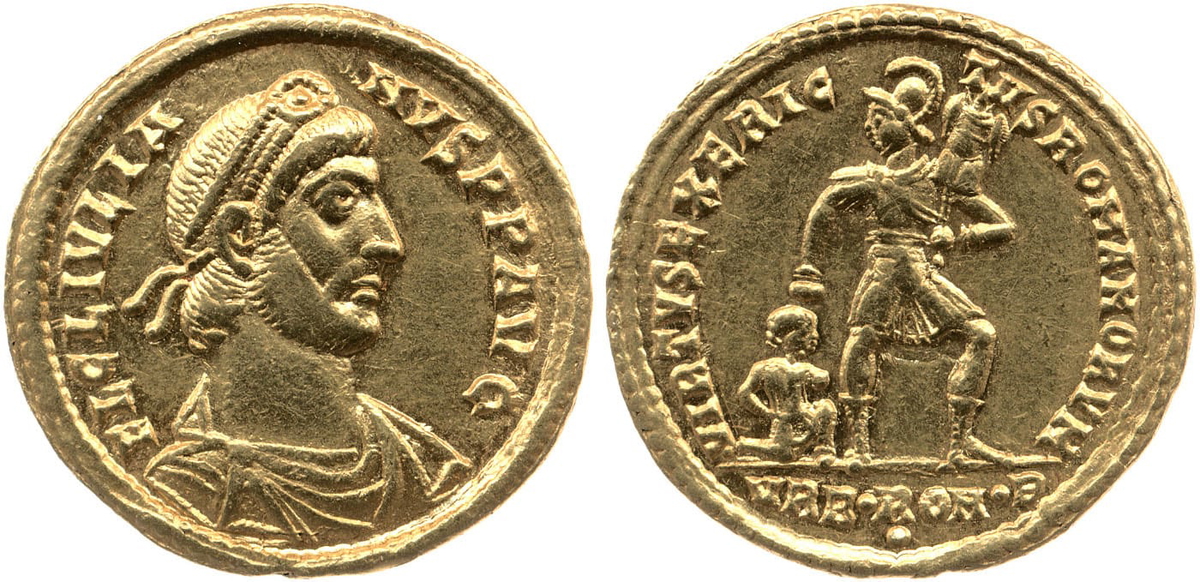
Western Roman Emperor Petronius Maximus

On this day in 455 AD Western Roman Emperor Petronius Maximus was killed.
Petronius Maximus was a wealthy Roman senator who served as Western Roman Emperor for 75 days. He is best remembered for engineering the assassinations of general Flavius Aëtius and Emperor Valentinian III before being stoned to death by an angry mob in Rome. Maximus, along with the eunuch Heraclius, convinced Emperor Valentinian III to assassinate Rome's top military commander, Aëtius, out of political jealousy. Having eliminated Aëtius, Maximus was denied the position of magister militum. In retaliation, he orchestrated the murder of Valentinian III.
On March 17, 455, Maximus declared himself emperor, securing the support of the Senate and bribing palace officials. Maximus tried to secure his position by marrying Licinia Eudoxia, the widow of Valentinian III, and arranging a marriage between his son and the daughter of Eudoxia. This backfired because the latter was already betrothed to Huneric, the son of the Vanadal king Geiseric. When Rome learned that Geiseric was planning an invasion to avenge his honor, the city panicked, including Maximus. On May 31, 455, as Maximus attempted to flee the city from an approaching vandal fleet, he was confronted by an angry mob. Without his bodyguard or retinue to protect him, he was attacked and killed, either stoned by the crowd or slain by a Roman soldier named Ursus. His mutilated body was thrown into the Tiber. His son Palladius, who had briefly held the title of caesar, was likely executed as well. Three days later, Geiseric seized Rome and sacked it over the course of two weeks.
The sack of Rome in 455 demonstrated the weakness of the Western Roman Empire. The term “vandalism” was born. Petronius Maximus gold is an exceptional rarity. The coins command premium prices. Authentic solidi have realized auction prices ranging from 27,000 Euro to well over 100,000 Euro depending on grade.

Saturday, May 30, 2026

The Holzthum Hoard

Archaeologists in northern Luxembourg unearthed a stash of Roman gold coins in 2019 near the ruins of a burgus. (small Roman fortress or tower) The coins were minted during a collapsing Western Roman Empire, just before Roman troops abandoned the region around 406 C.E.
The coins span Roman emperors who reigned during the fourth and fifth centuries—including Eugenius, an illegitimate usurper who ruled the Western Roman Empire for two years. Coins were excavated at an archaeological site in the northern village of Holzthum. The Holzthum Hoard consists of a total of 141 solidii, encompassing nine Roman emperors, who reigned between 364 and 408 AD.
The burial site was a Late Roman military fort, based on the foundations of the building that the cache was deposited in. The Roman emperors were Valentinian I, Valens, Gratian, Valentinian II, Theodosius I, Magnus Maximus and the ursurper Eugenius, of which three solidii were attributed to him, minted in Lugdunum, modern day Lyon. Eugenius, whose brief reign resulted in clashes with Theodosius I, and subsequent demise at the Battle of the Frigidus in September 394, meant few of his coins were minted.

The gold solidi are in excellent condition and because they include very rare examples, experts evaluated the coins at 308,600 euros. The Ministry of Culture paid the valuation as a finder’s fee to the landowner and acquired the coins for the nation. They will go on public display after they are conserved and studied.
Flavius Eugenius (ruled 392–394 AD) was a rhetoric teacher turned Western Roman usurper. Because his reign was brief his gold solidi are among the rarest and most sought-after coins of the late Roman Empire.

Eugenius solidus, Treveri 392–394. Very rare. A superb portrait of fine style and a lovely light reddish tone. Almost invisible marks, otherwise extremely fine. 40,000 CHF in May 2026.
141 solidii around the time of Theodosius I was a huge sum. Roman Cavalryman earned about 180 base copper coins (nummi) per day. At an exchange rate of roughly 7,200 nummi to 1 solidus, one solidus represented about 1.5 months of military service. A standard foot soldier earned less, meaning 1 solidus could represent up to 2 full months of pay.

The stele of Titus Flavius Bassus (eques of the ala Noricum) a Roman cavalryman from 1st century AD.

Friday, May 29, 2026

Battle of Ctesiphon

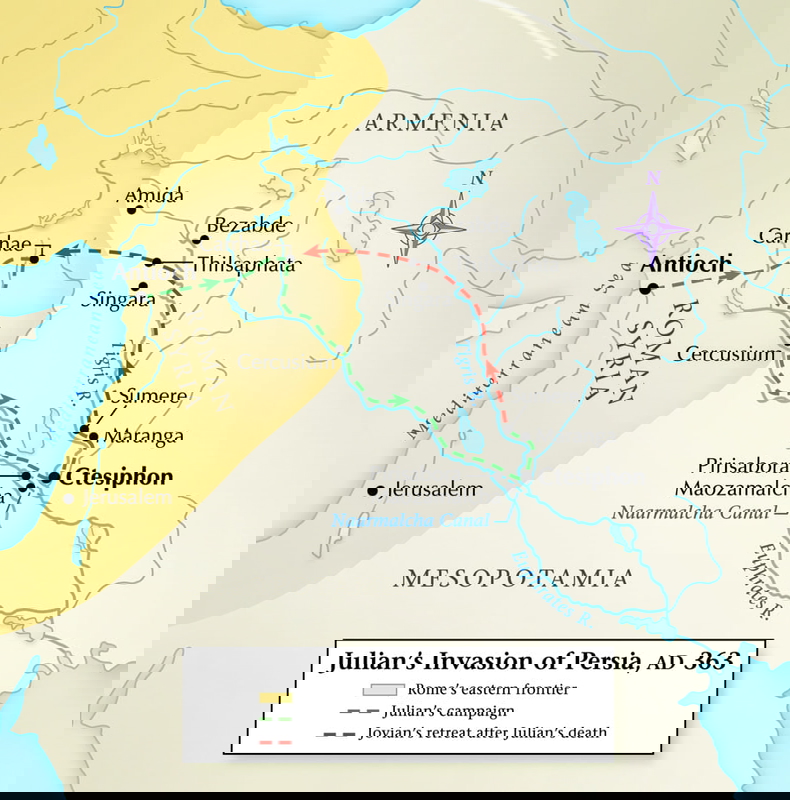
On this date in 363 AD Roman Emperor Julian defeated the Sassanid army in the Battle of Ctesiphon.
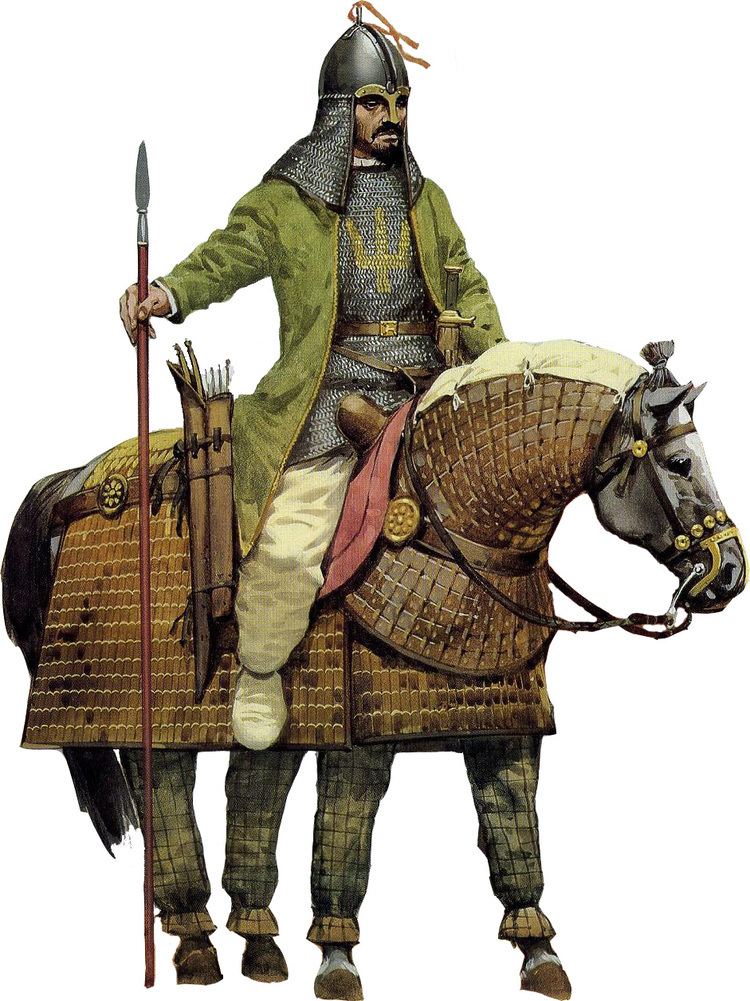
In April 363 after massing a force of 65,000 men, Julian advanced down the Euphrates River and reached the vicinity of the Sassanid capital, Ctesiphon (just south of modern-day Baghdad, Iraq). Despite the battlefield triumph, the Romans lacked heavy siege equipment and supply lines necessary to breach the heavily fortified capital. Before the Romans could reach its walls, they had to defeat the defending army. Thousands of spearmen and the vaunted mail-clad cavalry, the clibanarii, barred the way.
Ammianus, the primary source and eyewitness, said the defenders were an impressive sight. Cut off from supplies and facing disease in intense summer heat, Julian ordered a retreat on June 16. During the arduous withdrawal near Samarra, Julian was mortally wounded in a cavalry skirmish. The blow pierced his liver, and he died in his tent three days later at age 31.
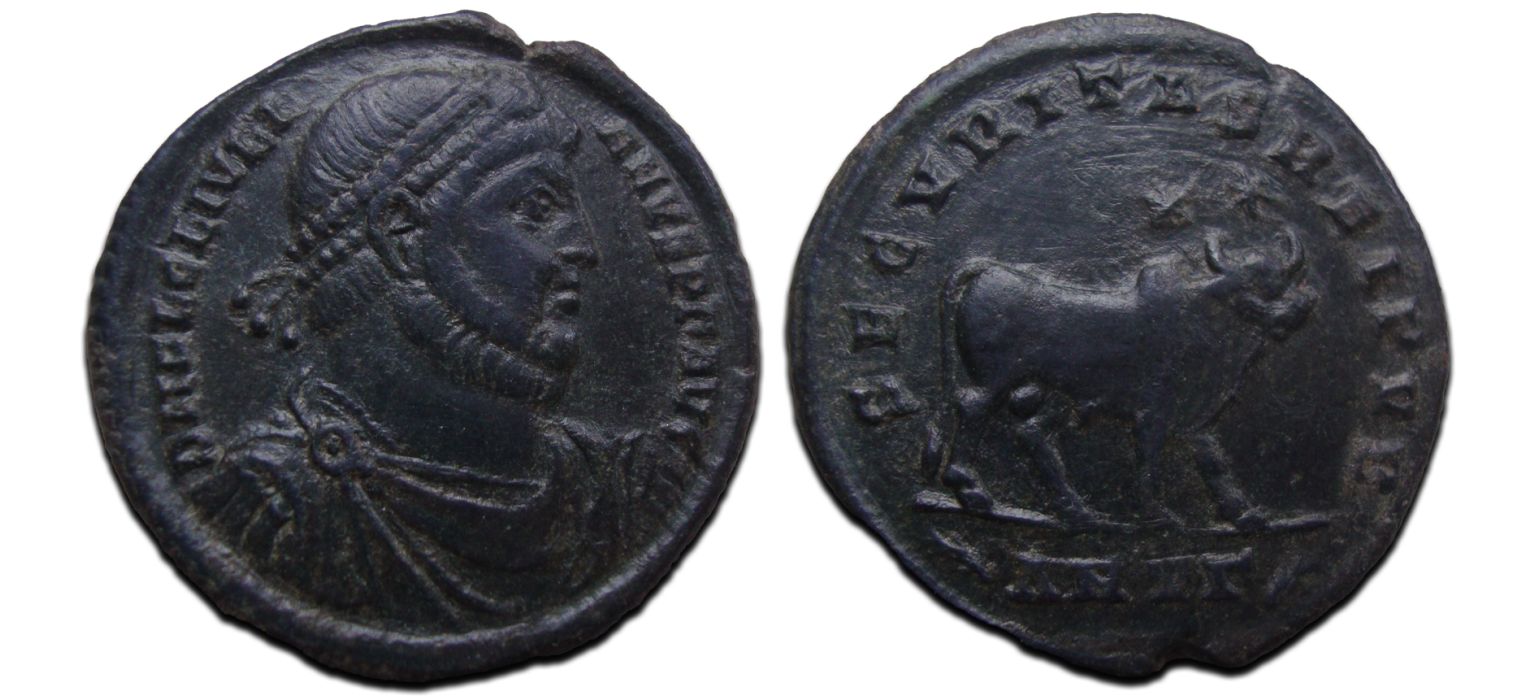
Julian II. AD 360-363. Antioch mint, 3rd officina. Struck AD 361-363. Very fine. €149.

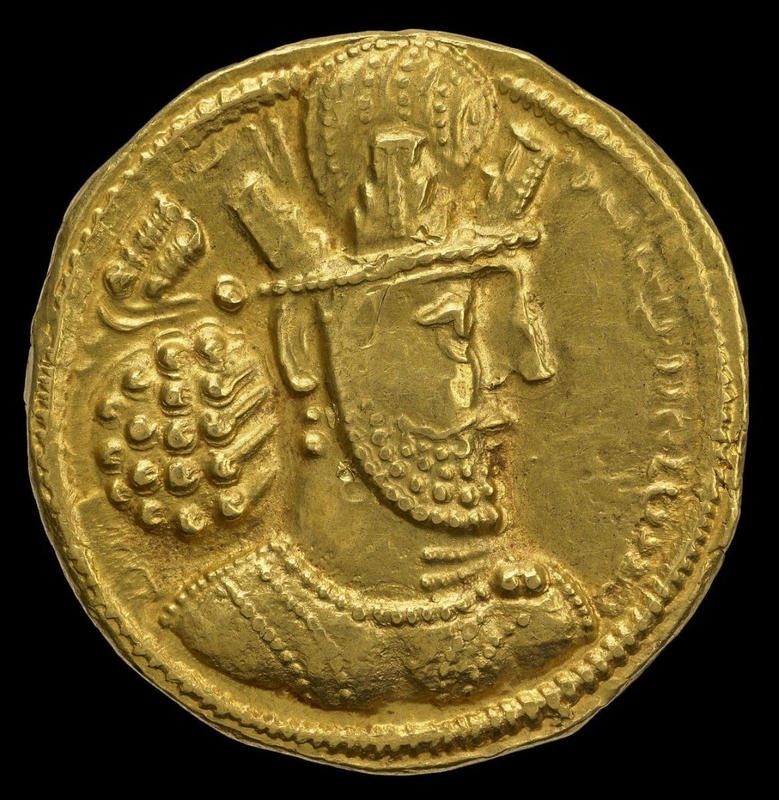
Sassanid king Shapur II, 309-379 CE.
Leaderless and starving, the Roman army under Julian’s successor, Jovian, was ultimately forced to sue for peace, ceding crucial territories and fortresses to the Sassanids to secure a safe retreat. In a humiliating peace, Rome surrendered five provinces. A decisive Roman tactical victory turned into a strategic catastrophe.

Thursday, May 28, 2026

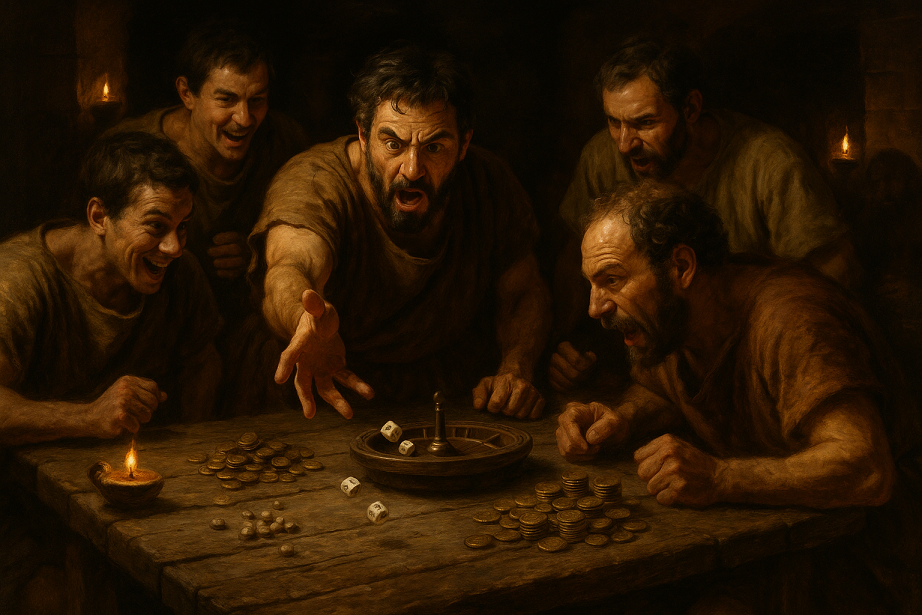
Roman dice - tesserae

Roman dice (tesserae) were commonly six-sided, roughly cubic, and crafted from bone, antler, or bronze. While often visually asymmetrical or lopsided, they typically followed the same numbering convention as modern dice (opposite sides add to seven).
Romans also used tali, or knucklebones with four usable sides, often for gambling.

Romans played a gambling game called Tali using the natural ankle bones (astragali) of sheep or goats. Tali was a common game in Ancient Rome. It originated in Greece and Egypt and was played with four tali.
Largely lost to time, what is known was that all combinations were split into three categories and one sub group. The highest value cast was 'Venus: 6,4,3,1'. Then 'Senio: 6,#,#,#' (Six and any combination of numbers.) then 'Vultures: 6,6,6,6 / 4,4,4,4 / 3,3,3,3'. Lowest roll was 'Canis: 1,1,1,1 (Lowest value Vulture.)

Anyone who cast Canis (Dogs) or Vultures put 4 coins in the pot, the first player to roll a Venus would take the pot. Despite strict laws, gambling was a popular pastime in ancient Rome, enjoyed by everyone from slaves to emperors. Romans were hard core gamblers on dice, board games, and sporting events like chariot races and gladiator contests.

Wednesday, May 27, 2026

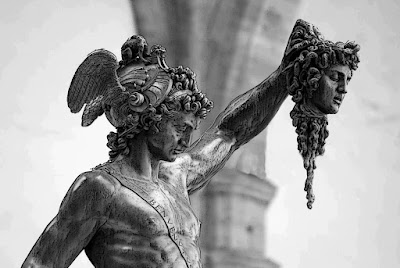
Gorgons

In Greek mythology, a Gorgon is a female creature. The name derives from the ancient Greek word gorgós, which means "dreadful". The term commonly refers to any of three sisters who had hair made of living, venomous snakes. They turned those who beheld them to stone. While two of the Gorgons were immortal, Stheno and Euryale, their sister Medusa was not, and she was slain by Perseus. The concept of the Gorgon is at least as old in classical Greek mythology as Perseus and Zeus. Gorgons were a popular image in Greek mythology, images of the Gorgons were put on objects and buildings for protection.
Representations of full-bodied Gorgons and the Gorgon face, called a gorgoneion, were popular subjects in Ancient Greek, Etruscan and Roman iconography. While ancient Gorgons were depicted as hideously ugly, over time they came to be portrayed as beautiful young women.
One of the earliest representations on coins is on an electrum stater from Parium.

Going further back, there is a similar image from the Knossos palace, dating to the fifteenth century BC.

One of two Gorgon Heads from the cuirass (breastplate) of Macedonian King Philip II
Greek Apollonia Pontica Silver Drachm struck 4th century B.C. Perseus and the gorgon.

Typhon

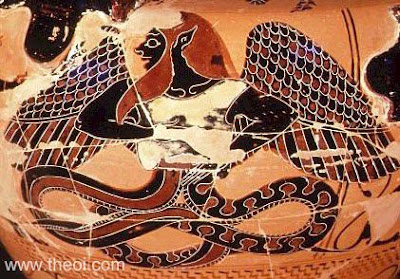
Typhon was a monstrous giant and the most deadly creature in Greek mythology. Typhon was the last son of Gaia, and was fathered by Tartarus.

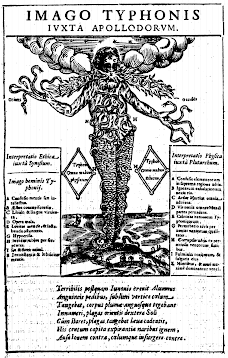
According to Hesiod, Typhon was "terrible, outrageous and lawless", and on his shoulders were one hundred snake heads, that emitted fire and every kind of noise.
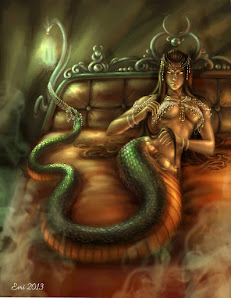
Typhon and his mate Echidna were the progenitors of many famous monsters. Hera, angry at Zeus for having given birth to Athena by himself, prayed to Gaia to give her a son as strong as Zeus, then slapped the ground and became pregnant. Hera gave the infant Typhon to the serpent Python to raise. Typhon become a bane to all mortals.
"Strength was with his hands in all that he did and the feet of the strong god were untiring. From his shoulders grew a hundred heads of a snake, a fearful dragon, with dark, flickering tongues, and from under the brows of his eyes in his marvellous heads flashed fire, and fire burned from his heads as he glared." Typhon "was joined in love" to Echidna, a monstrous half-woman and half-snake, who bore Typhon "fierce offspring"
Typhon challenged Zeus for rule of the cosmos. Angered, Zeus used his thunderbolt to overcome Typhon, who was cast down into Tartarus. Most accounts have the defeated Typhon being the cause of volcanic eruptions and earthquakes.

Typhon mythology is part of the Greek succession myth, explaining how Zeus came to rule the gods.