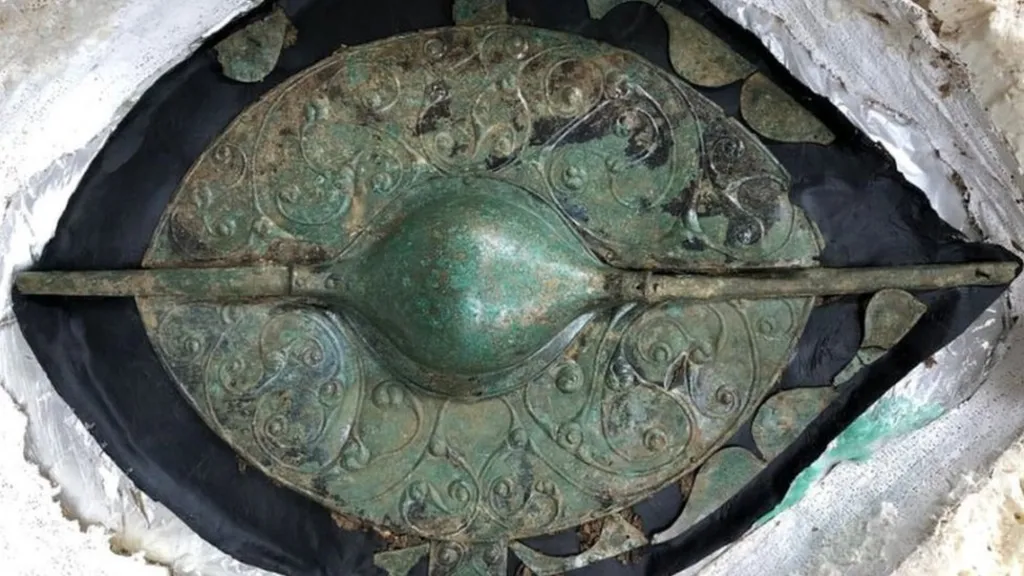
An exceptionally rare Iron Age bronze shield, described as one of the most significant British Celtic art objects of the millennium, was discovered in 2018 in Pocklington, East Yorkshire. Dated between 320 and 174 B.C., the 30-inch-diameter shield features a scalloped border, swirling La Tène style decorations, and a central boss. The bronze shield was found in a huge grave which contained the skeleton of a "very revered" man who probably lived between between 220 - 300 BC.
The bronze shield formed part of a chariot burial, which also contained the upright skeletons of two ponies.
Its owner was a high status male, in his late 40s or older when he died, between 320BC to 174BC. The shield was well used and a slash made by a sword is clearly visible in the upper right hand side. The only other shield like it, the Wandsworth shield boss, found in the Thames river in 1849, is now in the British Museum.
Found in a Celtic grave alongside a chariot and two upright horse skeletons, the shield was discovered face down on the chariot with the body of a man placed on top in a crouched position.



No comments:
Post a Comment