The Kingdom of Macedon gold distater is a trophy coin for collectors. Rare, rich in detail, and resonant with the mythos of Alexander the Great, they are always in demand. This circa 325 to 323 B.C. gold distater of Alexander III (the Great) was issued in either Aegae or Amphipolis and was likely used to pay soldiers. A distater was equivalent to about 20 day’s wages for a Macedonian soldier in wartime, a huge sum. The coin weighed about 17.22 grams.
 | Alexander the Great, born in 356 BC, was one of the most successful military leaders in history. He conquered a large part of Asia and ruled a kingdom that spanned from the Ionian sea to the Himalayas before he was 30 years old. One of his many achievements was a single currency across his empire. Flush with Persian gold he struck the largest Greek gold coin issued up to that time: the gold distater. Alexander the Great was determined to outdo the hero Hercules. Athena was the protector of Hercules, and Alexander adopted her image on his gold coinage, showing her wearing a Corinthian helmet with a coiled snake. |  |
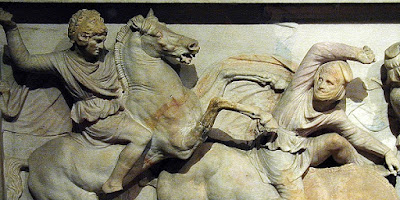
Sarcophagus of King Abdalonymos of Sidon | The reverse is represents Nike, the goddess of victory. Gold distaters were very valuable. This was inconvenient for daily use, so most were melted down. Staters weighed roughly 8.6g of .997 fine purity. Exceptional examples are always in high demand. Coins that were struck during his reign (lifetime issues) are the most desirable by collectors and the rarest. |  |
A top quality Alexander the Great gold distater will bring $50,000.


No comments:
Post a Comment