
 Crespi won the hearts of the people and they began to bring him artifacts. The items came from all corners of the country. | Father Carlos Crespi Croci was a Salesian monk who was born in Italy in 1891. He studied anthropology at the University of Milan before becoming a priest. In 1923, he was assigned to the small Andean city of Cuenca in Ecuador to work among the indigenous people. He devoted the rest of his life to charitable work until his death in 1982. Over time, Father Crespi acquired more than 50,000 objects. |  |
 | Thousands of Crespi’s artifacts are unremarkable but there was a small subset of items that sparked intense controversy. Some of the artifacts are Babylonian in style, others appear to have been carved in gold with strange motifs and symbols that don't resemble objects from any South American culture. Some of the gold plates appeared to show a type of ancient writing. | 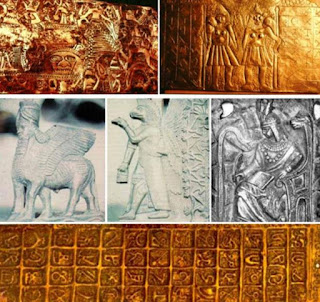 |
| In 1973, Eric von Däniken launched his book ‘ Gold of the Gods ’, claiming the artifacts had been created by a lost civilization with extraterrestrials. Father Crespi and the story of his artifacts shot to fame. According to Däniken, the so-called Metallic Library consisted of thousands of books made with metallic pages. An investigation proved them to be crude fakes.  |
 | Father Crespi’s collection was purchased by the Central Bank of Ecuador and is stored in their vaults, with most being authentic and valuable artifacts. Nowhere to be found however are the artifacts that were photographed and filmed in the 1970s consisting of gold carvings, hieroglyphs, and Sumerian figures. | 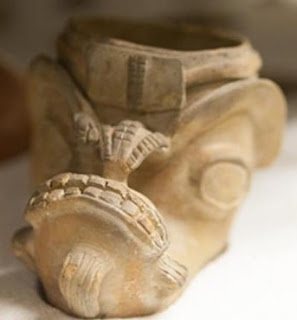 |
 |  | 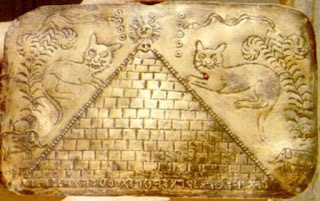 No one at the Universidad Politécnica Salesiana, Church of Maria Auxiliadora or the Central Bank Museum can say what became of the items. | 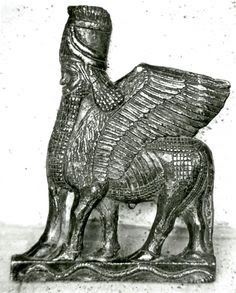 |

No comments:
Post a Comment