 | An aureus of Hadrian depicting Hercules Gaditanus, the principal deity of Gades (modern Cádiz), on the reverse. Issued early in Hadrian’s reign, in AD 119, the coin celebrates Hadrian’s connection to his mother’s native city and associates him with the city’s cult of Hercules. Hercules stands with his club and the apples of the Hesperides, beside a prow and the personification of Gades, with the legend HERC GADIT (Hercules Gaditanus). |

Wednesday, September 30, 2026
Hadrian - Hercules Gaditanus

The mines of Ancient Greece
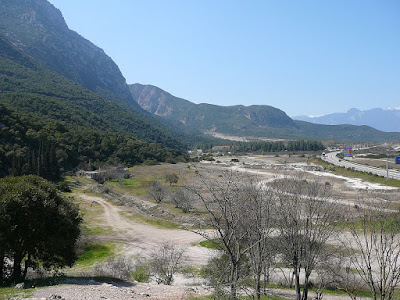 | In 480 BCE, the Persian army defeated the Greeks at the Battle of Thermopylae and invaded parts of Greece. When all seemed lost, Themistocles proposed an unusual plan: the Greeks should not face the superior Persian soldiers on the battlefield, but instead invest in a fleet. In the naval battle of Salamis, the newly-built ships destroyed the Persian fleet. | 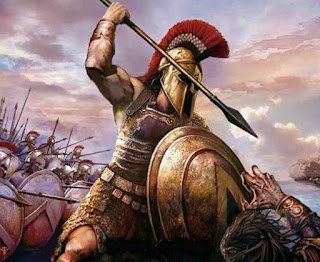 |
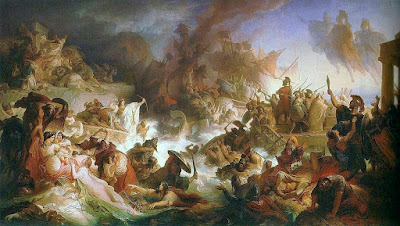 | Without a navy to support their army, the Persians were forced to retreat. The battle of Salamis was a critical turning point. The ships that won the battle of Salamis were paid for with silver from the mines of Laurion. 20,000 slaves worked to provide the silver for the fleet. Without it victory would have been impossible. | 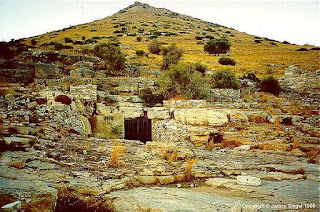 |
 | Discovery of major veins of ore meant that at the beginning of the second Persian invasion of Greece in 480–479 BC, the Athenian state had at its disposal a hundred talents of silver. (about 2.6 tonnes) |  |
 | After the defeat of Persia, Sparta and Athens waged a long and taxing war. As the silver mines became exhausted, a backwater territory, Macedonia, thrived and became the new power. The gold mines of Macedonia played a critical role. The largest gold mines in antiquity were operating in Macedonia and Thrace and they supported the rise of Philip II and his son, Alexander the Great. |
Evolution of gold coins
 | Gold has been used as a medium of exchange and a store of wealth for millennia due to its rarity, desirability, and high value. Ancient gold coins were first introduced for commerce in the kingdom of Lydia (modern Turkey) during the reign of King Croesus in the 6th century BC. The earliest coins were made from electrum, a naturally occurring alloy of gold and silver. Electrum wasn't always desirable. When coinage gained popularity a way to standardize the purity of gold and silver was needed. |
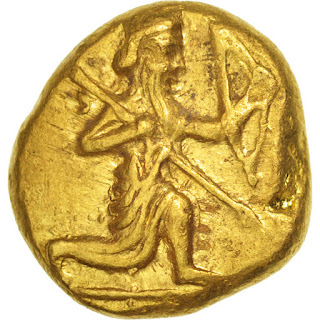 | The first technique of gold parting was invented by Croesus: salt cementation. King Cyrus and the Persians defeated the Lydians in 546 B.C., and the region became part of the Achaemenid Persian Empire. Through trade and conquest the Persians spread the use of gold coinage throughout the Mediterranean. The most popular gold coin of the empire was the Persian daric, introduced by Darius the Great sometime around 500 B.C. Production of darics continued for nearly two hundred years, until the Persians were defeated by Alexander the Great. |  |
 | Alexander and his armies looted some 700,000 troy ounces of gold coins from the Persians. These ‘spoils of war’ were subsequently melted and used to mint coins in his name. In Britain and elsewhere, a number of Celtic tribes issues coins in gold. The early Roman Republic issued few coins in gold, their main coinage being in silver, with bronze or copper for smaller denominations. From the death of Julius Caesar, gold coinage became an important part of the Roman financial system. |   |
Tuesday, September 29, 2026
Roman wine
 | The Roman belief that wine was a daily necessity made it ubiquitous. It was readily available to slaves, peasants and aristocrats, men and women. Ancient Roman wine was a daily staple, not a luxury. It was cloudy, highly acidic, and stored in large clay jars called dolia. With no modern preservation methods, Romans heavily diluted it with water, spices, or honey. Romans fermented and aged wine in large, partially buried earthenware clay vessels. The porous clay and egg-like shapes allowed for micro-oxygenation, which gave the wine grassy, nutty, and dried fruit flavors. |
 | Conditum Paradoxum was a popular sweet, spiced wine made by boiling wine with honey, black pepper, laurel, saffron, and mastic. Posca was a drink for soldiers and the lower classes made by mixing water with soured wine or vinegar. Premium wines were highly prized and expensive. Falernian was a sweet, strong white wine that was the most expensive drink in the empire. Produced on the slopes of Mount Falernus (modern-day Monte Massico) in the Campania/Lazio region of Italy, it was a symbol of luxury for the Roman elite. |
 | Premium, well-aged vintages were very expensive. Pliny the Elder wrote that Falernian is the only wine that takes light when a flame is applied to it. To catch fire a liquid needs be at least 40% alcohol. Wine produced by fermentation tops out around 15 or 16%. It's suspected Romans were accidentally distilling it, concentrating the alcohol through a process they didn't fully understand. The grapes were harvested late, dried, fermented to maximum strength, then aged for fifteen to twenty years in clay amphorae.
The wine trade drew merchants to do business with tribes native to Gaul and Germania, bringing Roman influences to these regions long before the arrival of the Roman military. Evidence of the trade and the significant ancient wine economy is found through amphorae – the ceramic jars used to store and transport wine and other goods. One of the most important wine centres in the Roman world was Pompeii, located on the Campanian coast. An expanse of farms and vineyards covered the slopes of Vesuvius, exploiting fertile soil to produce fine wines. |
Ancient sites without the tourists
 | Ruins are often the centerpieces of a trip overseas. Unfortunately everybody thinks the same: Stonehenge, Chichen Itza, the Great Pyramids, Pompeii. Take a less beaten path and the ruins can be both spectacular and without crowds. The Valley of the Temples in Agrigento is an archaeological site in Agrigento (ancient Greek Akragas), Sicily. It is one of the most outstanding examples of ancient art and architecture in the world. |
| La Ciudad Perdida. Magdalena, Colombia. Reached only after a grueling five-day trek through the Colombian jungle, it’s almost 1,000 years older than Machu Piccu. It was abandoned after the Spanish conquest and only rediscovered in the 1970s. |  |
 | Acrocorinth. Corinth, Greece. Acrocorinth, or Upper Corinth has sheep roaming among the ruins, not tourists. Acrocorinth was continuously occupied from archaic times to the early 19th century. |
| Ruins of Jerash. Jerash, Jordan. The most intact Roman city outside of Italy, Jerash was a crossroads of many cultures. The city flourished until the mid-eighth century CE, when the 749 Galilee earthquake destroyed most of it. The ancient city has been gradually revealed through a series of excavations. |  |
Monday, September 28, 2026
Search for Cleopatra's tomb
.png) | The location of Cleopatra and Mark Antony's tomb is one of archaeology's unsolved mysteries. Taposiris Magna, an ancient temple complex 30 miles west of Alexandria, has been studied..jpg) | The most widely accepted theory places the tomb of the pair somewhere in Alexandria, likely submerged due to a massive earthquake and tsunami in 365 AD. |
 The remains of a temple of Osiris, Taposiris Magna, has been in the spotlight as the site of the tomb of Cleopatra and Mark Antony. The remains of a temple of Osiris, Taposiris Magna, has been in the spotlight as the site of the tomb of Cleopatra and Mark Antony. | Cleopatra VII was born in 70 or 69 B.C. and ruled Egypt as co-regent for almost 30 years. After the forces of Cleopatra and Anthony were defeated by Octavian, she committed suicide in 30 B.C. |  |
 | Cleopatra VII was the last Ptolemaic ruler of Egypt. She was part of a dynasty of Macedonian rulers founded by Ptolemy, who served as general under Alexander the Great during his conquest of Egypt in 332 B.C. In 2010 archaeologists discovered a huge headless granite statue of a Ptolemaic king, and the original gate to a temple dedicated to the god Osiris. It could represent Ptolemy IV. |  |
Tyrian purple found for first time in Israel
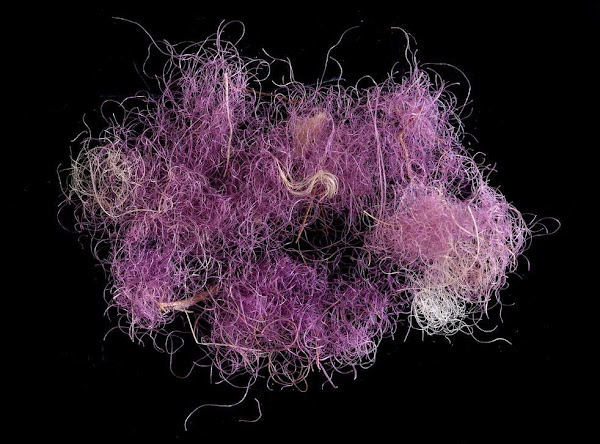 | Purple-dyed fabric dating to the Biblical reigns of David and Solomon was discovered in Israel in 2021. Produced in Phoenicia as early as 1570 BC using the distilled glands of sea snails, “Royal” or “Tyrian” purple was associated with the elite and exremely wealthy. It was more valuable than gold in the ancient world. Radiocarbon dating confirmed the samples found date from about 1000 BC. |
 | True purple (argaman) was produced from a gland located near the rectum of three species of mollusc indigenous to the Mediterranean Sea, through a complex distillation process lasting several days. The find was in the Timna Valley, a vast ancient copper mine. Copper smelting in ancient times required advanced knowledge which was a closely guarded state secret. Those who held this knowledge were of the highest status. |
Sunday, September 27, 2026
First Spear Centurion - Primus Pilus
Every Roman legion, which typically consisted of 5,000 to 6,000 soldiers, had a 'primuspilus' (first spear) centurion, and a 'secunduspilus' (second spear) centurion. These were the highest-ranking centurions and the most reliable officers in the army. In early episodes of 'Rome' Lucius Vorenus is a first spear centurion.
Evocati were veteran soldiers who voluntarily re-enlisted after an offer from their commander. Evocati were better paid and didn't perform tasks like road building.

| The Primus Pilus was the senior centurion of the first cohort in a Roman legion. The Primus Pilus was an experienced, career soldier who had risen through the ranks. He was a trusted advisor to the legate. While normal cohorts were composed of five to eight centuries, the one led by the primus pilus had ten centuries, 800 men. It also had 200 staff, including cooks and clerks. The Primus Pilus was charged with protecting the legionary standard and pay-chest. The legion was largely self-supporting and among its men were specialists, such as engineers, surveyors, and architects, as well as craftsmen. |
 | Only experienced, veteran soldiers who had proven their courage in battle would serve in the role. In modern terms the primus pilus would be a lieutenant colonel. The primus pilus was a well paid position. Only 8 officers in a full legion outranked the primus pilus.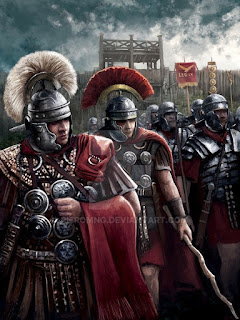 | 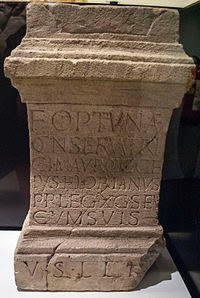 Altar by Marcus Aurelius Cocceius Florianus, Primus Pilus of Legio X Gemina. |
Persia: Ancient Iran and the Classical World
 | An exhibition at the Getty Villa in Los Angeles was entitled "Persia: Ancient Iran and the Classical World".   |
 Achaemenid earrings with inlays, dated to 400-300s BC. |   |  |
Judaea Capta
 | Judaea Capta coinage was a series of coins issued by Vespasian and his sons to celebrate the capture of Judaea. Coins inscribed Ivdaea Capta (Judea Captured) were issued throughout the Empire. Coins were issued by Roman Emperors Vespasian, Titus, and Domitian to celebrate the victory over the Jewish revolt and the destruction of Jerusalem's Second Temple in 70 CE. |
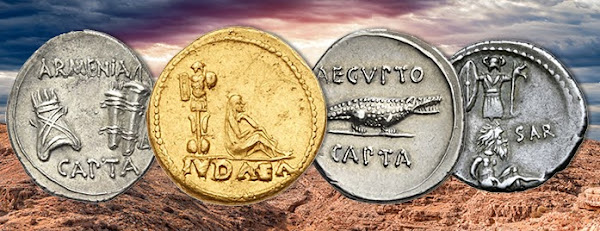 | The Great Revolt between the Romans and the Jews in 63 CE occured after Roman governor Gessius Florus looted the Second Temple. The First Jewish Revolt (66–73/74 CE), was the first of three major rebellions by Judaea against Rome. In 69 CE, Galba, the popular governor of Hispania (Spain), rebelled against Nero marking the start of the 'year of 4 emperors'. |
 Vespasian. AU Aureus (7.05 g), AD 69-79. ‘Judaea Capta’ type. | Winner Vespasian levied the punitive Fiscus Judaicus tax against all five million of his Jewish subjects. Vespasian then began striking vast numbers of Judaea Capta coins in all denominations. One element of the Judaea Capta imagery is a group of military trophies. Captured weapons and armor hung from a tree or post represents a military victory over the defeated enemy. |  |
  | A rare shekel produced in Year 4 plus the ultimate rarity, a Year 5 shekel. The Second Revolt was circa 132-135 CE. |  Judaea Capta gold aureus features the inscription DE IVDAEIS (Latin - "concerning the Jews")  Hybrid features the strange legend IVDAEA AUGUST. |
 | Titus, AD 79-81. Gold Aureus. A true rarity, the date is early in AD 70, which places it before or during the siege of Jerusalem (May-September 70). Titus as Caesar features the legend IVDAE DEVICTA, or “Judea is conquered,” It realized $956,000 in 2011. The undated coin is the only known example with a complete inscription on the shield. |  |
 |  Galba ruled for eight months from AD 68 to 69. His aureus is one of the great rarities of Roman coins. This example, near XF, made £52,000. |
Subscribe to:
Posts (Atom)