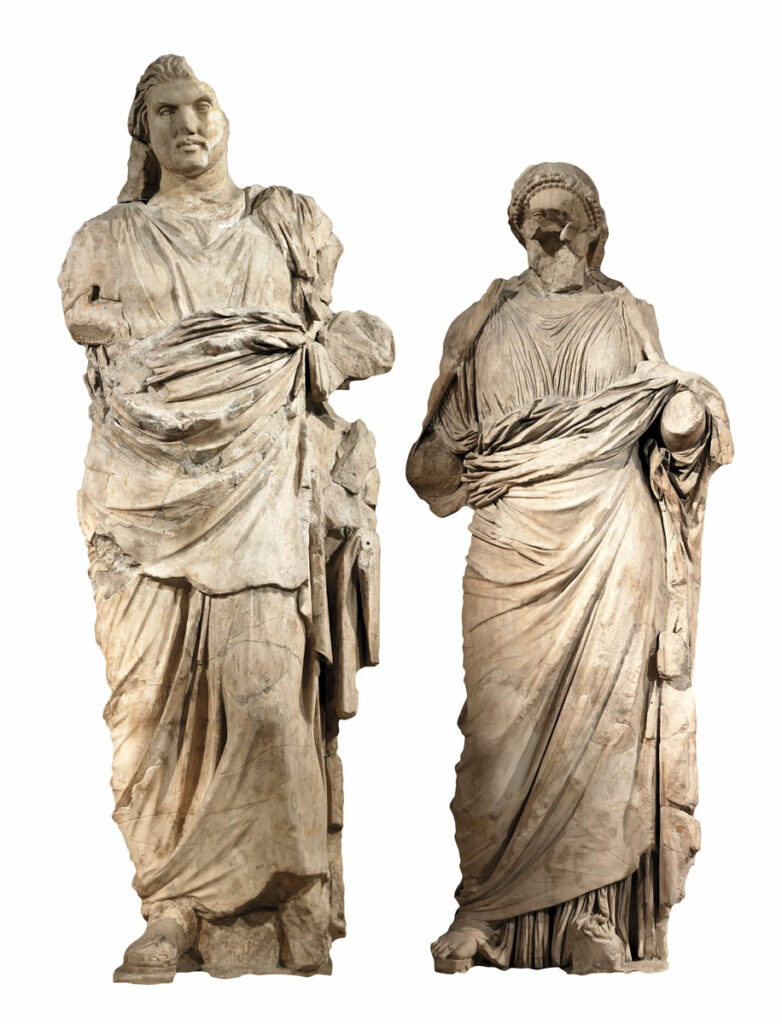
 | Mausolus ruled Caria, a region on the southwest coast of modern Turkey, in the 4th century BC. He was a satrap under the Persian Empire, but he operated as an independent king. He built his capital at Halicarnassus into a showpiece city. He was married to his own sister, Artemisia.
 | When Mausolus died in 353 BC, writers say she was so consumed by grief that she mixed his ashes into her drink and swallowed them. When the island of Rhodes saw a grieving widow on the throne they sent a fleet to take her city. Artemisia hid her ships, let the Rhodians land, and captured their fleet. She sailed the Rhodian ships back to Rhodes, decorated with victory wreaths. Rhodes thought their own navy was coming home in triumph and let them enter. |
She took the island and put up a statue of herself in Rhodes celebrating the conquest. She died about two years after her husband, before the tomb was finished. The Mausoleum was about 45m (148 ft) in height, with the four sides adorned with sculptural reliefs, each created by one of four Greek sculptors: Leochares of Athens, Bryaxis of Halicarnassus, Scopas of Paros, and Timotheus of Epidaurus. The Mausoleum contained 400 freestanding sculptures. | |



No comments:
Post a Comment