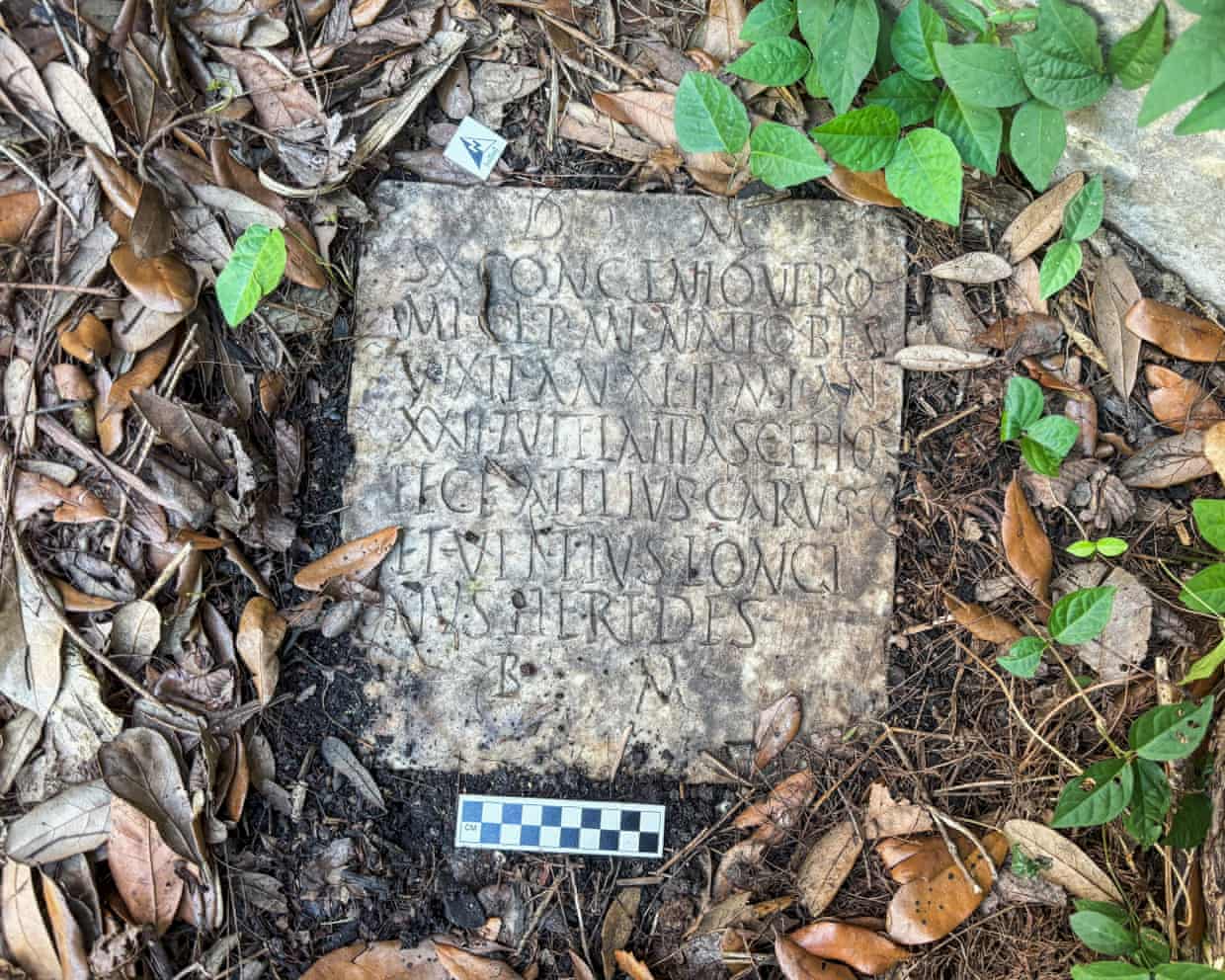
The Roman grave marker found in the back yard of a New Orleans home was inherited and left there by the granddaughter of a US soldier who fought in Italy during the second world war. The headstone dedicated to circa second-century Roman sailor Sextus Congenius Verus had been stolen from the city museum of Civitavecchia, Italy. Erin Scott O’Brien told local media outlets that her grandfather, Charles Paddock Jr, kept the artifact in a display case at his home in New Orleans until his death in 1986.
- "To the Spirits of the Dead [Dis Manibus] for Sextus Congenius Verus, soldier of the praetorian fleet Misenensis, from the tribe of the Bessi [of Thrace]"
- "(who) lived 42 years (and) served 22 in the military, on the trireme [warship] Asclepius"
- "Atilius Carus and Vettius Longinus, his heirs, made (this) for him well deserving"
|
 | The Classis Misenensis (Fleet of Misenum) was the senior and most important imperial Roman navy fleet, established by Augustus in 27 BC to protect the Western Mediterranean and act as a central naval reserve. Based at Portus Julius near Misenum, it served the emperor directly, maintaining security and conducting transport duties. |

Rome's Port of Ostia (Portus Augusti) was officially inaugurated in 64 AD. Nero's famous bronze sestertius marks the event. | A second-century Roman sailor was typically a non-citizen auxiliary serving in the Classis (Roman Imperial Navy). Often recruited from coastal provinces, they were professional mariners and soldiers. Although paid less than legionaries, they received similar rations. Sailors spent their time ferrying officials, escorting grain fleets (annona), suppressing pirates, and performing routine maintenance on vessels. They served up to 26 years before earning full Roman citizenship. |


No comments:
Post a Comment