On this date in 70 CE Roman forces led by future emperor Titus breached the second of three fortified walls surrounding Jerusalem.
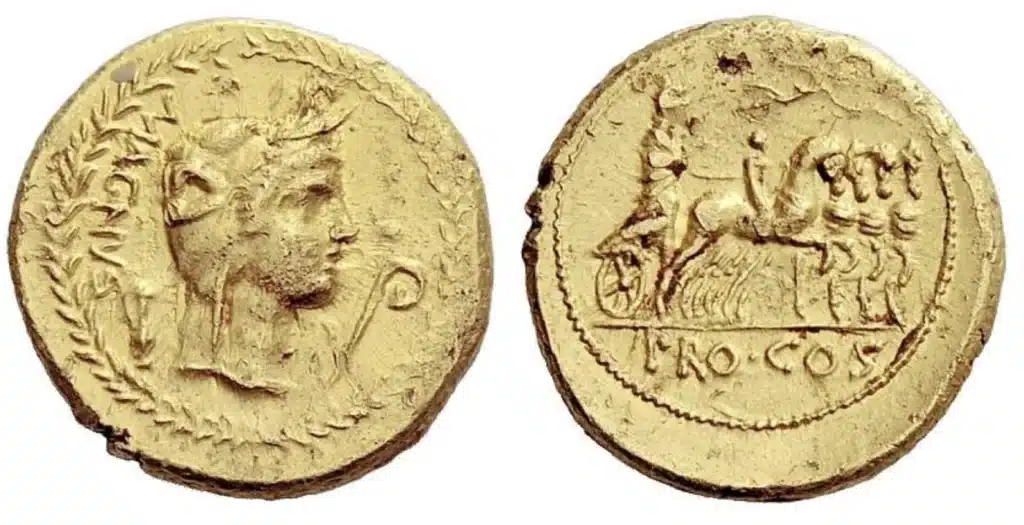
The first coin attributed to Pompey is a rare gold aureus, probably issued at Rome on his triumph in 71 BCE. Five are known. | In 63 BC Roman general Pompey captured Jerusalem. The Romans intially ruled through a local client king but later Jerusalem became a directly ruled province, marked by oppressive governors. Discord culminated in 66 CE in the First Jewish Revolt. The revolt was successful at first: Jewish forces quickly expelled the Romans from Jerusalem, and a revolutionary government was formed. Nero sent general Vespasian to meet the Jewish forces, an endeavour that pushed the majority of the rebels into Jerusalem by the time Vespasian was proclaimed emperor in 69 CE. | |
 | In April 70 CE Roman general Titus besieged Jerusalem. Coinciding with Passover, the Romans allowed pilgrims to enter the city but refused to let them leave—thus depleting supplies in Jerusalem. Within the walls, the militant Zealots struggled with other Jewish factions, which weakened the resistance further. The Romans encircled the city with a wall to cut off supplies to the city completely. The Flavians seized power amidst the Year of the Four Emperors in 69 CE, and used the conquest of Jerusalem as imperial propaganda. Judaea Capta coinage was issued in all denominations.
|  |
The immense wealth plundered from the Temple helped finance monuments in Rome, including the Colosseum and the Arch of Titus.
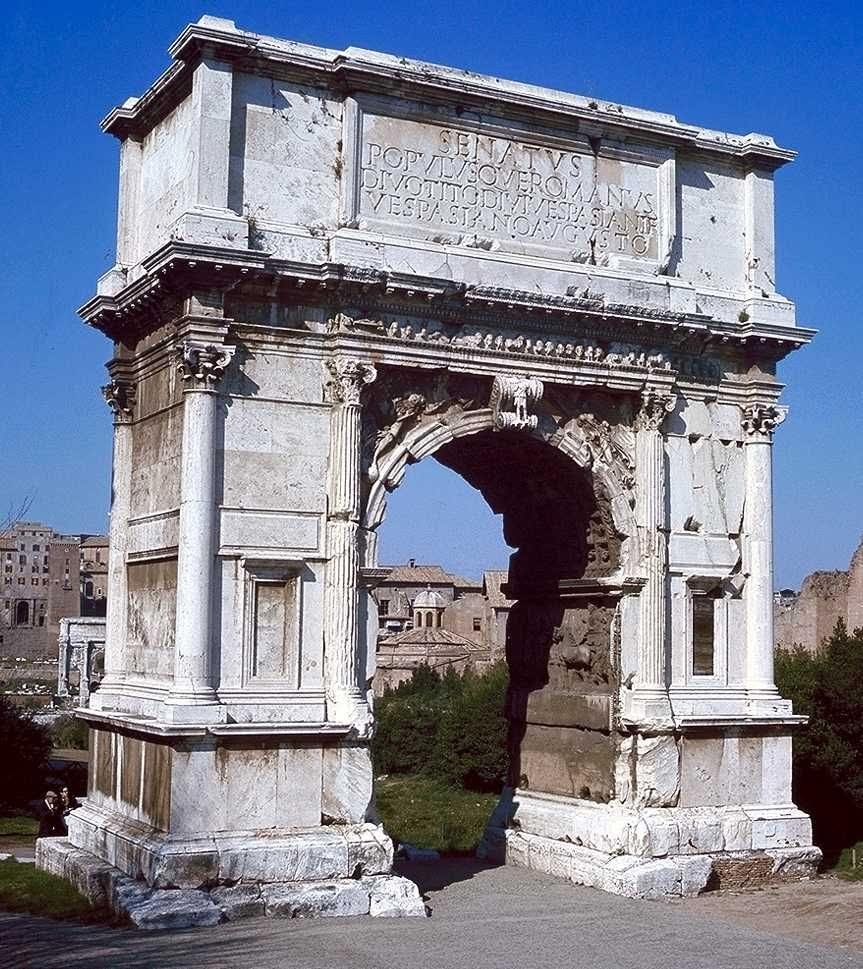 | By August 70 CE the Romans had breached the final defenses and massacred much of the remaining population. They also destroyed the Second Temple. The loss of the Temple is still mourned by Jews today during the fast of Tisha be-Av. | 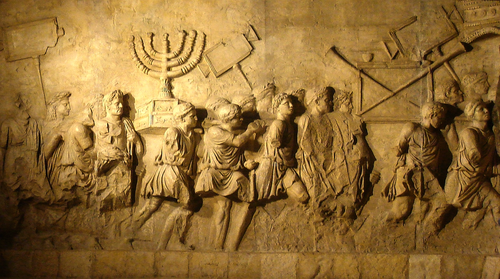
Relief on the Arch of Titus depicting temple spoils of 71 CE. |
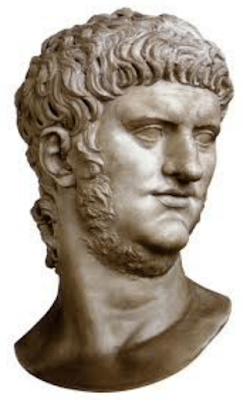 | In 2017 excavations at Mount Zion in Jerusalem discovered a gold coin bearing the likeness of Roman Emperor Nero. The coin had been struck in either 56 and 57 AD. The aureus bears the portrait of a young Nero as Caesar. Researchers said that the coin was likely part of a Jewish store of wealth, hidden before their mansions were razed – along with the rest of the city – by Titus and the Roman legions. The coin was likely overlooked by looting Roman soldiers. | 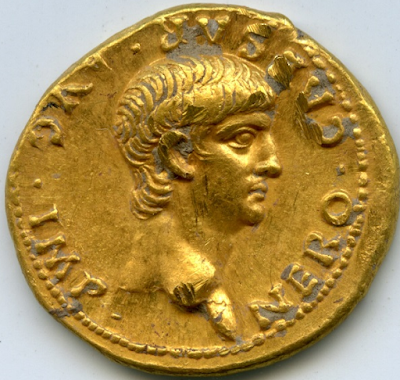 |


No comments:
Post a Comment