The Year of the Six Emperors occurred in 238 AD when Maximinus Thrax, Gordian I, Gordian II, Pupienus, Balbinus, and Gordian III were recognized as emperors.
 | The Year of the Six Emperors began during the short reign of Maximinus Thrax, who had ruled since 235. Thrax’s reign is considered by many scholars to be the start of the Crisis of the 3rd Century (235–84 AD), during which the Empire was beset by invasions, plague, civil wars and economic difficulties. | |
 | An uprising against corrupt tax officials in the province of Africa spurred locals to proclaim the provincial governor and his son as co-emperors. The Senate supported the claim, causing Maximinus Thrax to march on Rome. Forces of the governor of Numidia entered Carthage in support of Maximinus, and easily defeated the Gordians.
The younger was killed in battle and the elder committed suicide by hanging on hearing news of the defeat. |  | |
After the African revolt was crushed, the Senate, fearing reprisal from Maximinus for supporting the now-dead Gordians, proclaimed Pupienus and Balbinus as new emperors and charged them with defending the capital.
 | The Senate elevated the 13-year-old Gordian III, grandson of Gordian I. During the subsequent siege of Aquileia, Maximinus was assassinated by his own troops. Pupienus and Balbinus ruled for 99 days before being murdered by the Praetorian Guard, leaving Gordian III the sole ruler of the empire.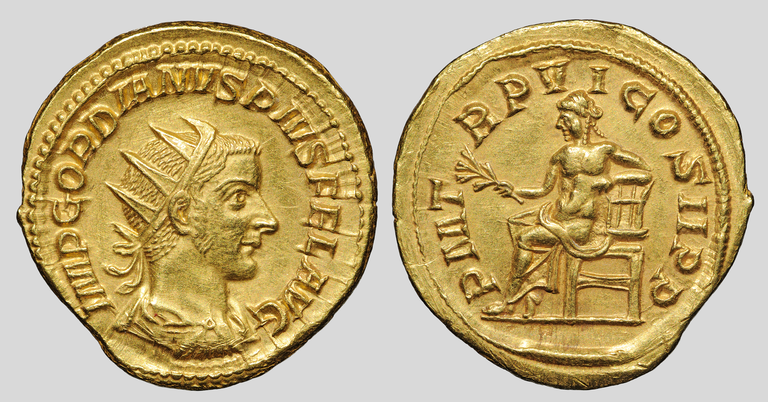 | |
The exact fate of Gordian III is unclear, but he was most likely killed at the Battle of Misiche in early 244 AD.


No comments:
Post a Comment