Friday, May 1, 2020

3 Roman shipwrecks found in Egypt

Egypt announced in 2017 that archaeologists had uncovered three Roman shipwrecks off the country's north coast. The discoveries were made off the coast of Alexandria, in Abu Qir Bay.

Three gold coins that date to the time of Augustus were found.
Work in Alexandria’s harbor began in 2016, with researchers diving down to the sunken city of Heracleion.

Thonis-Heracleion was founded around the 8th century BC, underwent a series of natural catastrophes, and eventually sunk entirely into the depths in the 8th century CE.

Tuesday, April 21, 2020

Gold Treasure of Nagyszentmiklos

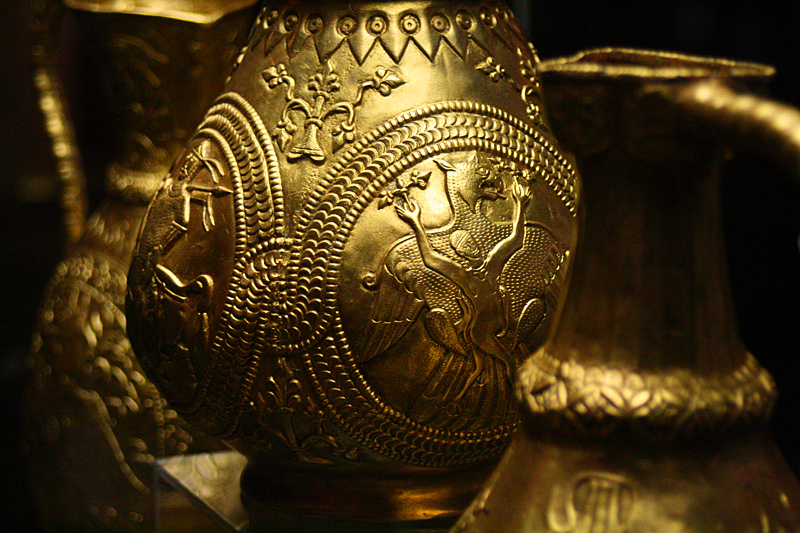
The Gold Treasure of Nagyszentmiklos is the largest known hoard of early medieval gold vessels. The Treasure of Nagyszentmiklos was discovered accidentally in the Banat region of the Habsburg Empire in 1799. Its total weight is about 10 kg. It is remarkable for its quality and precision of craftsmanship.
Studies over the last few decades have revealed that the treasure was gathered over a long period of time, from the late 7th to the late 8th century AD, and seem to confirm its links to the Avar culture.

Tuesday, April 14, 2020

Hawaiian Kona-style statue of the god of war Ku-ka’ili-moku - $7.5m

Offered in the 'Collection Vérité' on 21 November 2017 at Christie’s in Paris.

Hawaiian figurative sculptures are incredibly rare. Kamehameha I associated himself with the war god Ku-ka’ili-moku — the ‘land snatcher’ or ‘island eater’. This example was made circa 1780-1820 from the Metrosideros, a tree found in the high mountains of Hawaii. The figures that are known are all in museums. The statue made a whooping $7.5m blowing well past it's $3.5m estimate.


Also being auctioned is a Uli figure, which is a type of wooden statue carved only in the villages of New Ireland in Papua New Guinea. $ 3.4m


Tribal art is rising in value and has been doing so for many years. The reason is extreme rarity, there are more and more museums, but fewer and fewer pieces.

Sunday, April 12, 2020

Teotihuacan: City of Water, City of Fire

In 2017 the de Young Museum hosted the exhibit “Teotihuacan: City of Water, City of Fire.” More than 200 artifacts were featured, some never displayed before. Teotihuacan was established in the first century BC. By the fifth century it had evolved into an important urban center and multicultural metropolis, becoming the largest city in the Western Hemisphere. The so-called “City of the Gods” is estimated to contain 100,000 people at it's peak. Around 550 CE, the city was destroyed by fire.
900 years after its destruction, the Aztecs made their way into a ghost city in the northeastern part of the Valley of Mexico. There, the Aztecs considered Teotihuacan to be the city where the gods brought the world into existence.

Teotihuacan means the place where men become gods.

Monday, March 16, 2020

Stolen Roman ballista stone returned


The thief cited the current coronavirus outbreak as the reason for returning the artifact.
A man has returned an ancient Roman projectile that he took from an ancient site in Jerusalem 15 years ago. The man took the ballista stone from the City of David in the Jerusalem Walls National Park.
The ballista stones at the City of David likely date to the Roman siege of Jerusalem and the destruction of the Second Temple in 70 CE.

Wednesday, March 11, 2020

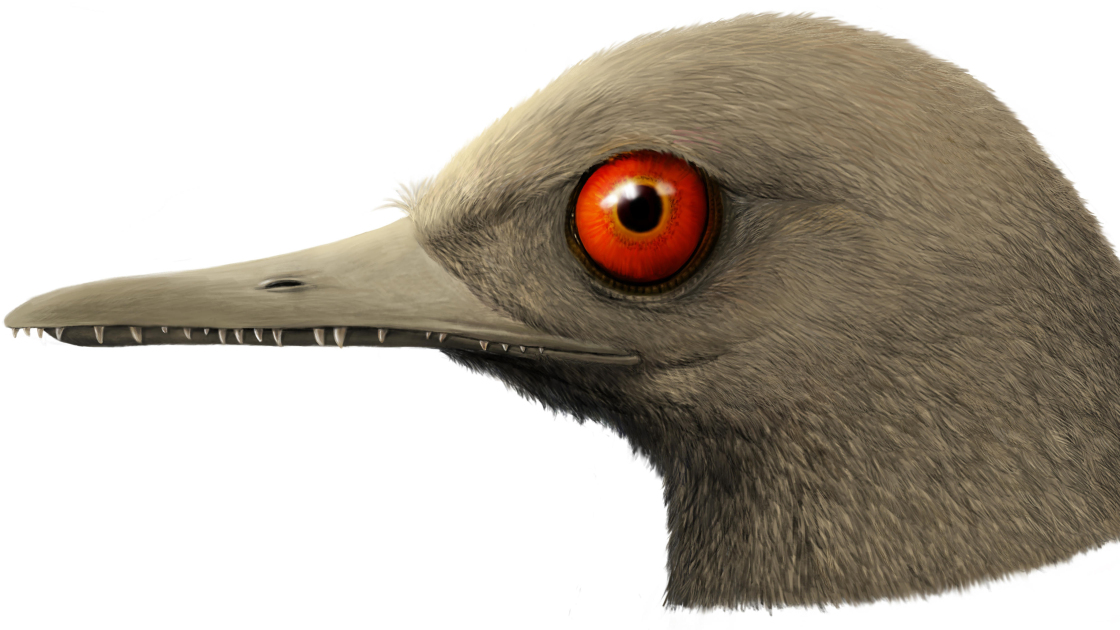
Hummingbird sized dinosaur - Oculudentavis khaungraae

A hummingbird-sized predatory bird is the smallest known dinosaur to live during the Mesozoic Era, between 252 million and 66 million years ago. Of modern birds the bee hummingbird is the smallest. The new species, dubbed Oculudentavis khaungraae, was similar in size.

The earliest birds, such as Archaeopteryx, arose around 150 million years ago, and this find suggests that bird body sizes were reaching their lower limit by 99 million years ago.
Tomography scans reveal a 3-D image of the bird’s skull, preserved in amber. They show the deep eye sockets and sharp teeth of a predator. Researchers need to figure out where the new species belongs on the tree of life.

Tuesday, March 10, 2020

SS Central America - Territorial Gold Coins


Second finest known 1854 Kellogg $20 Territorial gold coin, graded PCGS MS62+
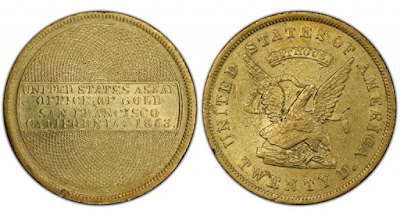
Coins from the SS Central America include rare Territorial Gold Coins. "Territorial" is a term that encompasses a wide range of coins issued by private minters, semi-official entities, entrepreneurs, and opportunists.
Rare 884 THOUS variety 1853 U.S. Assay Office $20, graded PCGS AU55+

Small Head variety 1852 Wass Molitor $5 gold coin, with a counterstamp advertising Sacramento dentist W.W. Light
The coins arose out of necessity and were created to fill a void that government would not fill. Until they intervened, these issues flourished; once the government entered the market, they were made illegal.
One of the finest known 1855 Wass Molitor Small Head variety $20 gold coins, PCGS AU58
See ----->https://psjfactoids.blogspot.com/2018/07/superb-california-fractional-gold-coins.html

Saturday, March 7, 2020

Ancient Jade Axe found in China.


A Ritual Jade Yue (battle-axe), Western Zhou Dynasty 西周玉鉞. Mottled with teeth inlays on the edge, for ritual purposes in Shang and Zhou Dynasty.
Archeologists discovered jade ware that dates back over 4,000 years in 2018 at a site in central China's Hubei Province. Jade battle-axes, an astronomical instrument and a tube, dating back to between 4,600 to 5,100 years ago, have been unearthed at the Mulintou site in Baokang County. Skeletons, stoneware and pottery have also been found at the site. A jade battle-axe was a symbol of power. The Qujialing culture is a late Neolithic culture discovered in the middle reaches of the Yangtze River.

Monday, February 17, 2020

Chinese Porcelain Vase found in a shoebox sells for $19 Million

In 2018 an 18th century Chinese vase found in a shoebox in an attic and forgotten for decades was sold in France for 16.2 million euros ($19 million) at auction in Paris. The price was more than 20 times the estimate Sotheby's had put on the item. It was the highest price reached for a single item sold by Sotheby's in France.

The 30 cm, bulb-shaped vase, painted in delicate shades of green, blue, yellow and purple, was described as an exceptionally well-preserved porcelain vessel made for an emperor of the Qing dynasty. The vase bears a mark of the Qianlong Emperor who ruled China from 1736 to 1796.

Wednesday, February 12, 2020

Thanatotheristes degrootorum - "reaper of death"

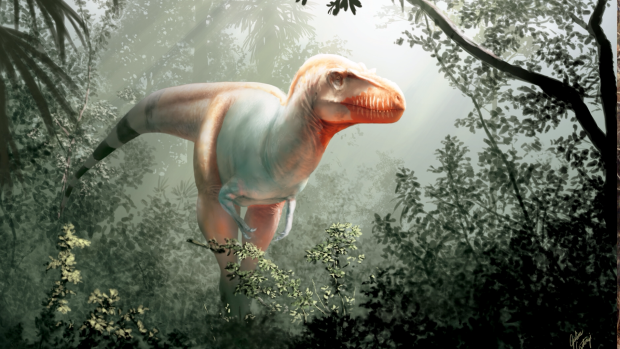
The oldest known member of the Tyrannosaur family walked the plains of southern Alberta about 80 mya. That's the finding of a new study identifying the previously unknown dinosaur. Paleontologists confirmed that it was a new species.

The name, Thanatotheristes degrootorum, means "reaper of death" in Greek. This tyrannosaur was as the only known large apex predator of its time in Canada. Tyrannosaurs were a type of carnivorous, bipedal dinosaur called therapods.

Tuesday, February 11, 2020

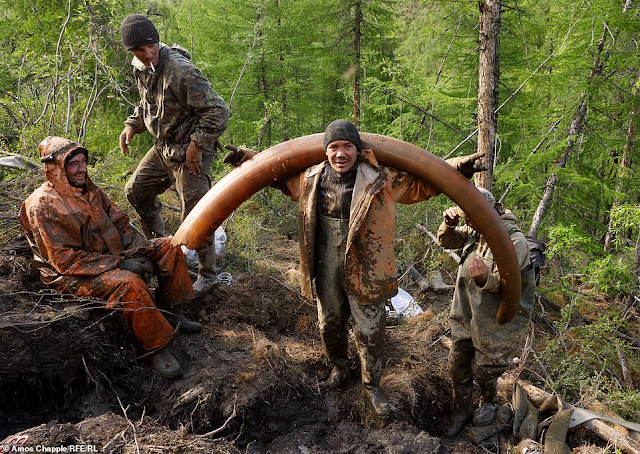
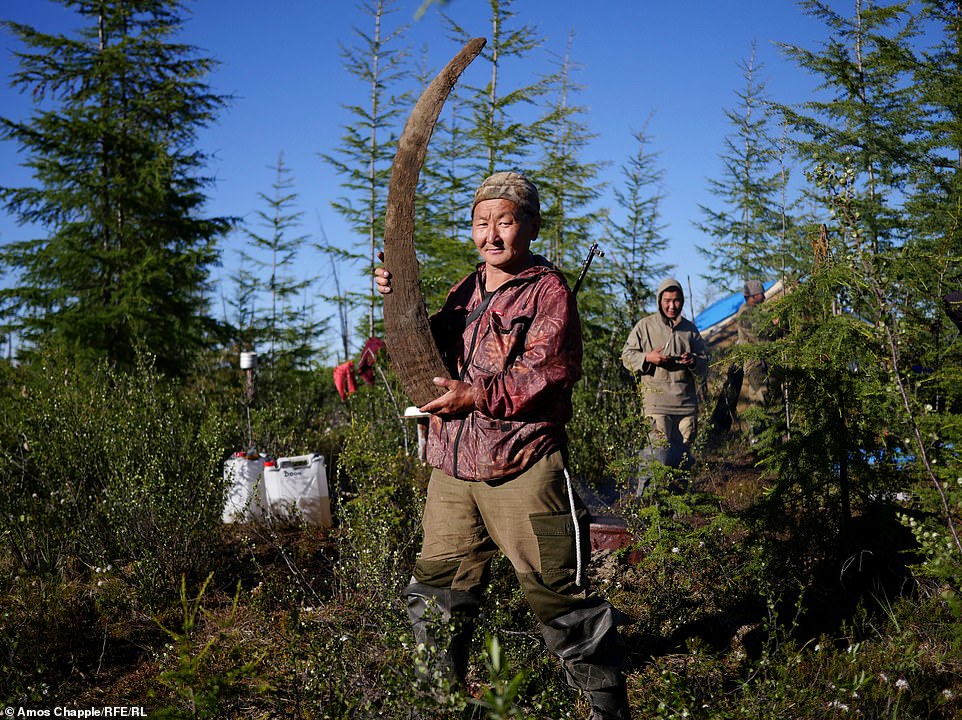
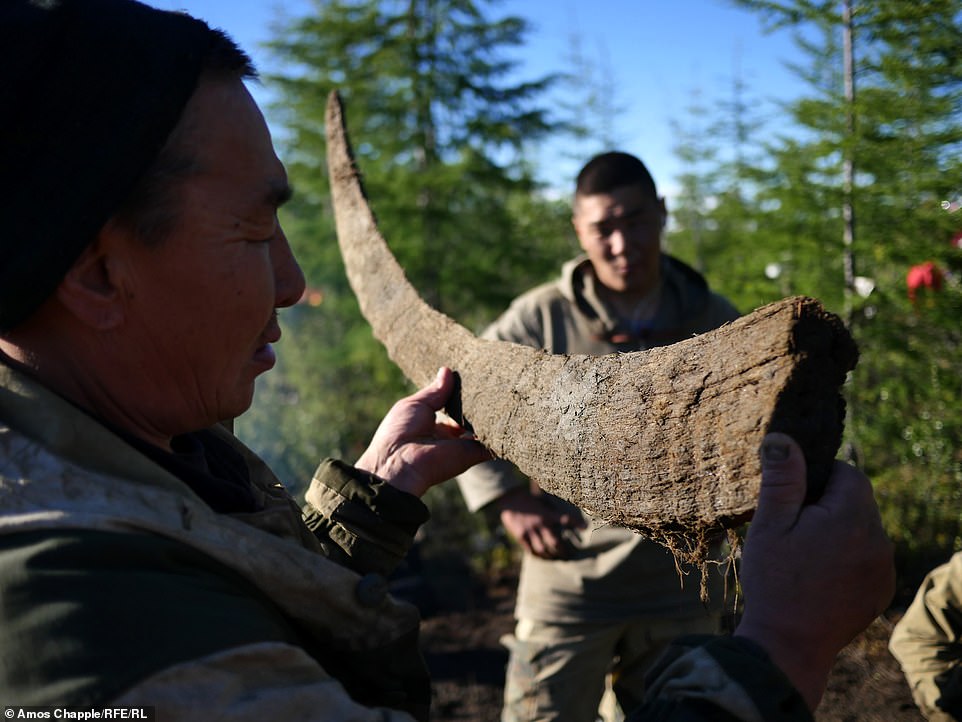
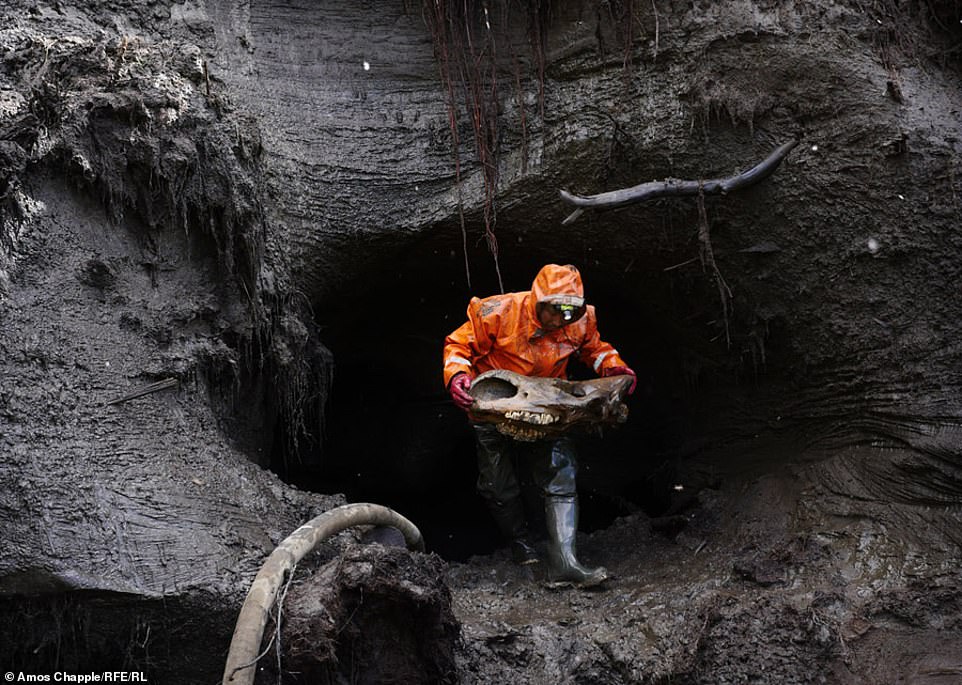
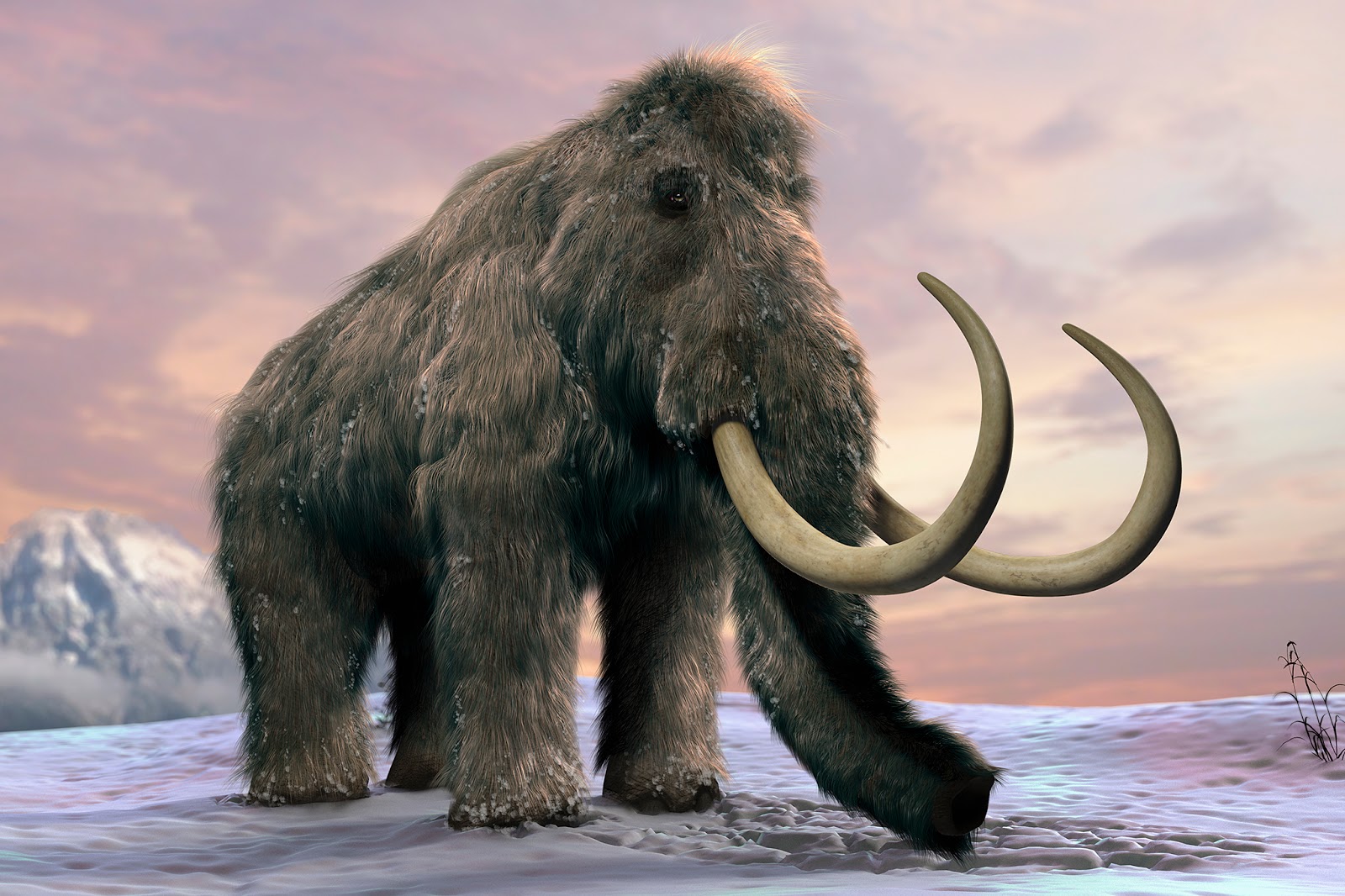
Mammoth tusk pirates in Russia

Russian miners are making a fortune by unearthing prehistoric woolly mammoth tusks preserved in the permafrost and selling them for thousands on the Asian 'ethical ivory' market. They are searching for the 'white gold.' They find it along the Yakutia river, about 4,300 miles east of Moscow.

Tusks can fetch around $34,000 for 65kg. Miners also sell the tusks of woolly rhinos, worth more than their weight in gold, which are ground up to be sold as medicine in Vietnam.
Mammoths once roamed Russia's north from 400,000 years ago until their population declined at the end of the Pleistocene 10,000 years ago. A few hung on outcrops of land, such as Wrangel Island, until they finally went extinct around 4,000 years ago.

Sunday, February 9, 2020

Blythburgh hoard - Iron Age gold coins

The gold staters and quarter staters were attributed to pre-Roman tribal leader Addedomaros, King of Trinovantes. They are dated to 45-25BC, and were likely deposited after 20 AD.

The Trinovantes were one of the Celtic tribes of pre-Roman Britain. Their territory was on the north side of the Thames estuary in Essex and Suffolk, and included lands now located in Greater London. They were bordered to the north by the Iceni, and to the west by the Catuvellauni.