![]() | Notorious outlaw Joaquin Murrieta was killed in 1853 by a posse of bounty hunters, led by Captain Harry Love. Love was seeking a $1,000 governor’s reward from the California state legislature for his capture, dead or alive. Love came away with his head and the hand of his chief lieutenant, Manuel Garcia, aka “Three-fingered Jack.” The reward paid, the pickled head and hand went on tour. | ![]() |
Sunday, May 31, 2020
Joaquin Murrieta’s Carpinteria Treasure
Wednesday, May 27, 2020
Hochberg Palace hiding Nazi gold?
![]() | Researchers looking for billions in lost Nazi treasure say a 16th century German castle in Poland is where as much as 28 tonnes of gold and other treasures are buried. The Hochberg Palace, situated in the village of Roztoka, Lower Silesia, about 40 km north of the Czech border, is one of 11 locations described in the diary of SS Standartenfuhrer Egon Ollenhauer. The diary was kept in a German Freemason lodge in Saxony-Anhalt for decades, its existence revealed last year, after the last of the Nazis connected with it died.![]() |
![]() | According to the diary, underneath the palace, in a room at the bottom of a blasted well shaft, Reichsbank gold bars and other treasures from Breslau worth as much as $1.54 billion in today’s dollars may be buried. The loot, said to have been deposited by the Waffen SS, is now thought to be buried under the castle, along with the corpses of eyewitnesses who observed or heard the operation to destroy the well shaft. | ![]() |
Saturday, May 16, 2020
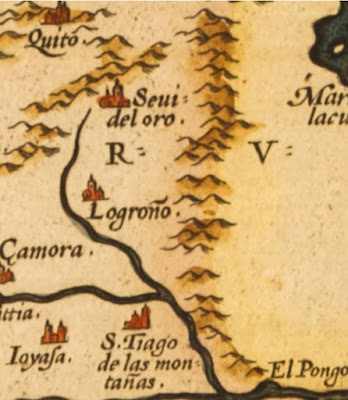
Lost Cities, Ecuador
![]() | Logroño de los Caballeros and Sevilla del Oro were two mining sites, lost to history. Documents reveal the two areas were rich in gold. Served by a declining slave labour force suffering from smallpox, the mines were abandoned by the Spanish invaders after 1606.![]() | |
![]() ![]() | ![]() | ![]() |
| In November 2019 Aurania Resources Ltd. (ARU.v) found the vestiges of an old road on it's Cutucu Project in southeastern Ecuador. The road was discovered by Aurania while searching for Sevilla de Oro. Records describe the Colonial Spanish operating the two gold mines between 1565 and 1606. The road discovered by Aurania is believed to be the one that linked Sevilla de Oro to Logroño de los Caballeros. The gold produced was cast into crude ingots for transport to Quito. The road was once a well-traveled route from the mines. It is an engineered road, cut into embankments and its down slope edges are lined with blocks of shale to prevent erosion. |
See ----->Aurania Resources Ltd. - ARU.v | Two rectangular, well hewed blocks of dressed sandstone are estimated to weigh over 400kg each. The two gold mining areas at Sevilla de Oro and Logroño de los Caballeros were said to be a hard day's march apart. | Between 1500 and 1650, the Spanish extracted 181 tons of gold and 16,000 tons of silver from the New World. |
Thursday, May 14, 2020
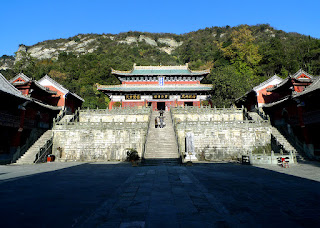
Tomb with ancient chariots found in central China
![]() | In 2017 archaeologists in China uncovered a tomb with 2400-year-old chariots and horses. The burial pit was uncovered in central China, in the city of Xinzheng, near Zhengzhou in Henan province. | ![]() |
![]() | Scientists believe the tomb may have belonged to a noble family of the Zheng state (806–375 BC), which was a vassal kingdom that governed during the Zhou dynasty (1100–221 BC). Archaeologists found dozens of chariots and the skeletons of around 100 horses. |
Friday, May 1, 2020
3 Roman shipwrecks found in Egypt
![]() | Egypt announced in 2017 that archaeologists had uncovered three Roman shipwrecks off the country's north coast. The discoveries were made off the coast of Alexandria, in Abu Qir Bay. Three gold coins that date to the time of Augustus were found. | ![]() |
![]() | Work in Alexandria’s harbor began in 2016, with researchers diving down to the sunken city of Heracleion. Thonis-Heracleion was founded around the 8th century BC, underwent a series of natural catastrophes, and eventually sunk entirely into the depths in the 8th century CE. | ![]() |
Tuesday, April 21, 2020
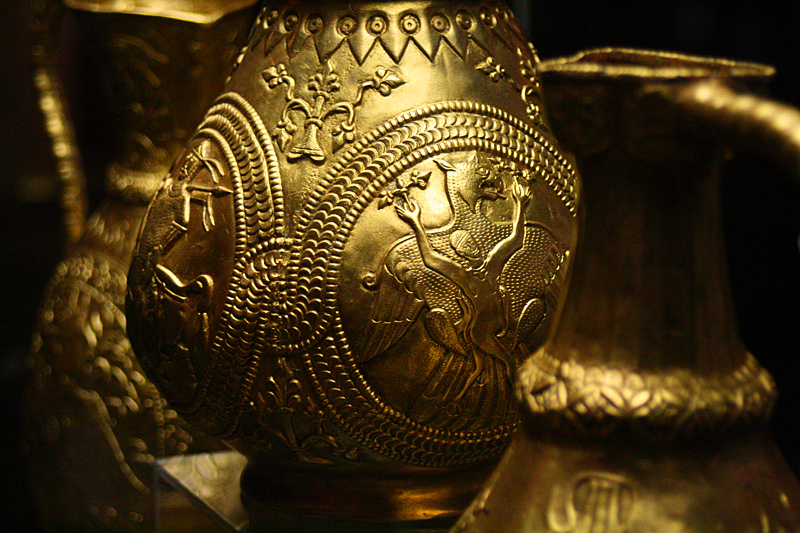
Gold Treasure of Nagyszentmiklos
Tuesday, April 14, 2020
Hawaiian Kona-style statue of the god of war Ku-ka’ili-moku - $7.5m
![]() | Offered in the 'Collection Vérité' on 21 November 2017 at Christie’s in Paris. Hawaiian figurative sculptures are incredibly rare. Kamehameha I associated himself with the war god Ku-ka’ili-moku — the ‘land snatcher’ or ‘island eater’. This example was made circa 1780-1820 from the Metrosideros, a tree found in the high mountains of Hawaii. The figures that are known are all in museums. The statue made a whooping $7.5m blowing well past it's $3.5m estimate.
| ![]() |
Sunday, April 12, 2020
Teotihuacan: City of Water, City of Fire
![]() | In 2017 the de Young Museum hosted the exhibit “Teotihuacan: City of Water, City of Fire.” More than 200 artifacts were featured, some never displayed before. Teotihuacan was established in the first century BC. By the fifth century it had evolved into an important urban center and multicultural metropolis, becoming the largest city in the Western Hemisphere. The so-called “City of the Gods” is estimated to contain 100,000 people at it's peak. Around 550 CE, the city was destroyed by fire. ![]() | ![]() |
![]() | 900 years after its destruction, the Aztecs made their way into a ghost city in the northeastern part of the Valley of Mexico. There, the Aztecs considered Teotihuacan to be the city where the gods brought the world into existence. Teotihuacan means the place where men become gods. | ![]() |
![]() |
Monday, March 16, 2020
Stolen Roman ballista stone returned
Wednesday, March 11, 2020
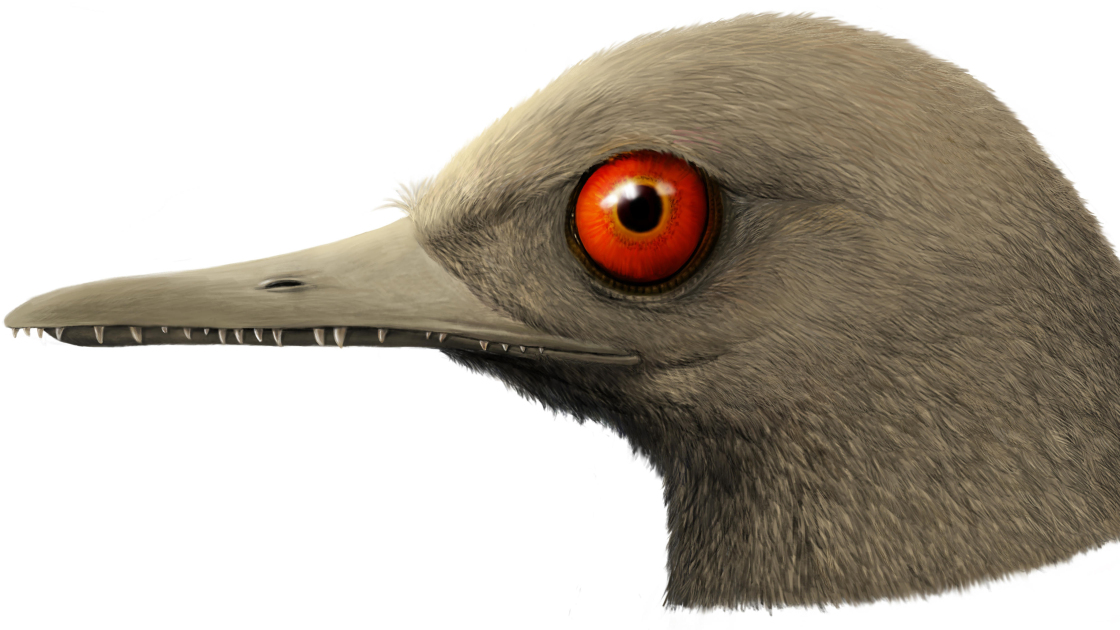
Hummingbird sized dinosaur - Oculudentavis khaungraae
Tuesday, March 10, 2020
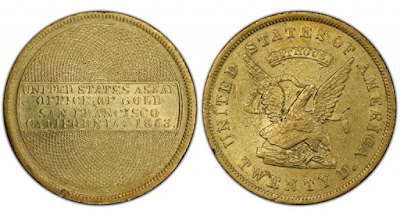
SS Central America - Territorial Gold Coins
![]() Second finest known 1854 Kellogg $20 Territorial gold coin, graded PCGS MS62+ | Coins from the SS Central America include rare Territorial Gold Coins. "Territorial" is a term that encompasses a wide range of coins issued by private minters, semi-official entities, entrepreneurs, and opportunists. | ![]() Rare 884 THOUS variety 1853 U.S. Assay Office $20, graded PCGS AU55+ |
![]() Small Head variety 1852 Wass Molitor $5 gold coin, with a counterstamp advertising Sacramento dentist W.W. Light | The coins arose out of necessity and were created to fill a void that government would not fill. Until they intervened, these issues flourished; once the government entered the market, they were made illegal. | ![]() One of the finest known 1855 Wass Molitor Small Head variety $20 gold coins, PCGS AU58 |
Saturday, March 7, 2020
Ancient Jade Axe found in China.
Subscribe to:
Posts (Atom)


See ----->
Between 1500 and 1650, the Spanish extracted 181 tons of gold and 16,000 tons of silver from the New World. 




The ballista stones at the City of David likely date to the Roman siege of Jerusalem and the destruction of the Second Temple in 70 CE.