Sunday, June 21, 2020

The Sree Padmanabhaswamy Temple

The world's richest temple has a cash flow problem. In the wake of depleting revenue amid lockdown restrictions, the Sree Padmanabhaswamy temple has slipped into a deep financial hole. Management plans to approach the trust controlled by the Travancore royal family for aid. The famous shrine’s revenue has plummeted since the Covid-19 lockdown began on March 25.
The Sree Padmanabhaswamy temple is a Hindu temple dedicated to Lord Vishnu located in Thiruvananthapuram, India.

The temple and its assets belong to Lord Padmanabhaswamy, and are controlled by a trust run by the Royal family. In June 2011, the Supreme Court directed authorities to open the secret chambers of the temple for inspection of the items kept inside. Some had not been opened in centuries.
The review of the temple's underground vaults led to the enumeration of a vast inventory of the temple's assets, which consist of gold, jewels, and other valuables. 18th century Napoleonic era coins were found, as well as a three-and-a-half foot tall solid gold idol of Mahavishnu studded with rubies and emeralds. Ceremonial attire adorning the idol was in the form of a gold anki weighing 30 kg.(66 lb).
It is estimated that the value of the items is close to 1.2 lakh crore (US$22 billion) This makes the temple the wealthiest in the world. The treasures accumulated for centuries, put there by generations of the Maharajahs of Travancore.

Vault B door with Cobra guardians
It was announced that a new hidden treasure vault had been discovered beyond the already documented Vault B. Adding to recent treasure findings in other vaults, researchers are estimating the total treasure could total over $1.5 trillion.

The temple has been shrouded in mystery and superstition. Two enormous Cobras are rumored to be protecting the innermost hidden chamber.
Legend holds that anyone who opens the vault will be met with certain doom.

Tuesday, June 9, 2020

Falerii Novi revealed through radar

Falerii Novi was a walled city spanning 30.5 hectares about 50km north of Rome. It was founded in 241 BC and was inhabited until around 700 AD. This is the first time a complete ancient city was mapped using ground-penetrating radar.

With a population of 3000 people, it boasted an elaborate public bath complex and market building, and at least 60 large houses.
One notable discovery was the location of the city’s water system. GPR showed it was laid out underneath the buildings before they were built, suggesting the city's construction was highly planned.

Friday, June 5, 2020

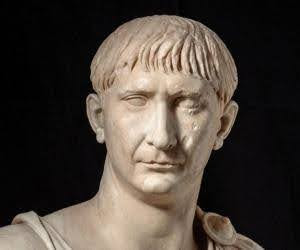
Statue of Trajan unveiled

The statue of Roman Emperor Marcus Ulpius Nerva Traianus (Trajan) was found last year. The excavation work in ancient Laodicea, Turkey, found the statue, which dates to 113 A.D. It was in 356 pieces. Trajan is best known for his extensive public building program, which reshaped the city of Rome and left numerous landmarks such as Trajan’s Forum, Trajan’s Market and Trajan’s Column. His conquest of Dacia enriched the empire greatly.

His campaigns expanded the Roman Empire to its greatest territorial extent. In late 117, while sailing back to Rome, Trajan fell ill and died of a stroke. He was deified by the Senate and his ashes were laid to rest under his column. He was succeeded by his cousin Hadrian.

Thursday, June 4, 2020

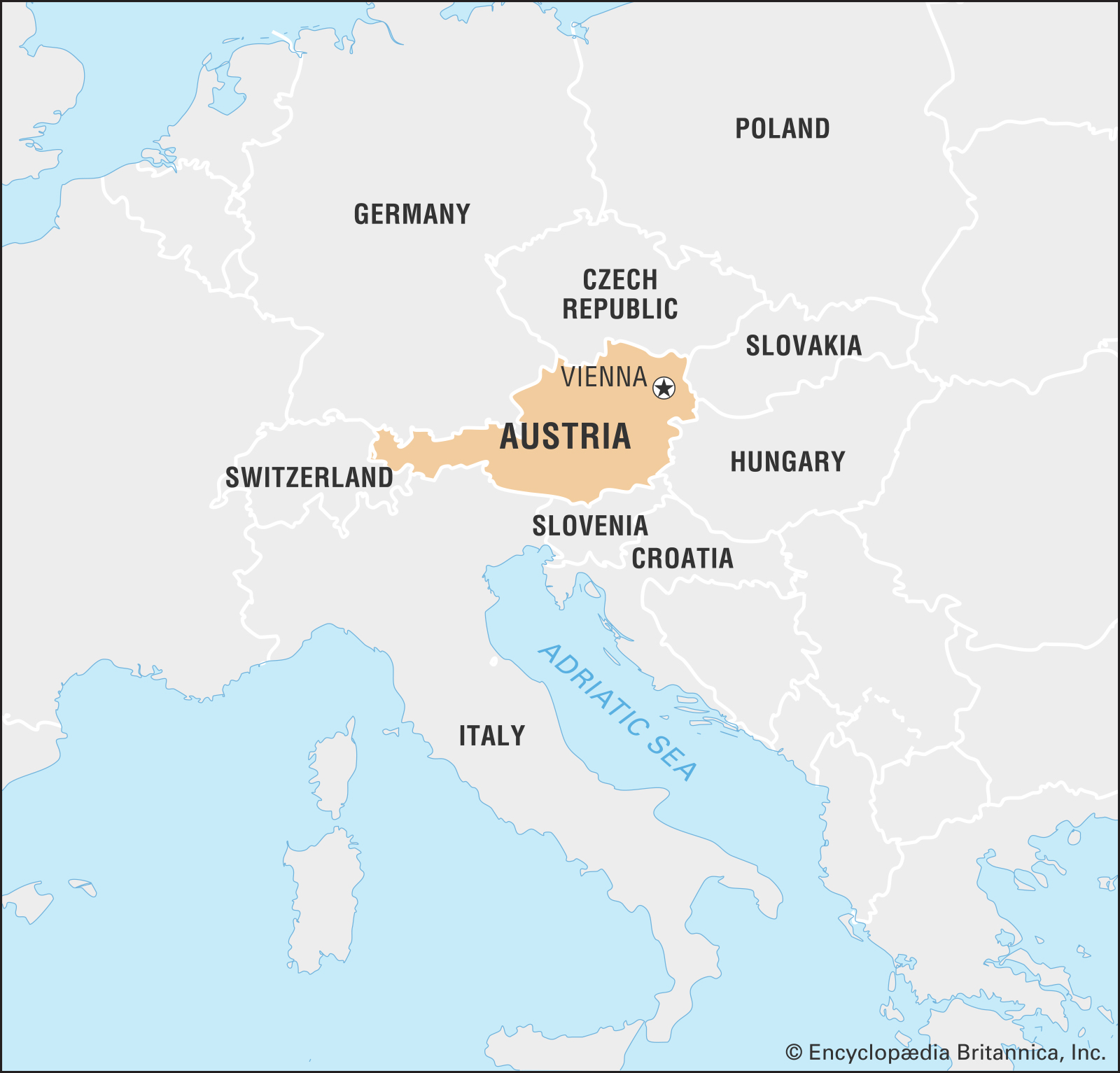
Roman gold necklace found in Austria


The discovered necklace weighs 32 grams and has a pear-shaped fastener at one end and a button at the other. It was made of a thin flattened gold ribbon and decorated with an irregular stamped ornament. Purity is 90%, with a slight admixture of silver and copper. The discovery was highly unusual.
Archaeologists did not find any other archaeological evidence of Roman presence at the site to better explain the origin of the necklace or it's location.

Such necklaces appear most often in richly-adorned tombs of the Late Roman period, but could also be from the latter end of the 3rd-4th centuries AD. This type of jewellery has never been found in Moravia before.

Sunday, May 31, 2020

Joaquin Murrieta’s Carpinteria Treasure

Notorious outlaw Joaquin Murrieta was killed in 1853 by a posse of bounty hunters, led by Captain Harry Love. Love was seeking a $1,000 governor’s reward from the California state legislature for his capture, dead or alive.

Love came away with his head and the hand of his chief lieutenant, Manuel Garcia, aka “Three-fingered Jack.” The reward paid, the pickled head and hand went on tour.
After his death, there were tales of buried treasure in various parts of the state, mostly in Northern California surrounding gold country. A dime novel of Murrieta was published in 1854, and books that followed decades later were based on that account, romanticized Murrieta. He was portrayed as an aggrieved figure, wronged by the American invaders into California. His crimes were ones of revenge and he became legend.

Wednesday, May 27, 2020

Hochberg Palace hiding Nazi gold?

Researchers looking for billions in lost Nazi treasure say a 16th century German castle in Poland is where as much as 28 tonnes of gold and other treasures are buried. The Hochberg Palace, situated in the village of Roztoka, Lower Silesia, about 40 km north of the Czech border, is one of 11 locations described in the diary of SS Standartenfuhrer Egon Ollenhauer. The diary was kept in a German Freemason lodge in Saxony-Anhalt for decades, its existence revealed last year, after the last of the Nazis connected with it died.
According to the diary, underneath the palace, in a room at the bottom of a blasted well shaft, Reichsbank gold bars and other treasures from Breslau worth as much as $1.54 billion in today’s dollars may be buried.

The loot, said to have been deposited by the Waffen SS, is now thought to be buried under the castle, along with the corpses of eyewitnesses who observed or heard the operation to destroy the well shaft.

Saturday, May 16, 2020

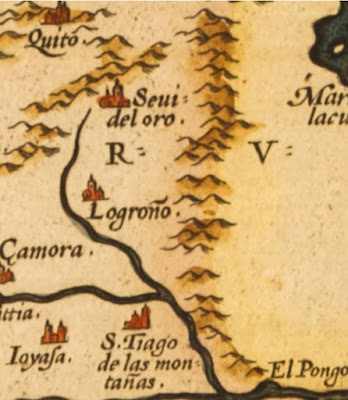
Lost Cities, Ecuador

Logroño de los Caballeros and Sevilla del Oro were two mining sites, lost to history. Documents reveal the two areas were rich in gold. Served by a declining slave labour force suffering from smallpox, the mines were abandoned by the Spanish invaders after 1606.
"They are in lands that are very rich in gold. This witness in one week extracted 350 pesos of gold with six other men, and the witness said that this land was the richest in gold of all the Kingdoms of Peru. A lot of gold was extracted when there were work crews but this all came to an end when the Indians rebelled.” An uprising in 1590 saw 16 Spaniards killed in Logroño de los Caballeros.
In November 2019 Aurania Resources Ltd. (ARU.v) found the vestiges of an old road on it's Cutucu Project in southeastern Ecuador. The road was discovered by Aurania while searching for Sevilla de Oro. Records describe the Colonial Spanish operating the two gold mines between 1565 and 1606. The road discovered by Aurania is believed to be the one that linked Sevilla de Oro to Logroño de los Caballeros. The gold produced was cast into crude ingots for transport to Quito.

The road was once a well-traveled route from the mines. It is an engineered road, cut into embankments and its down slope edges are lined with blocks of shale to prevent erosion.
See ----->Aurania Resources Ltd. - ARU.vTwo rectangular, well hewed blocks of dressed sandstone are estimated to weigh over 400kg each.

The two gold mining areas at Sevilla de Oro and Logroño de los Caballeros were said to be a hard day's march apart.
Between 1500 and 1650, the Spanish extracted 181 tons of gold and 16,000 tons of silver from the New World.

Thursday, May 14, 2020

Tomb with ancient chariots found in central China

In 2017 archaeologists in China uncovered a tomb with 2400-year-old chariots and horses.

The burial pit was uncovered in central China, in the city of Xinzheng, near Zhengzhou in Henan province.
Scientists believe the tomb may have belonged to a noble family of the Zheng state (806–375 BC), which was a vassal kingdom that governed during the Zhou dynasty (1100–221 BC).

Archaeologists found dozens of chariots and the skeletons of around 100 horses.

Friday, May 1, 2020

3 Roman shipwrecks found in Egypt

Egypt announced in 2017 that archaeologists had uncovered three Roman shipwrecks off the country's north coast. The discoveries were made off the coast of Alexandria, in Abu Qir Bay.

Three gold coins that date to the time of Augustus were found.
Work in Alexandria’s harbor began in 2016, with researchers diving down to the sunken city of Heracleion.

Thonis-Heracleion was founded around the 8th century BC, underwent a series of natural catastrophes, and eventually sunk entirely into the depths in the 8th century CE.

Tuesday, April 21, 2020

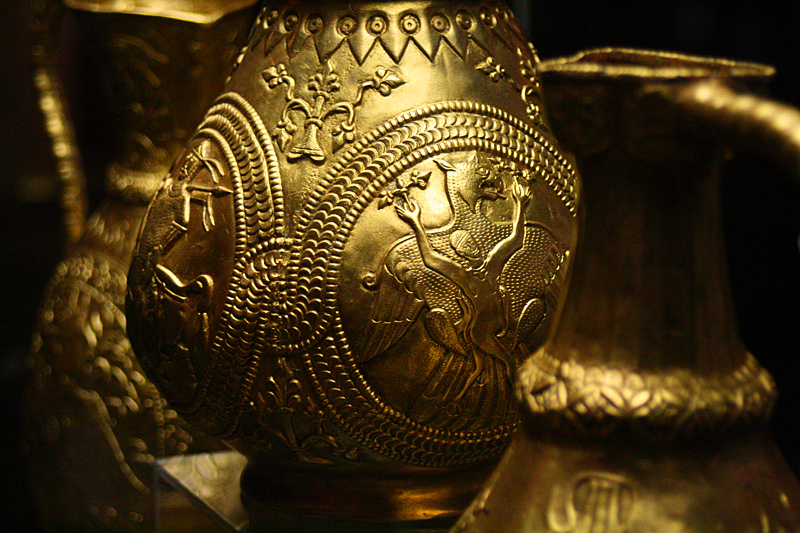
Gold Treasure of Nagyszentmiklos

The Gold Treasure of Nagyszentmiklos is the largest known hoard of early medieval gold vessels. The Treasure of Nagyszentmiklos was discovered accidentally in the Banat region of the Habsburg Empire in 1799. Its total weight is about 10 kg. It is remarkable for its quality and precision of craftsmanship.
Studies over the last few decades have revealed that the treasure was gathered over a long period of time, from the late 7th to the late 8th century AD, and seem to confirm its links to the Avar culture.

Tuesday, April 14, 2020

Hawaiian Kona-style statue of the god of war Ku-ka’ili-moku - $7.5m

Offered in the 'Collection Vérité' on 21 November 2017 at Christie’s in Paris.

Hawaiian figurative sculptures are incredibly rare. Kamehameha I associated himself with the war god Ku-ka’ili-moku — the ‘land snatcher’ or ‘island eater’. This example was made circa 1780-1820 from the Metrosideros, a tree found in the high mountains of Hawaii. The figures that are known are all in museums. The statue made a whooping $7.5m blowing well past it's $3.5m estimate.


Also being auctioned is a Uli figure, which is a type of wooden statue carved only in the villages of New Ireland in Papua New Guinea. $ 3.4m


Tribal art is rising in value and has been doing so for many years. The reason is extreme rarity, there are more and more museums, but fewer and fewer pieces.

Sunday, April 12, 2020

Teotihuacan: City of Water, City of Fire

In 2017 the de Young Museum hosted the exhibit “Teotihuacan: City of Water, City of Fire.” More than 200 artifacts were featured, some never displayed before. Teotihuacan was established in the first century BC. By the fifth century it had evolved into an important urban center and multicultural metropolis, becoming the largest city in the Western Hemisphere. The so-called “City of the Gods” is estimated to contain 100,000 people at it's peak. Around 550 CE, the city was destroyed by fire.
900 years after its destruction, the Aztecs made their way into a ghost city in the northeastern part of the Valley of Mexico. There, the Aztecs considered Teotihuacan to be the city where the gods brought the world into existence.

Teotihuacan means the place where men become gods.