Thursday, July 9, 2020

The ancient city of Patara

The ancient city of Patara on Turkey’s coast is located in the Kaş district of Antalya province. Patara is known as the capital of the ancient Lycian civilization, from about the middle of the first century B.C. Carthaginian general Hannibal fled Rome and took refuge in Patara. Pontic King Mithradates VI, another famous enemy of the Romans, also set foot in Patara. Julius Caesar's assassin Marcus Junius Brutus also lived in Patara.Alexander the Great wanted to seize Patara harbor after conquering Lycia, and during excavations bronze projectiles with the words "belonging to Alexander" were found.
Patara harbor was the center and focus of many wars, which is why the city is historically significant.

Wednesday, July 8, 2020

Ruling on Scythian gold from Crimea postponed

Moscow accused the Netherlands of seizing the gold artifacts.In February 2014 a collection of ancient gold was shipped from four Crimean museums to a museum in Amsterdam on loan. After Crimea reunited with Russia the museum decided against sending the collection to either Crimea or Ukraine pending a court ruing. That ruling has been delayed.
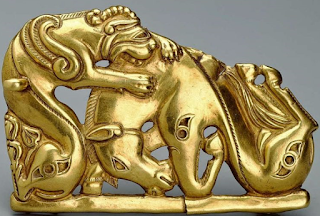
A Dutch court ruled that Ukraine was the rightful owner of the ancient treasure and it should not be returned to the territory while it is occupied by Russia. Moscow claims that as Crimea is part of Russia and the artifacts should be returned.

Tuesday, July 7, 2020

590 artifacts pillaged from Egypt

A Brooklyn man was indicted for trying to smuggle hundreds of Egyptian artifacts stuffed inside dirty suitcases through JFK Airport. Ashraf Omar Eldarir, 47, was caught at the Queens airport in January allegedly carrying three suitcases filled with 590 antiquities.

Among the relics were objects made to be buried in the funerary pyramids of Egyptian royalty, such as gold amulets and wooden tomb models — including one item that dates to around 1900 BCE. There was also two funerary stelae, or stone monuments to the deceased, hailing from the Roman period. Prosecutors said Eldarir did not have any of the required documentation from Egypt authorizing the export of the artifacts. He faces a maximum sentence of 20 years in jail for each count.

Sunday, July 5, 2020

The Prospero Collection

In 2010 a rare collection of ancient coins, called the Prospero Collection, fetched a record price of $25m at an auction in New York. The Prospero Collection was a spectacular assemblage of 642 historical coins by a private British collector over three decades. Included in the collection is a coin which has been regarded as an artistic masterpiece. The catalogue cover coin features the head of a satyr and sold for $3.25m, breaking all previous world records for an ancient Greek coin.

A Calabria, Tarentum Gold Stater coin circa 344-338 BC, featuring Head of Hera. Reverse Taras.

Silver Tetradrachm from Kyrenaika, Kyrene (circa 400 BC) bears the likeness of Head of Zeus Ammon, Reverse Silphium. It is described as a coin "of immense power and majesty."

KINGDOM OF MACEDON. Alexander III, The Great (336-323 B.C.), Gold Stater

Kyzikos (c.450-400 B.C.), Electrum Stater, Silenos, with a horse's ear and tail, kneeling to right, pouring wine from an amphora into a kantharos he holds in his right hand, a tunny below. Rev. Quadripartite incuse square.

MYSIA. Lampsakos (c.350 B.C.), Gold Stater, Head of a female satyr facing to left, with a long pointed ear, wearing a wreath of ivy. Reverse Pegasos

KYRENAIKA. Kyrene (c.331-322 B.C.), Gold Stater, Magistrate Jason. Nike, with her wings spread, in a facing quadriga. Rev. Zeus Ammon


ITALY. Calabria, Tarentum (c.280 B.C.), Gold Stater . Head of Zeus facing to right. Rev. TAPANTINΩN, eagle standing to left on a thunderbolt.

SICILY. Akragas (c.409 B.C.), Silver Tetradrachm. Nike driving a galloping quadriga to left, holding a kentron in her left hand and the reins in both, a vine with a bunch of grapes above. Rev. ΖTPATΩN, two eagles standing to left on top of a dead hare.

SICILY. Naxos (c.461-430 B.C.), Silver Tetradrachm. c.460 B.C. Bearded head of Dionysos facing to right, wearing an ivy-wreath, his hair tied in a krobylos at the back. Rev. N-AXI-ON, naked, bearded Silenos

Wednesday, July 1, 2020

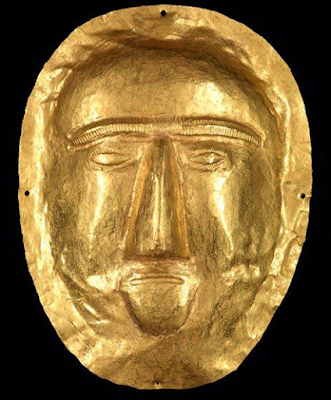
Princess of Thaj’s Mask

Saudi Arabia's Minister of Culture unveiled the “Princess of Thaj’s Mask” from the heritage village of Thaj in the Eastern Province. The golden mask was for a high status girl who lived in the first century AD. Found in 1998, the mask dates to the Hellenistic era when the Arabian Peninsula was connected to the Mediterranean world through major trade routes.

Laid on a wooden funeral bed covered with lead and bronze, her body was wrapped in a shroud with gold decoration.
She wore the gold mask and a single gold glove, along with gold rings and necklaces.

Tuesday, June 30, 2020

The land of gold, Halayeb and Shalateen

The area is inhabited by the Beja tribe, the largest in eastern Sudan.Egypt announced the discovery of gold in the Eastern Desert, with reserves at more than 1m ounces. The Shalateen Triangle is rich in oil and other metals, most notably gold.
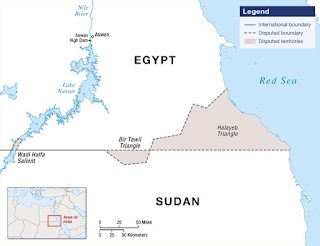
The conflict around the Shalateen Triangle began in the days of British colonialism which failed to identify who the inhabitants of the Triangle followed. It was annexed to Egypt, but was returned to Sudan in 1902 since it is closest to Sudanese land.

The Queen of Sheba is a figure first mentioned in the Hebrew Bible. She brings a caravan of valuable gifts for the Israelite King Solomon ... "with a very great retinue, with camels bearing spices, and very much gold, and precious stones" The tale has undergone elaboration in many cultures. Historians identify Sheba with the South Arabian kingdom of Saba in present-day Yemen. Yemen was one of the colonies of ancient Ethiopia, before the fall of the Axum Empire. The queen's existence is not disputed and her 'lost mines' are legend.
See ----->Gold Mining in Sudan - terra incognita

Sunday, June 21, 2020

The Sree Padmanabhaswamy Temple

The world's richest temple has a cash flow problem. In the wake of depleting revenue amid lockdown restrictions, the Sree Padmanabhaswamy temple has slipped into a deep financial hole. Management plans to approach the trust controlled by the Travancore royal family for aid. The famous shrine’s revenue has plummeted since the Covid-19 lockdown began on March 25.
The Sree Padmanabhaswamy temple is a Hindu temple dedicated to Lord Vishnu located in Thiruvananthapuram, India.

The temple and its assets belong to Lord Padmanabhaswamy, and are controlled by a trust run by the Royal family. In June 2011, the Supreme Court directed authorities to open the secret chambers of the temple for inspection of the items kept inside. Some had not been opened in centuries.
The review of the temple's underground vaults led to the enumeration of a vast inventory of the temple's assets, which consist of gold, jewels, and other valuables. 18th century Napoleonic era coins were found, as well as a three-and-a-half foot tall solid gold idol of Mahavishnu studded with rubies and emeralds. Ceremonial attire adorning the idol was in the form of a gold anki weighing 30 kg.(66 lb).
It is estimated that the value of the items is close to 1.2 lakh crore (US$22 billion) This makes the temple the wealthiest in the world. The treasures accumulated for centuries, put there by generations of the Maharajahs of Travancore.

Vault B door with Cobra guardians
It was announced that a new hidden treasure vault had been discovered beyond the already documented Vault B. Adding to recent treasure findings in other vaults, researchers are estimating the total treasure could total over $1.5 trillion.

The temple has been shrouded in mystery and superstition. Two enormous Cobras are rumored to be protecting the innermost hidden chamber.
Legend holds that anyone who opens the vault will be met with certain doom.

Tuesday, June 9, 2020

Falerii Novi revealed through radar

Falerii Novi was a walled city spanning 30.5 hectares about 50km north of Rome. It was founded in 241 BC and was inhabited until around 700 AD. This is the first time a complete ancient city was mapped using ground-penetrating radar.

With a population of 3000 people, it boasted an elaborate public bath complex and market building, and at least 60 large houses.
One notable discovery was the location of the city’s water system. GPR showed it was laid out underneath the buildings before they were built, suggesting the city's construction was highly planned.

Friday, June 5, 2020

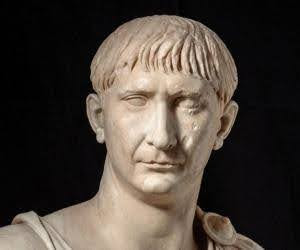
Statue of Trajan unveiled

The statue of Roman Emperor Marcus Ulpius Nerva Traianus (Trajan) was found last year. The excavation work in ancient Laodicea, Turkey, found the statue, which dates to 113 A.D. It was in 356 pieces. Trajan is best known for his extensive public building program, which reshaped the city of Rome and left numerous landmarks such as Trajan’s Forum, Trajan’s Market and Trajan’s Column. His conquest of Dacia enriched the empire greatly.

His campaigns expanded the Roman Empire to its greatest territorial extent. In late 117, while sailing back to Rome, Trajan fell ill and died of a stroke. He was deified by the Senate and his ashes were laid to rest under his column. He was succeeded by his cousin Hadrian.

Thursday, June 4, 2020

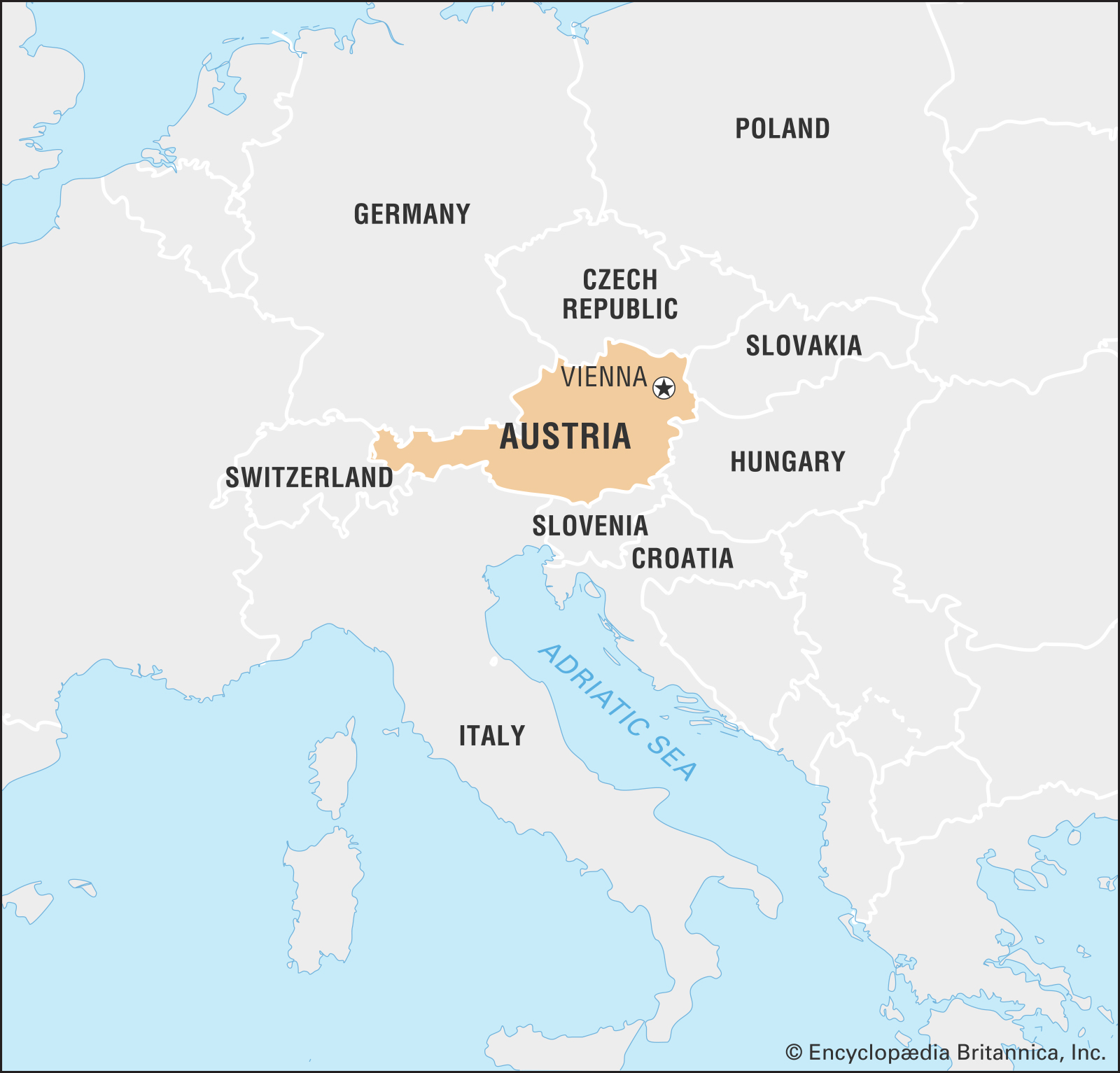
Roman gold necklace found in Austria


The discovered necklace weighs 32 grams and has a pear-shaped fastener at one end and a button at the other. It was made of a thin flattened gold ribbon and decorated with an irregular stamped ornament. Purity is 90%, with a slight admixture of silver and copper. The discovery was highly unusual.
Archaeologists did not find any other archaeological evidence of Roman presence at the site to better explain the origin of the necklace or it's location.

Such necklaces appear most often in richly-adorned tombs of the Late Roman period, but could also be from the latter end of the 3rd-4th centuries AD. This type of jewellery has never been found in Moravia before.