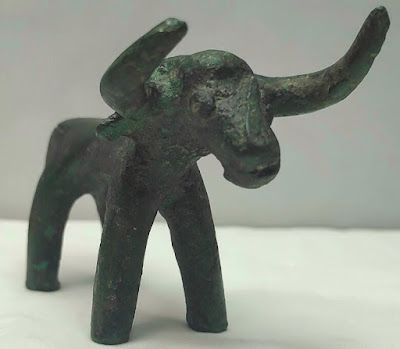
 | Greek archaeologists have unearthed by chance a 2,500-year-old bronze bull at the archaeological site of Olympia. With one of its horns sticking out of the ground after a heavy rainfall, the statuette was found intact, close to the temple of Zeus at Olympia. Archaeologists believe the bull was part of the gifts offered to Zeus from 1,050 to 700 B.C. |  |

Saturday, March 20, 2021
Bronze bull from ancient Olympia found

Sunday, March 14, 2021
Huge ancient shipwreck examined
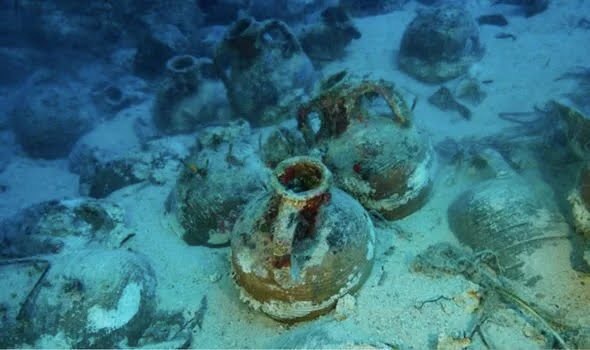 | An ancient ship was found off the coast of Kefalonia - one of the Ionian islands near the west coast of Greece. The wreck of the 35 metres (110ft) ship, along with its cargo of 6,000 amphorae, was discovered at a depth of around 60 metres.(197ft) Goods such as cereal, wine, oil and olives were transported throughout the Mediterranean, with Rome often their final destination. |
 | Study of the wreck could shed light on sea-routes, trading, amphorae hull stowage and shipbuilding in the period between first century BC and first century AD. |
Friday, March 12, 2021
Roman floor found in Southern France
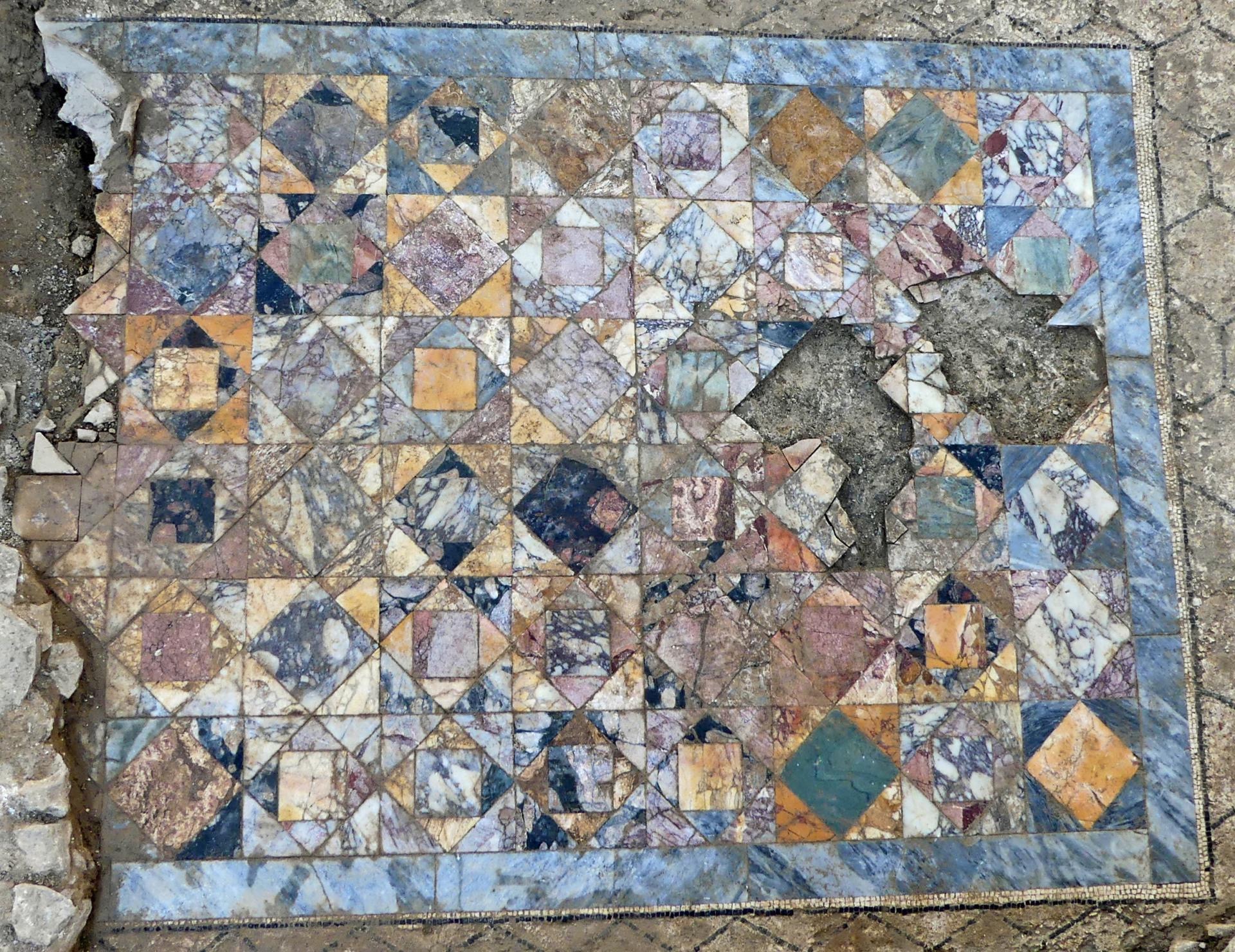 | Developers in Nîmes, France, had to halt construction when archaeologists discovered an opulent tiled floor that once blanketed a Roman villa, or domu. This domu was lavish and featured a private bath, a concrete floor speckled with decorative gemstones, and a large central fountain made from Carrara white marble. One room even had remains of hypocaust heating, an inventive system that sent hot air underneath the flooring to warm the home. |
Wednesday, March 10, 2021
4.6 b yo meteorite found in Algeria
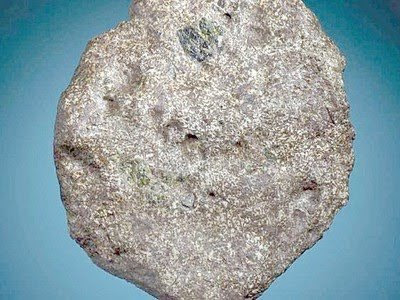 | A 4.6 billion-year-old meteorite may be the oldest rock ever analyzed. The rock, named Erg Chech 002, was discovered in May 2020 in the Erg Chech area of southwestern Algeria. Unlike most discovered meteorites, which are made of basalt, created after lava has cooled, the meteorite is composed of a much rarer volcanic rock called andesite. Achrondites are igneous rocks that come from a body that has undergone internal melting that distinguishes the core from its crust. Silica-infused andesite crusts were likely common during our solar system’s protoplanet-forming stage. |
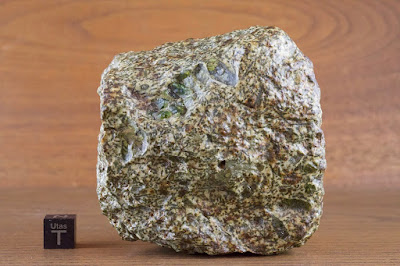 | Stones found in May 2020 totalling 22.8 kg were found showing distinctive large greenish orthopyroxene megacrysts. |
Tuesday, March 2, 2021
Celtic Chieftain’s chariot brooch - £55,000
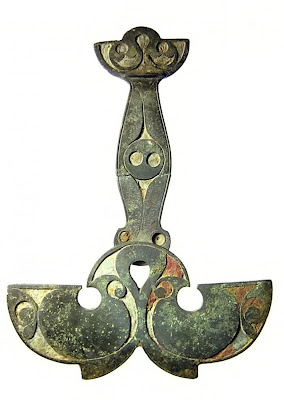 | The brooch is made from cast copper-alloy. The front is decorated with champlevé enamel - red glass - forming a flowing pattern of opposed scrolls with tips that curl like breaking waves. The decoration is in the tradition of the Celtic ‘South Western Style’. The very rare horse brooch would probably have belonged to a wealthy Celtic chieftain in the mid 1st century AD. They indicate high status. There are only a handful of known examples from Britain. Buckinghamshire, where it was found, was once the territory of the Trinovantes and the Catuvellauni, two of the most powerful and richest tribes in Ancient Britain. |  |
Tuesday, February 23, 2021
Ancient kauri tree maps geomagnetic flip
 | The Earth’s magnetic field is fundamental to the existence of life. It deflects harmful solar winds and keeps our protective atmosphere in place. Every few hundred thousand years on average it completely flips, with magnetic north switching places with magnetic south. The last major geomagnetic reversal occurred 780k years ago. Geomagnetic excursions are short-lived, and involve temporary changes to the Earth’s magnetic field. The most recent recorded geomagnetic excursion is known as the Laschamps excursion and it took place around 42,000 years ago. The Laschamps Excursion was the last time the magnetic poles flipped. They swapped places for about 800 years before swapping back again. A kauri tree trunk was found perfectly preserved for 42,000 years, with its rings offering a 1,700-year record of the Laschamps Excursion. |
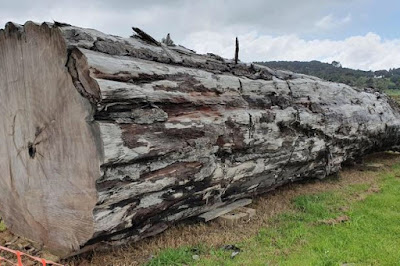 | Researchers compared the newly-created timescale with records from sites across the Pacific and used it in global climate modeling, finding that the growth of ice sheets and glaciers over North America and large shifts in major wind belts and tropical storm systems could be traced back to the Laschamps Excursion. |  |
Wednesday, February 17, 2021
Seqenenre Tao
 | Seqenenre Tao was a pharaoh who ruled southern Egypt in the mid-16th century BC. He met his end in an execution after he was captured in a battle with the Hyksos dynasty. The pharaoh’s mummified remains were discovered in 1881 in the necropolis in Thebes. While his head bore severe injuries, the exact manner of his death was a mystery. |
 Reasearchers believe he was ritually executed by multiple attackers, with his hands tied behind his back. | A CT scan revealed previously undetected lesions that were expertly concealed by embalmers. 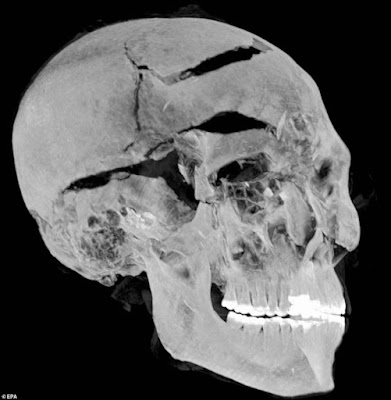 | 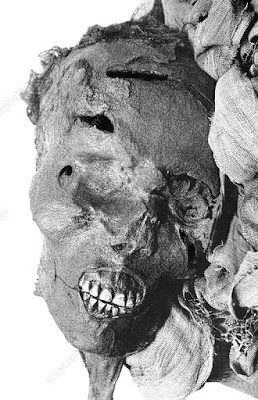 |
Tuesday, February 16, 2021
95.6% copper a covid killer
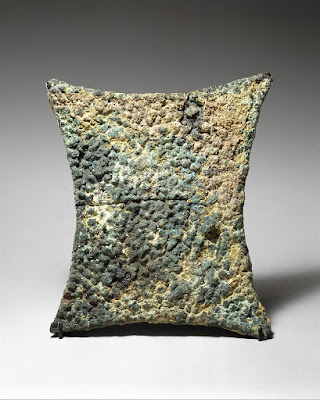 | The knowledge of working with copper and its alloys goes back at least 7,000 years. Ancients knew that copper healed infections, but they didn’t know why. Copper kills germs because it has an extra electron it its atomic makeup. The outermost orbit electron reacts with things that land on it, killing the germs quickly. Ions blast apart bacterial cell membranes and the coatings that protect viruses, rendering them inert. Most viruses and bacteria succumb within minutes. COVID’s stubbornness only buys it extra time. Within a few hours it too is rendered harmless. The antiviral properties of copper surfaces never wear off. |
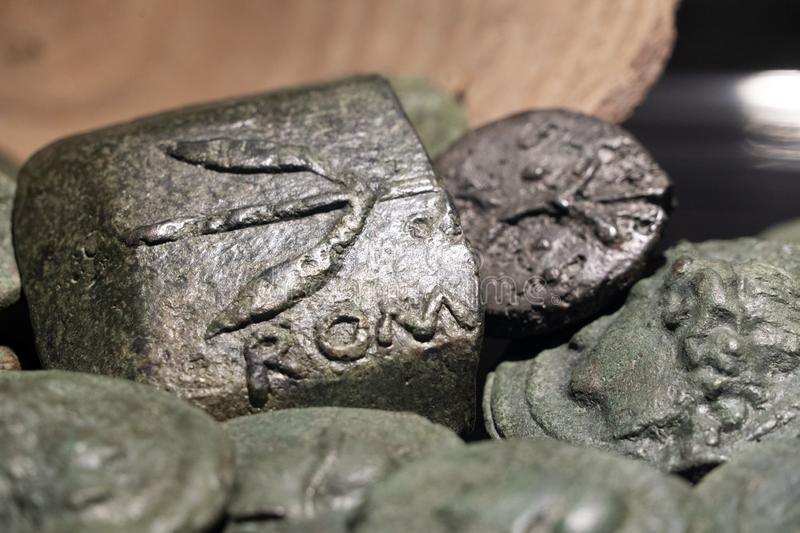 | The only reason copper alloys fell to iron and steel was hardness and durability. Today ancient copper may provide another line of defense against a modern illness. |
Saturday, February 13, 2021
Waun Mawn
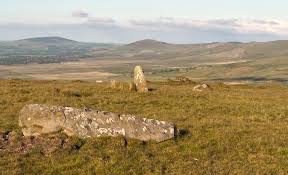 | Waun Mawn (Welsh for "peat moor") is the site of a dismantled Neolithic stone circle in west Wales. The doleritic bluestones that made up the circle were likely mined at the nearby Carn Menyn. | 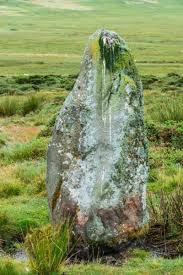 |
 | A new study suggests the stones used to create Stonehenge in 3000 BC may have belonged to Waun Mawn. | 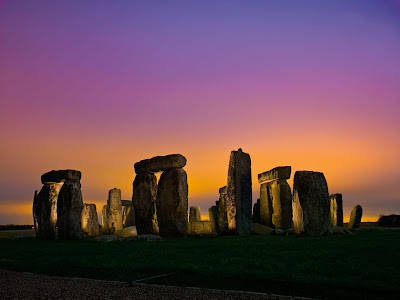 |
Thursday, February 11, 2021
5,000 yo rock crystal dagger unearthed in Spain
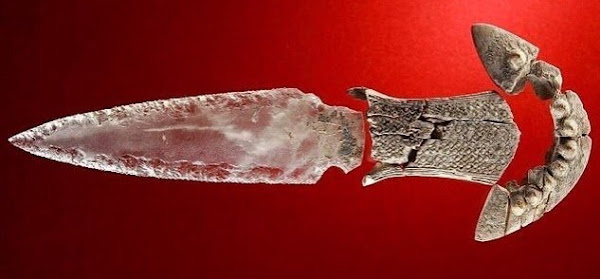 | A 5,000 year old rock crystal dagger has been found in Spain. The eight-and-a-half-inch dagger was found in a tomb at the Tholos de Montelirio site. Stone and flint typically comprise daggers, a rock crystal one is unusual. It's thought to have belonged to a high status individual due to the time and expertise required to make it. |
Sunday, February 7, 2021
Spectacular Calabria Stater makes $66k
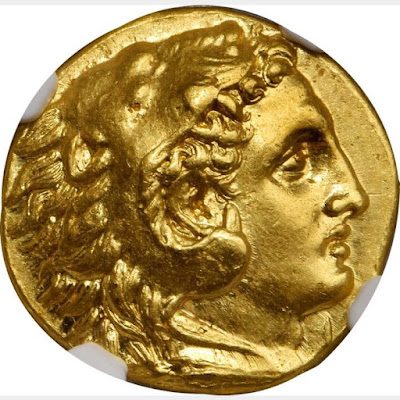 | ITALY. Calabria. Tarentum. AV Stater (8.56 gms), ca. 276-272 B.C. NGC MS, Strike: 5/5 Surface: 4/5. Fine Style. $66k. |  |
Thursday, February 4, 2021
Face of Poseidon
 | Photographer Mathieu Rivrin captured waves whipped up by Storm Justine near Lesconil in Brittany, France as they smashed against the seawall, forming a face.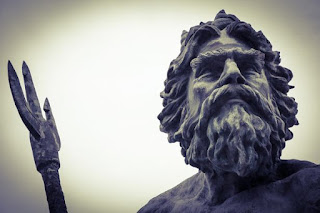 |
Subscribe to:
Posts (Atom)