Sunday, June 20, 2021
Tuesday, June 15, 2021
“Echenique Disc” returned to Peru
![]() | The Smithsonian’s National Museum of the American Indian returned a pre-Incan gold ornament from its collection to Peru. The repatriated item, an “Echenique Disc,” is recognized as the symbol of the city of Cusco in Peru, once the capital of the Inca Empire. The object is a circular thin sheet of metal measuring 5.3 inches in diameter. It’s made of 90% gold, 5% silver, and 5% copper, and crafted with techniques commonly used in ancient Andean metal work. Experts have dated the item to the pre-Inca Early Horizon Period (800 BCE to 1 CE). |
Sunday, June 6, 2021
Spectacular 'Leda and the Swan' found in Pompeii
![]() | In 2019 archaeologists found a watercolor fresco depicting 'Leda and the Swan' in Pompeii. Amazingly preserved it has brilliant detail and color despite being buried for nearly 2,000 years. | 'Leda and the Swan' is a common theme. The swan is an embodiment of the Roman god Zeus, who is impregnating Leda. |
Saturday, June 5, 2021
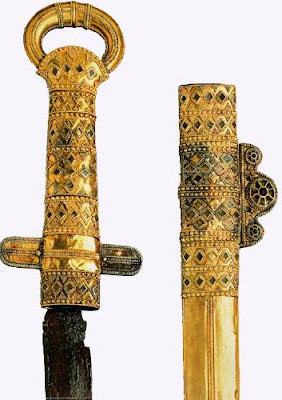
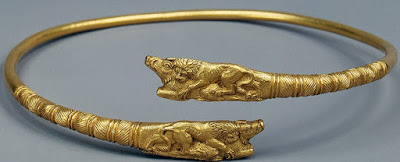
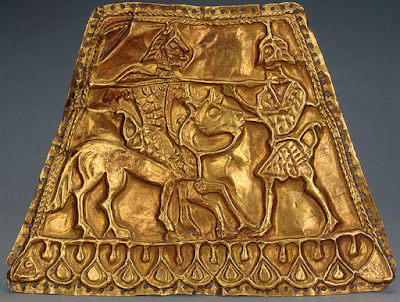
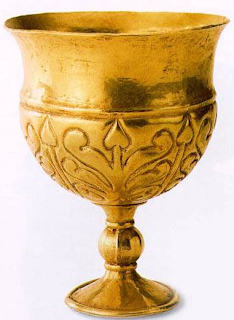
The Pereshchepina Hoard
![]() Belt Plaque Gold. Second half of the 7th century BC | The Pereshchepina Treasure is a major deposit of Bulgarian, Sassanian, Sogdian, Turkic and Avarian objects. The hoard was discovered in 1912 in the village of Mala Pereshchepina (20 km from Poltava, Ukraine) by a boy shepherd who literally stumbled over a golden vessel and fell into what is thought to be the grave of Kuvrat, the founder of Great Bulgaria and father of Asparuh, the founder of the First Bulgarian Empire. | ![]() |
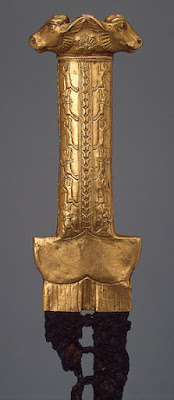
![]() Comb with Scythians in Battle. Gold; cast and chased. Late 5th - early 4th century BC | ![]() Plaque in the Form of the Head Gold; stamped. Scythian. 4th century BC | ![]() Sword Hilt. Gold and iron; chased. Scythian. 5th century BC |
![]() | The 800 piece trove contains finely crafted gold artifacts that exceeds 21 kg and 50 kg of silver. (42 pounds, 110 pounds) Items ranged from 500 BC to 670 AD and are of Byzantine, Persian and Barbarian origin. Three gold rings are engraved with the monogram of Kubrat, and his 400gm gold patrician buckle and sword were found.![]() Torque (Grivna) Gold; cast, forged, chased. Meotian Culture. Late 4th century BC | ![]() |
![]() Necklace. Gold; stamped, soldered, filigreed, repousse. Meotian Culture. Late 4th century BC | ![]() Plaque with Scythian Warriors. Gold; repousse. Scythian. 4th century BC | ![]() Facing for a Horse's Frontlet Gold; stamped. Scythian. 4th century BC |
![]() Overlay for a Goryt (Case for a Bow and Arrows) Gold; stamped. Scythian. 4th century BC ![]() Hand-Washing Vessel: Pitcher and Ladle Poltava Region, Ukraine. Silver gilt | ![]() Overlay for a Wooden Vessel Gold; stamped. Scythian. First half of the 5th century BC ![]() Pair of Boat-Shaped Earrings Gold; forged, stamped, soldered, filigreed. Scythian. 4th century BC | ![]() Goblet Poltava Region, Ukraine 7th century ![]() |
Wednesday, May 26, 2021
Relics from the time of the Battle of Salamis uncovered
![]() | It was around this time, 480 B.C., that the Battle of Salamis took place. Following successful invasions by the Persians, the Greek fleet had withdrawn to Salamis and they were outnumbered. At this point Themistocles, a politician and general, convinced Greek allies to build a fleet and fight. |
Tuesday, May 25, 2021
The Aqueduct of Constantinople
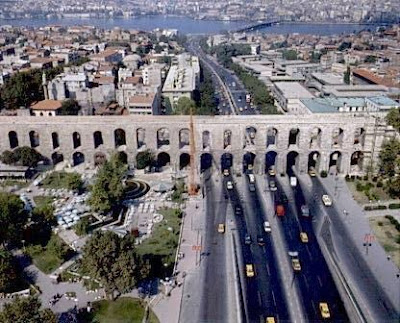
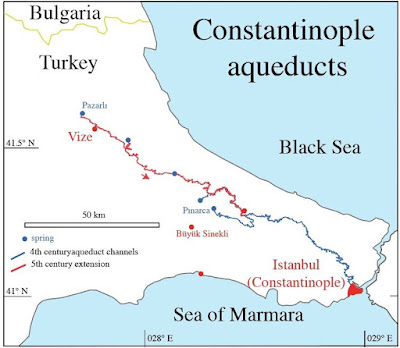
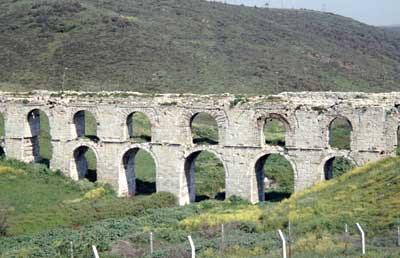
![]() | The longest aqueduct of all time, the Aqueduct of Valens is 429 km long and supplied Constantinople with water. In AD 324, the Roman Emperor Constantine the Great made Constantinople the new capital of the Roman Empire. The aqueduct system worked for more than 700 years, until at least the 12th century. | ![]() |
|
Monday, May 17, 2021
Sunday, May 2, 2021
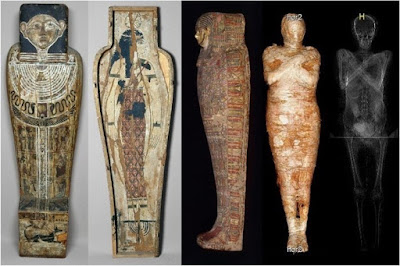
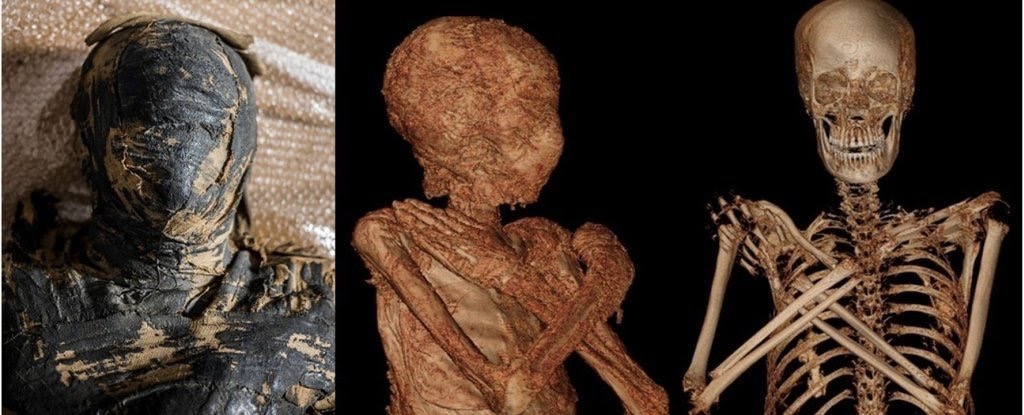
Pregnant mummy found
![]() | A pregnant mummy has been found. "Scribe, priest of Horus-Thoth worshiped as a visiting deity in the Mount of Djeme, royal governor of the town of Petmiten, Hor-Djehuty, justified by voice, son of Padiamonemipet and lady of a house Tanetmin," the translation read. |
| She died just over 2,000 years ago, in the first century BCE, between the ages of 20 and 30. |
Friday, April 30, 2021
Abraxas
Friday, April 16, 2021
Nymphaeum Museum in Rome
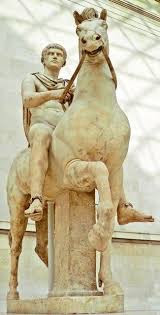
| The Rome headquarters of the National Insurance and Assistance Body for Doctors and Dentists is in the Piazza Vittorio section of the city. 13 feet under the lobby of the country’s leading medical pension fund are the restored ruins of Casa Caligula. After a nine-year excavation, it will open to the public for the first time. Caligua declared himself a god and spoke of making his horse ´Incitatus´ a senator. | |
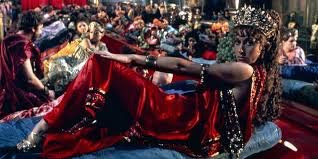
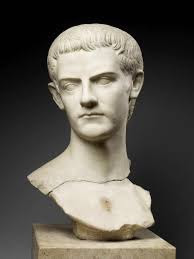
| Caligula, officially Gaius Julius Caesar Germanicus, is recorded as a sadistic lunatic and one of Rome's worst tyrants. Sources describe his cruelty, sadism, extravagance, and sexual perversion. He was born in the year 12 and spent his childhood in military camps along the Rhine with his father Germanicus, one of the great Roman generals of his time. His mother, Agrippina the Elder, the granddaughter of Augustus himself, used to dress Gaius up as a soldier, down to the caliga sandals on his feet. | ![]() |
Thursday, April 8, 2021
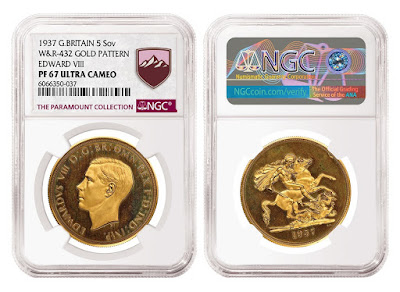
1937 Edward VIII Gold Pattern 5 Sovereign $2.2m
![]() | This Great Britain 1937 Edward VIII Gold Pattern 5 Sovereign graded NGC PF 67 Ultra Cameo had an estimate of $1m. It made $2.2m. It is one of two known in private hands. Only a few pattern coins were produced for Edward VIII after his coronation in 1936. Less than a year into his reign, he gave up the throne, and his coinage was never issued. |

Saturday, April 3, 2021
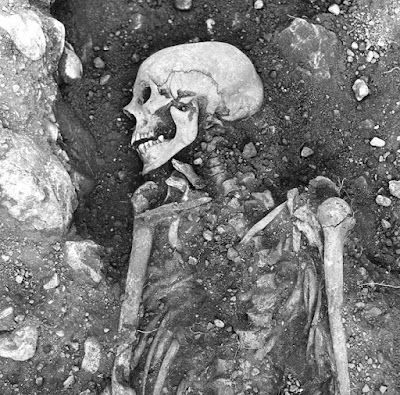
DNA suggests Vikings may have been plagued by smallpox
![]() | Researchers isolated viral DNA from human teeth and bones, like this 1,200-year-old smallpox-infected Viking skeleton found in Ă–land, Sweden. The team reconstructed nearly complete genetic blueprints of four of the 11 ancient viruses. During that period, smallpox may have been widespread throughout Europe and could have caused serious disease.![]() |
Subscribe to:
Posts (Atom)


'Leda and the Swan' is a common theme. The swan is an embodiment of the Roman god Zeus, who is impregnating Leda. 








Nike,1st century.
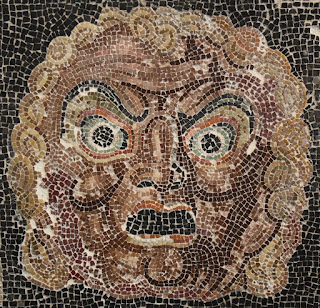
Theatre Mask.