Sunday, February 9, 2025

Talos

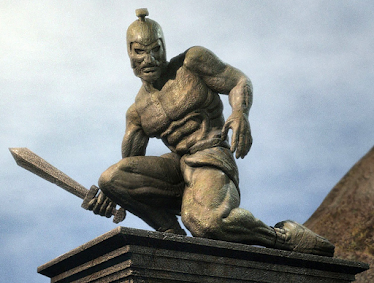
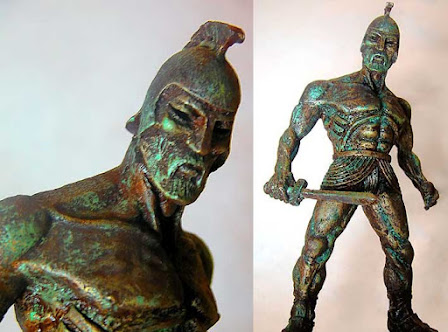
Talos was a giant automaton made of bronze that protected Europa in Crete from pirates and invaders.

Phaestus Stater circa 300-270 BC. EF $29,500
He circled the island's shores three times daily. Talos threw rocks at any approaching ship. Stories of his origin vary. One tale is that Hephaistos crafted the bronze android Talos for Minos, the son of Zeus.


Some accounts describe him as the last survivor of an ancient race of bronze men, but the more popular versions attribute his creation to Hephaestus, god of the forge. Talos had one vein, which went from his neck to his ankle, bound shut by one bronze nail. The Argo, transporting Jason and the Argonauts, approached Crete after obtaining the Golden Fleece. Talos kept the Greeks at bay by hurling boulders.


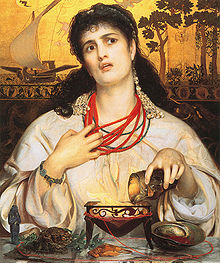
Talos was slain when Medea the sorceress either drove him mad with drugs, or deceived him into believing that she would make him immortal by removing the nail. He dislodged the nail, and "the ichor ran out of him like molten lead", killing him.

5th-century BCE Greek vase depicts the death of Talos
Talos makes an appearance in the 1963 motion picture "Jason and the Argonauts" thanks to stop-motion wizardry. The film, however, cast Jason as the automaton's slayer instead of Medea.

Saturday, February 8, 2025

Sargon of Akkad

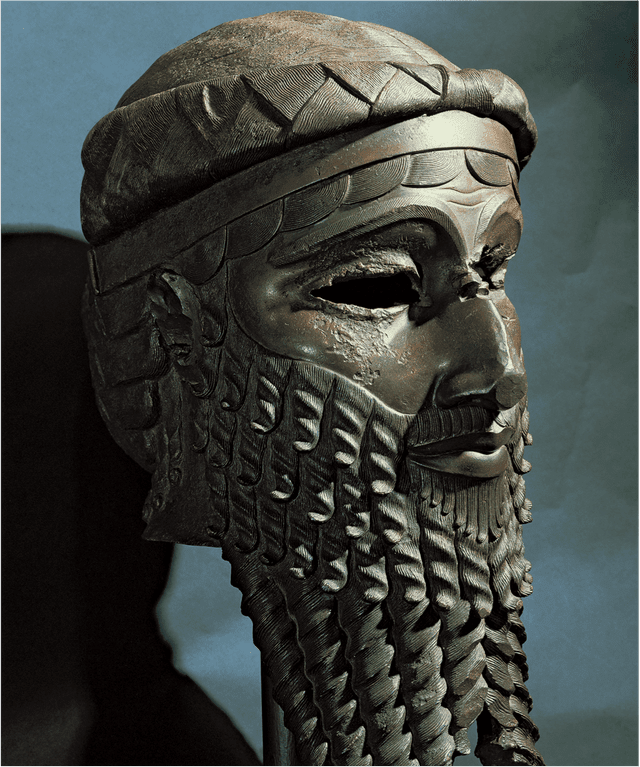
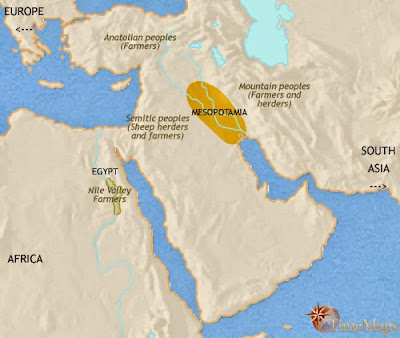
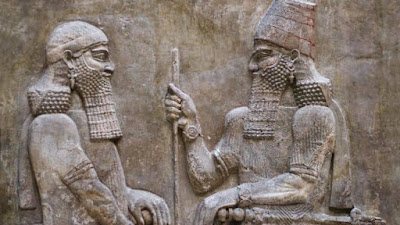
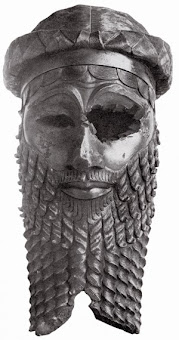
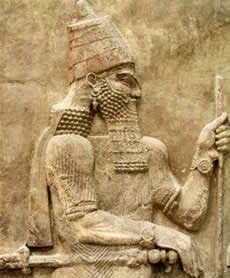
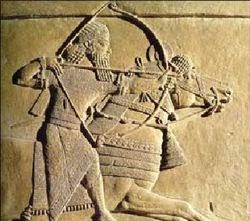
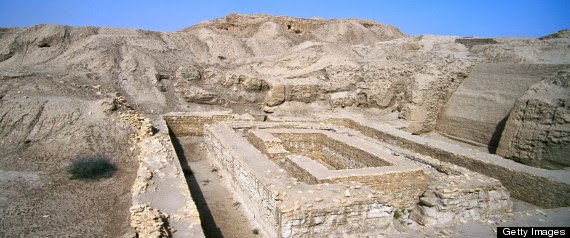
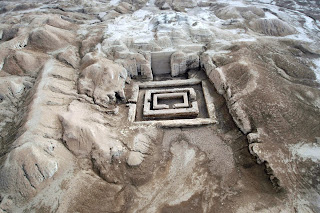
Sargon of Akkad, also known as Sargon the Great "the Great King" was a Semitic Akkadian emperor famous for his conquest of the Sumerian city-states in the 24th and 23rd centuries BC. The founder of the Dynasty of Akkad, he was originally referred to as Sargon I until records of an Assyrian king also named Sargon (now usually referred to as Sargon I) were unearthed. Sargon's empire included large parts of Mesopotamia, and included parts of modern-day Iran, Asia Minor and Syria.
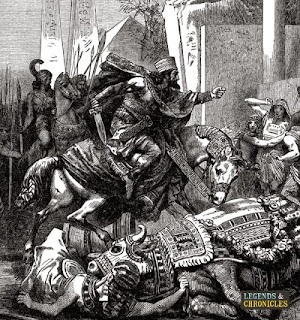
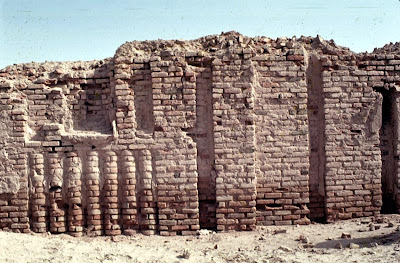
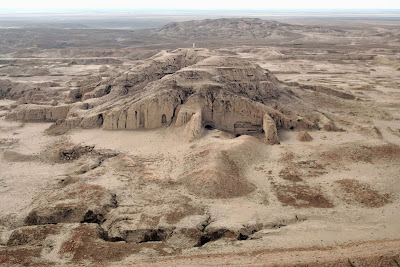
Sargon is often regarded as the first in recorded history to create a centrally ruled empire and a professional army. After coming to power, he killed the king of Kish, and attacked Uruk. He captured Uruk and dismantled its famous walls. Uruk was renowned for its walls which were first built 4,700 years ago by the Sumerian King Gilgamesh, hero of the epic named after him. Sumerian forces fought two pitched battles against the Akkadians and were routed. The defenders fled the city.

Sargon pursued his enemies to Ur before moving eastwards to Lagash, the Persian Gulf, and then Umma.
Sargon of Akkad died around 2215 BC. He was regarded as a model by kings for two millennia after his death. Assyrian and Babylonian kings who based their empires in Mesopotamia saw themselves as the heirs of Sargon's empire.

Akkadian influence was seen through trade throughout much of the known world from Eastern Europe to Northern Africa to India. Akkadian customs – language, religion, art, architecture – were the standard for almost two millennia until the Greeks and Persians established their own mighty empires.

The Didcot Hoard

The Didcot hoard was found by metal detectorist Bill Darley in 1995, near the Oxfordshire town of Didcot. It consists of 126 aurei. The aureus was the standard gold denomination of the Roman Empire and was valued at 25 silver denarii. Though the aureus was the same size as the denarius, the increased density of gold gave it twice the weight, usually between 7-8 grams in the first century. The aureus is known for its purity, nearly 24-carat gold. The incrediblely rare hoard represented a massive sum. A Roman legionary of the time earned about 300 denarii per year (from the time of Domitian). The hoard was equivalent to 10.5 years salary.

The coins date from AD 54 to 161. The first coins were issued under Claudius while the latest coin in the hoard dates to the final year of the reign of Antoninus Pius. The Didcot Hoard dates from a relatively stable period in Roman history. Represented are the Flavian dynasty Vespasian and his two sons Titus and Domitian, as well as a span of the 'Good Emperors', Nerva, Trajan, Hadrian and Antoninus Pius. It has been proposed that the hoard could have been a donative on the accession of the new emperor, Marcus Aurelius. It was tradition for new emperors to inaugurate their reign with generous gifts to high ranking officials and miltary officers. It will never be known who buried the gold in rural Oxfordshire or why.
Claudius ruled from AD 41 to 54. He had a limp and slight deafness. This likely saved him from the purges of Tiberius and Caligula. Antoninus Pius ruled from AD 138 to 161. He was the fourth of the 'Five Good Emperors'.
People have been living in Didcot for about 9,000 years - since the end of the last ice age. A significant find was a rare Neolithic bowl from about 3,600 BC - when people began to farm. It was found upside down in a hole where a tree had stood and may have been an offering to the gods. Roman burials revealed pots.

Coffin of Nedjemankh

The Metropolitan Museum of Art has returned a stolen antiquity from its collection: The Gold Coffin of Nedjemankh. The ancient gilded coffin was acquired by the Metropolitan in 2017 for $3.95m. The Gold Coffin of Nedjemankh dates to between 150 and 50 B.C. The coffin is a gilded ancient Egyptian coffin from the late Ptolemaic Period. It once encased the mummy of Nedjemankh, a high priest of the ram-god Heryshaf. It is made of a combination of cartonnage (linen, glue, and gesso), paint, gold, silver, resin, glass, wood, and leaded bronze.

The lid is covered with vignettes illustrating funerary spells and texts aimed at guiding the priest on his journey to eternal life. The elaborately decorated coffin was returned in 2019 to Egypt, where it was displayed at the Grand Egyptian Museum in Cairo.
In 2018, Kim Kardashian helped solve the criminal case featuring the golden coffin, forged documents and a trafficking ring. Thieves had stolen the coffin and sold it to the Metropolitan Museum of Art using fake documentation. An informing looter had seen the image of Kardashian and the coffin because it had gone viral and recognized the artifact. He had not been paid.

Friday, February 7, 2025

4th century BC warrior wearing Montefortino helmet found

A warrior equipped with a Montefortino helmet was found in Crecchio, Italy. The helmet dates from the 4th century BC and probably belongs to a Samnite warrior. Montefortino type was popular among the Italic peoples: Romans, Samnites, and Etruscans were equipped with the Montefortino. Due to its simple design and ease of manufacture, the Montefortino replaced Greek types in the Roman army after the 4th century BC, when a simple helmet was required to equip a growing number of Roman legions.
The Montefortino helmet was used from around 400 BC through the 1st century AD with modifications. The helmet is named after the region of Montefortino (frazione of Arcevia) in Italy, where it was first uncovered in a Celtic burial. The helmet was brought to Italy by the Senones. It was the most popular helmet in the Roman army during the Republican period.

Spectacular mosaic in Turkey

A massive floor mosaic of 84 square meters, which is thought to belong to the Late Roman or Early Byzantine period, was discovered by chance while a farmer was excavating for planting saplings in the Salkaya village of Elazığ, located in the Eastern Anatolia region of Türkiye. The lavishly decorated floor, which is 904 square feet in size, is believed to be the largest of its type ever found in Turkey. This stunning Roman-era mosaic has not been precisely dated, but is thought to have been installed sometime in the later part of the Roman period, perhaps from the third or fourth century AD. The imagery on the mosaic features hunting scenes (of animals stalking or chasing other animals). Especially notable is an image of a rare Anatolian leopard. The floor would have been in a home in an ancient settlement located near Salkaya, which is located 315 miles (500 kilometers) east of Ankara.

Monday, October 31, 2022

Rome subway work reveals artifacts

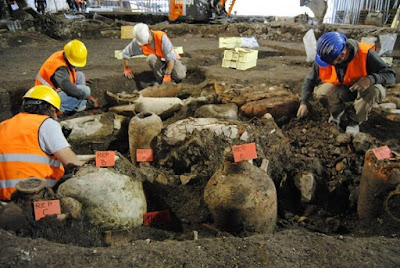
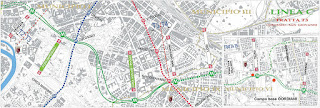
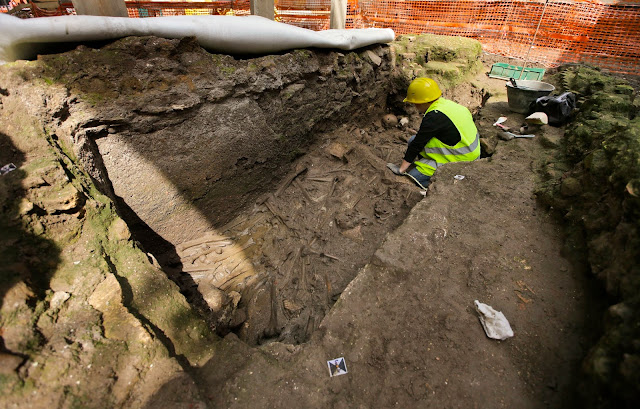
Construction of the subway in Rome in 2017 resulted in scores of treasures from ancient times. Ancient Roman objects featured amphora, marble panels, coins and peach pits. Officials created a permanent exhibit of the excavated articles at the San Giovanni metro station.

Human bones at ancient Roman ruins of former barracks. 13 skeletons were found.
The barracks were for Roman Praetorian guards dating back to the period of Emperor Hadrian. (117 to 138). The Praetorian Guard were elite military troops. They were household troops of Roman emperors and acted as bodyguards.

Notable finds included a three-pronged iron pitchfork, storage baskets, leather fragments possibly from a farmhand's glove or shoe, and traces carved into stone by a waterwheel's repeated turning. Peach pits, presumably from the farm's orchard, also were found. Peaches were still a novelty, first imported from the Middle East. Ancient Romans recycled. Amphorae, the jars they favored to transport and store food, were lined up with their ends cut open to double as water conduits. Other, older signs of life were carriage ruts from as long ago as the 6th century B.C.

Wednesday, October 26, 2022

Treasures of Ancient Greece: Life, Myth and Heroes

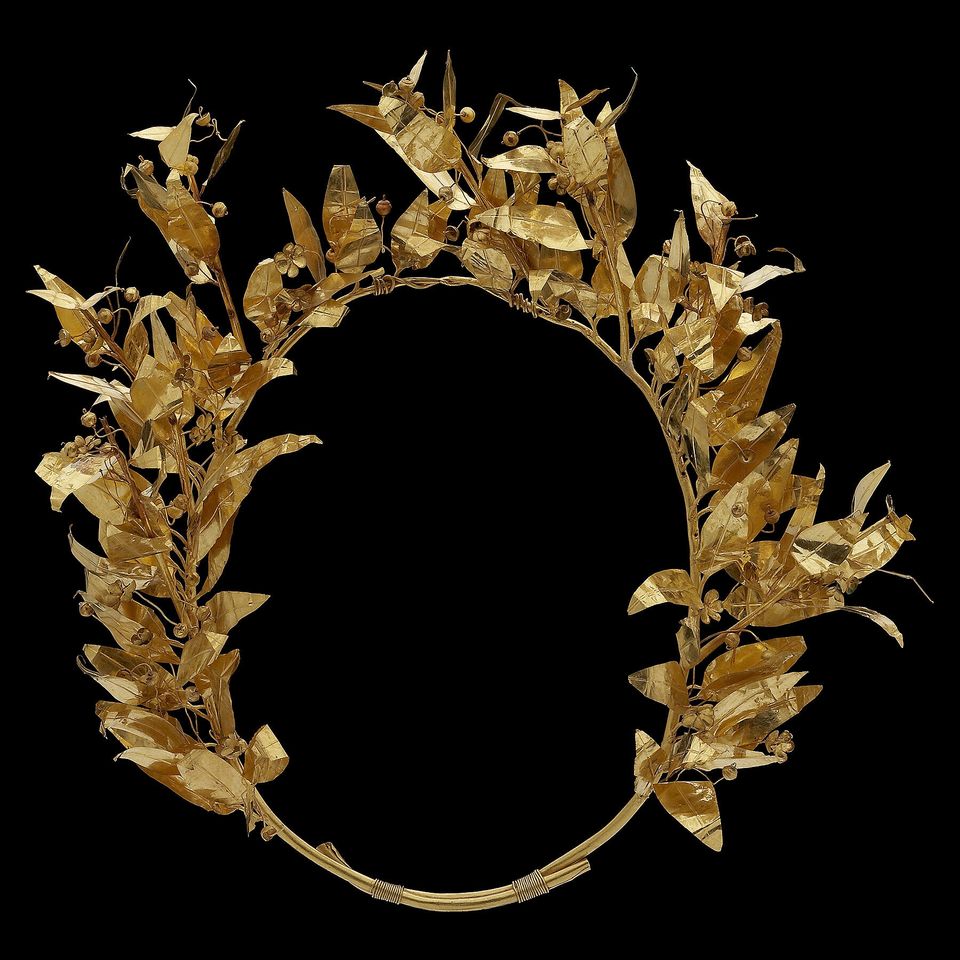
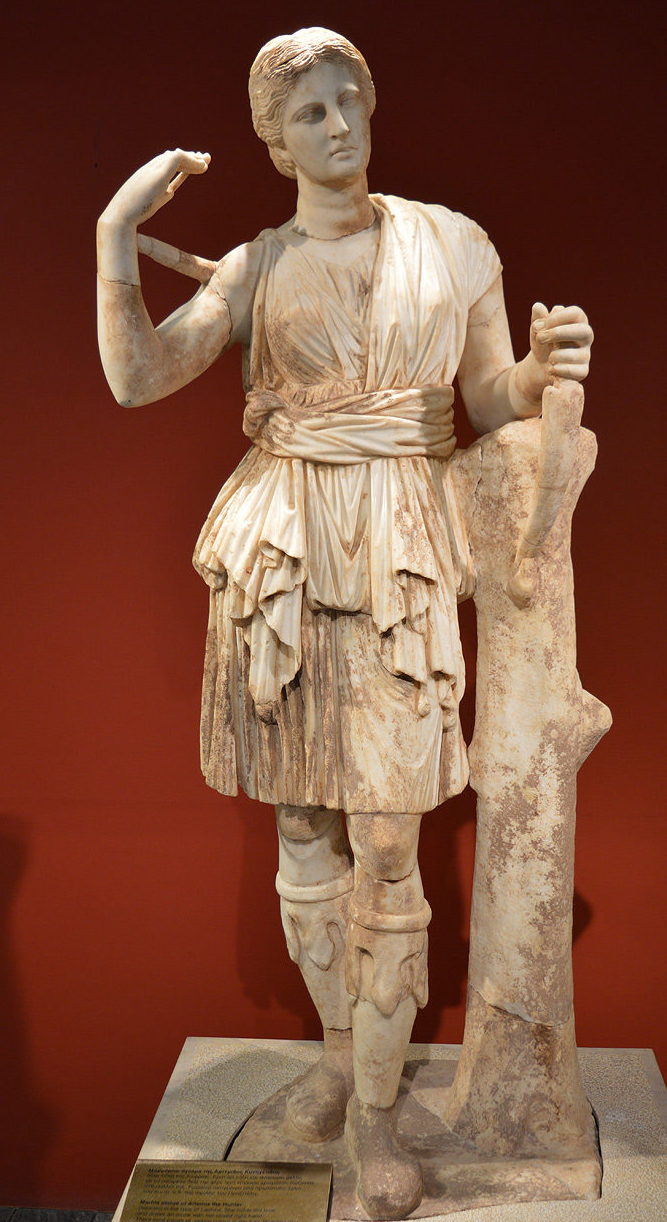
An exhibit of 150 ancient Greek artifacts was on display at the Children’s Museum of Indianapolis in 2019. The exhibition featured bronze and marble statues, gold jewelry and funerary objects.

Saturday, October 15, 2022

Cancer found in ancient Egyptians

This ancient woman died of breast cancer.Archaeologists found six cases of cancer while studying the bodies of ancient Egyptians who were buried in the Dakhleh Oasis. The finds include a toddler with leukemia, a mummified man with rectal cancer and individuals with cancer possibly caused by human papillomavirus (HPV).

In five of the six cases, scientists determined that they had cancer by studying lesions (holes and bone damage) on their skeletons.
Those holes were left when cancer spread throughout their bodies. Researchers cannot be certain where the cancers originated in many of the cases.
Researchers believe the risk of cancer was considerably lower in ancient Egypt than it is today.

Saturday, October 8, 2022

Jurassic-era piranha is world's earliest flesh-eating fish

The creature, found in South Germany, lived about 150 mya and had the distinctive teeth of modern-day piranhas. The Jurassic marauders used their razor teeth to tear chunks of flesh and fins off other fish; a renewable resource as fins grew back.