Monday, February 17, 2025

Strange and unusual places


Mono Lake in Sierra Nevada is a closed hydrological basin, water flows into it but it doesn't flow out. The only way for water to leave is through evaporation. 

Lake Baikal in Siberia freezes over but the water is so clear that you can see 50m below you. Wind, frost and sun cause cracks and ice hummocks to form.

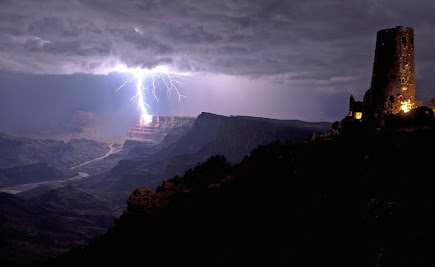
A lightning bolt crashed against the Grand Canyon. It is one of the Seven Natural Wonders of the World.
The Door to Hell is a gas field in Turkmenistan. The Door to Hell has been burning since it was lit by Soviets in 1971.

The elephant rock formation in Valley of Fire State Park in Nevada is a natural sandstone rock formation.
Don Juan Pond is a shallow hypersaline lake in Antarctica with a salinity level of over 40%. It is the saltiest known body of water on Earth.

The Great Blue Hole in Belize is a submarine sinkhole which is over 250m across and 130m deep. It formed during episodes of glaciation when sea levels were lower.

The Dune of Pilat is the tallest sand dune in Europe. It is located in La Teste-de-Buch in France, 60 km from Bordeaux.

The Wave in Utah is carved rock eroded into a wave-like formation made of jurassic-age Navajo sandstone that is around 190m years old.

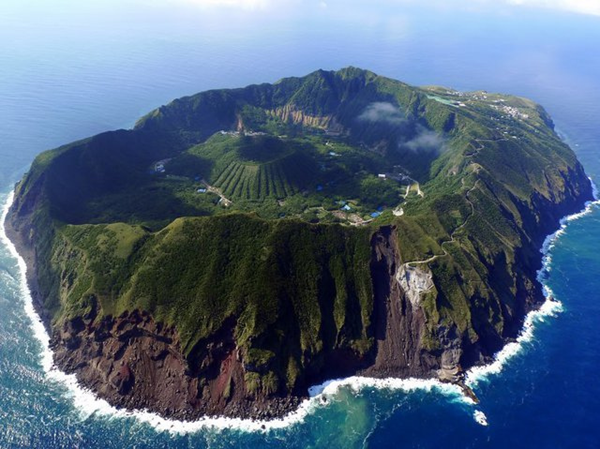
Aogashima is south of Tokyo in the Philippine Sea. The island is known for having a volcanic caldera within a larger caldera.

The sliding stones of Death Valley, California - The movement of the rocks baffles experts, with some rocks sliding across a flat bed despite weighing up to 700 pounds.

Urup is an uninhabited volcanic island near in the Sea of Okhotsk in the northwest Pacific Ocean

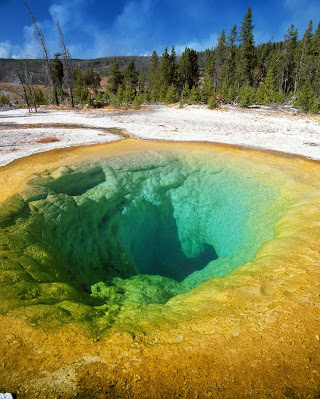
The Beauty Pool of Yellowstone National Park. The hot spring allows luminous algae and bacteria to flourish creating an array of colors

Fraser Island is the largest sand island in the world.

Danxia Landforms in Zhangye, Province of Gansu

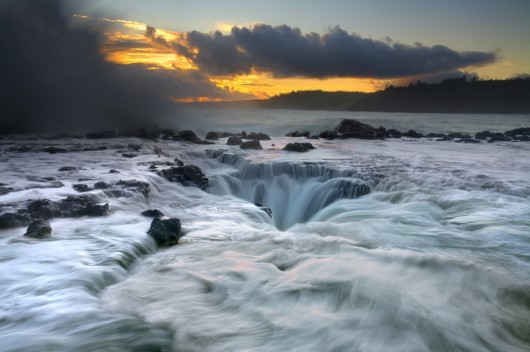
Thor’s Well, Oregon

The Moeraki Boulders of New Zealand started forming on the ocean floor and can now be seen on the coastline thanks to erosion.
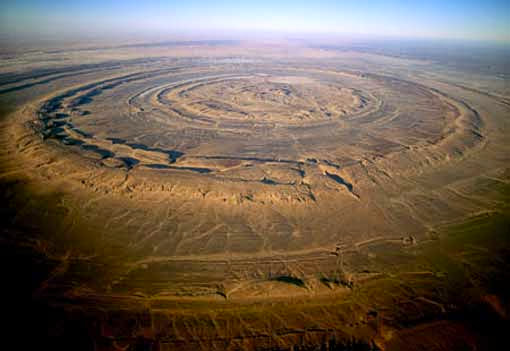
The Eye of Africa is officially the Richat Structure. Spotted in central Mauritania by astronauts, the formation has a diameter of about 10km.

Seaside lava ledges on Kauaʻi of the main Hawaiian Islands.

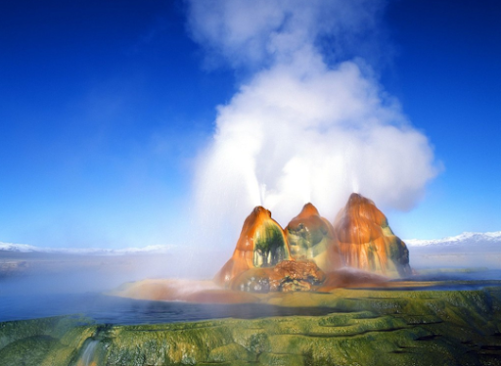
The Fly Geyser, near Gerlach, Nevada

Sunday, February 16, 2025

Venus Victrix - Venus the Victorious

In the second or third century a gold ring bearing the likeness of the Roman goddess Venus was lost on a road in what is now Brittany, France. Researchers excavated an 11-acre site ahead of planned development in the French commune of Pacé and found the relic.
Roman generals were known to call on Venus Victrix before battle. The ring dates to Brittany’s occupation by the Romans, which began with Julius Caesar’s conquest of the region in 56 B.C.E.
In Roman mythology, Venus was the goddess of love, sex, beauty, and fertility. She was the Roman counterpart to the Greek Aphrodite. The Roman Venus had many abilities beyond the Greek Aphrodite; she was the goddess of victory and even prostitution.
According to Hesiod, Aphrodite was born of the foam from the sea after Saturn castrated his father Uranus and threw his genitals into the sea. Her beauty became a source of tension among the gods, all of whom desired her.

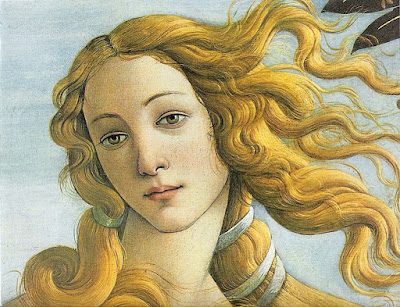
Botticelli's Birth of Venus
To calm matters, Zeus decided that Aphrodite would marry Hephaestus, the crippled smith god. Hephaestus fashioned a magic girdle to ensure her fidelity. However, she proved unfaithful and had multiple affairs with both mortals and gods. Some of her offspring were the Cupids (Erotes) who were a collection of winged love deities who represented the different aspects of love. Images of Venus can be found in countless forms. Venus, due to her beauty and sexual nature, was often depicted nude. Venus continued to be a popular subject matter for artists into modern times.

Terracotta Warriors: Guardians of Immortality

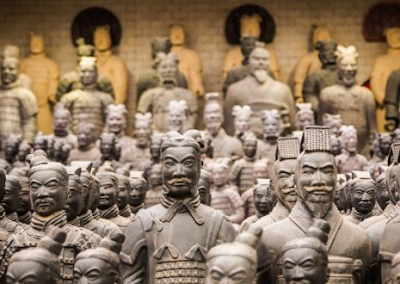
Terracotta Warriors: Guardians of Immortality was an exhibition in 2018. For more than 2,000 years, the warriors guarded the tomb of Qin Shihuang, China’s First Emperor. Discovered by chance in 1974, the underground army is one of the greatest archaeological finds known. Centerpiece is a phalanx of the funerary army, including soldiers, horses and chariots.
Works of ancient Chinese art crafted from gold, jade and bronze were found.
As many as 700,000 people toiled to create the army, mainly day labour, and probably conscripted. Each soldier was made from the feet up, with successive body parts shaped from coils of clay. Each face is unique.

Qin Shi Huang was the founder of the Qin dynasty and the first emperor of China. He was born in 259 BC and died in 210 BC.

Saturday, February 15, 2025

Praetorian Guard

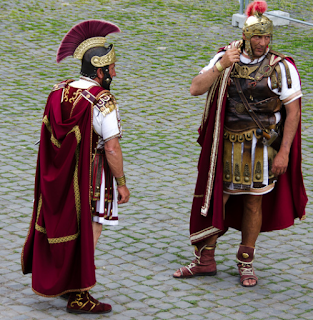
The term Praetorian came from the tent of the legate of a legion in the field — the praetorium. Many Roman generals choose from the ranks a private force of soldiers to act as bodyguards of the tent. The cohors praetoria existed as bodyguards for Roman generals.
In 27 BC Augustus created a permanent corps of nine cohorts, each of 500 to 1,000 men. Three cohorts were kept on duty in the capital. The others were stationed in the towns surrounding Rome; no threats were possible from the individual cohorts. In 2 BC he appointed two equestrian prefects to command them. The death of Augustus in 14 AD at 75 marked the end of Praetorian calm.
Through the machinations of their ambitious prefect, Lucius Aelius Sejanus under Tiberius, the Guard was brought into Rome itself. In 23 CE Sejanus convinced Tiberius to have the Castra Praetoria (the Camp of the Praetorians) built just outside of Rome. The entire Guard was now at the disposal of the emperors, but they were also at the mercy of the Praetorians. They gained significant political power.
Folowing the death of Sejanus in 31 CE, the guards became increasingly ambitious. At will, or for the right bribe, they assassinated emperors, bullied their own prefects or turned on the people of Rome.
In 41, Gaius Caligula was killed by conspirators from the guard. The Praetorians placed Claudius on the throne, daring the Senate to oppose them.
Praetorian Cohorts intervened many times in the struggle for the imperial succession. Lacking troops of its own, the Senate had no choice each time but to accept the choice of the Praetorians as well as that of the various legions. The new emperor was always proclaimed by the Praetorians before being ratified by the Senate and the legions stationed in the various provinces. While the guard had the power to make or break emperors, it had no formal role in government or its bureaucracy. After their acts of violence, revenge by the new ruler was almost always forthcoming.
Although they continued to serve for about three centuries, the Guard became infamous for its interference in Roman politics. The Guard was disbanded by Constantine the Great in 312.

The Olmec Civilization

The Olmec were the first major civilization in Mexico, developing in Soconusco. They lived in the tropical lowlands of south-central Mexico, in the present-day states of Veracruz and Tabasco. The Olmec flourished from 1500 BCE to about 400 BCE.
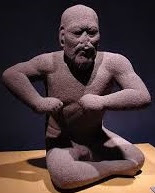
The discovery of reliefs was made in Tenosique, a municipality in the state of Tabasco, Mexico, and dates from the late Olmec. (900-400 BC) The name ‘Olmec’ comes from the Nahuatl word: Ōlmēcatl or Ōlmēcah, meaning ‘rubber people’. Researchers believe the reliefs depict local rulers performing ritual contortionism. This is done by adopting a stance that reduces the flow of blood and oxygen to the brain to achieve a trance-like state.
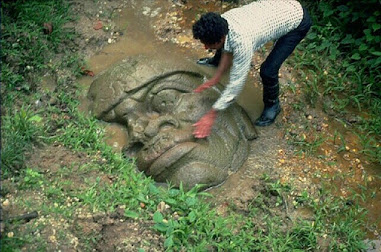
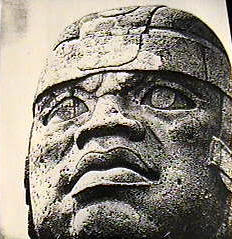
Pre-Olmec cultures populated the area since about 2500 BCE, but by 1600–1500 BCE, early Olmec culture had emerged, centered on the San Lorenzo Tenochtitlán site in southeast Veracruz. They were the first Mesoamerican civilization and laid the foundations for those that followed. The aspect of the Olmecs most familiar is their artwork, and "colossal heads".
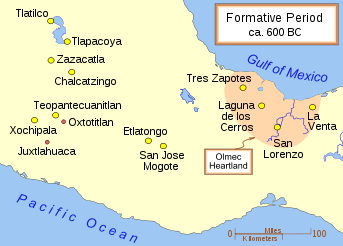
The Olmec constructed permanent city-temples at San Lorenzo Tenochtitlán, La Venta, Tres Zapotes, and Laguna de los Cerros. In this region the first Mesoamerican civilization emerged. What is today called Olmec first appeared within the city of San Lorenzo Tenochtitlán, where distinctive Olmec features occurred around 1500 BCE.

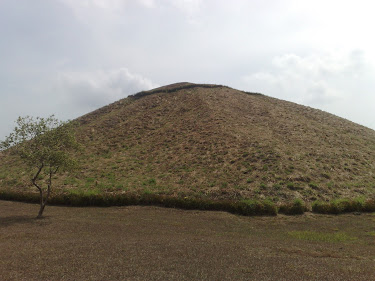
The Great Pyramid was the largest Mesoamerican structure of its time.
San Lorenzo was abandoned around 900 BCE and La Venta became the most prominent Olmec city, until it too was abandoned around 400 BCE. Between 400 and 350 BCE, the population in the Olmec heartland dropped sharply. The area was sparsely inhabited until the 19th century.
The Olmec culture was first defined as an art style, and this continues to be it's hallmark.