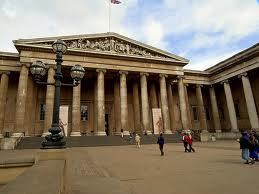
![]() | The British Museum was established in 1753 and first opened to the public in 1759.![]() | ![]() |
![]() | ![]() | ![]() |
![]() | ![]() | ![]() | |
![]() Gold locket with the hair of Queen Marie Antoinette | ![]() | ![]() |
![]() | ![]() | ![]() |
![]() | The British Museum was established in 1753 and first opened to the public in 1759.![]() | ![]() |
![]() | ![]() | ![]() |
![]() | ![]() | ![]() | |
![]() Gold locket with the hair of Queen Marie Antoinette | ![]() | ![]() |
![]() | ![]() | ![]() |
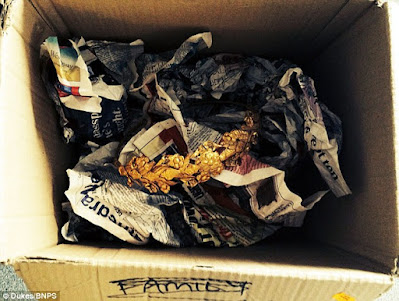
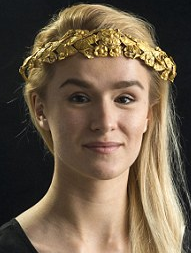
![]() | A rare gold crown believed to be more than 2,300 years old was discovered in 2016 under a bed in a Somerset cottage. The delicate Greek myrtle wreath, which is thought to date to 300 BC, was found in a cardboard box in a modest Taunton property. Its elderly owner was stunned when he found out the artifact is worth at least £100,000. Stylistically it belongs to a rarefied group of wreaths dateable to the Hellenistic period and the form may indicate that it was made in Northern Greece. It is eight inches across and weighs about 100 grams. It's pure gold and handmade and it would have been hammered out by a goldsmith. |
| Gold wreaths like the one found were meant to imitate the wreaths of real leaves that were worn in Ancient Greece in religious ceremonies and given as prizes in athletic and artistic contests. They usually depicted branches of laurel, myrtle, oak and olive trees, which were symbolic of concepts such as wisdom, triumph, fertility, peace and virtue. Due to their fragile nature, they were only worn on special occasions. Many were dedicated to the Gods in sanctuaries or placed in the graves of royal or aristocratic people as funerary offerings. | ![]() |
![]() | The current owner's grandfather was a collector who was fascinated by the ancient world. Although his family don't know how or where he acquired it, it's likely he bought it sometime in the 1940s. Similar gold wreaths can command £200,000. | ![]() |
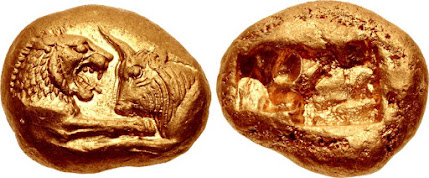
![]() | Results for the Stack’s Bowers Galleries August 2020 auction illustrate numismatics stands firm even during times of economic uncertainty. Over 92% of the ancient coin and world coin and paper money lots changed hands. Highlights among ancient coins included a gold octodrachm of Arsinoe II Philadelphos, which garnered $38k, a gold stater of Kroisos that sold for $30k, and an exceptional silver half shekel from year 3 of the First Jewish War that made $22k. ![]() |
![]() | SICILY. Syracuse. The Gameroi, ca. 500-490/86 B.C. AR Tetradrachm (17.21 gms). NGC Ch F, Strike: 5/5 Surface: 2/5. Marks. Obverse: Charioteer, holding reins in both hands, driving slow quadriga right; Reverse: Head of Arethousa left in incuse circle in center of quadripartite incuse square. A VERY RARE type, this piece emanates from the earliest coinage at Syracuse. Est $5k to $10k, hammer price $13,200 | ![]() |
![]() | In 1958 archaeologists were exploring the complex at Teppe Hasanlu near the city of Naghadeh in the northwestern province of West Azarbaijan. They came across a layer of an Iron Age city that had been frozen in time - a ‘burn layer’ containing remains preserved in ash and rubble. The Gold Bowl of Hasanlu was discovered not far from a skeletal hand who was likely the last to touch it almost 3000 years ago. Evidence suggests when the citadel of Hasanlu was under siege some soldiers penetrated into the citadel grabbing a handful of valuable treasures, including the gold bowl. The theory suggests that the whole building collapsed, crushing the looters and their possessions under layers of debris. And here they remained for thousands of years. |
![]() The Gold Bowl weighs more than two pounds and bears remarkable repoussé and chase decorations. | ![]() |

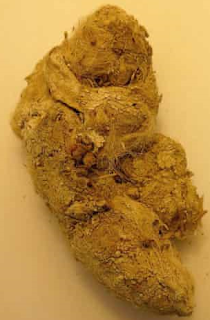
![]() | Scientists were able to sequence a complete human genome from a piece of birch pitch that was chewed up and spat out in southern Denmark some 5700 years ago. The chewer was female, with dark skin, dark hair, and blue eyes. Trapped within her gum was genetic material from one of her meals—duck and hazelnuts—along with DNA from the bacteria and viruses she harbored in her mouth. 17,000-year-old puma shit from the southern Andes contains the oldest parasite DNA yet recorded. It proves pumas were infested with roundworm long before humans and their animals arrived. | ![]() |
![]() | They collected bits from their surroundings and sealed it with their urine, which acts as a binder that preserves the nests for tens of thousands of years. These nests, middens, offer a snapshot of the local environment at the time they were made. Because the enamel that coats our teeth is 97% mineral, human teeth are more likely to survive through time. In 2010 genetic material from a wisdom tooth discovered in Siberia lead scientists identify the Denisovans, a little-known group that shared a common ancestor with Neanderthals and Homo sapiens. | ![]() |
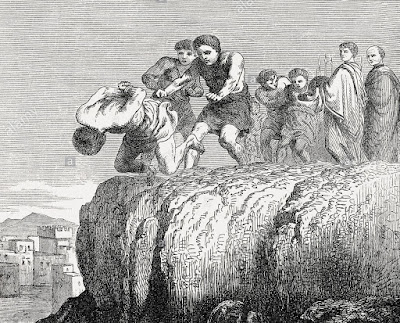
![]() | Long neglected, the legendary site lies overgrown and overlooked on the southern side of the Capitoline Hill. The rock is named for Tarpeia, a Vestal virgin and daughter of a Roman commander. When Rome was under siege by the Sabines, the story goes, she offered to betray the city. Tarpeia was flung to her death from what would henceforth become known as the Tarpeian Rock.![]() | ![]() By the early Republic, the rock was the site of capital punishment used against those convicted of perduellio, Rome’s earliest legal term for treason. Perduellio included acts of betrayal, secret cooperation with enemies, desertion, and political betrayal that weakened the safety and stability of the city. |
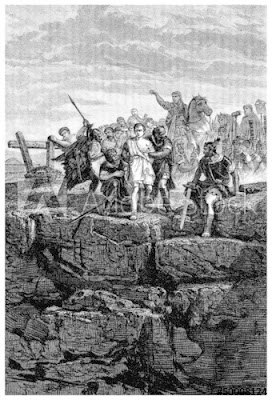
![]() | Later Romans would use the site to put to death their most notorious criminals, who would be thrown headfirst off the drop. The gruesome punishment was reserved for traitors, murderers and rebels to serve as a warning to others. 'The Tarpeian Rock is close to the Capitol,' an old Roman saying went – in other words, even at the height of power, you're never far from a fall. | ![]() |
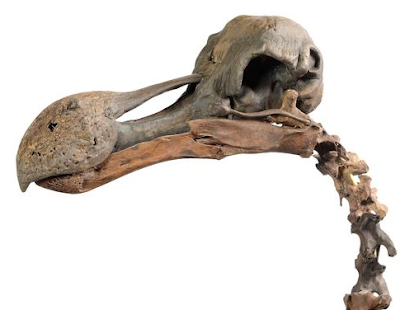
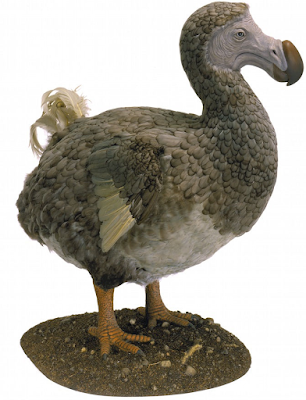
![]() | Known for their slightly comical, ungainly appearance, the flightless birds - most closely related to pigeons - were last seen on the island of Maritius, their sole habitat, in 1662. It's believed the presence of humans brought about their extinction in just 70 years.![]() |
![]() | Like most collectors, he spent years adding to his collection and it was only in the early 2000s that he realized he had enough bones (only lacking part of the skull and one set of claws - which were reconstructed) to construct a skeleton. He then meticulously reassembled them to create as complete a specimen as possible. | Any newly discovered bones from the Mare aux Songes swamp - where the vast majority of dodo bones were found in the 19th century – will not be for sale. The Mauritian Government has banned all exports of dodo bones. |