 The thief cited the current coronavirus outbreak as the reason for returning the artifact. | A man has returned an ancient Roman projectile that he took from an ancient site in Jerusalem 15 years ago. The man took the ballista stone from the City of David in the Jerusalem Walls National Park.  |  The ballista stones at the City of David likely date to the Roman siege of Jerusalem and the destruction of the Second Temple in 70 CE. The ballista stones at the City of David likely date to the Roman siege of Jerusalem and the destruction of the Second Temple in 70 CE. |

Monday, March 16, 2020
Stolen Roman ballista stone returned

Wednesday, March 11, 2020
Hummingbird sized dinosaur - Oculudentavis khaungraae
 | A hummingbird-sized predatory bird is the smallest known dinosaur to live during the Mesozoic Era, between 252 million and 66 million years ago. Of modern birds the bee hummingbird is the smallest. The new species, dubbed Oculudentavis khaungraae, was similar in size. The earliest birds, such as Archaeopteryx, arose around 150 million years ago, and this find suggests that bird body sizes were reaching their lower limit by 99 million years ago. |
 | Tomography scans reveal a 3-D image of the bird’s skull, preserved in amber. They show the deep eye sockets and sharp teeth of a predator. Researchers need to figure out where the new species belongs on the tree of life. | 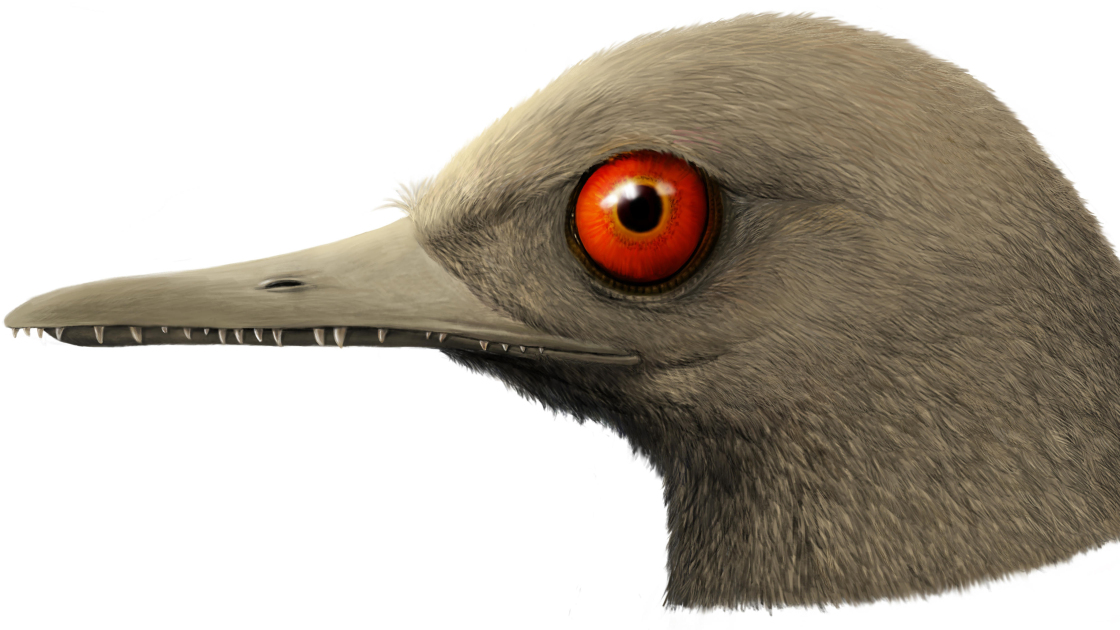 |
Tuesday, March 10, 2020
SS Central America - Territorial Gold Coins
 Second finest known 1854 Kellogg $20 Territorial gold coin, graded PCGS MS62+ | Coins from the SS Central America include rare Territorial Gold Coins. "Territorial" is a term that encompasses a wide range of coins issued by private minters, semi-official entities, entrepreneurs, and opportunists. | 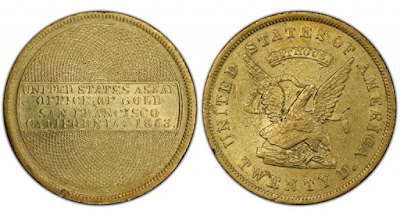 Rare 884 THOUS variety 1853 U.S. Assay Office $20, graded PCGS AU55+ |
 Small Head variety 1852 Wass Molitor $5 gold coin, with a counterstamp advertising Sacramento dentist W.W. Light | The coins arose out of necessity and were created to fill a void that government would not fill. Until they intervened, these issues flourished; once the government entered the market, they were made illegal. |  One of the finest known 1855 Wass Molitor Small Head variety $20 gold coins, PCGS AU58 |
Saturday, March 7, 2020
Ancient Jade Axe found in China.
 A Ritual Jade Yue (battle-axe), Western Zhou Dynasty 西周玉鉞. Mottled with teeth inlays on the edge, for ritual purposes in Shang and Zhou Dynasty. | Archeologists discovered jade ware that dates back over 4,000 years in 2018 at a site in central China's Hubei Province. Jade battle-axes, an astronomical instrument and a tube, dating back to between 4,600 to 5,100 years ago, have been unearthed at the Mulintou site in Baokang County. Skeletons, stoneware and pottery have also been found at the site. A jade battle-axe was a symbol of power. |  The Qujialing culture is a late Neolithic culture discovered in the middle reaches of the Yangtze River. The Qujialing culture is a late Neolithic culture discovered in the middle reaches of the Yangtze River. |
Monday, February 17, 2020
Chinese Porcelain Vase found in a shoebox sells for $19 Million
 | In 2018 an 18th century Chinese vase found in a shoebox in an attic and forgotten for decades was sold in France for 16.2 million euros ($19 million) at auction in Paris. The price was more than 20 times the estimate Sotheby's had put on the item. It was the highest price reached for a single item sold by Sotheby's in France. The 30 cm, bulb-shaped vase, painted in delicate shades of green, blue, yellow and purple, was described as an exceptionally well-preserved porcelain vessel made for an emperor of the Qing dynasty. The vase bears a mark of the Qianlong Emperor who ruled China from 1736 to 1796. |  |
 |  |  |
Wednesday, February 12, 2020
Thanatotheristes degrootorum - "reaper of death"
 | The oldest known member of the Tyrannosaur family walked the plains of southern Alberta about 80 mya. That's the finding of a new study identifying the previously unknown dinosaur. Paleontologists confirmed that it was a new species. The name, Thanatotheristes degrootorum, means "reaper of death" in Greek. This tyrannosaur was as the only known large apex predator of its time in Canada. Tyrannosaurs were a type of carnivorous, bipedal dinosaur called therapods. 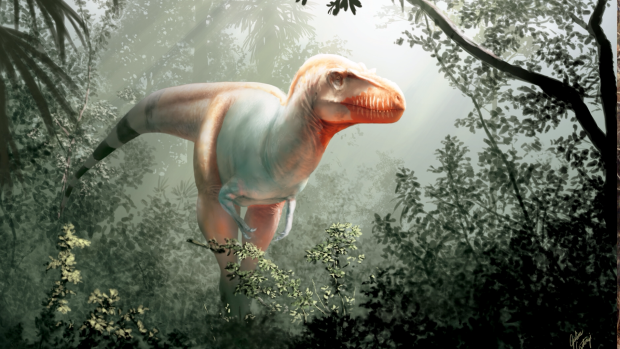 |
Tuesday, February 11, 2020
Mammoth tusk pirates in Russia
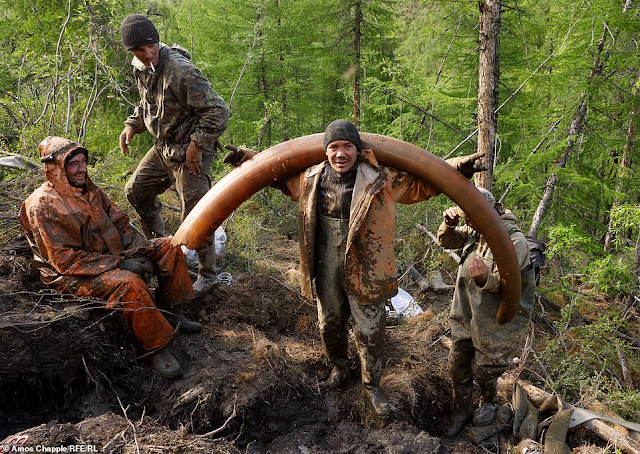 | Russian miners are making a fortune by unearthing prehistoric woolly mammoth tusks preserved in the permafrost and selling them for thousands on the Asian 'ethical ivory' market. They are searching for the 'white gold.' They find it along the Yakutia river, about 4,300 miles east of Moscow. Tusks can fetch around $34,000 for 65kg. Miners also sell the tusks of woolly rhinos, worth more than their weight in gold, which are ground up to be sold as medicine in Vietnam. |
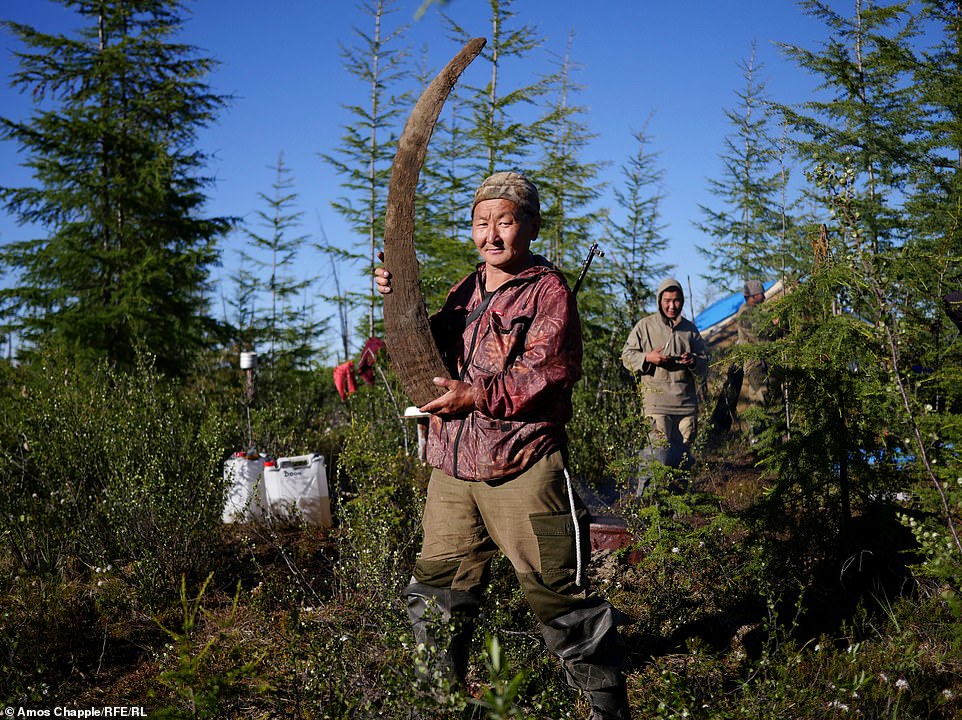 | 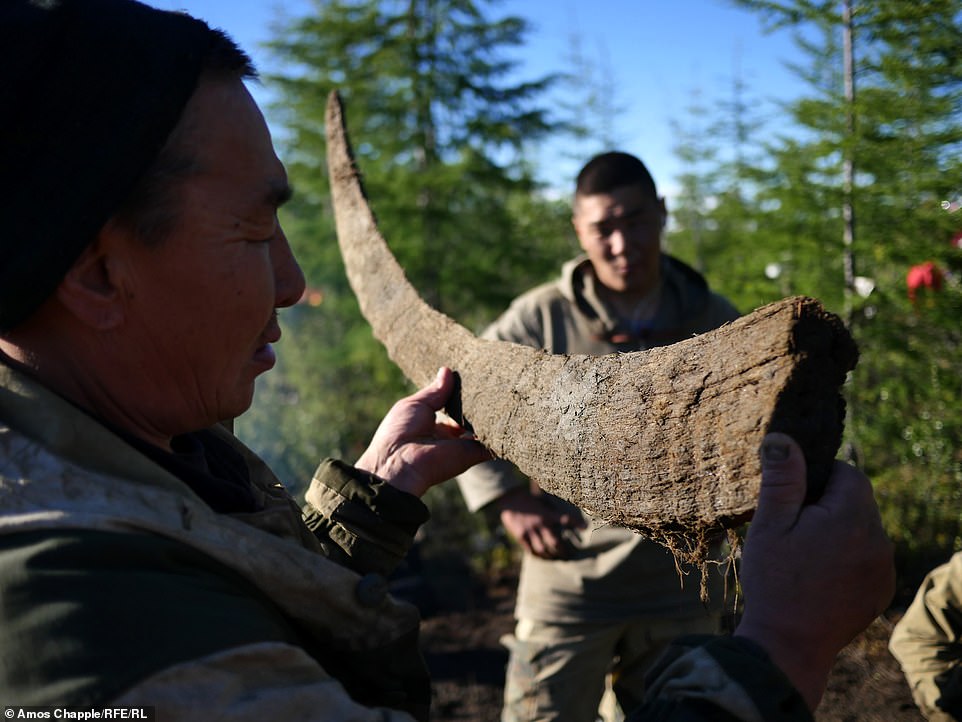 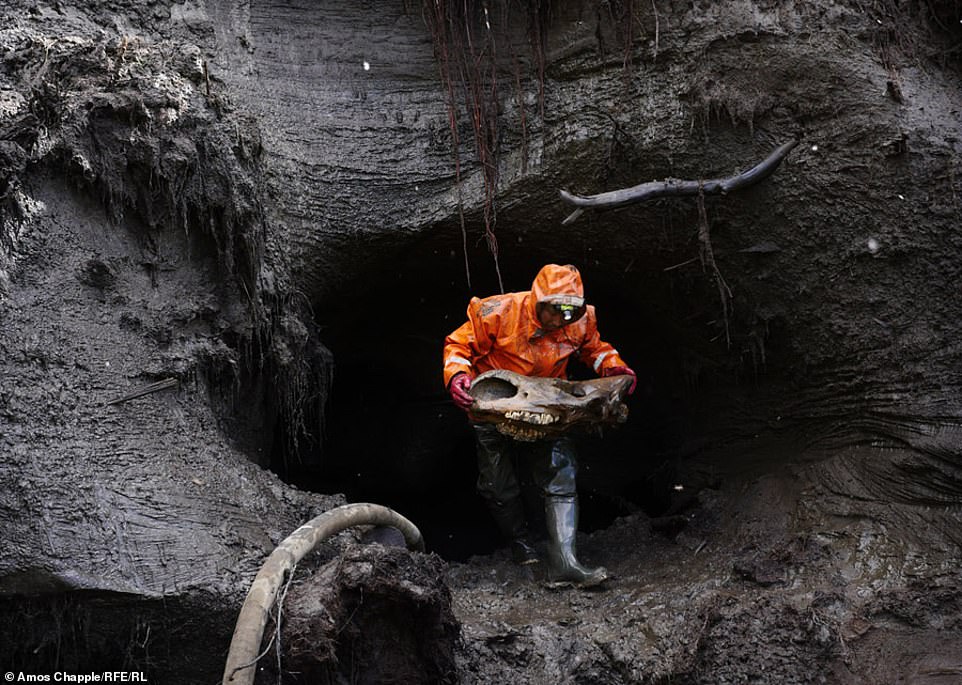 |
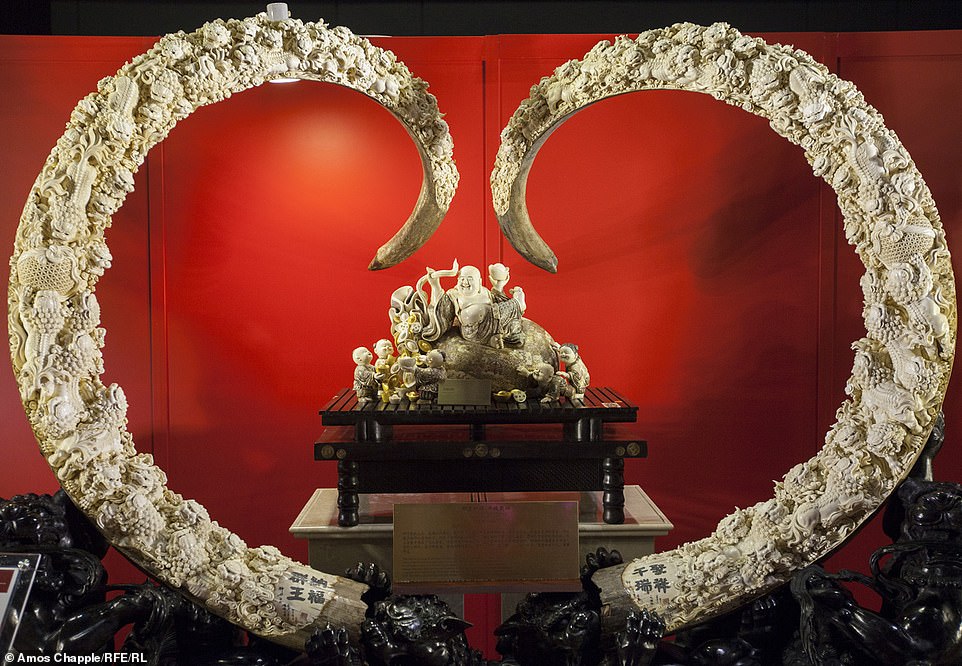 | Mammoths once roamed Russia's north from 400,000 years ago until their population declined at the end of the Pleistocene 10,000 years ago. A few hung on outcrops of land, such as Wrangel Island, until they finally went extinct around 4,000 years ago.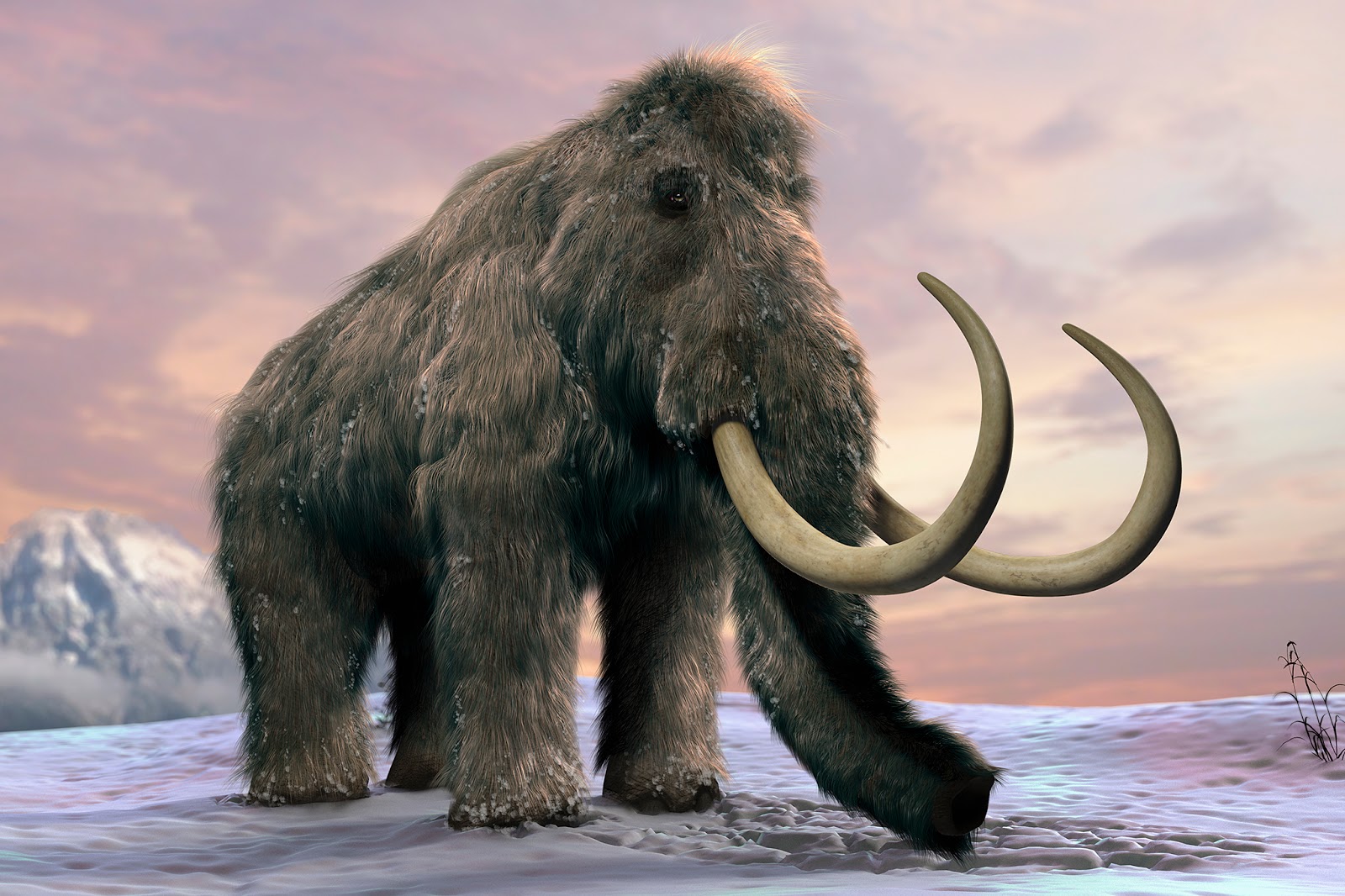 |
Sunday, February 9, 2020
Blythburgh hoard - Iron Age gold coins
 | The gold staters and quarter staters were attributed to pre-Roman tribal leader Addedomaros, King of Trinovantes. They are dated to 45-25BC, and were likely deposited after 20 AD. The Trinovantes were one of the Celtic tribes of pre-Roman Britain. Their territory was on the north side of the Thames estuary in Essex and Suffolk, and included lands now located in Greater London. They were bordered to the north by the Iceni, and to the west by the Catuvellauni. |
 |  |  |
Wednesday, February 5, 2020
Pterosaur tooth found in rare ancient squid fossil
 | A new cephalopod fossil was unearthed with a surprising accessory: an embedded tooth. The fossilized evidence represents the first known that pterosaurs hunted cephalopods. Excavated in 2012 from a limestone formation in Bavaria, Germany, the fossil is a Plesioteuthis subovata cephalopod, a predecessor of today’s squids, octopuses and cuttlefish. The 11-inch-long creature was extremely well preserved with its ink sac and fins still partially intact. What is amazing is the tooth protruding from just below the animal’s head. Based on the size, shape and texture of the dentition, as well as its approximate age, researchers argue that it probably belonged to a Rhamphorhynchus muensteri pterosaur. |
 | The mixed-species fossil immortalized a rare pterosaur-prey interaction and it is rare and unique. |
Tuesday, February 4, 2020
Pleistocene Cave Bear
 | A fully articulated skeleton of a late prehistoric male cave bear, Ursus Spelaeus was offered for sale in 2018. The cave bear lived in Europe and Asia during the Pleistocene and became extinct about 24,000 years ago. Estimate: $28k - 34k |  |
 | Genetic research that reconstructed the population dynamics of the cave bear implicates Homo sapiens in their Ice Age extinction. Scientists obtained genome data from 59 cave bears from bones unearthed at 14 sites in France, Germany, Italy, Poland, Serbia, Spain and Switzerland. A dramatic decline starting about 40,000 years ago coincided with the spread of Homo sapiens throughout Europe. Before the arrival of Homo sapiens, the bear’s population had remained robust. |
Friday, January 24, 2020
Submerged ancient Egyptian treasures
 | More than 200 objects were showcased in 2016 at an exhibition of Egyptian artifacts discovered in a sunken ancient city. Dating back some 2,300 years they were found over a decade ago near what is now the city of Alexandria. In ancient times, the port city of Thonis-Heracleion was the main port of entry to Egypt for all ships coming from the Greek world. |  |
 | The city was founded around the 8th century BC, underwent natural catastrophes, and eventually sunk entirely into the depths of the Mediterranean in the 8th century CE. |  |
 |  |
 |  |  |
 |  |  |
 |  |  |
 |  |
Subscribe to:
Posts (Atom)