Tuesday, February 23, 2021

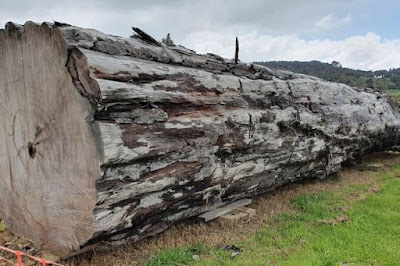
Ancient kauri tree maps geomagnetic flip

The Earth’s magnetic field is fundamental to the existence of life. It deflects harmful solar winds and keeps our protective atmosphere in place. Every few hundred thousand years on average it completely flips, with magnetic north switching places with magnetic south. The last major geomagnetic reversal occurred 780k years ago. Geomagnetic excursions are short-lived, and involve temporary changes to the Earth’s magnetic field. The most recent recorded geomagnetic excursion is known as the Laschamps excursion and it took place around 42,000 years ago. The Laschamps Excursion was the last time the magnetic poles flipped. They swapped places for about 800 years before swapping back again. A kauri tree trunk was found perfectly preserved for 42,000 years, with its rings offering a 1,700-year record of the Laschamps Excursion.
Researchers compared the newly-created timescale with records from sites across the Pacific and used it in global climate modeling, finding that the growth of ice sheets and glaciers over North America and large shifts in major wind belts and tropical storm systems could be traced back to the Laschamps Excursion.
The study showed a depleted ozone layer, higher levels of ultraviolet radiation and increased atmospheric ionization that all coalesced about 42,000 years ago.

Wednesday, February 17, 2021

Seqenenre Tao

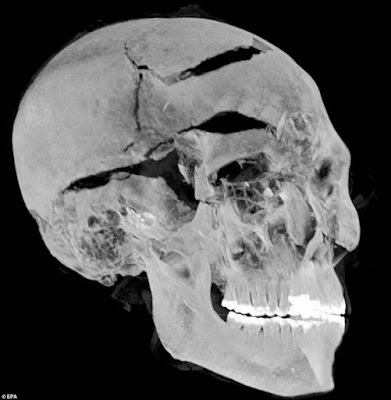
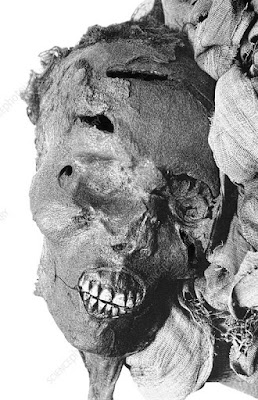
Seqenenre Tao was a pharaoh who ruled southern Egypt in the mid-16th century BC. He met his end in an execution after he was captured in a battle with the Hyksos dynasty. The pharaoh’s mummified remains were discovered in 1881 in the necropolis in Thebes. While his head bore severe injuries, the exact manner of his death was a mystery.

Reasearchers believe he was ritually executed by multiple attackers, with his hands tied behind his back.
A CT scan revealed previously undetected lesions that were expertly concealed by embalmers.

Tuesday, February 16, 2021

95.6% copper a covid killer

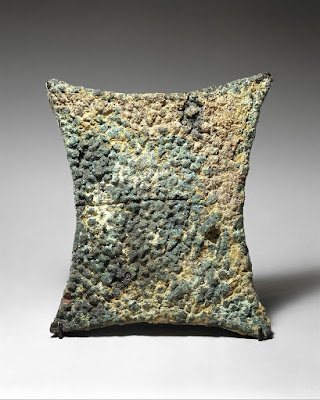
The knowledge of working with copper and its alloys goes back at least 7,000 years. Ancients knew that copper healed infections, but they didn’t know why.

Copper kills germs because it has an extra electron it its atomic makeup. The outermost orbit electron reacts with things that land on it, killing the germs quickly. Ions blast apart bacterial cell membranes and the coatings that protect viruses, rendering them inert. Most viruses and bacteria succumb within minutes. COVID’s stubbornness only buys it extra time. Within a few hours it too is rendered harmless. The antiviral properties of copper surfaces never wear off.
The only reason copper alloys fell to iron and steel was hardness and durability. Today ancient copper may provide another line of defense against a modern illness.

Saturday, February 13, 2021

Waun Mawn

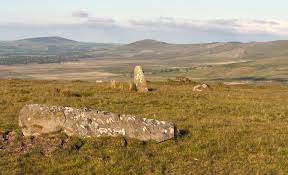
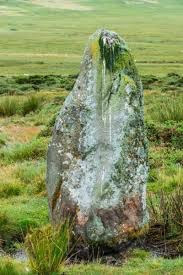
Waun Mawn (Welsh for "peat moor") is the site of a dismantled Neolithic stone circle in west Wales. The doleritic bluestones that made up the circle were likely mined at the nearby Carn Menyn.
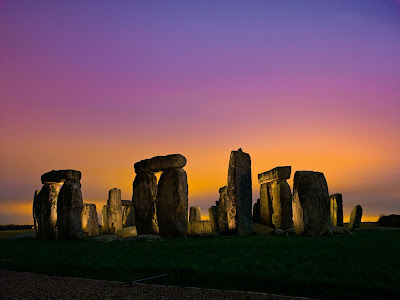
A new study suggests the stones used to create Stonehenge in 3000 BC may have belonged to Waun Mawn.

Thursday, February 11, 2021

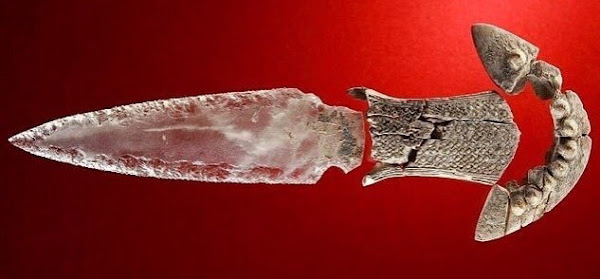
5,000 yo rock crystal dagger unearthed in Spain

A 5,000 year old rock crystal dagger has been found in Spain. The eight-and-a-half-inch dagger was found in a tomb at the Tholos de Montelirio site. Stone and flint typically comprise daggers, a rock crystal one is unusual. It's thought to have belonged to a high status individual due to the time and expertise required to make it.

Sunday, February 7, 2021

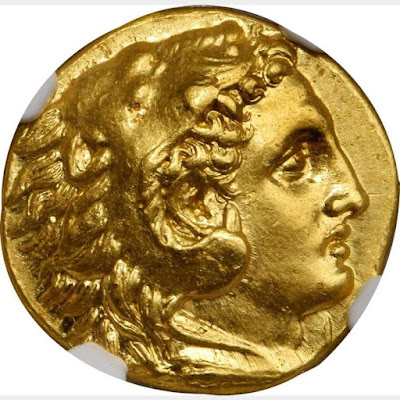
Spectacular Calabria Stater makes $66k

ITALY. Calabria. Tarentum. AV Stater (8.56 gms), ca. 276-272 B.C. NGC MS, Strike: 5/5 Surface: 4/5. Fine Style. $66k.

Friday, February 5, 2021

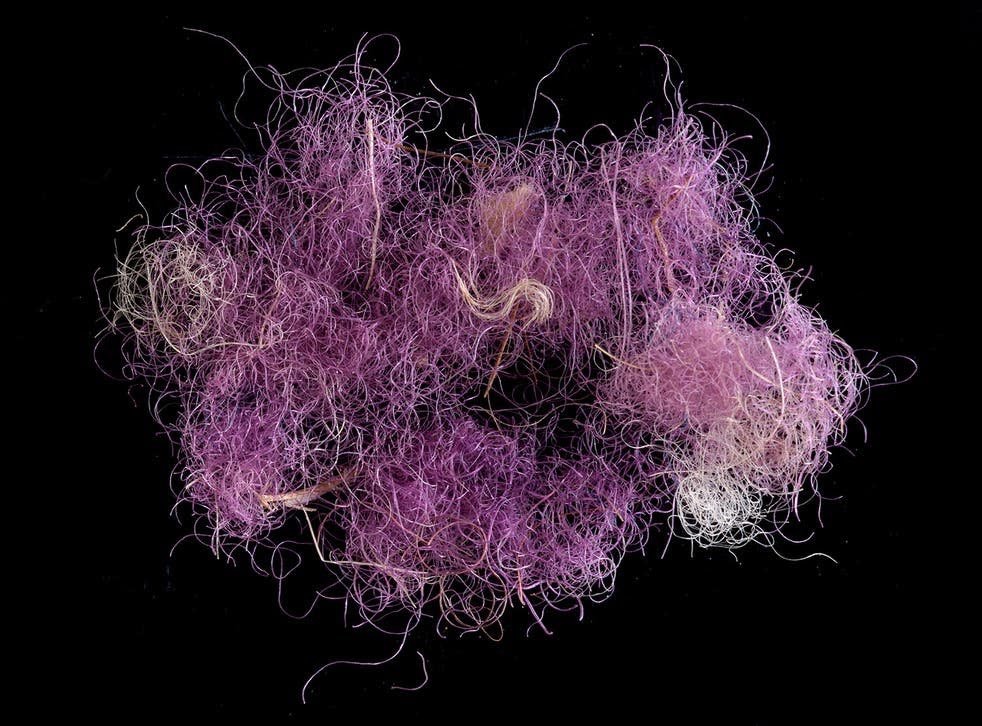
Tyrian purple found for first time in Israel

Purple-dyed fabric dating to the Biblical reigns of David and Solomon has been discovered in Israel. Produced in Phoenicia as early as 1570 BC using the distilled glands of sea snails, “Royal” or “Tyrian” purple was associated with the elite and exremely wealthy. It was more valuable than gold in the ancient world. Radiocarbon dating confirmed the samples found date from about 1000 BC.
True purple (argaman) was produced from a gland located near the rectum of three species of mollusc indigenous to the Mediterranean Sea, through a complex distillation process lasting several days.

The find was in the Timna Valley, a vast ancient copper mine. Copper smelting required advanced knowledge which was a guarded state secret. Those who held this knowledge were of the highest status.

Thursday, February 4, 2021

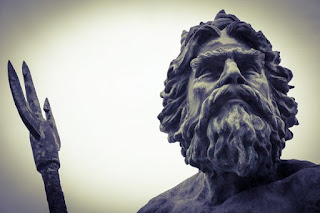
Face of Poseidon

Photographer Mathieu Rivrin captured waves whipped up by Storm Justine near Lesconil in Brittany, France as they smashed against the seawall, forming a face.

Monday, February 1, 2021

Neanderthal teeth point to interbreeding

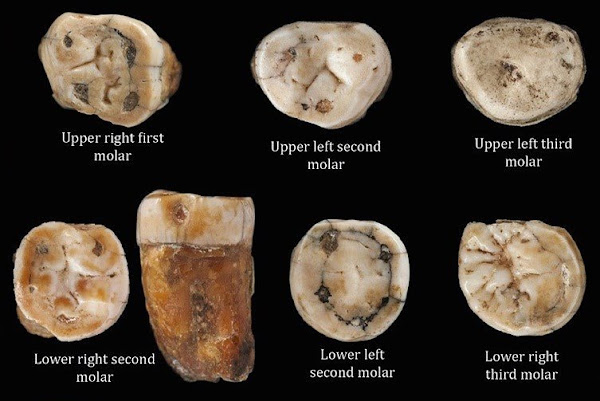
Neanderthal teeth point to extensive interbreeding. The 13 teeth were excavated at the Paleolithic site of La Cotte de St Brelade in Jersey in 1910. They are dated to 48,000 years ago. Their shape suggests a link to modern humans and the possibility of a hybrid population. DNA testing is ongoing.
Many studies have suggested that Neanderthals and modern humans interbred multiple times, and around 2% of non-African human DNA is Neanderthal.

Thursday, January 21, 2021

Theft from Burgess Shale

A tourist from Belgium paid a price for going where he wasn’t supposed to go and attempting to steal an ancient artifact by putting it into a sock and stuffing it into a backpack. An alert hiking guide at the world-famous Burgess Shale Formation in Canada’s Yoho National Park spotted the tourist in a restricted area and alerted wardens.

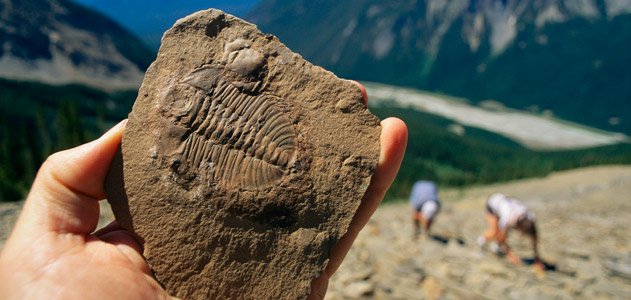
The tourist was collecting fossils illegally near the Walcott Quarry of the Burgess Shale, a fossil field with some artifacts more than 500 million years old. Wardens dug through the tourist’s backpack and discovered the trilobite fossil.

The Walcott Quarry of the Burgess Shale.
He was charged with removing a fossil with the intention of selling or trafficking the ancient artifact. A British Columbia provincial court fined him $4,000.

Authorities say “a fairly active” black market exists for fossils from the Burgess Shale with values ranging from $300 or $400 for common trilobite fossils. Larger and rarer fossils can sell for $ 10,000 or more.
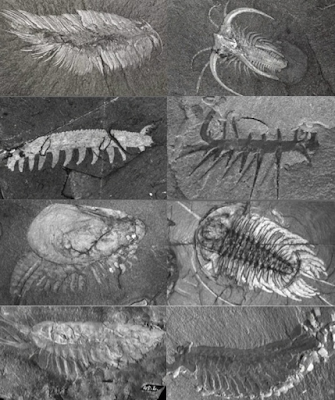
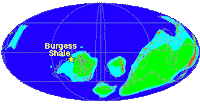
The Burgess Shale Formation is located in the Canadian Rockies of British Columbia. It is one of the world's most celebrated fossil fields and is listed as a UNESCO world heritage site. It is famous for the exceptional preservation of the soft parts of its fossils.

At 508 million years (Middle Cambrian) old, it is one of the earliest fossil beds containing soft-part imprints.
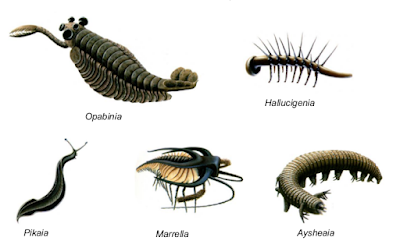
Burgess Shale contains the best record we have of Cambrian animal fossils. It reveals creatures originating from the Cambrian explosion, an evolutionary burst of animal origins dating 545 to 525 million years ago.
During this period, life was restricted to the world's oceans. The land was barren, uninhabited, and subject to mudslides which periodically rolled into the seas and buried marine organisms.

At Burgess, sediment was deposited in a deep-water basin adjacent to an enormous algal reef with a vertical escarpment several hundred meters high.

The Burgess Shale fossils have been called the world’s most significant fossil discovery because of their great age, their diversity and the detail of their preservation.


Wednesday, January 20, 2021

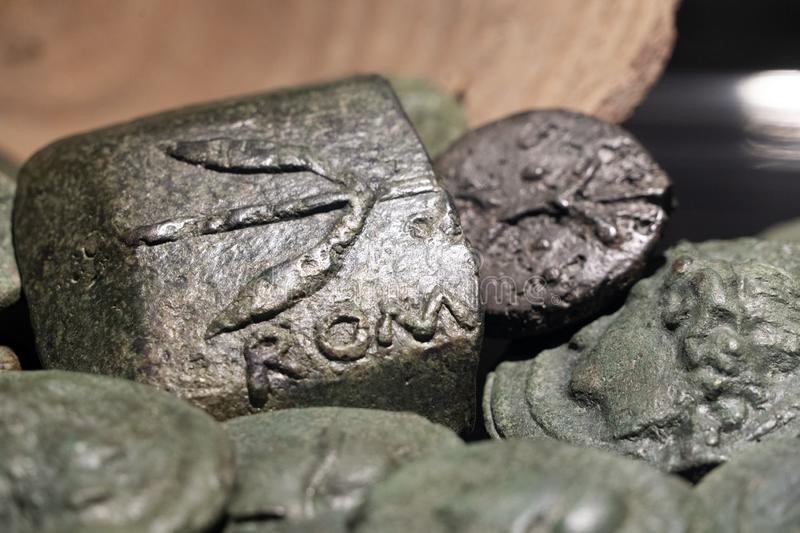
Iron Age money

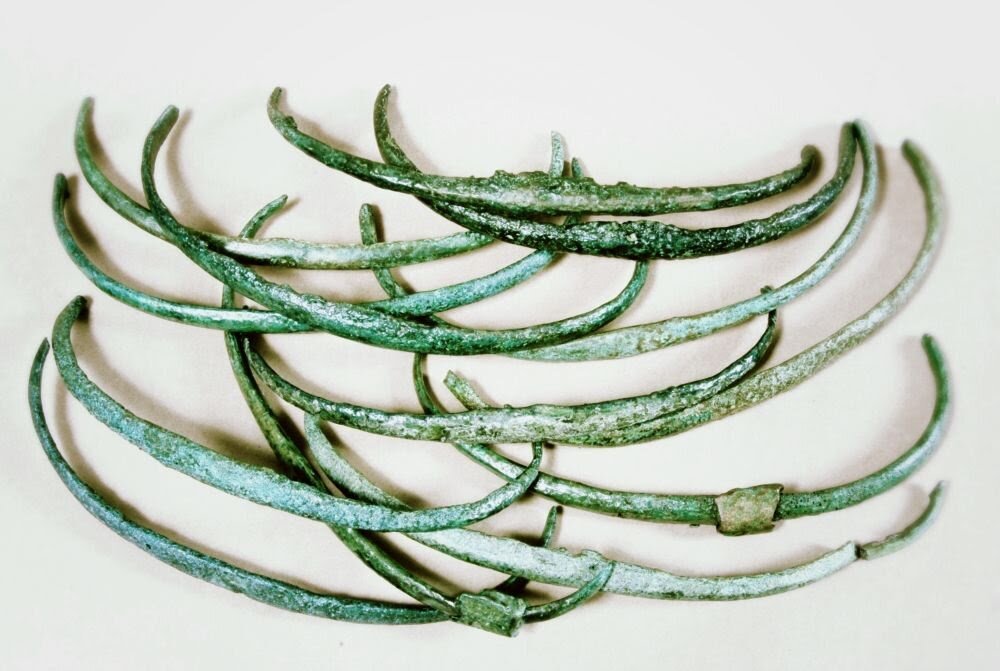
In the Early Bronze Age, ancient people used bronze objects as an early form of money. Researchers suggest that a consistent similarity in shape and weight, along with the fact that the objects often occurred in hoards, are signs of their use as an early form of standardized currency.

Standardized currency is a requirement for trade, a cornerstone of human development.

Saturday, January 16, 2021

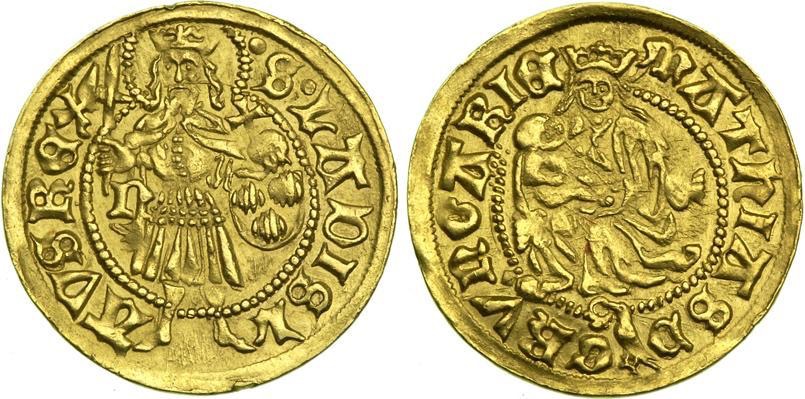
Stash of late medieval coins discovered in Hungary

Újlengyel is a Hungarian village about 31 miles (50 km) southeast of Budapest. The oldest coin is a silver denarius of Roman emperor Lucius Verus, who ruled from A.D.161 to A.D. 169. The newest coins date to Louis II, who ruled Hungary and Bohemia from 1516 to 1526. The hoard consists of nearly 7,000 silver coins and four gold coins. The four gold coins were issued during the reign of Matthias I, the king of Hungary from 1458 to 1490. Hungarians may have buried the hoard during an attack from the Ottoman Empire in 1526.
The Ottoman Empire, led by Suleiman the Magnificent, defeated Hungary and its allies in the Battle of Mohács on Aug. 29, 1526; this marked the end of the Hungarian monarchy.