Wednesday, February 19, 2025

Shroud of Turin Fake

The Shroud of Turin is one of Catholicism’s most controversial and mysterious artifacts. Its believed by some to have shrouded the body of Jesus Christ, while others consider it a hoax perpetrated by medieval con men. Despite testing using radiocarbon dating, pollen testing, microscopic analysis and image enhancement, scientists have not said whether the object is legitimate or not.

For some, it comes down to a question of faith.
Researchers used a volunteer to simulate the position of the body that would be required to create the stains found on the shroud.
It is impossible for the stains to have been made by wrapping a dead body. A volunteer created a range of bloodstained materials from simulated wounds to the head, hands, feet, back and waist, mirroring those suffered by Jesus. When the volunteer was laid out on a shroud, each wound made specific marks that could be cross-referenced with the shroud.


Blood splatters on the cloth were inconsistent, suggesting the stains had been made with several different poses and likely by a standing person—not a corpse lying flat.

Peruvian Gold: Ancient Treasures

Rich natural resources in ancient Peru gave rise to the earliest Andean civilizations. Artisans crafted extraordinary objects, including gold ceremonial and funerary masks, beakers, and jewelry.

From 1250 B.C. to A.D. 1450 spectacular objects were created.
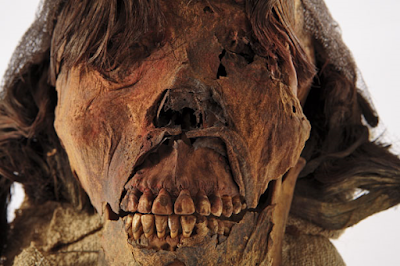
She died in her twenties some 1,700 years ago, and is believed to have ruled over a desert valley in ancient Peru where her elaborately tattooed body was buried with weapons and gold. A glimpse of the former priestess, the Lady of Cao, can be seen in a replica of her face. Using 3D imaging technology and forensics archaeology, the replica, based on the Lady of Cao's skull structure, was unveiled in 2017.

The discovery of the Lady of Cao's mummified remains in 2005 shattered the belief that the ancient Moche society, which occupied the Chicama Valley from about 100 to 700 A.D., was patriarchal. Several Moche female mummies have been found since in graves with objects denoting high political and religious standing. Archaeologists believe the Lady of Cao died due to complications of childbirth.


Monday, February 17, 2025

Strange and unusual places


Mono Lake in Sierra Nevada is a closed hydrological basin, water flows into it but it doesn't flow out. The only way for water to leave is through evaporation. 

Lake Baikal in Siberia freezes over but the water is so clear that you can see 50m below you. Wind, frost and sun cause cracks and ice hummocks to form.

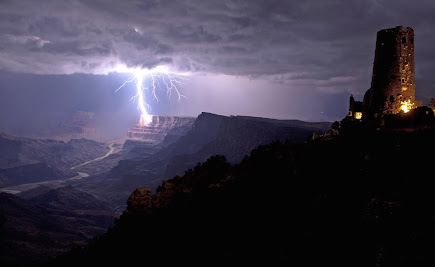
A lightning bolt crashed against the Grand Canyon. It is one of the Seven Natural Wonders of the World.
The Door to Hell is a gas field in Turkmenistan. The Door to Hell has been burning since it was lit by Soviets in 1971.

The elephant rock formation in Valley of Fire State Park in Nevada is a natural sandstone rock formation.
Don Juan Pond is a shallow hypersaline lake in Antarctica with a salinity level of over 40%. It is the saltiest known body of water on Earth.

The Great Blue Hole in Belize is a submarine sinkhole which is over 250m across and 130m deep. It formed during episodes of glaciation when sea levels were lower.

The Dune of Pilat is the tallest sand dune in Europe. It is located in La Teste-de-Buch in France, 60 km from Bordeaux.

The Wave in Utah is carved rock eroded into a wave-like formation made of jurassic-age Navajo sandstone that is around 190m years old.

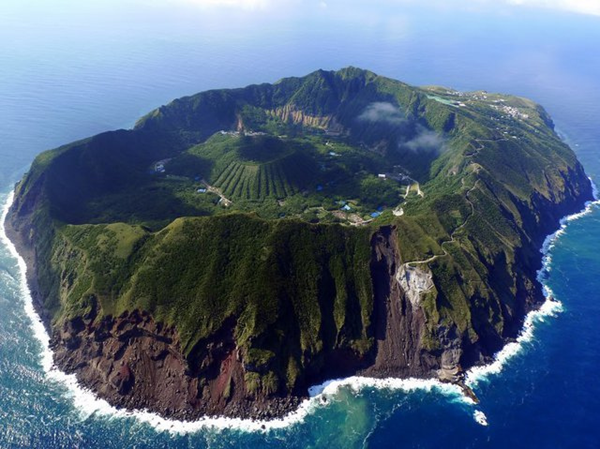
Aogashima is south of Tokyo in the Philippine Sea. The island is known for having a volcanic caldera within a larger caldera.

The sliding stones of Death Valley, California - The movement of the rocks baffles experts, with some rocks sliding across a flat bed despite weighing up to 700 pounds.

Urup is an uninhabited volcanic island near in the Sea of Okhotsk in the northwest Pacific Ocean

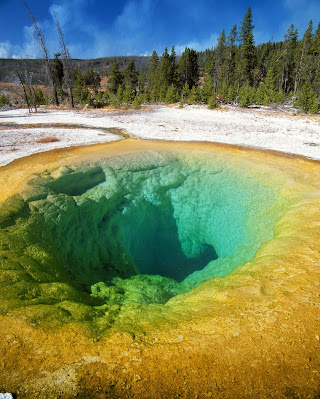
The Beauty Pool of Yellowstone National Park. The hot spring allows luminous algae and bacteria to flourish creating an array of colors

Fraser Island is the largest sand island in the world.

Danxia Landforms in Zhangye, Province of Gansu

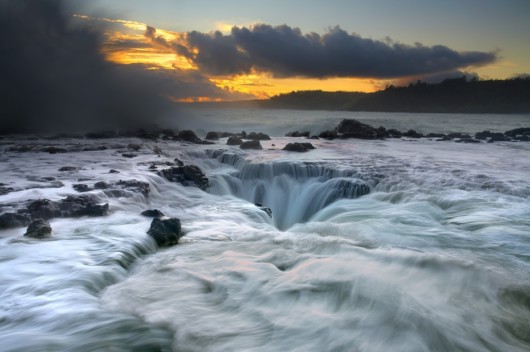
Thor’s Well, Oregon

The Moeraki Boulders of New Zealand started forming on the ocean floor and can now be seen on the coastline thanks to erosion.
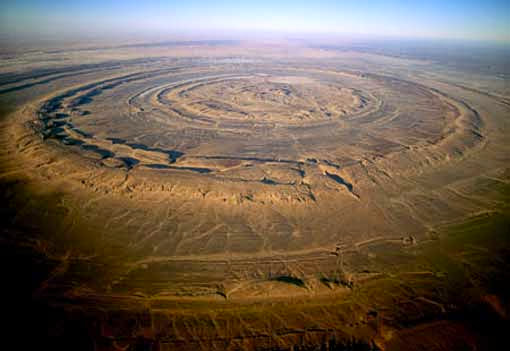
The Eye of Africa is officially the Richat Structure. Spotted in central Mauritania by astronauts, the formation has a diameter of about 10km.

Seaside lava ledges on Kauaʻi of the main Hawaiian Islands.

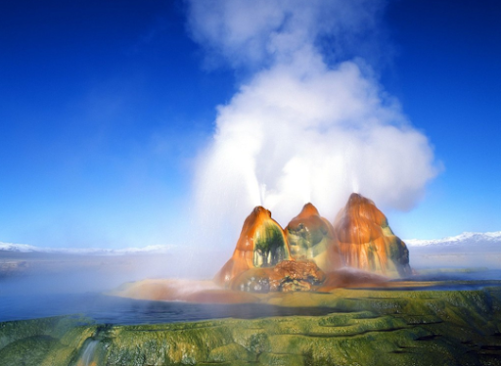
The Fly Geyser, near Gerlach, Nevada

Sunday, February 16, 2025

Venus Victrix - Venus the Victorious

In the second or third century a gold ring bearing the likeness of the Roman goddess Venus was lost on a road in what is now Brittany, France. Researchers excavated an 11-acre site ahead of planned development in the French commune of Pacé and found the relic.
Roman generals were known to call on Venus Victrix before battle. The ring dates to Brittany’s occupation by the Romans, which began with Julius Caesar’s conquest of the region in 56 B.C.E.
In Roman mythology, Venus was the goddess of love, sex, beauty, and fertility. She was the Roman counterpart to the Greek Aphrodite. The Roman Venus had many abilities beyond the Greek Aphrodite; she was the goddess of victory and even prostitution.
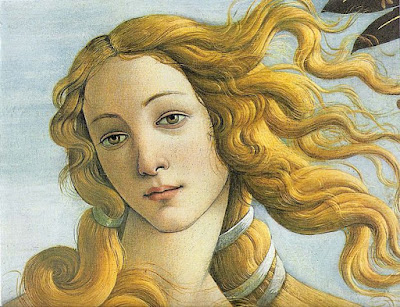
According to Hesiod, Aphrodite was born of the foam from the sea after Saturn castrated his father Uranus and threw his genitals into the sea. Her beauty became a source of tension among the gods, all of whom desired her.

Botticelli's Birth of Venus
To calm matters, Zeus decided that Aphrodite would marry Hephaestus, the crippled smith god. Hephaestus fashioned a magic girdle to ensure her fidelity. However, she proved unfaithful and had multiple affairs with both mortals and gods. Some of her offspring were the Cupids (Erotes) who were a collection of winged love deities who represented the different aspects of love. Images of Venus can be found in countless forms. Venus, due to her beauty and sexual nature, was often depicted nude. Venus continued to be a popular subject matter for artists into modern times.