Friday, March 14, 2025

Otzi the 5,300-year-old Tyrolean Iceman


In 1991 a group of hikers in the mountains of Austria came across an awful sight: a frozen body was buried in the ice. That body belonged to a 5,300 year old man. Scientists have discovered some specific facts. When he was alive, he had parasites in his intestines, was lactose intolerant, and had been sick three times in the past six months.

He's older than the Giza pyramids and Stonehenge, yet Otzi the Tyrolean Iceman continues to teach us things.

A reconstruction of Otzi, based on forensics and 3D modeling.
The latest study of the weapons he was found with reveals that Otzi was right-handed and had recently resharpened and reshaped some of his tools before his death. Otzi was shot in the back with an arrow and became naturally preserved in the ice. Otzi, his clothing and his tools were well-preserved. The arrowhead, embedded in his left shoulder, wasn't found until 2001. He would have bled out and died shortly after because it pierced a vital artery.
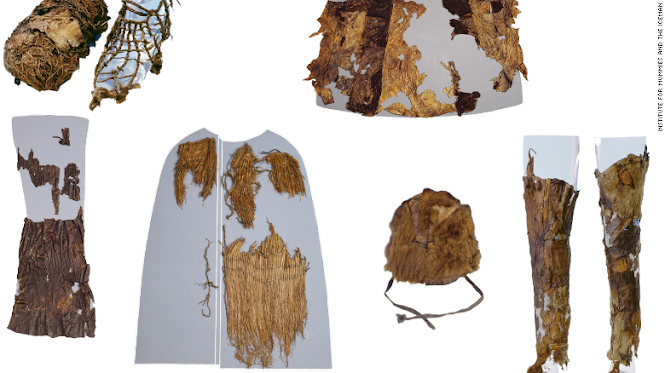
With goat-leather leggings and a brown bear fur hat, Otzi must have strutted the Alps with style.
The iceman’s copper axe blade was remarkably pure at 99.7% copper and was mined in the Colline Metallifere area near Campiglia Marittima in southern Tuscany. Otzi the Iceman left behind his leather-heavy wardrobe and a slew of his accessories when he died in the Italian Alps. He was found with a very valuable copper ax. It is the only one of its kind ever found. During the Copper Age, copper axes were owned by men of high rank and buried with them. Copper was extremely valuable and a symbol of high status.
Otzi’s final meal was high in fat, with traces of red deer and ibex in his stomach along with einkorn wheat. When he died his stomach was full, meaning he ate shortly before he was attacked.
The Iceman has 61 marks on his body made by fine incisions into which charcoal was rubbed. His are the oldest tattoos known.

Tuesday, March 11, 2025

Ancient gold found at Karnak Temple

Archaeologists in Egypt have discovered a 2,600-year-old pot full of gold jewelry, including a rare statuette that depicts a family of gods that may have been worn as an amulet. The team found the pot at Karnak Temple, a complex near Luxor (ancient Thebes). The temple was initially built around 4,000 years ago and was continuously expanded, renovated and modified over millennia. A number of deities were worshipped at the site, including Amun, the chief god of Thebes.

The finds include beads, amulets and statuettes, many of which are gold. One of the finds is a gold statuette that depicts the deities Amun, Khonsu and Mut standing beside each other. These gods were a family: Amun was the chief god of Thebes, his wife Mut was a mother goddess, and their son Khonsu was a moon god.
Some of the amulets found in the pot are wadjet (also spelled wedjet) amulets, which are eye-shaped amulets that for the Egyptians, imbues healing power and symbolizes rebirth. The amulet was thought to protect its wearer and to transfer the power of regeneration onto him or her. The jewelry could be votive offerings given to the deities during a ritual. Or perhaps they may have been a donation to the temple treasury. Another possibility is that they were buried for safekeeping during a time of political unrest. The jewelry seems to have been designed for burial and not everyday wear.

Caligula Coins

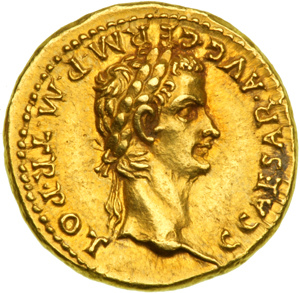
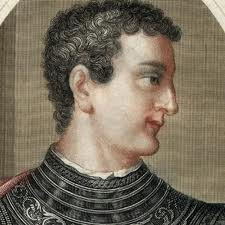
The Roman Empire produced many bad emperors, but Caligula is ranked among the very worst of them all. Gaius Julius Caesar Augustus Germanicus; (31 August 12 – 24 January 41 AD) was the third Roman emperor, ruling from 37 to 41 AD.
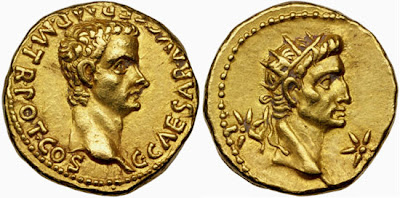
The son of Germanicus and Agrippina Sr. was nicknamed Caligula, meaning "little boots," by the legions because as a child his mother dressed him in military uniforms, including little boots. Caligula’s early coinage celebrates his descent. The great-grandson of Augustus inherited none of his ancestor’s virtues and all of his vices.
For a few months he was popular, succeeding the paranoid Tiberius in 37 A.D. when he was 24 years old. His reign soon degenerated into debauchery.
Ancient accounts of Caligula’s reign focus on his cruelty, his excesses, and his clinical insanity – an unpredictable mixture of fits, anxiety, insomnia and hallucinations. During his reign it was a crime punishable by death to look down on him as he passed by, or to mention a goat in his presence.
He murdered Tiberius Gemellus, his co-heir, he murdered his pregnant wife, he heaped public honors upon his horse, and bankrupted Rome's treasury.
Caligula was sadistic, cruel and indulged in sexual aberrations that were considered insane. Caligula's power soon led him to believe himself a God. This drove him to kill anyone that he thought surpassed him in something. He was famous for his sadism.
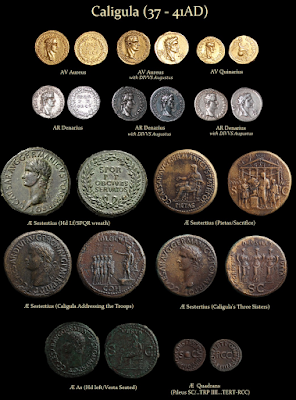
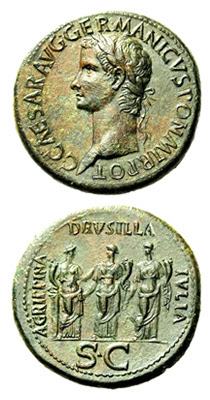
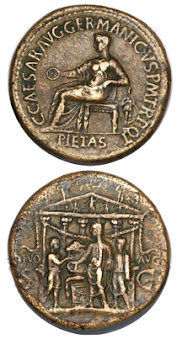
Sestertius features the three sisters of Caligula. Appearing on the coin wasn't a good omen for them.
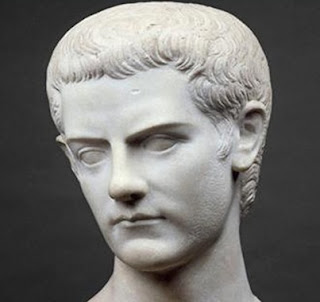
Caligula was tall, with spindly legs and a thin neck. His eyes and temples were sunken and his forehead broad and glowering. His hair was thin and he was bald on top, though he had a hairy body. He was very pale. He often claimed to hold conversations with Jupiter and to sleep with the moon goddess. Declaring himself a deity caused a major backlash in Judea, because Jewish law said that they could only worship their God.
His refusal to revoke the decree that nations worship him caused the revolution in Judea.

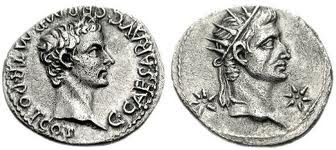
Caligula's hubris eventually destroyed him. He insulted his Roman military commanders, including Cassius Chaerea, who murdered him on January 24, 41 at the Palatine Games. In 2014 a Caligula coin appeared on 'Pawn Stars'. The coin was a silver denarius that was struck in the last 24 days of Caligula's life. Caligula coins are rare. The hatred for Caligula ran deep.
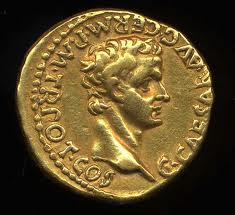
Caligula's name was erased from public inscriptions, his statues pulled down and destroyed and his coinage defaced, recalled and melted down. This makes his coins rare and valuable.

A circa A.D. 37 to 38 gold aureus of Caligula and his mother, Agrippina senior. Though it has a few marks, it is in otherwise Good Extremely Fine condition and carried an estimate of 150,000 Swiss francs (about $164,862).

Saturday, March 8, 2025

The Sphinx

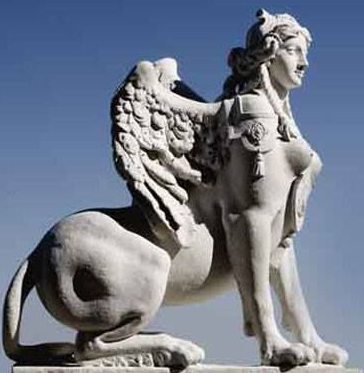
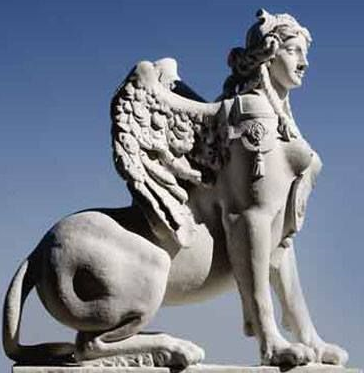
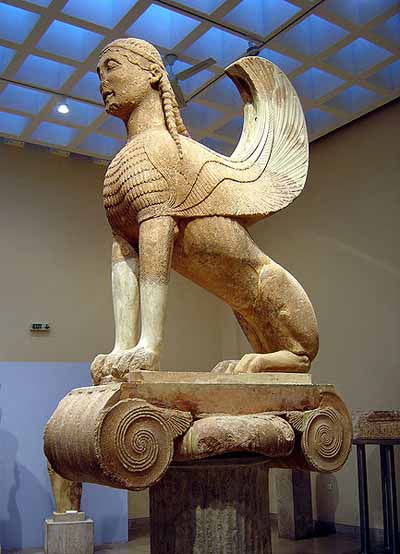
The sphinx is an important image in Egyptian and Greek art and legend. Oldest forms are Egyptian. On seals, ivories, and metalwork the sphinx was portrayed sitting on its haunches, often with one paw raised, and was frequently paired with a lion, a griffin, or another sphinx. About 1600 bce the sphinx first appeared in the Greek world.
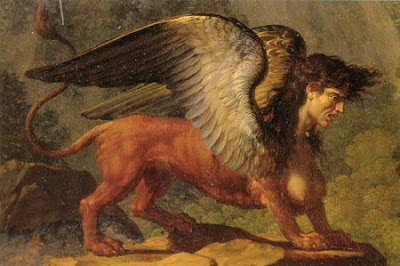
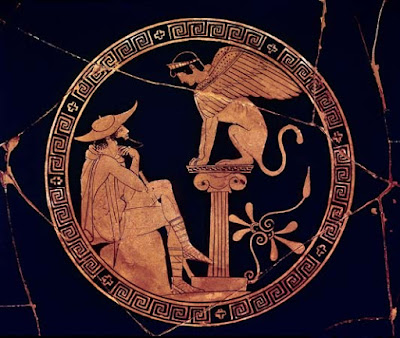
The sphinx was said to have the body of a lion, the head of a woman, and the wings of an eagle. The sphinx is perhaps known best for her role in the legend of Oedipus. Oedipus was traveling when he is confronted by the creature.
The sphinx blocks Oedipus’ path and confronts him with a riddle. Although the exact riddle is not mentioned in legend, the popular version goes ... "What is that which in the morning goeth upon four feet; upon two feet in the afternoon; and in the evening upon three?” Oedipus correctly answers: Man - who crawls on all fours as a child, then on two feet as an adult, and finally (with the help of a cane) on three feet during the sunset of life. Having been bested at her game, the Sphinx throws herself from a high cliff.

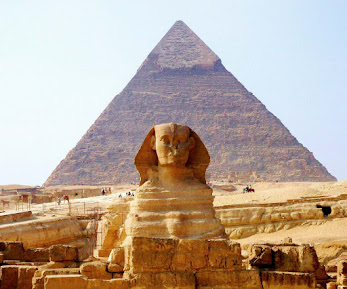
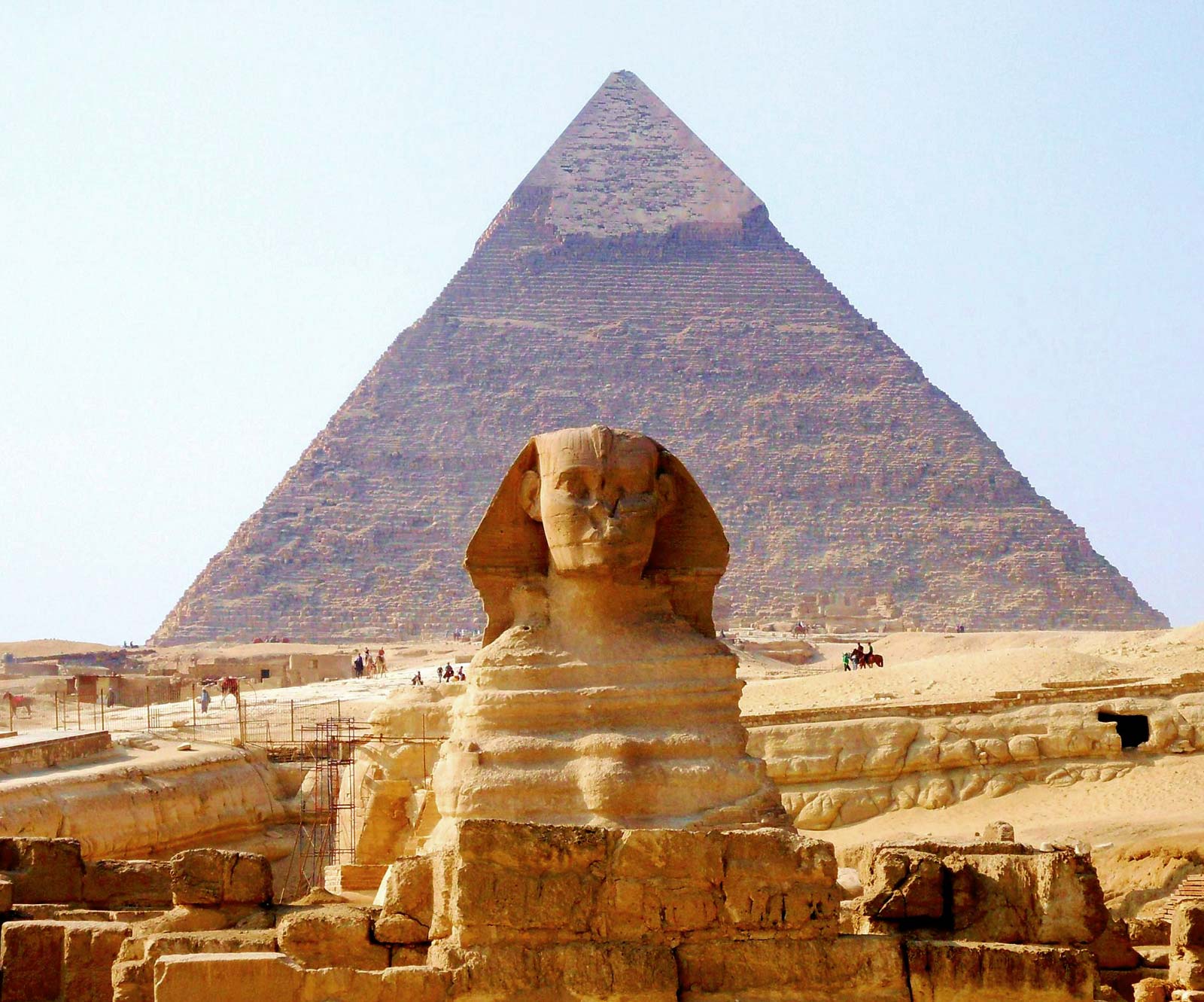
The nose on the face is missing. The Arab historian al-Maqrīzī, writing in the 15th century, attributes the loss of the nose to iconoclasm by Muhammad Sa'im al-Dahr.
The Great Sphinx of Giza is a limestone statue of a reclining sphinx. The Great Sphinx is one of the world's largest and oldest statues. Facing directly from West to East, it stands on the Giza Plateau on the west bank of the Nile in Giza, Egypt. The face of the Sphinx is generally believed to represent the Pharaoh Khafre, 2558–2532 BC.

Friday, March 7, 2025

The Watlington Viking Hoard

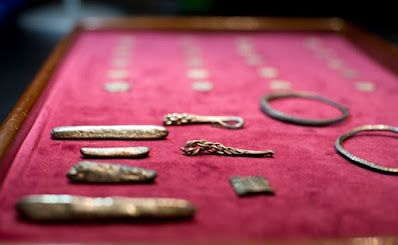
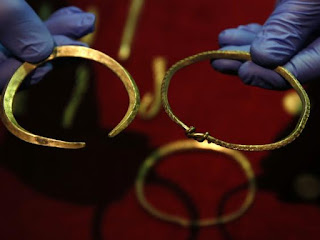
A rare Viking hoard of arm rings, coins and silver ingots was unearthed in Oxfordshire in late 2015. The hoard was buried near Watlington around the end of the 870s, in the time of the 'Last Kingdom'. The Anglo-Saxon kingdoms of Mercia and Wessex were fighting for survival from the threat of the Vikings, which was to lead to the unification of England.
The hoard was likely buried when the Anglo-Saxons pushed the Vikings north of the Thames into East Anglia. Prior to 878, the Vikings had been increasing their raids from Denmark.
The hoard is a nationally significant find. The Anglo Saxons began to re-establish their rule over southern England and won the decisive battle at Edington in 878. Alfred the Great defeated the Great Heathen Army led by Guthrum.
Experts speculate that a Viking fleeing after the battle buried it on his way north, on the ancient road from East Anglia to Wiltshire.
The hoard of 186 coins includes rarities from the reign of King Alfred of Wessex, who ruled from 871 to 899, and King Ceolwulf II, who reigned in Mercia from 874 to 879.

Thursday, March 6, 2025

Claudius

Claudius (10 BC – AD 54) was Roman emperor from AD 41 to 54. He was born at Lugdunum in Gaul, the first (and until Trajan, only) Roman emperor to be born outside Italy.

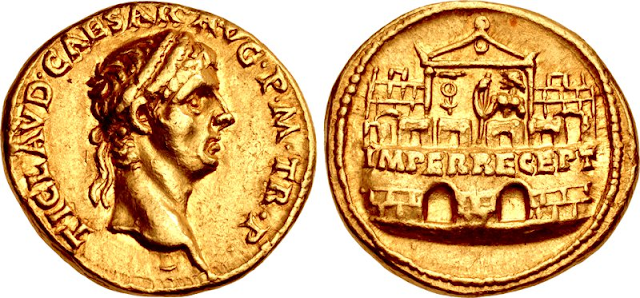
Claudius. AV Aureus. Rome mint. Struck AD 46-47. Good VF. Est $7500, sold for $20,000.
Bust of Claudius at the Naples National Archaeological Museum
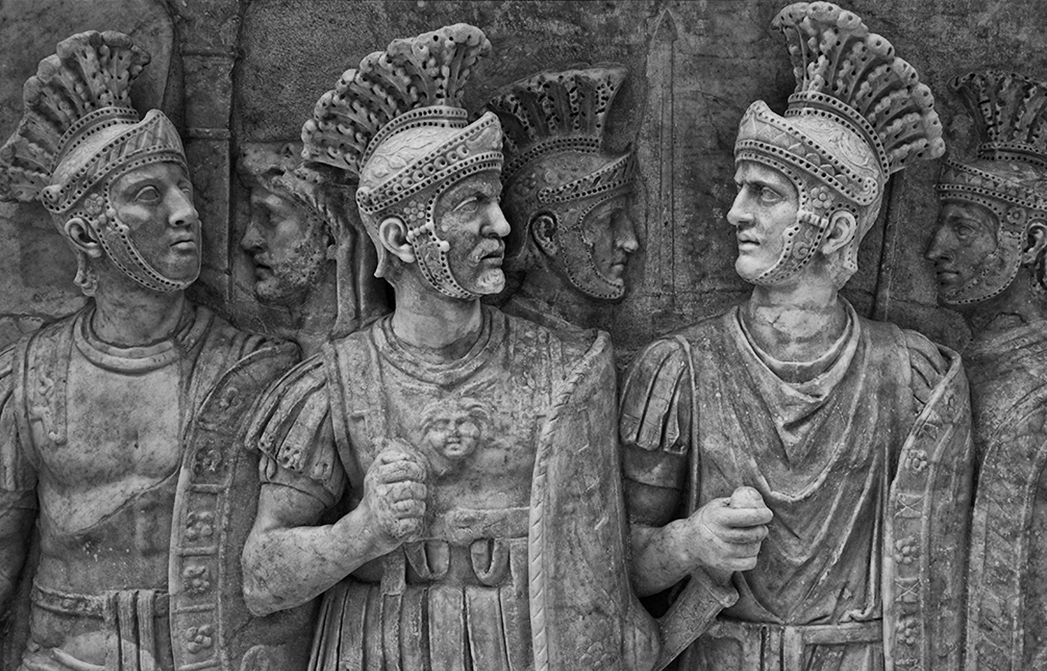
His maternal grandparents were Mark Antony and Octavia Minor, Augustus' sister, and he was the great-great grandnephew of Gaius Julius Caesar. He was afflicted with a limp and slight deafness due to sickness as a child, causing his family to ostracize him. Claudius's infirmity probably saved him from the fate of other nobles during the many purges of Tiberius and Caligula. He wasn't seen as a serious threat. His survival led to his being declared emperor by the Praetorian Guard after Caligula's assassination.
On 24 January 41, Caligula was assassinated in a broad-based conspiracy involving the Praetorian commander Cassius Chaerea and several senators. There is no evidence that Claudius had a hand in the assassination. In the chaos following the murder, Claudius witnessed the guard cut down several uninvolved noblemen. He fled to the palace to hide. According to tradition, a Praetorian named Gratus found him hiding behind a curtain and declared him princeps. Eventually the Senate was forced to give in again and, in return, Claudius pardoned virtually all the assassins. He ruled well and left a large treasury behind. After his death in 54 aged 63, his grand-nephew, step-son, and adopted son Nero succeeded him as emperor.

Wednesday, March 5, 2025

Senator Claude Malhuret - Court of Nero

Senator Claude Malhuret - “Washington has become the court of Nero, with an incendiary emperor, submissive courtiers and a jester on ketamine in charge of the public service’s purge (…) We were at war with a dictator, now we are at war with a dictator supported by a traitor”

Gigantopithecus blacki

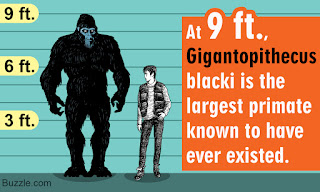
In 1935, anthropologist Gustav von Koenigswald came across strange teeth in drug stores in Hong Kong and southern China. Sold as 'dragon teeth' and ground up for use in Chinese medicine, they were special: they were apelike, but huge. Their size suggested that Gigantopithecus blacki was the largest primate ever, towering 3 meters. By piecing together clues from proteins in the enamel of a 1.9myo tooth found in southern China, researchers have evidence that places G. blacki on the primate family tree. The giant ape was most closely related to orangutans. The two lineages probably split off between 10 million and 12 million years ago.
G. blacki became extinct around 100,000 years ago.
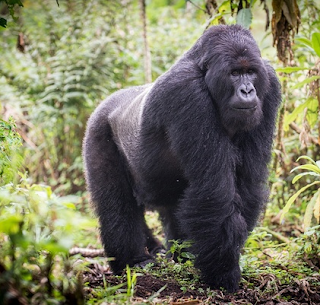
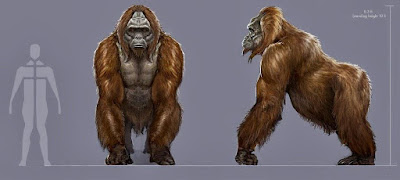
Adult male G. blacki are believed to have stood almost 10 feet tall and weighed as much as 600kg, making it three to four times as heavy as modern gorillas and eight times as heavy as the orangutan, its closest living relative. It's thought G. blacki consumed bamboo and other vegetable foods including seeds and fruit. Gigantopithecus blacki is the largest known hominid.