Tuesday, April 21, 2026

Lost Inca Gold - Treasure of the Llanganatis

Its not the mythical city of gold that draws treasure seekers to the rugged Llanganates mountain range in Ecuador, some say there's a vast Inca hoard of gold hidden from Spanish conquistadors there.

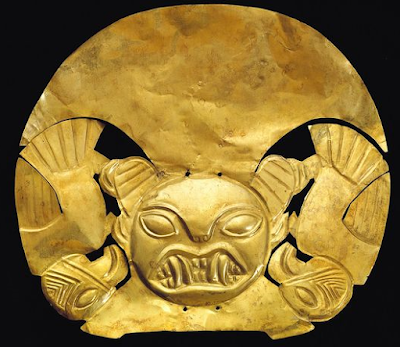
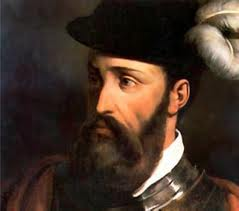
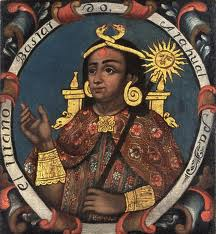
The Inca Empire in South America in the early 15th century was weak and quickly giving way to European invaders. Atahualpa was an Inca king who, after warring with his half-brother, Huáscar, for control of the empire, was captured at his palace in Cajamarca in modern-day Peru by Spanish commander Francisco Pizarro.
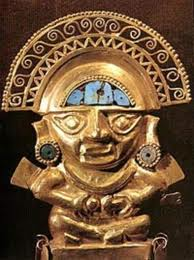
Pizarro agreed to release Atahualpa in return for a roomful of gold, but the Spaniard later reneged on the deal.
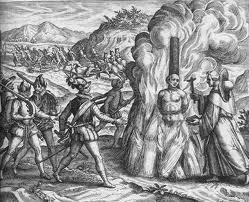
Atahualpa was garroted on August 29, 1533, and then burned at the stake before the last and largest part of the ransom had been delivered. The legend holds that the Inca general Rumiñahui was on his way to Cajamarca with the ransom when he learned of Atahualpa's fate. The story goes he buried the gold in a secret mountain cave. It is a tale between fact and fiction. Atahualpa's gold existed because it's recorded in the Spanish chronicle, and it's recorded that a large convoy of gold was on its way from Ecuador. After that the best stories revolve around the Llanganates.
The Llanganates Mountains are a remote and rugged area known for difficult terrain, including swamps, dense vegetation, and high altitudes. Some stories suggest that Rumiñahui may have thrown some of the gold into a lagoon to further conceal it.
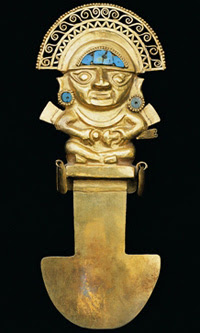
Over the centuries countless explorers have sought Atahualpa's gold, but the mountains of the Llanganates have refused to surrender it.
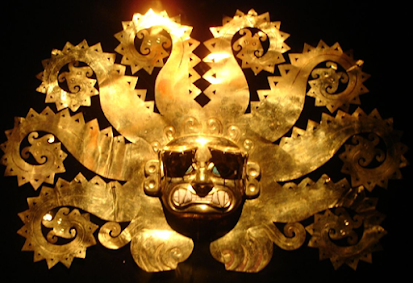
Unlike in Peru, where attention goes to Inca sites such as Machu Picchu, Ecuador's archaeological ruins attract few tourists.

Monday, April 20, 2026

Four Horsemen of the Apocalypse

The Four Horsemen of the Apocalypse are described in the last book of the New Testament of the Bible, called the Book of Revelation of Jesus Christ to John of Patmos, at 6:1-8.
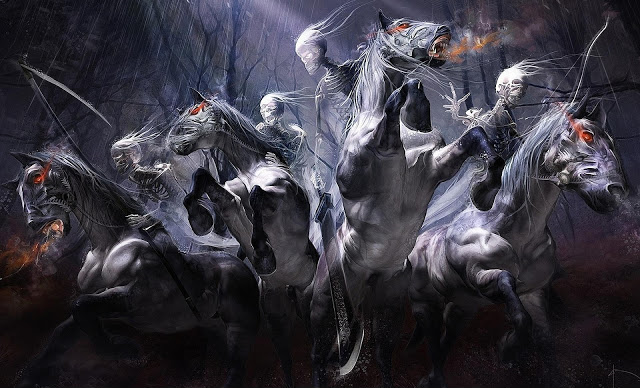
The chapter tells of a book or scroll in God's right hand that is sealed with seven seals. The Lamb of God opens the first four of the seven seals, which summons four beings that ride out on white, red, black, and pale horses. The four riders are often seen as symbolizing Pestilence, War, Famine, and Death. The Christian apocalyptic vision is that the four horsemen set a divine apocalypse upon the world as harbingers of the Last Judgment.

The rider of the second horse is taken to represent War. His horse is red. The color red, and the rider's possession of a great sword, suggests blood.
The first horseman is called Pestilence, and is associated with infectious disease and plague. "They were given power over a fourth of the earth to kill by sword, famine, plague, and by the wild beasts of the earth." (Revelation 6:7-8).

"When He broke the second seal, I heard the second living creature saying, “Come.” And another, a red horse, went out; and to him who sat on it, it was granted to take peace from the earth, and that men would slay one another; and a great sword was given to him."  (Revelation 6:3-4)

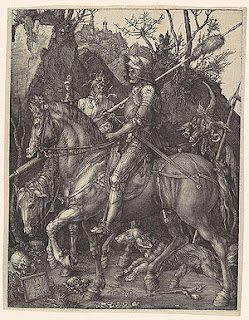
Albrecht Dürer, Knight, Death and the Devil, 1513
The End Times will experience the 4 horsemen. The third horseman rides a black horse and is understood to be Famine as the horseman carries a pair of balances or weighing scales, indicating the way that bread would have been weighed during a famine. "When He broke the third seal, I heard the third living creature saying, “Come.” I looked, and behold, a black horse; and he who sat on it had a pair of scales in his hand." (Revelation 6:5-6)
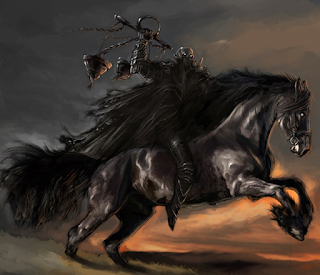
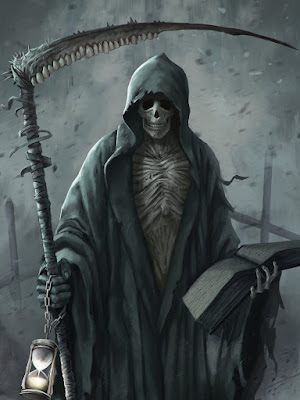
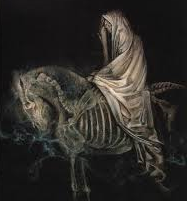
The fourth and final horseman is named Death. Of all the riders, he is the only one to whom the text explicitly gives a name. Unlike the other three, he is not described carrying a weapon or other object, instead he is followed by Hades. Illustrations commonly depict him carrying a scythe. When the Lamb broke the fourth seal, I heard the voice of the fourth living creature saying, “Come.” I looked, and behold, an ashen horse; and he who sat on it had the name Death; and Hades was following with him. 

The four horsemen portray four disastrous occurrences that will take place before the second coming of Jesus Christ.

Sunday, April 19, 2026

The Five Good Emperors

The five Good Emperors refers to the succession of Nerva (96–98 CE), Trajan (98–117), Hadrian (117–138), Antoninus Pius (138–161), and Marcus Aurelius (161–180). They presided over the most majestic days of the mighty Roman Empire.
After the death of Marcus Aurelius in 180, the empire quickly descended into chaos which was not ended until the assassination of Commodus (December 31, 192 AD) and the triumph of Septimius Severus. With Commodus' murder, the Nerva–Antonine dynasty came to an end. Turmoil continued until the 'Year of the Five Emperors'. The Roman Empire would never be as great again.
193 AD was a period of intense civil war and political chaos in the Roman Empire following the assassination of Commodus. Five men, Pertinax, Didius Julianus, Pescennius Niger, Clodius Albinus, and Septimius Severus claimed the throne, ultimately leading to the rise of the Severan dynasty.

Nerva

Trajan
Hadrian

Antoninus Pius

Marcus Aurelius

Friday, April 17, 2026

Augustus aureus - £480,000

This aureus was made between 27 B.C. and 18 B.C. The early lifetime coin depicts the new portrait of Augustus transformed into an ageless Apollo-like figure on one side and an image of a heifer based on a long-lost masterpiece by a Greek sculptor on its reverse.
22 examples of the heifer-reverse aureus minted during the reign of Augustus are known, of which 15 are in museums. Of the seven in private collections, the one that sold is among the best and most sought after. Brisk bidding at the London auction in 2014 saw the price of the coin soar past its pre-sale estimate of £300k and eventually go for a hammer price of £400k.
In 27 BC Octavian, the great nephew of Julius Caesar, founded the Principate. He took the name of Augustus, meaning ‘stately’ or ‘dignified’, and began to stamp his authority on Rome. The depiction of Augustus is unlike the severe portraits found in late republican Rome. The young Octavian is a figure of calm dignity and power. The reverse celebrates the 28 BC dedication of the temple of Apollo on the Palatine which had as its centrepiece an altar with four statues of heifers by the sculptor Myron of Eleutherae.

Thursday, April 16, 2026

Pertinax

Pertinax (1 August 126 – 28 March 193) was a Roman military leader and Roman Emperor for the first three months of 193. He succeeded the insane Commodus to become the first emperor during the Year of the Five Emperors.
Born the son of a freed slave, Pertinax became an officer in the army. He was promoted to higher-ranking positions in both the military and political spheres, leading to the rank of provincial governor and urban prefect. He was a member of the Roman Senate. Following the death of Commodus, Pertinax was acclaimed emperor.
Pertinax attempted several reforms during his short reign of 86 days. One was the restoration of discipline among the Praetorian Guards, and that led to conflict that cost him his life.
Didius Julianus The Praetorian Guard expected a generous donativum on his ascension, and when they were disappointed, they agitated until he produced money, selling off Commodus' property. He was assassinated by the Guard on 28 March 193. After his death, the Praetorians auctioned off the imperial title, which was won by the wealthy senator Didius Julianus, whose also short reign would end on 1 June 193 in death.
Pertinax gold is rare and valuable. Gold aureus of Pertinax. EF $56,525 in 2017.

Wednesday, April 15, 2026

Aureus of Pompey

Gnaeus Pompeius ('Pompey') was a pivotal figure in the events that led to the collapse of the Roman Republic. Born September 29, 106 BCE in the Italian province of Picenum, he was the son of Pompeius Strabo, a rich landowner who became a Roman senator and eventually consul in 89 BCE.
The first coin attributed to Pompey is an extremely rare gold aureus, probably issued at Rome on his triumph in 71 BCE. The extremely rare Roman gold coin features a female head in an elephant-skin headdress (personifying Africa) on the obverse and Pompey in a chariot on the reverse, celebrating his triumphs. Only five examples exist, with the best-known in the British Museum.
The inscription is simply MAGNVS (“the Great”). On the reverse, Pompey stands in a triumphal quadriga; a small figure riding the lead horse may be Pompey’s son, Cnaeus. The inscription PRO•COS abbreviates another of his titles, Proconsul. The aureus, valued at 25 silver denarii (a month’s pay for a soldier) was not a regular part of the currency at this time; it was only issued on special occasions. Today on Sept 28 in 48 BC Pompey the Great is assassinated on orders of King Ptolemy of Egypt after landing in Egypt.

Tuesday, April 14, 2026

Marmara Island

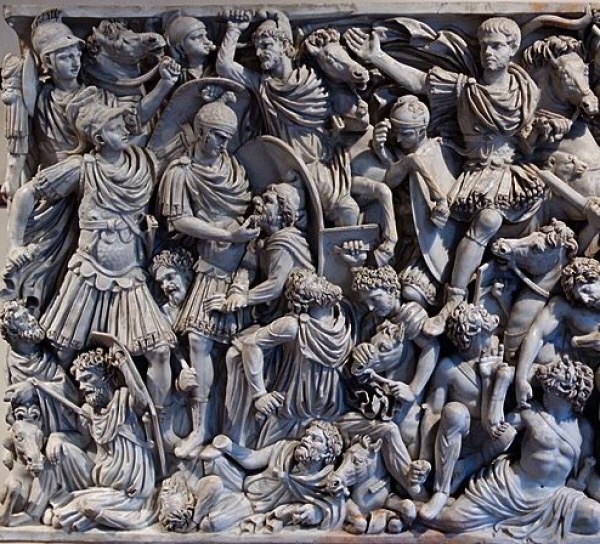
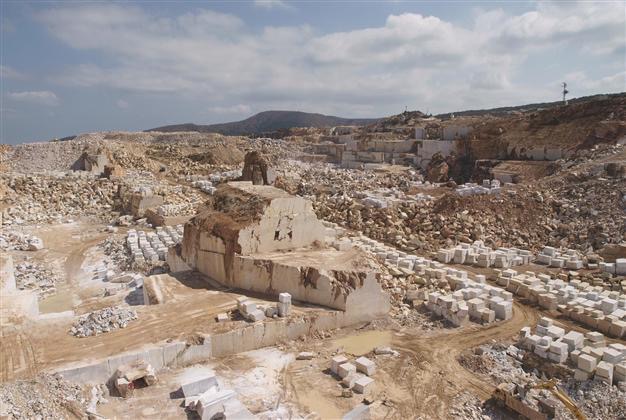
The largest island in the Sea of Marmara takes its name from its marble quarries. In antiquity it was called Prokonnesos, and Proconnesian marble was highly desired for sculptures, an example being the 3rd-century AD Great Ludovisi sarcophagus. The marble from Marmara is so specific one cannot find any other marble like it in the world. The marble was used for palaces, churches, mosques and statues.
Marmara marble quarries in Turkey's Balıkesir province are among the world's oldest, operating since the 7th century BC to supply iconic structures like the Hagia Sophia.
For 2,000 years, the island of Marmara has played an important role in the history of marble. The Romans, the Byzantines, the Ottomans; all valued the quality and beauty of the marble that was quarried from the island.

Statue of a Victorious Youth

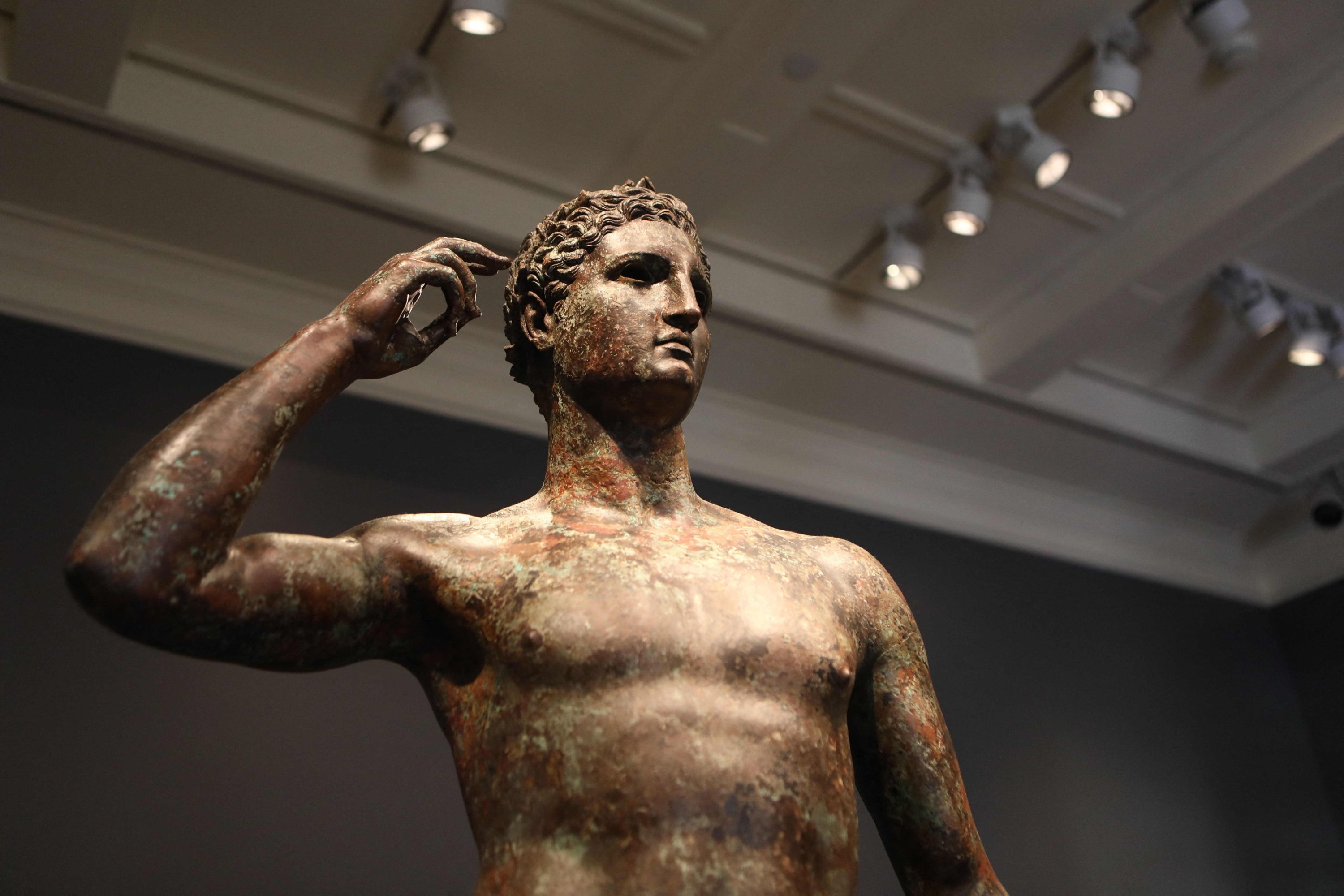
Among the J. Paul Getty Museum’s most treasured items is a bronze Greek statue of a young man, his weight shifted onto his right leg, his head crowned with an olive wreath — the prize bestowed on victorious athletes in ancient Greece. “Statue of a Victorious Youth” was discovered in the Adriatic Sea by Italian fishermen in 1964, and purchased by the Getty in 1977. It was made between 300 and 100 BCE. The Getty Museum Board of Trustees bought the bronze in the United Kingdom for $3.95 million.

In 1989, the Italian government asked the Getty to return “Statue of a Victorious Youth,” and the fight over the bronze has been ongoing ever since. A 1939 Italian law stipulates that Italy can lay claim to any antiquity discovered on its territory, but the Getty has argued that the law does not apply in this case because the statue was discovered in international waters.

In the wake of the most recent 2018 ruling, the Getty filed an appeal with the Court of Cassation, Italy’s highest judicial authority.
Romans probably carried the Greek statue off from its original location during the first century B.C., when Roman collecting of Greek art was at its height.

Monday, April 13, 2026

King Lycurgus

In Greek mythology, Lycurgus was the king of the Edoni in Thrace, son of Dryas.
Lycurgus banned the cult of Dionysus. As punishment, Dionysus drove Lycurgus insane. In his madness, Lycurgus mistook his son for a mature trunk of ivy and killed him, pruning away his nose and ears, fingers and toes. Consequently, the land of Thrace dried up in horror. Dionysus decreed that the land would be dry and barren as long as Lycurgus was left unpunished, so his people bound him and flung him to man-eating horses on Mount Pangaeüs.
In other stories Lycurgus tried to rape his mother after consuming too much wine. When he discovered what he had done, he attempted to cut down the grapevines, believing the wine to be tainted. In Homer's Iliad, an older source, Lycurgus's punishment for his disrespect towards Dionysus is blindness inflicted by Zeus followed not long after by death.
The Lycurgus cup features dichroic glass, with gold and silver nanoparticles, producing a green appearance when light is shining on it from the front, and red when illuminated from behind.

The cup is also a very rare example of a complete Roman cage-cup, or diatretum, where the glass has been cut and ground back to leave only a decorative "cage" at the original surface-level. The cup features a composition showing the mythical King Lycurgus, who tried to kill Ambrosia, a follower of the god Dionysus (Bacchus). She was transformed into a vine that twined around the enraged king and restrained him, eventually killing him. Dionysus and two followers are shown taunting the king.
The cup was made about 290-325 AD. It is first mentioned in print in 1845.
The process used to create the dichroic effect is unclear, and its likely that it was not well understood by the makers.