The Great Torc from Snettisham or Snettisham Great Torc is a large Iron Age torc or neck ring in electrum, from the 1st century BC.
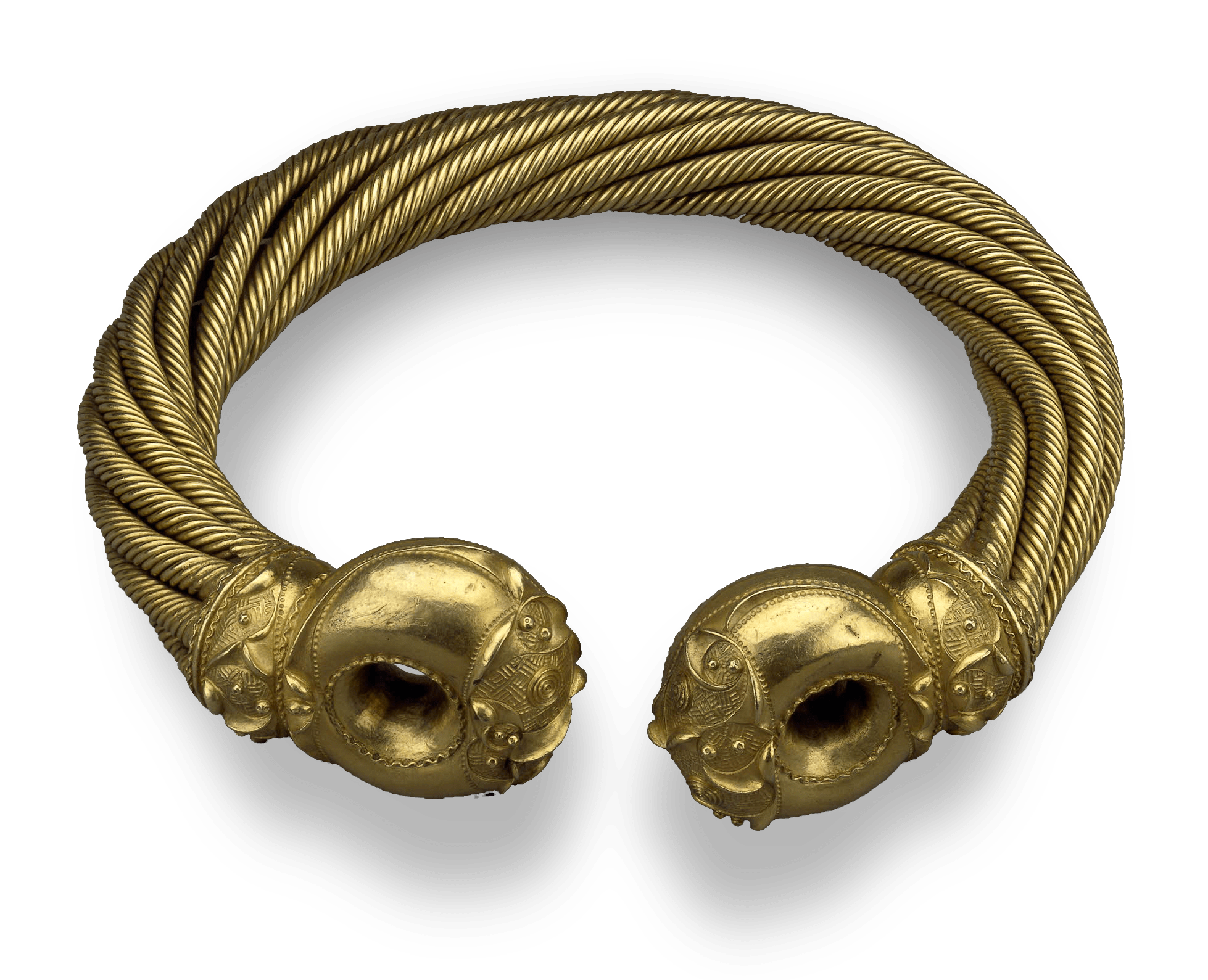 | It is one of the finest pieces of early Celtic art known. It was the most spectacular object in the Snettisham Hoard, found in 1950 near the village of Snettisham in Norfolk, East Anglia. The perfectly intact torc is noted for its high level of craftsmanship and artistry. Soon after its discovery it was acquired by the British Museum. It had been buried with a bracelet and a French coin, which helped date the torc to around 75 BC. It had been buried with a bracelet and a French coin, which helped date the torc to around 75 BC. | |
| The hoard consists of metal, jet and more than 150 gold/silver/copper alloy torc fragments, more than 70 of which form complete torcs. The Great Torc weighs slightly more than 1 kg and is mostly made of gold alloyed with a small fraction of silver. The torc was made in two ways: complex threads of metal were grouped into ropes and twisted around each other to create the crescent shaped necklace; the ends of the torc were cast in moulds with La Tène designs and welded onto the metal ropes to create the whole composition. It has been conjectured that the area around Snettisham may have been connected with royalty from the Iceni tribe. The Great torc from Snettisham could belong to no one else. |  | |
Research by the British Museum reveals the wear patterns in the torcs, the chemical composition of the metal and the cut marks that reduced many of them to fragments. One hypothesis suggests the deliberate destruction of valuable items was a form of votive offering.


No comments:
Post a Comment