
 Coin of Marcus Antonius celebrating with the legend “Chortis Speculatorum” on the reverse, 31 BC. | Originally utilized as frontline military scouts, elite operatives evolved into the emperor’s spies and political executioners. Speculatores formed an efficient domestic intelligence network that kept the imperial throne secure through surveillance, tracking, and terror. The name speculatores comes from 'speculari', which literally means 'to observe.' Ancient writers used the term speculatores when talking about soldiers on reconnaissance tasks. By the imperial period, it came to be used for a special unit within the Roman Army. Speculatores not only scouted ahead for the Roman army, but also went deep behind enemy lines. |
 | During the reign of Augustus, speculatores were formalized in a new form. They were incorporated into the emperor’s personal administration alongside the Praetorian Guard. They were given new tasks, including escorting prisoners, assisting in arrests, transmitting secret orders, and, in some cases, providing personal security for the emperor and his representatives. Following Augustus’ reforms, a contingent of about ten speculatores was included in each Roman legion, one in each cohort. Speculators were commanded by a trecenarius, the highest-ranking centurion in the elite Praetorian Guard. Under Tiberius, the use of speculatores became increasingly prominent. This was tied to the rise of Lucius Aelius Sejanus as commander of the Praetorian Guard. With the complete trust of a highly paranoid emperor, Sejanus used the speculatores as the world's first secret police. |
 | Tacitus specifically described delatores, professional informers who accused senators and elites of treason. The accusations were made under the maiestas law, which treated traitors as public enemies. Although this law had long existed, under Tiberius it became a new weapon of tyranny. Up to 80 people were accused of treason under Tiberius, 18 were officially executed, and another 10 or so committed suicide before they could be convicted. |
 | Sejanus met an ironic fate. In AD 31, Tiberius suddenly turned against Sejanus following intelligence passed to him by sister-in-law Antonia the Younger. A message was read in the senate condemning Sejanus, who was arrested and sentenced to death. His supporters and family members were exiled. After this episode, Tiberius fell into an even deeper paranoia, and spent the rest of his reign in isolation. Speculatores were not only spies, but also hired assassins in the service of the Roman emperors. Nero used speculatores, especially after the Pisonian Conspiracy of AD 65. |
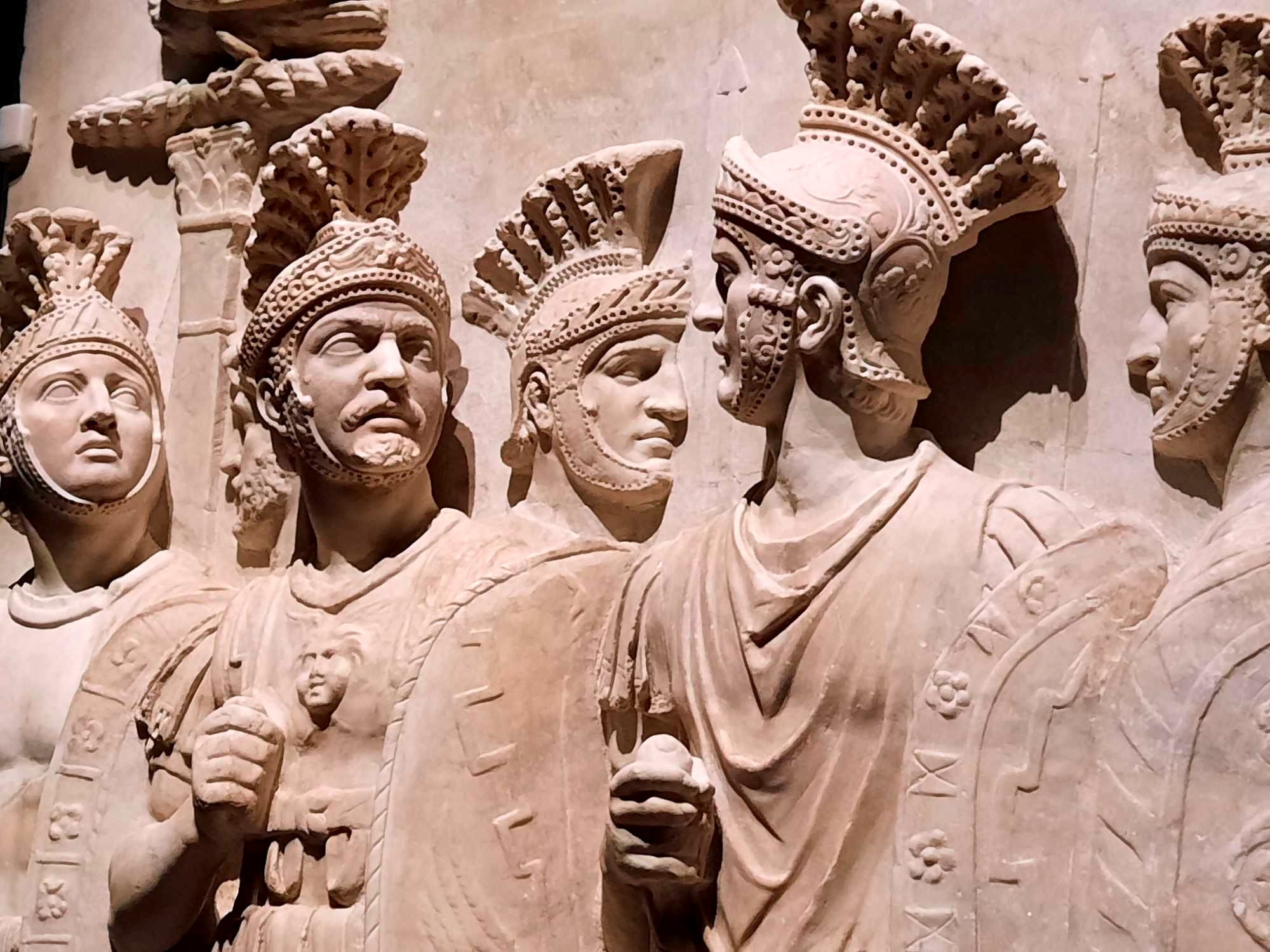 | As the Empire grew, so did the need for a more extensive intelligence network. That role gradually fell to frumentarii. This unit was originally made up of soldiers responsible for overseeing the collection and transport of grain for the Roman army. They began their history as a courier service and developed into an imperial spying agency. They also carried out assassinations. The frumentarii were headquartered in the Castra Peregrina ("camp of the strangers") in Rome situated on the Caelian Hill. Their camp commander was the princeps peregrinorum. Ancient sources say their reputation quickly deteriorated. They were disbanded under the reign of Diocletian. |
