Sunday, December 21, 2025

Mosaics of Pompeii

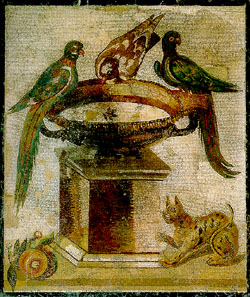
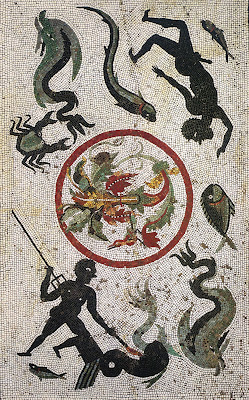
Pompeii has provided valuable insight to the Roman world and most agree it is the richest archaeological site in the world. Fine mosaics were a common feature in the villas of the town and depicted scenes from mythology, the owner’s business interests or animal scenes.

They are of the highest artistic merit.

Plato's Academy Circle
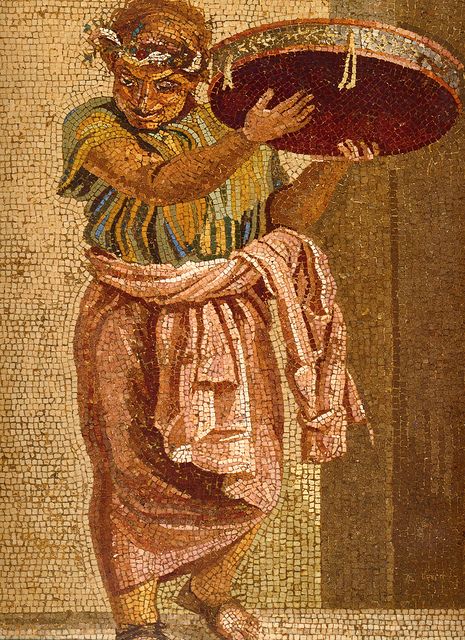
Detail of Musician with tympanon, Villa del Cicerone
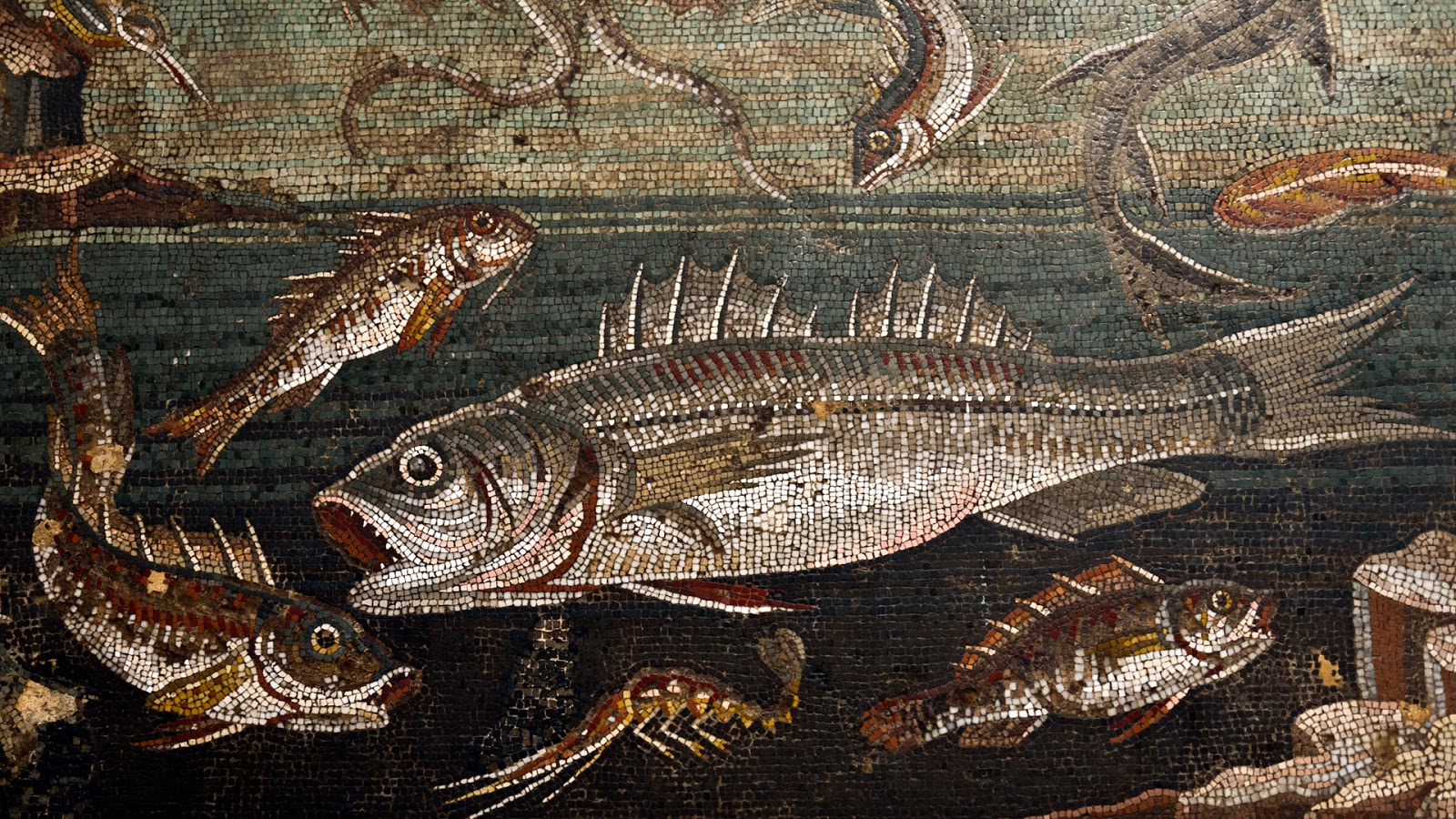
House of Neptune

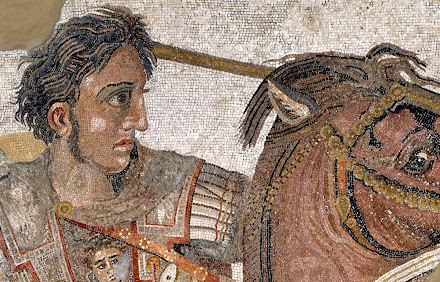
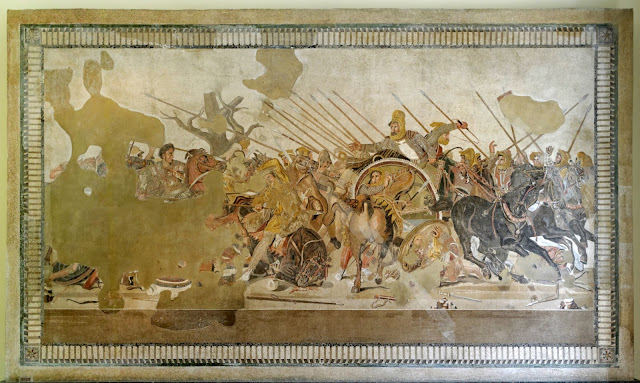
Detail Alexander the Great at the Battle of Issus

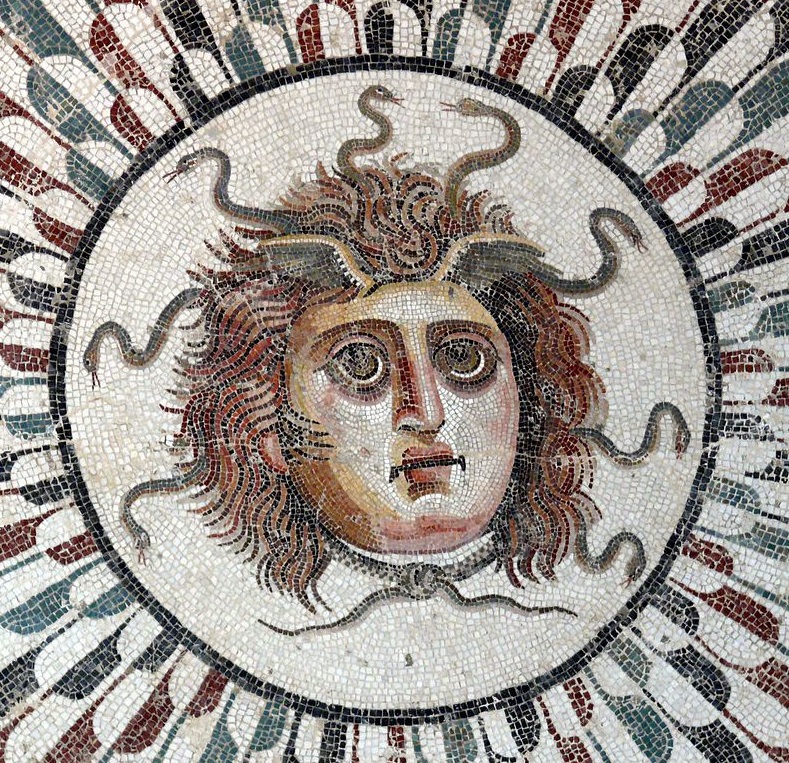
Head of Medusa

Detail Satyr and nymph

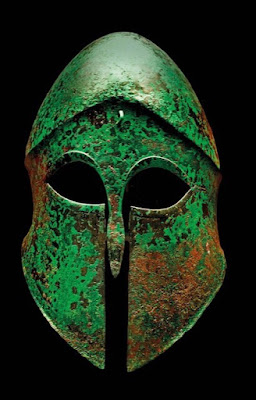
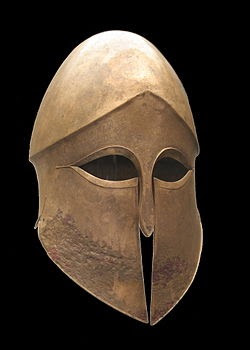
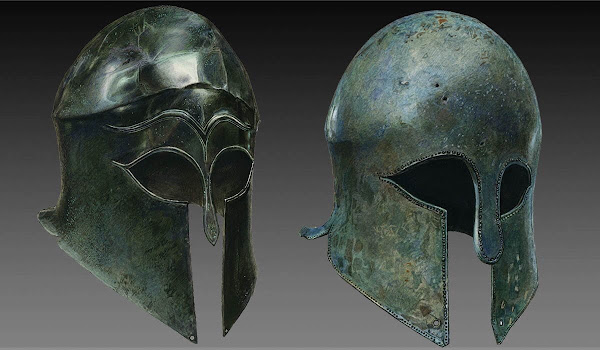
The Corinthian helmet


Corinthian helmet, fifth century B.C.
The Corinthian helmet originated in ancient Greece and took its name from the city-state of Corinth. It was a helmet made of bronze.

The Ancient Greek helmet evolved over time to meet the needs of the battlefield. Corinthian helmets were perfectly suited for hoplites fighting in the phalanx formations that characterized warfare in Greece.
Corinthian helmets were very popular and became closely associated with Greece, Greek culture, and hoplites. Corinthian helmets remained in use for nearly three hundred years, falling out of fashion by the end of the Fifth Century.

A well preserved Corinthian helmet crossed the block in early 2025.
Ca. 500 - 450 BC. A fantastic Greek Corinthian hoplite bronze helmet, likely cast and then hammered into shape, belongs to a type known as Corinthian. This type also features holes for rivets, or metal fasteners, intended to secure liners. The helmet is in perfect, not restored condition with smooth green patina. One of the best preserved specimens on the market for the last several years! The helmet made £70,000.

Saturday, December 20, 2025

Jewel bedecked skeleton

A 2000-year-old woman found buried in a Russian tomb in 2018 was bedecked in fine jewels from the Roman Empire. The remains of the high-status female was found in a tomb in the Russian republic of Kabardino-Balkaria.

Two rings on her fingers were made with a cutting edge technology.
Her remains surprised archaeologists, in part due to the fact the jewellery was of Roman origin. The ancient woman is probably from the Alans warrior people who made incursions into the Caucasus in the first and second centuries AD. She was buried alongside a warrior and two other men.
The rings were cast from transparent white glass with golden fibres from the same material, with a dark glass in the middle. It is Roman-made and would have been extremely expensive, as the barbarian world had no glass production at that time.


The beads on her shoes were made of glass and carnelian. She went to the afterlife wearing a bright violet amethyst medallion. The high status burial appears to be a family grave. The woman could have been the wife of a renowned warrior or tribal chief.

Ancient ‘piggy bank’ found in central Israel

A hoard of 1,200 year old gold coins was found in 2019 by a team of Israeli archaeologists working in the city of Yavne.
The seven gold coins were found hidden inside a small clay juglet and date to the 9th century AD, with one of them being a dinar of Caliph Harun al-Rashid, a key figure in Middle Eastern folk tales known as "One Thousand and One Nights" or "Arabian Nights".
The site included a large number of pottery kilns that were used to make storage jars, cooking pots and bowls, leading archaeologists to suspect that the coins were the savings of a potter.

Tuesday, December 16, 2025

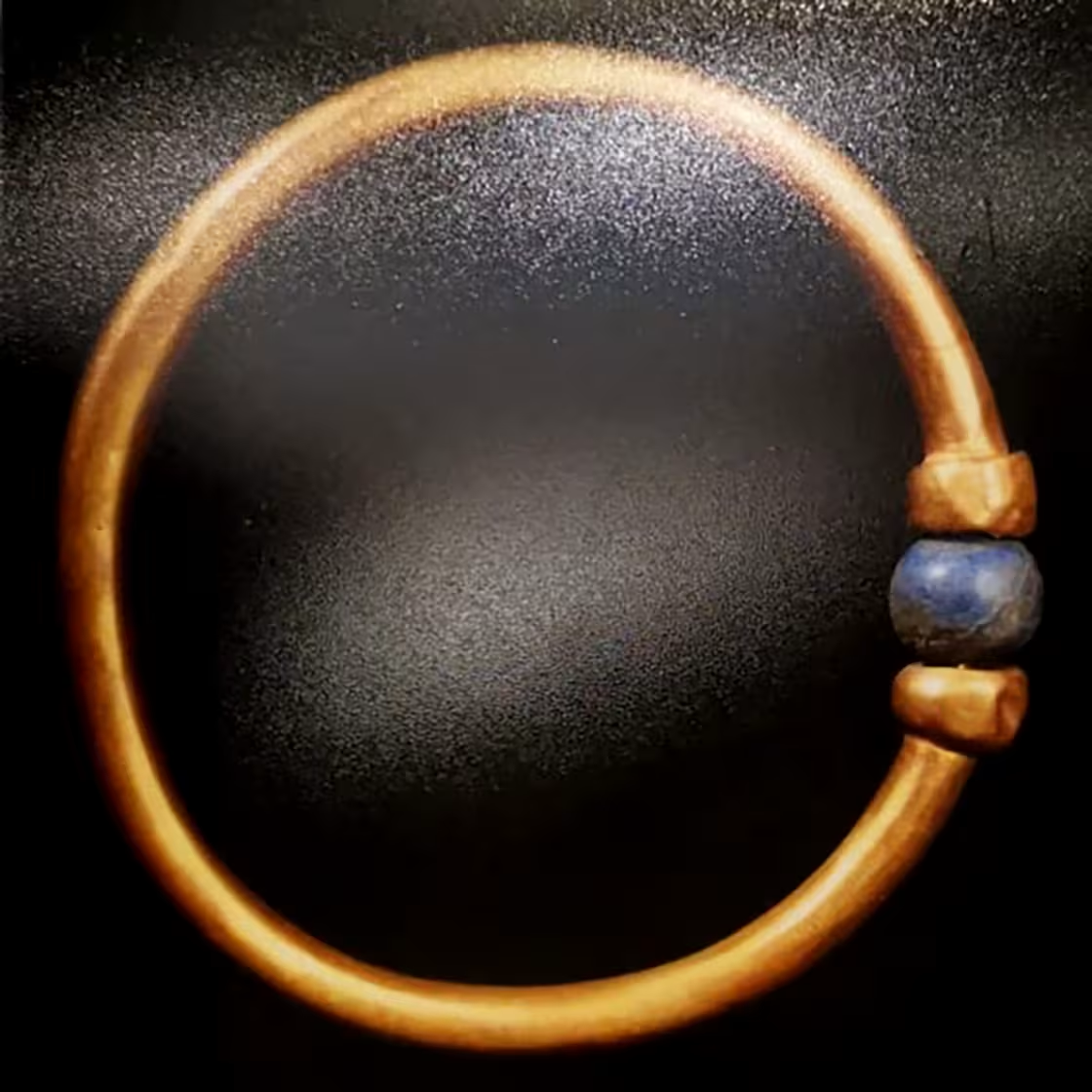
Pharaoh Amenemope's stolen gold bracelet

Egyptian police arrested a museum employee and three accomplices after a priceless ancient gold bracelet was stolen from Cairo’s Egyptian Museum in September 2025. It was sold for about $3,735 USD and then melted down.
The 3,000-year-old bracelet, a gold band adorned with lapis lazuli beads, dated back to the reign of Amenemope, a pharaoh of Egypt’s 21st Dynasty (1070-945 BC).
The 3,000-year-old bracelet was being restored in a laboratory when it went missing from the Egyptian Museum. Amenemope was a pharoah of the 21st dynasty who ruled Egypt from 993 to 984 B.C. His burial was notable for being one of three entirely intact royal burials known from ancient Egypt. Known for its deep blue hue and golden flecks, lapis lazuli was highly prized in ancient Egypt for its association with the gods and healing powers.

Sunday, December 14, 2025

The Watlington Viking Hoard

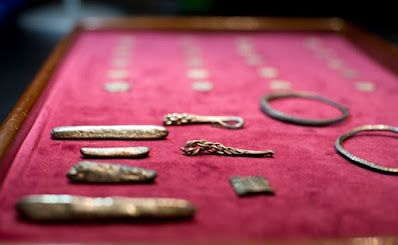
A extremely rare Viking hoard of arm rings, coins and silver ingots was unearthed in Oxfordshire in 2015.
The hoard was buried near Watlington around the end of the 870s, in the time of the 'Last Kingdom'. The Anglo-Saxon kingdoms of Mercia and Wessex were fighting for their survival from the threat of the Vikings, which lead to the unification of England. The hoard is a "nationally significant find".
The hoard was probably buried in the late 870s, when the Anglo-Saxons began to push the Vikings north of the Thames into East Anglia.
Prior to 878, the Vikings had been increasing raids from Denmark. The Anglo Saxons began to re-establish their rule over southern England and won a decisive battle at Edington in 878. Experts speculate that a Viking fleeing the Anglo Saxons after this battle buried it on his way north, on the ancient road from East Anglia to Wiltshire and Dorset.
The hoard consists of 186 coins - some fragmentary - and includes rarities from the reign of King Alfred "the Great" of Wessex, who reigned from 871 to 899, and King Ceolwulf II, who reigned in Mercia from 874 to 879.

Saturday, December 13, 2025

Medusa

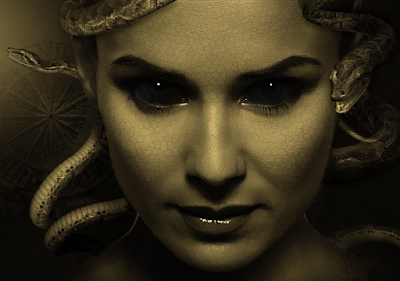
Medusa was a monster to the ancient Greeks, one of the Gorgon sisters and daughter of Phorkys and Keto, the children of Gaea (Earth) and Oceanus (Ocean). She had the face of an ugly woman with snakes instead of hair; anyone who looked into her eyes was turned to stone.
She was once a fair maiden, a priestess of Athena, and devoted to a life of celibacy; however, after being wooed by Poseidon she forgot her vows and married him. For this offence she was punished by the goddess. Each wavy lock of the beautiful hair that had charmed her husband was changed into a venomous snake; her love-inspiring eyes turned into bloodshot, furious orbs, which excited fear and disgust in the onlooker; whilst her milk-white skin turned a loathsome green.
After a life of misery deliverance came at the hands of Perseus. Medusa was beheaded by the hero Perseus, who used her head as a weapon until he gave it to Athena to place on her shield. In classical antiquity the image of the head of Medusa appeared in an evil-averting device known as the Gorgoneion.
Medusa's frightening appearance on coins served a propaganda purpose. Warfare was endemic in the classical world, a way of life, and death. Medusa served to both protect and terrify.

Friday, December 12, 2025

The Kushan

Kushans were an Indo-European tribe who roamed the Asian steppes. They expanded their empire into India in the 1st century AD.
Roman denarii were the first gold coins to appear in India, which had only previously seen copper and silver coins. Soon the Indian rulers of the day, the Kushan, copied the idea. By the time they reached India, the Kushan culture was a rich blend of Chinese, Iranian, Afghan, Greek and Indian customs, beliefs and modes of dress.
Much of what we know about the mysterious Kushans comes from studying their coinage, which is rich with symbolism. Vima Kadphises was the first to mint gold coins. His gold distater, or double-dinar, weighs in at 15.95 grams, twice the weight of the only other widely circulating gold coin of the time, the Roman aureus. His coin features the Hindu pantheon, but it also depicts the Buddhist triaratna (“three jewels”) symbol.

Kushan: Vasudeva I Gold dinar with 3-headed Siva
Vima Kadphises, Kushan Emperor (c. 95-127 CE), was the first ruler in India to issue gold coins extensively, introducing denominations like the dinar and double-dinar, using gold likely gained from trade with the Romans. His coinage marked significant prosperity and established a tradition of king-and-deity imagery that influenced Indian coinage for centuries.

Thursday, December 11, 2025

Vivid fresco depicting gladiators found in Pompeii

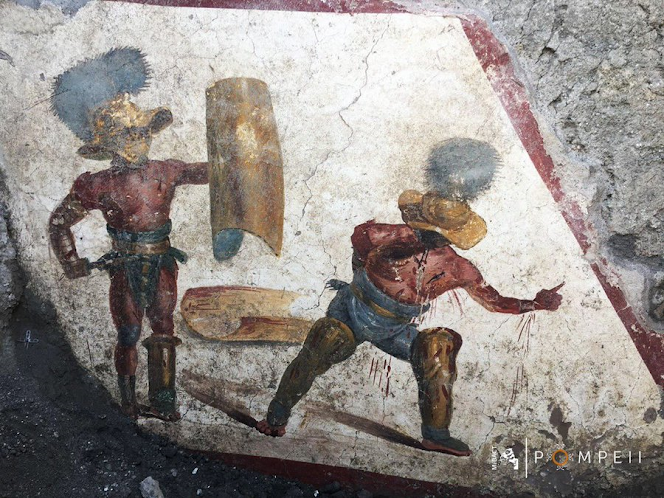
A vivid fresco depicting a gladiator standing victorious as his wounded opponent gushes blood was discovered in Pompeii in 2019.
A 'murmillo' holds aloft his shield in his left hand, as he grips his short sword in the right. On the ground next to him lies the shield of the defeated 'thraex', who has suffered wounds and is bleeding. The thraex is gesturing with his hand, possibly asking for mercy.

Wednesday, December 10, 2025

Saka gold found

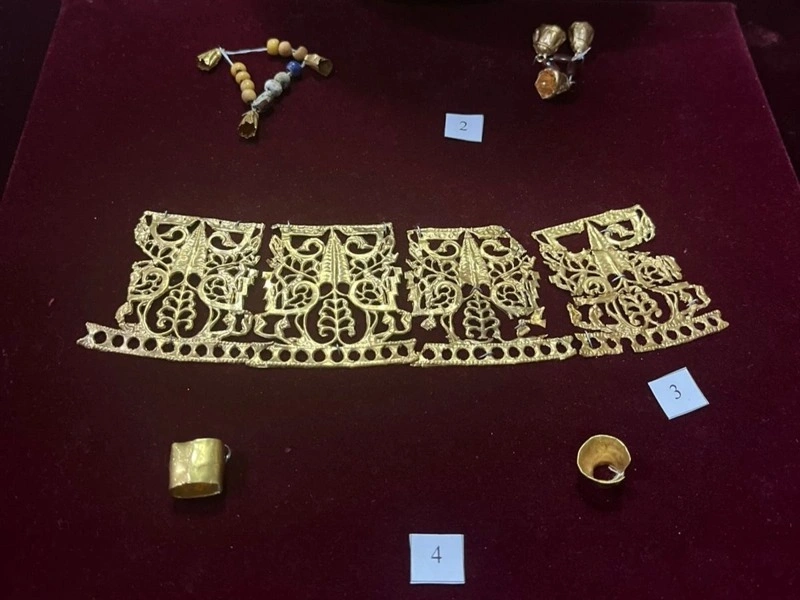
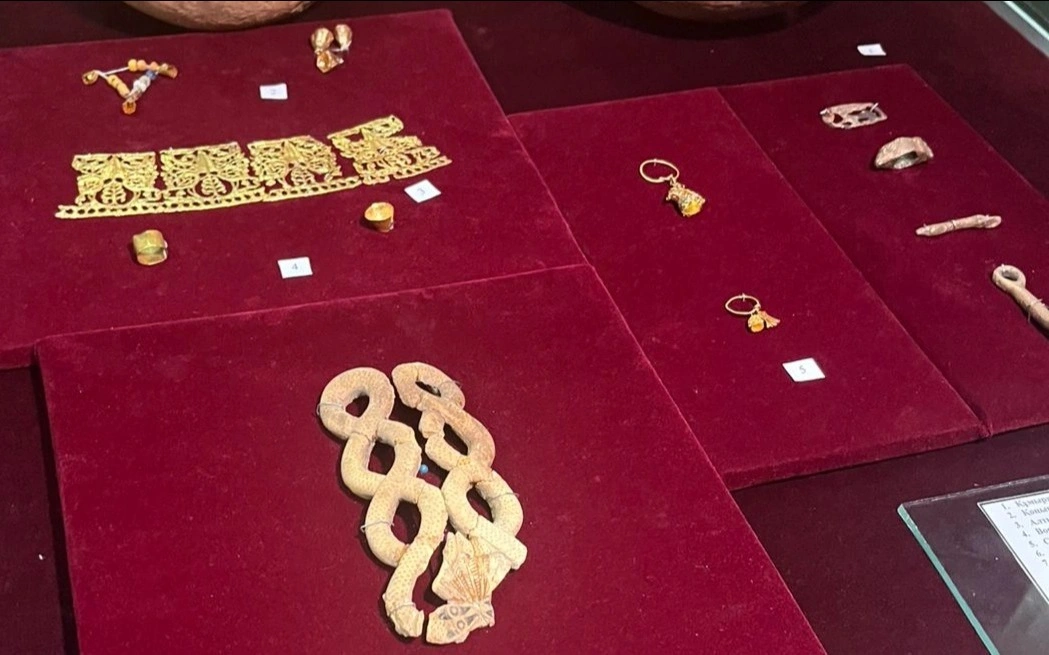
Archaeologists in Kazakhstan’s Zhetysu Region have uncovered rare gold jewelry, elite Saka-era burial mounds, and a unique double burial dating back to the 4th–3rd centuries BC during excavations at the Dauylbay burial ground. Located at the foot of the Dauylbay mountain range, the burial ground has yielded a wide array of artifacts, including bronze tools, bone ornaments, intricate ceramics, and ritual objects.
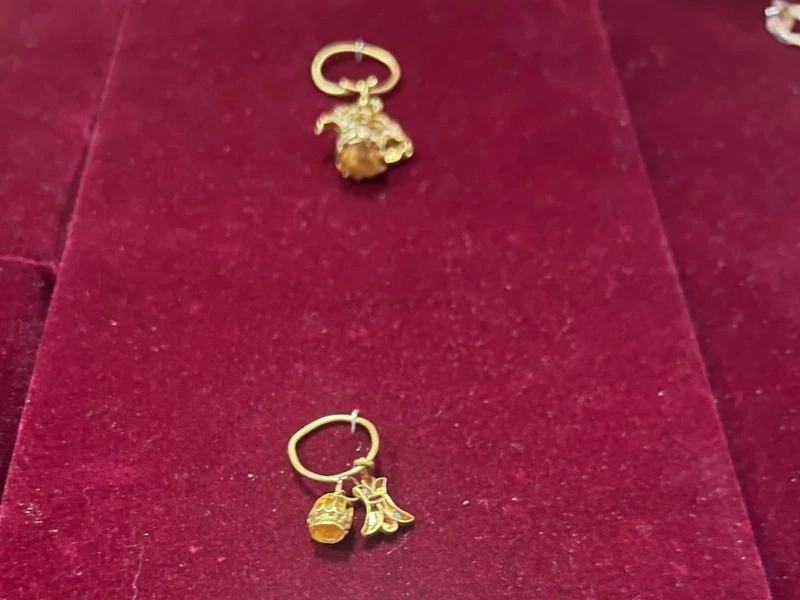
Archeologists unearthed fragments of gold jewelry: beads, earrings, bone buttons, bronze pins and buckles, and various ceramic vessels. Of importance is a varvorka – a gold ornament strung on a thread and used as a pendant in high-status ritual attire.
A rare bone artifact carved in the shape of a “snake-dragon,” is believed to have played a role in ancient ceremonies.
In one of the larger mounds, measuring around 40 meters in diameter and 3-4 meters in height, archaeologists uncovered the remains of a man. An iron akinak sword, typical of Saka warriors, was found to his right, along with gold plates and a varvorka, indicating his high social rank. Three additional mounds – two of them of elites – contained a rare double burial. A woman and a child were laid to rest together; gold earrings were found near the child’s skull with bronze plaques crafted in the Saka animal style.