Garum is a fermented fish sauce that was used as a condiment in Phoenicia, ancient Greece, Carthage, Rome, and later Byzantium.
 | Garum was used extensively throughout the ancient world as a condiment and was a frequent trade item. What went into garum and how it was prepared was lost to time.
In 2014 a team from the University of Cadiz began excavating at Pompeii in search of garum. They found a garum store and, inside, were 2,000-year-old traces of the sauce itself. For the first time ever an actual sample of garum could be analyzed to find out exactly what it was made of. Microscopic analysis revealed pollen grains revealing which selection of herbs were used. The sample also told them exactly what species of fish was used. | |
The spices are characteristic of the Mediterranean – rosemary and coriander. Anchovies were used.
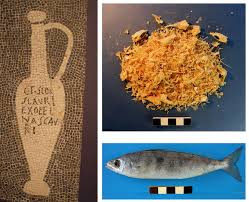 | Like modern soy sauce, fermented garum is a rich source of umami flavoring, including monosodium glutamate. When mixed with wine, vinegar, black pepper, or oil, garum enhances the flavor of a wide variety of dishes, including boiled veal and steamed mussels. It was so common that even slaves used it to improve the taste of their bread. |  |
 | Garum was produced in various grades and consumed by all social classes. After the liquid was ladled off the top of the mixture, the remains of the fish, called allec, were used by the poorest classes to flavor their staple porridge or farinata.
The finished product was labour intensive. The best garum fetched very high prices. The highest-quality was made from prime fish like mackerel and red mullet, along with the blood and innards. The most expensive of these was dubbed haimation or garum sociorum. It was an extremely expensive, clear, amber liquid reserved for the Roman elite. The manufacture and export of garum was an element of global trade in the ancient world and a driver for Roman conquest of coastal areas. |

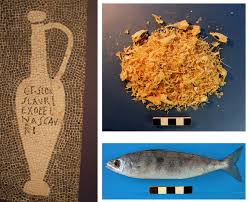


Fermented fish sauces are a staple of the Khymer ( Cambodian) diet. I'd be in3if they were developed independently.
ReplyDelete